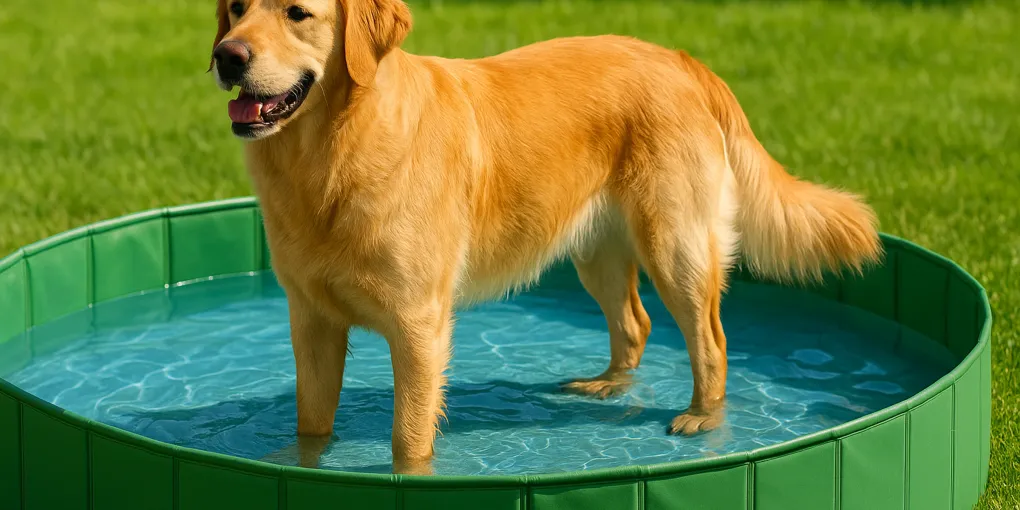
Jasonwell Foldable Dog Pool (Hard Plastic)
Best OverallMaterial: Heavy-duty PVC (foldable)
$35–$65
Quick Comparison
| Product | Key Specs | Price Range | Buy |
|---|---|---|---|
| |
| $35–$65 | Check Price |
| |
| $25–$45 | Check Price |
| |
| $60–$90 | Check Price |
| |
| $80–$150 | Check Price |
Contains affiliate links — we may earn a small commission at no extra cost to you.
Best Home Hydrotherapy Tubs for Senior Dogs in 2026
For senior dogs with arthritis, hip dysplasia, or general mobility issues, Jasonwell Foldable Dog Pool (PSR 8.0/10) provides the best combination of structural durability, appropriate depth options, and non-slip interior for safe home hydrotherapy. The Ruff ‘n Ruffus Portable Pet Bath Tub (PSR 7.8/10) is the best option for owners who prioritize controlled water depth and easier dog entry and exit.
TL;DR
- Best Overall: Jasonwell Foldable Pool — durable PVC, multiple depth options, non-slip, wide size range (PSR 8.0/10)
- Best Controlled Setup: Ruff ‘n Ruffus Bath Tub — framed structure, consistent shape, easier entry/exit (PSR 7.8/10)
- Best for Small Dogs: PETCUTE Portable Pool — appropriately sized for small senior breeds (PSR 7.6/10)
- Best Large Breed: Reinforced large dog pool — full immersion option for Labs, Goldens, Shepherds (PSR 7.5/10)
How We Researched This Article
This article follows PSR’s 5-step evidence-synthesis process. Safety assessment included evaluating PVC pool materials for BPA and phthalate content, structural integrity under the weight and movement of senior dogs, and interior surface grip. Depth appropriateness was assessed against veterinary rehabilitation guidelines on safe water depth for varying dog sizes. Owner synthesis from verified Amazon reviews and senior dog health communities, with focus on reports from owners whose senior dogs have specific orthopedic conditions (combined review base of 25,000+ reviews across featured products).
Why Hydrotherapy Helps Senior Dogs
Buoyancy reduces joint loading: Water buoyancy offloads a significant portion of a dog’s body weight. When a dog stands in water at elbow depth, the supported portion of body weight reduces joint compression by 50–75% compared to land-based standing. This allows senior dogs with painful joints to move and exercise muscle groups that would be too painful to use on land.
Resistance builds muscle without impact: Water creates 12–14 times more resistance to movement than air, meaning gentle walking in water strengthens muscles more effectively than land walking at the same pace — without the impact forces that cause joint pain. Senior dogs who have lost significant muscle mass (sarcopenia) from reduced exercise tolerance benefit from the muscle-building efficiency of water exercise.
Thermal benefits: Warm water increases blood circulation to joint capsules and surrounding musculature, reducing stiffness before land-based activities like walking. Many owners report that senior dogs are more comfortable and willing to walk after a 10-minute warm water session than without one. This is complementary to heated dog beds and heating pads for overall thermal management.
Psychological engagement: Senior dogs who have become reluctant to exercise on land due to pain often respond positively to water environments. The novel sensation of buoyancy reduces the pain signals from arthritic joints, making exercise less aversive and more likely to be repeated.
PSR Composite Score Breakdown
| Criterion | Weight | Jasonwell | Ruff ‘n Ruffus | PETCUTE | Large Pool |
|---|---|---|---|---|---|
| Safety & Ingredients | 25% | 8.5 | 8.5 | 8.0 | 7.5 |
| Durability & Build Quality | 20% | 8.0 | 8.0 | 7.5 | 7.5 |
| Pet Comfort & Acceptance | 20% | 8.0 | 8.0 | 7.5 | 7.5 |
| Value for Money | 20% | 8.0 | 7.0 | 8.5 | 7.0 |
| Ease of Use | 15% | 8.0 | 8.0 | 7.5 | 7.0 |
| PSR Composite | — | 8.0 | 7.8 | 7.6 | 7.5 |
Score notes: Jasonwell and Ruff ‘n Ruffus tie on Safety, Durability, and Pet Comfort. Jasonwell scores higher on Value for its lower price at comparable quality. PETCUTE earns the top Value score per size for small dogs but is limited in size availability.
Jasonwell Foldable Dog Pool: Best Overall
The Jasonwell pool uses thick PVC construction (rated for a dog’s weight without puncturing) with a non-slip interior surface that prevents senior dogs from scrambling when they lose footing. The foldable design stores flat when not in use — an important consideration for owners who don’t have permanent outdoor pool space. Multiple diameter options (23–63 inches) accommodate breeds from Beagles to German Shepherds.
Why the foldable hard-wall design suits senior dogs:
- The pool maintains its shape without inflation — no gradual deflation that can suddenly change the water depth
- Low sidewalls (available in various heights) allow easier entry and exit for dogs with reduced rear leg strength — critical for dogs who cannot step up over a tall rim
- Non-slip interior base prevents the panic slipping that causes senior dogs to resist water entry in smooth-bottomed pools
Entry adaptation: For senior dogs with very limited rear leg strength, use a dog ramp or step alongside the pool. A ramp or stairs designed for senior dogs adapted to pool height allows controlled entry without requiring the dog to lift a leg over the pool rim.
View Jasonwell Foldable Pool on Amazon
Ruff ‘n Ruffus Portable Pet Bath Tub: Best for Controlled Water Therapy
The Ruff ‘n Ruffus tub uses a fabric-over-frame construction that maintains a consistent rectangular shape — easier to position the dog in controlled standing postures than round pools. The tub format allows owners to stand alongside the dog, guide limb movements, or provide physical support during exercise.
Therapeutic positioning advantage:
- Rectangular shape allows the owner to stand at the dog’s side or head without leaning over a curved pool rim
- Consistent depth across the floor means there is no depth variation for the dog to accommodate
- The tub height is low enough for small-medium breeds but provides good sidewall stability
Best for: Owners doing structured aquatic physical therapy exercises with guidance from a veterinary rehabilitation therapist; small-medium breed senior dogs (under 45 lbs) for whom the tub provides adequate space.
View Ruff ‘n Ruffus Bath Tub on Amazon
PETCUTE Portable Dog Pool: Best for Small Senior Dogs
For small senior breeds (Dachshunds, Beagles, Cocker Spaniels, Shih Tzus), the PETCUTE pool is appropriately sized without the excess space of large dog pools. Smaller diameter means the dog has pool wall support on all sides — reassuring for dogs who are anxious about water or unsteady on their feet.
Small dog hydrotherapy considerations:
- Small senior dogs can achieve meaningful buoyancy in shallower water (4–6 inches) than large breeds require
- Pool diameter close to the dog’s body length reduces the distance the dog must move to reach a wall for balance support
- Lower pool rim makes entry and exit easier for dogs with front leg mobility issues
View PETCUTE Portable Pool on Amazon
Using Home Hydrotherapy Safely
Supervision is mandatory: Never leave a senior dog unattended in a hydrotherapy pool. Dogs with reduced muscle strength can become fatigued quickly and may not be able to maintain standing if they slip. An owner should remain within arm’s reach throughout every session.
Warm water preparation: Fill with warm water (85–95°F) before the dog enters. Add warm water gradually if the ambient temperature cools the pool during the session. Use a thermometer to verify temperature — water that feels comfortable to a human hand can be too warm or too cool for a senior dog.
Post-session care: Dry the dog thoroughly after hydrotherapy, particularly in cool weather. Wet fur in cold air rapidly draws heat from the body — a concern for senior dogs whose thermoregulation is already impaired. A dog cooling vest approach in reverse — drying the coat rapidly — reduces this risk.
Complementary therapies: Home hydrotherapy works best alongside canine massage tools, joint supplements, and veterinarian-prescribed pain management. Dogs with significant arthritis pain may need NSAID pre-treatment to participate comfortably in water therapy.
Related Senior Dog Mobility Articles
- Best Dog Treadmills for Senior Dogs
- Best Dog Indoor Exercise Equipment for Senior Dogs
- Best Dog Balance Disc for Senior Dogs
- Best Massage Tools for Senior Dogs
- Best Heated Dog Beds for Senior Dogs
- Best Orthopedic Dog Beds for Senior Dogs
Frequently Asked Questions
Is home hydrotherapy effective for senior dogs with arthritis?
Yes. Water buoyancy reduces joint loading by 50–75% at elbow depth, allowing arthritic dogs to exercise muscle groups too painful to use on land. Home pools supplement professional underwater treadmill therapy and provide consistent low-impact exercise between veterinary appointments.
What water depth is appropriate for a senior dog’s home hydrotherapy?
Water should reach approximately the dog’s elbow height — typically 6–10 inches for medium breeds. Senior dogs with reduced balance should start at 4–6 inches with owner support nearby.
Should I use warm or cold water for senior dog hydrotherapy?
Warm water (85–95°F) is preferable for arthritic senior dogs. It increases circulation, reduces muscle tension, and promotes joint relaxation. Cold water should not be used for routine arthritis management.
How often should a senior dog do home hydrotherapy?
Veterinary rehabilitation therapists commonly recommend 3–5 sessions per week of 5–15 minutes duration. Start shorter (5 minutes) to assess fatigue tolerance. Never leave the dog unsupervised.
Frequently Asked Questions
- Hydrotherapy uses water buoyancy to reduce the weight borne by arthritic joints during movement, allowing senior dogs to exercise muscles with significantly less joint loading. Even standing in warm shallow water provides therapeutic benefit for dogs with hip dysplasia, elbow arthritis, or thoracolumbar stiffness. Clinical hydrotherapy (underwater treadmills in veterinary rehabilitation facilities) is more controlled than home tubs, but home water therapy provides meaningful supplementary exercise between professional sessions.
- Water depth should reach approximately the dog's elbow height — this provides meaningful buoyancy support without creating drowning risk. For a medium-sized dog (30–50 lbs), this is typically 6–10 inches. Senior dogs with reduced leg strength or balance issues should start at shallower depths (4–6 inches) with an owner nearby to support them. Never leave a senior dog unattended in a hydrotherapy pool.
- Warm water (not hot) is preferable for arthritic senior dogs — warm water increases circulation to muscle tissue, reduces muscle tension, and promotes relaxation of the joints before exercise. A comfortable warm water temperature is 85–95°F (29–35°C). Cold water constricts blood vessels and may exacerbate stiffness and discomfort in arthritic dogs. Cold water is appropriate only in the context of acute injury management (reducing swelling), not routine hydrotherapy.
- For general mobility support and pain management, 3–5 sessions per week of 5–15 minutes duration is a common recommendation from veterinary rehabilitation therapists. Start with shorter sessions (5 minutes) to assess the dog's tolerance and fatigue level. Dogs who are visibly tired or reluctant to continue should be allowed to stop. Excessive fatigue from hydrotherapy can worsen soreness the following day.