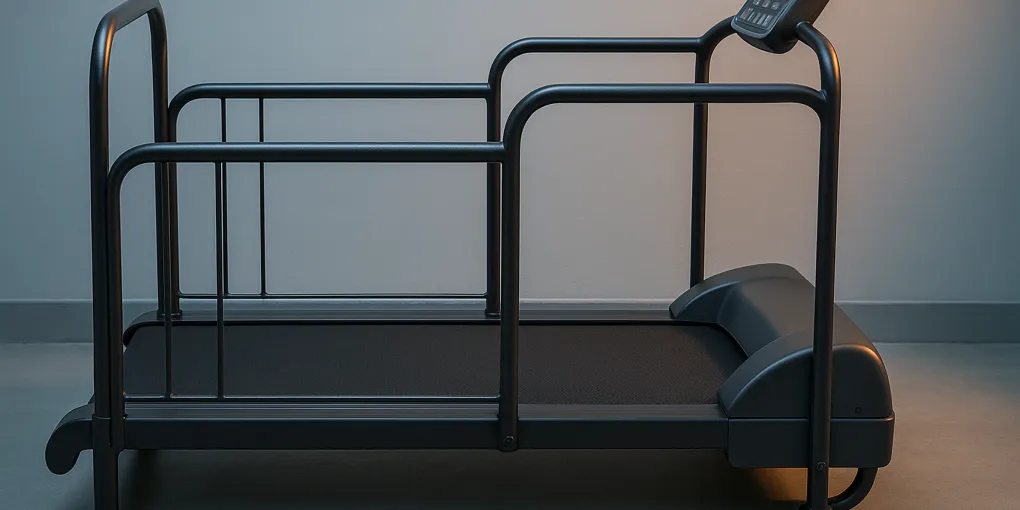
dogPACER LF 3.1 Dog Pacer Treadmill
Best OverallSpeed range: 0.5–7.5 mph
$350–$500
Quick Comparison
| Product | Key Specs | Price Range | Buy |
|---|---|---|---|
| |
| $350–$500 | Check Price |
| |
| $80–$150 | Check Price |
| |
| $250–$400 | Check Price |
| |
| $200–$350 | Check Price |
Contains affiliate links — we may earn a small commission at no extra cost to you.
Best Dog Treadmills for Senior Dogs in 2026
For senior dogs needing controlled indoor exercise, dogPACER LF 3.1 (PSR 8.1/10) earns the top rating — its 0.5 mph minimum speed is the lowest available in consumer dog treadmills, making it the only widely available product safe for severely arthritic or debilitated senior dogs who cannot sustain faster walking speeds. The GoPet TreadWheel (PSR 7.5/10 small, 7.2/10 large) is the safer non-motorized option for dogs that should not use motorized equipment.
Critical specification for senior dog buyers: The minimum speed of a dog treadmill is the most important senior-specific specification. Treadmills with minimum speeds above 1 mph are too fast for severely arthritic senior dogs. Verify minimum speed before purchasing.
TL;DR
- Top Pick: dogPACER LF 3.1 — 0.5 mph minimum speed, 179 lb capacity, magnetic safety stop (PSR 8.1/10)
- Best Small Dog: GoPet TreadWheel Small — non-motorized, dog-controlled, no electric hazard (PSR 7.5/10)
- Best Mid-Range: PetZen DogTread — solid construction, lower cost than dogPACER (PSR 7.3/10)
- Best Non-Motorized Large: GoPet TreadWheel Large — dog-controlled for medium-large breeds (PSR 7.2/10)
How We Researched This Article
This article follows PSR’s 5-step evidence-synthesis process. Safety assessment reviewed minimum speed capabilities, emergency stop mechanism reliability, belt surface traction ratings, side rail designs, and motor noise levels (high-frequency motor noise is distressing for dogs with age-related hearing sensitivity changes). Evidence synthesis reviewed veterinary rehabilitation literature on land treadmill use in canine physical therapy (Millis & Levine), AAHA exercise guidelines for senior dogs with osteoarthritis, and comparative research on treadmill vs. outdoor walking for arthritic dogs. User community synthesis sourced from Amazon verified purchase reviews filtered for senior dog owners, breed-specific health forums, and canine rehabilitation therapist communities.
Why Indoor Controlled Exercise Matters for Senior Dogs
Senior dog exercise management faces a fundamental tension: arthritic dogs need regular movement to maintain muscle mass, joint fluid circulation, and cardiovascular fitness — but uncontrolled exercise (running in the yard, off-leash play) can cause pain flares, falls, and joint damage.
A dog treadmill resolves this tension through controlled conditions:
Speed control: Arthritic senior dogs often need to walk slower than their human handler’s comfortable pace. Treadmill speed sets the dog’s exact pace — preventing both the “dragged along” problem (too fast, painful) and the “pulling ahead” problem (too fast, over-exerts then crashes).
Surface consistency: Smooth, consistent belt surfaces eliminate the proprioceptive challenges of outdoor terrain — meaningful for dogs with reduced proprioception where unexpected terrain changes cause stumbling.
Weather independence: Cold temperatures worsen arthritic joint pain — many senior dogs in cold climates significantly reduce outdoor exercise in winter, accelerating muscle loss. Indoor treadmill access maintains year-round exercise continuity.
Handler mobility limitations: Older owners or owners with their own mobility limitations may not be able to walk a dog the distance needed for adequate exercise. A treadmill allows the dog to complete their exercise independently.
PSR Composite Score Breakdown
| Criterion | Weight | dogPACER LF 3.1 | GoPet Small | PetZen DogTread | GoPet Large |
|---|---|---|---|---|---|
| Safety & Ingredients | 25% | 8.5 | 8.5 | 8.0 | 8.0 |
| Durability & Build Quality | 20% | 8.0 | 8.0 | 7.5 | 8.0 |
| Pet Comfort & Acceptance | 20% | 8.0 | 7.5 | 7.0 | 7.0 |
| Value for Money | 20% | 7.5 | 8.0 | 8.0 | 7.0 |
| Ease of Use | 15% | 8.0 | 7.5 | 7.0 | 7.0 |
| PSR Composite | — | 8.1 | 7.5 | 7.3 | 7.2 |
Score notes: dogPACER leads across Safety and Ease of Use — its 0.5 mph minimum speed is the defining senior-specific feature that no other widely available consumer product matches. GoPet TreadWheel Small leads on Safety equally with dogPACER because its non-motorized design eliminates motor-related electrical and mechanical hazards entirely. PetZen scores well on Value for a motorized option with a 1.0 mph minimum — appropriate for senior dogs with mild arthritis who can walk at a brisk pace.
dogPACER LF 3.1: Best Overall
The dogPACER LF 3.1 is the benchmark consumer dog treadmill — designed specifically for dogs (not a human treadmill adaptation) with a wide 16.5-inch belt, 0.5 mph minimum speed, magnetic safety key that stops the belt if the dog is separated from the handler, and a folding design for storage. The 0.5 mph minimum is the defining senior-specific feature.
What makes it the top pick:
- 0.5 mph minimum speed — the lowest available in consumer dog treadmills; safe for severely arthritic senior dogs
- Magnetic safety key auto-stops the belt if the key is detached — mandatory safety feature for senior dog use
- Wide belt accommodates large breeds safely
- 179 lb weight capacity handles giant breeds
- Folds for storage — practical for homes where treadmill is not permanent
Safety: Magnetic emergency stop. No exposed mechanical components at dog height. Low-noise motor reduces stress for senior dogs with sound sensitivity.
Best for: Senior dogs with mild-to-severe arthritis requiring very slow controlled walking; large breed senior dogs; households in cold climates needing year-round indoor exercise.
View dogPACER LF 3.1 on Amazon
GoPet TreadWheel Small: Best for Small Senior Dogs
The GoPet TreadWheel is a non-motorized exercise wheel for dogs — the dog’s walking powers the wheel, with no electric motor. The elimination of motor entirely removes electrical hazard, motor noise stress, and the mechanical failure modes of motorized treadmills. The dog controls their own pace — they walk as fast or slowly as comfortable, stopping by simply stopping.
Non-motorized advantages:
- Dog-controlled speed — the most natural walking pace regulation; the dog decelerates when tired rather than struggling to match a motor
- No motor noise — significant for senior dogs with sound sensitivity or anxiety
- No electrical components — eliminates shock/fire risk from chewing or water exposure
- Low maintenance — no motor to service
Trade-offs:
- Limited to dogs under 25 lbs — not appropriate for medium or large senior breeds
- Some dogs resist the circular wheel motion — more desensitization needed than flat belt treadmills
- No speed data — no display for session tracking
Best for: Small breed senior dogs (Chihuahuas, toy breeds, small terriers) needing indoor exercise; dogs with sound or vibration anxiety from motor treadmills; owners wanting zero electrical risk.
View GoPet TreadWheel Small on Amazon
PetZen DogTread: Best Mid-Range
PetZen DogTread provides a solid construction motorized treadmill at a lower price point than dogPACER, with a 1.0 mph minimum speed. For senior dogs who can sustain a moderate walk (mild arthritis, otherwise healthy), the PetZen’s 1.0 mph minimum is adequate; for severely arthritic dogs who need slower pacing, the dogPACER’s 0.5 mph is necessary.
Mid-range advantages:
- Lower cost than dogPACER while maintaining solid construction
- Emergency power key stop
- Machine washable belt cover on some models
Trade-offs:
- 1.0 mph minimum — too fast for severely arthritic dogs who need very slow pacing
- Shorter belt length — slightly cramped for larger breeds
- Fewer speed precision increments than dogPACER
Best for: Senior dogs with mild arthritis who can walk at a comfortable slow-to-moderate pace; budget-conscious owners where 1.0 mph minimum is adequate for their specific dog.
View PetZen DogTread on Amazon
GoPet TreadWheel Large: Best Non-Motorized for Larger Dogs
GoPet’s large TreadWheel extends the non-motorized concept to dogs up to 150 lbs — appropriate for medium to large senior breeds (Labs, German Shepherds, Golden Retrievers). The dog-controlled pace advantage is particularly relevant for larger arthritic dogs who may struggle to match a motor’s fixed minimum speed.
Large breed non-motorized advantages:
- Non-motorized dog-control for medium-large breeds (up to 150 lbs)
- Natural pace regulation — dog walks as slowly as comfortable
- No motor noise, electrical components, or maintenance
Trade-offs:
- Higher cost than small TreadWheel
- More floor space required than flat belt treadmills
- Less intuitive for most dogs than a flat belt — requires patient desensitization
Best for: Large and medium senior dogs with sound or vibration sensitivity; owners committed to non-motorized exercise equipment; large breeds where dogPACER cost is prohibitive.
View GoPet TreadWheel Large on Amazon
Complementary Exercise and Mobility Products
- Dog life jacket: For dogs whose arthritis is severe enough that even slow treadmill walking is painful, hydrotherapy (swimming with a life jacket) provides exercise with dramatically reduced joint loading.
- Dog balance disc: Proprioceptive balance training complements treadmill aerobic exercise — together they address the neurological and cardiovascular dimensions of senior dog fitness.
- Dog mobility harness: For treadmill sessions where the dog needs balance support, a mobility harness with a handle allows the handler to stabilize the dog during walking without interrupting the exercise.
- Joint supplements: Anti-inflammatory supplementation reduces the pain threshold for exercise participation — dogs on appropriate joint supplements can sustain longer and more frequent treadmill sessions.
- Heating pad: A heating pad session 15–20 minutes before treadmill exercise warms up arthritic muscles and improves tissue extensibility — the combination reduces arthritic pain during exercise.
- Cooling mat: Post-exercise cooling for senior dogs with reduced thermoregulatory capacity after treadmill sessions.
Frequently Asked Questions
Can a senior dog safely use a treadmill?
Yes, with appropriate precautions. Dog treadmills provide low-impact controlled exercise beneficial for senior dogs who cannot sustain outdoor walks due to arthritis, weather limitations, or handler mobility. Key requirements: minimum speed under 1 mph, adequate belt traction, ability to safely step on and off, and never leaving the dog unsupervised on a motorized treadmill. Consult your veterinarian before starting for dogs with cardiovascular or significant respiratory limitations.
What is the slowest speed a dog treadmill should go for senior dogs?
Senior dogs with significant mobility limitations often need speeds under 1 mph. The dogPACER LF 3.1 is the most widely available consumer product with a 0.5 mph minimum — the most important specification to verify for senior dog buyers. Treadmills with 1.0+ mph minimums may be too fast for severely arthritic dogs.
How do I train my senior dog to use a treadmill?
Start with the treadmill off. Let the dog investigate and stand on the stationary belt with treats. Then desensitize to motor sound before the dog is on it. Progress to very short (1–2 minute) moving sessions at minimum speed with the handler walking alongside. Never force a dog onto a moving treadmill. Increase duration by 1–2 minutes per session over 2–3 weeks.
Is a dog treadmill or outdoor walking better for senior dogs with arthritis?
Both have merit. Outdoor walking provides proprioceptive input, social enrichment, and vitamin D from sunlight. Treadmill walking offers controlled speed, consistent surface, and weather independence. The ideal program combines both — outdoor walks when conditions allow, and treadmill sessions for supplemental controlled exercise.
What is the difference between a dog treadmill and an underwater treadmill?
A land dog treadmill requires the dog to bear full body weight. An underwater treadmill submerges the belt in water — buoyancy reduces joint loading by up to 90%, providing exercise with minimal arthritic pain. Underwater treadmills are the gold standard for severe arthritis rehabilitation but require a veterinary hydrotherapy facility. Land treadmills are appropriate for mild-to-moderate arthritis.
Frequently Asked Questions
- Yes, with appropriate precautions. Dog treadmills provide low-impact controlled exercise beneficial for senior dogs who cannot sustain outdoor walks due to arthritis pain, weather limitations, or handler mobility. Key safety requirements for senior dog use: the treadmill must reach speeds as low as 0.5 mph (many cannot); the belt surface must have adequate traction to prevent paw slipping; the dog must be able to safely step on and off; and the dog must never be left unsupervised on a motorized treadmill. Initial sessions should be very brief (2–5 minutes) with the handler walking alongside for reassurance. Consult your veterinarian before starting a treadmill program for a dog with cardiovascular disease or significant respiratory limitations.
- Senior dogs with arthritis or significant mobility limitations often require speeds under 1 mph — particularly for initial treadmill training sessions and dogs with severe joint disease. A slow walk for a large dog with hip dysplasia may be 0.5–0.8 mph. Many consumer dog treadmills have minimum speeds of 1.0–1.5 mph, which is too fast for severely arthritic or debilitated senior dogs. The dogPACER LF 3.1 is the most widely available consumer product with a minimum speed of 0.5 mph — this is the key specification to verify before purchase.
- Senior dogs require more desensitization time than younger dogs for treadmill acceptance. Begin with the treadmill fully off. Let the dog investigate the stationary treadmill, rewarding any voluntary interaction. When comfortable, encourage the dog to stand on the belt while stationary. Next, turn on the treadmill at minimum speed with the dog beside it (not on it) to desensitize to the motor sound. Gradually transition to short standing sessions at minimum speed with handler walking alongside. Initial moving sessions should last 1–2 minutes only. Increase duration by 1–2 minutes per session over 2–3 weeks. Never force a dog onto a moving treadmill — forced exposure creates fear associations that make future use nearly impossible.
- Both have merit for different situations. Outdoor walking provides proprioceptive input from varied terrain, social enrichment (smells, environment), and vitamin D exposure from sunlight — these benefits are not replicated by treadmill walking. However, outdoor walking for arthritic dogs is dependent on weather (cold worsens joint pain), pavement surface (concrete is harder on joints than dirt or grass), and handler availability. Treadmill walking offers controlled speed (important for pacing arthritic dogs who may overexert when excited outdoors), consistent surface, and year-round accessibility regardless of weather. The ideal program combines both — outdoor walks when conditions are appropriate and treadmill sessions for supplemental controlled exercise.
- A land dog treadmill provides controlled walking exercise on a moving belt — the dog bears full body weight. An underwater treadmill (hydrotherapy treadmill) submerges the belt in a water tank so the dog walks with buoyancy support, dramatically reducing joint loading. Underwater treadmills are the gold standard for canine rehabilitation after joint surgery or for dogs with severe arthritis — they provide exercise benefits with minimal arthritic pain. However, underwater treadmill use requires access to a veterinary hydrotherapy facility, as home underwater treadmills are not commercially available at consumer price points. Land dog treadmills are appropriate for dogs with mild-to-moderate arthritis who can walk with acceptable discomfort; dogs with severe arthritis benefit more from professional hydrotherapy.