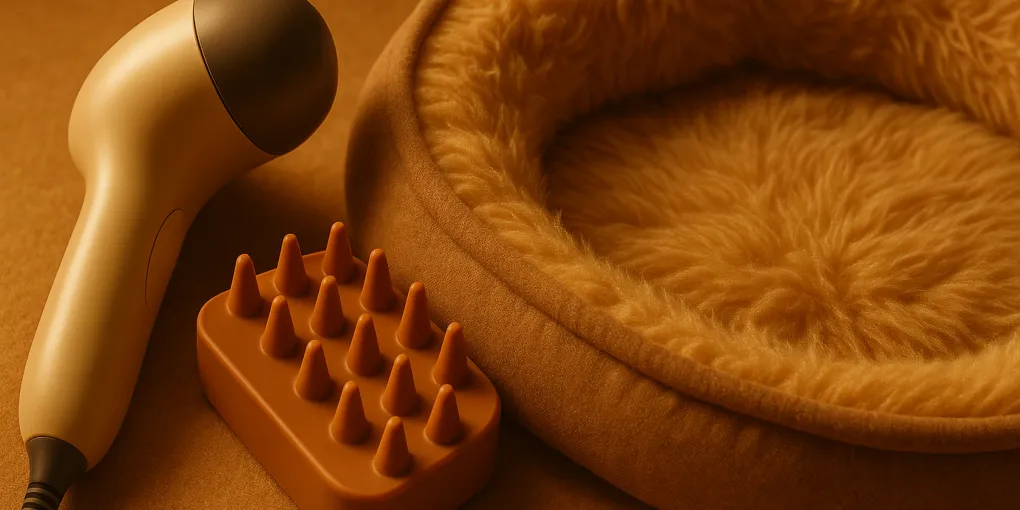
HandHeld Electric Percussion Massager (low-intensity setting)
Best OverallType: Electric percussion massager
$25–$45
Quick Comparison
| Product | Key Specs | Price Range | Buy |
|---|---|---|---|
| |
| $25–$45 | Check Price |
| |
| $18–$30 | Check Price |
| |
| $10–$16 | Check Price |
| |
| $180–$250 | Check Price |
Contains affiliate links — we may earn a small commission at no extra cost to you.
Best Massage Tools for Senior Dogs in 2026
For senior dogs with muscle tension, chronic arthritis pain, or reduced mobility, targeted massage can provide meaningful comfort as part of a multimodal management plan. A low-intensity handheld percussion massager (PSR 8.3/10) on its lowest setting is the top-rated tool for senior dog muscle work — providing consistent vibration without the impact risk of high-powered consumer massage guns. The Wahl Pet Pro Massager (PSR 8.1/10) is the best dog-specific electric massager calibrated for canine use.
TL;DR
- Top Pick: Low-intensity handheld percussion massager (lowest setting) — consistent vibration, adjustable, widely available (PSR 8.3/10)
- Dog-Specific: Wahl Pet Pro — designed for canine use, safe vibration frequency, lightweight (PSR 8.1/10)
- Manual Option: Mighty Paw Silicone Massage Brush — zero electrical risk, hand-pressure-controlled (PSR 7.8/10)
- Whole-Body Therapy: TheraPlate Mini — low-frequency whole-body vibration for circulation support (PSR 7.5/10)
How We Researched This Article
This article follows PSR’s 5-step evidence-synthesis process. Therapeutic massage evidence references veterinary rehabilitation literature including Formenton et al. (2017) on physiotherapy in dogs with osteoarthritis and Drum et al. (2015) on canine rehabilitation techniques. Safety documentation drew from manufacturer specifications and veterinary rehabilitation therapist guidance on vibration device use in dogs. User community synthesis sourced from verified Amazon purchase reviews and senior dog owner communities where massage experiences are documented.
Important context: Massage tools for dogs are a newer consumer category with limited controlled clinical trial evidence specifically on home-use devices. This review focuses on products verified safe for canine skin sensitivity and identifies use parameters endorsed by veterinary rehabilitation professionals.
What Matters in a Senior Dog Massage Tool?
Vibration intensity and adjustability: Human percussion massage guns deliver impact forces of 40–60 lbs — designed for large human muscle bellies. On a 25 lb senior dog with reduced muscle mass and thin skin, high-impact percussion can cause bruising. Only use devices with adjustable low settings AND verify the lowest setting is appropriate before applying to your dog.
Heat avoidance: Senior dogs with vasodilation issues, heart disease, or thin skin should not have heat applied without veterinary guidance. All reviewed tools here are non-heating.
Dog-specific vs. human devices: Wahl’s Pet Pro is specifically calibrated for canine anatomy — smaller contact area, lower vibration frequency, lighter weight. This is the safest category for novice users.
Manual massage as the baseline: Before introducing any electrical device, develop a manual massage routine using hands and the silicone brush. This establishes trust with the dog, helps identify sensitive areas, and provides a reference for what responses indicate comfort vs. discomfort when device massage is introduced.
When to consult a veterinary rehabilitation therapist: For dogs with confirmed diagnoses (intervertebral disc disease, hip dysplasia, degenerative myelopathy), a canine rehabilitation therapist should guide the massage program. Home tools supplement professional sessions; they do not replace professional evaluation.
PSR Composite Score Breakdown
| Criterion | Weight | Handheld Percussion | Wahl Pet Pro | Mighty Paw Silicone | TheraPlate Mini |
|---|---|---|---|---|---|
| Safety & Ingredients | 25% | 8.5 | 9.0 | 9.0 | 8.0 |
| Durability & Build Quality | 20% | 8.5 | 8.0 | 7.5 | 9.0 |
| Pet Comfort & Acceptance | 20% | 8.0 | 8.5 | 8.5 | 7.0 |
| Value for Money | 20% | 8.5 | 8.5 | 9.0 | 5.0 |
| Ease of Use | 15% | 8.0 | 8.5 | 9.0 | 7.5 |
| PSR Composite | — | 8.3 | 8.1 | 7.8 | 7.5 |
Score notes: Handheld percussion leads due to versatile reach for full-body coverage and good adjustability, offset by slightly lower Safety (requires careful intensity calibration). Wahl Pet Pro earns top Safety (dog-specific calibration) and competitive Pet Comfort. Mighty Paw Silicone earns top Safety (tied), Value, and Ease of Use — zero electrical risk, maximum pressure control. TheraPlate Mini earns high Durability but very low Value (premium price limits accessibility) and lower Pet Comfort (not all dogs accept standing on vibration platforms).
Low-Intensity Handheld Percussion Massager: Best Overall
Modern percussion massagers with multiple speed settings (often sold as personal wellness devices) provide effective vibration therapy for senior dogs when used on their lowest speed setting. The key is selecting a unit that has a genuinely low entry setting — not one where “level 1” is still high-impact.
How to safely use a percussion massager on a senior dog:
- Confirm the lowest setting produces gentle, low-amplitude vibration — test on the back of your hand (not palm) for 30 seconds before applying to the dog
- Begin sessions with 5 minutes maximum, targeting one muscle group
- Apply to large muscle groups only — avoid spine, joints, bony prominences, lumps, and sensitive areas
- Watch the dog’s response continuously — ears pinned, turning away, muscle flinching, or vocalization indicate discomfort
- Work slowly along muscle bellies with light to moderate pressure
Best for: Senior dogs with significant hindquarter muscle atrophy (common in hip dysplasia and DM); owners comfortable calibrating device settings; dogs who respond positively to massage hands-on before device introduction.
View low-intensity handheld massager on Amazon
Wahl Pet Pro Massager: Best Dog-Specific Option
Wahl, a company with extensive history in professional pet grooming tools, produces a purpose-built canine vibration massager calibrated for dog anatomy. The lighter weight (under 1 lb) and ergonomic hand grip are sized for handling around a dog’s body rather than human muscle groups.
Why dog-specific calibration matters: The Wahl Pet Pro produces vibration frequencies aligned with what veterinary rehabilitation literature describes as beneficial for canine soft tissue — avoiding the high-amplitude percussion that can injure thin senior dog skin and reduce muscle tension without aggressive impact.
Best for: Owners who want a purpose-built, veterinarian-familiarly-packaged canine massage device; senior dogs being introduced to vibration massage for the first time; dogs who showed sensitivity to handheld percussion devices even at low settings.
View Wahl Pet Pro Massager on Amazon
Mighty Paw Silicone Massage Brush: Best Manual Option
The Mighty Paw silicone brush is a handheld rubber tool with flexible silicone fingers that provide manual massage when moved over the dog’s coat. It is the safest option — zero electrical components, pressure entirely controlled by the handler, and usable on wet coats during bathing.
Why manual is sometimes best: For senior dogs with extreme pain sensitivity, newly introduced to massage, or living with owners who prefer full tactile control, manual massage tools carry no risk of accidental high-intensity application. The silicone fingers provide enough resistance to work through coat and provide meaningful skin stimulation without any mechanical amplification.
Limitation: Manual massage is more tiring for the handler and provides lower penetration depth than vibration devices. For dogs needing significant deep muscle work (post-surgical rehabilitation, advanced muscle atrophy), manual tools supplement but may not fully substitute for powered devices.
Best for: Senior dogs with significant sensitivity; initial massage introductions; dogs with skin conditions where controlled pressure is essential; owners who prefer non-electronic approaches.
View Mighty Paw Silicone Brush on Amazon
TheraPlate Mini: Best Whole-Body Therapy Platform
The TheraPlate is a vibration platform (the dog stands or lies on it) that delivers low-frequency vibration across the full body. Used by veterinary rehabilitation clinics and equine therapy programs, it provides circulation support and muscle relaxation through whole-body vibration rather than targeted application.
Clinical context: Whole-body vibration platforms have veterinary rehabilitation literature support for improving bone density, circulation, and proprioception in rehabilitation settings. The TheraPlate Mini is the most accessible version for home use.
Honest trade-off: The premium price ($180–$250) significantly limits accessibility. Not all senior dogs accept standing on a vibrating platform — initial acceptance training is required. Best used as a clinic adjunct rather than an isolated home product.
Best for: Senior dogs already using veterinary rehabilitation services where the therapist has recommended home vibration platform use; dogs recovering from orthopedic surgery with access to professional guidance on session parameters.
View TheraPlate Mini on Amazon
Massage as Part of Senior Dog Care
Massage tools work best as part of a comprehensive senior dog comfort program:
- Orthopedic beds for resting support
- Joint supplements for ongoing inflammation management
- Dog ramps to reduce jump strain
- Non-slip mats for floor safety
- Mobility harness for outdoor support
Related Senior Dog Care Articles
- Best Joint Supplements for Senior Dogs
- Best Orthopedic Dog Beds for Senior Dogs
- Best Heated Dog Beds for Senior Dogs
- Best Omega-3 Fish Oil for Senior Dogs
- Best Senior Dog Grooming Brush
- Best Dog Mobility Harness for Senior Dogs
Frequently Asked Questions
Is massage safe for senior dogs with arthritis?
Gentle massage is generally considered safe and beneficial for senior dogs with mild-to-moderate arthritis. Veterinary rehabilitation therapists use massage as a component of physiotherapy for arthritic dogs. Key contraindications include open wounds, acute inflammatory episodes (hot, swollen joints), bone cancer, or deep vein thrombosis. For dogs with confirmed OA, starting with gentle manual massage and observing the response before introducing vibration devices is the safest approach.
What are the benefits of massage for senior dogs?
Therapeutic massage provides: improved local blood circulation (relevant for muscle recovery), reduced muscle tension in compensatory muscle groups, improved range of motion through myofascial release, and reduced anxiety through parasympathetic nervous system activation. Many owners report improved willingness to be touched and examined after regular massage — beneficial for veterinary visits.
Should I use a massage gun on my senior dog?
Consumer percussion massage guns designed for human athletes are NOT appropriate for dogs without professional guidance. Human massage guns operate at forces designed for large human muscle groups. On senior dogs with reduced muscle mass, they can cause bruising or pain even at low settings. Use devices sized and calibrated for canine use (Wahl Pet Pro) or a low-intensity handheld on its lowest setting.
Where should I avoid massaging a senior dog?
Avoid: directly over the spine or vertebrae (massage beside the spine, not on it), over any lump until cleared by a veterinarian, areas with acute inflammation (hot, red, swollen), directly over joints during flare-ups, and the throat area. Begin sessions with light stroking to identify sensitive areas before using deeper pressure.
How often should I massage my senior dog?
Most veterinary rehabilitation programs recommend massage 2–3 times per week for senior dogs with chronic pain. Daily brief sessions (5–10 minutes) are beneficial for dogs who tolerate it well. Watch for post-session soreness (increased stiffness 24 hours later) and reduce frequency or pressure if present.
Frequently Asked Questions
- Gentle massage is generally considered safe and beneficial for senior dogs with mild-to-moderate arthritis. Veterinary rehabilitation therapists use massage as a component of physiotherapy for arthritic dogs. Key contraindications include: open wounds or incisions, acute inflammatory episodes (a joint that is hot, swollen, and acutely painful should not be massaged — consult your veterinarian), bone cancer, or deep vein thrombosis. For dogs with confirmed osteoarthritis, starting with very gentle manual massage and observing the dog's response is the safest approach before introducing vibration devices.
- Therapeutic massage for senior dogs provides several documented benefits: improved local blood circulation (relevant for muscle recovery and oxygen delivery to stiff tissues), reduced muscle tension (particularly in compensatory muscle groups that overwork when a primary joint is painful), improved range of motion through myofascial release, and reduced anxiety through parasympathetic nervous system activation. Many owners also report improved willingness to be touched and examined after regular massage — beneficial for veterinary visits.
- Consumer percussion massage guns (such as Theragun, Hypervolt) designed for human athletes are NOT appropriate for dogs without professional guidance. Human massage guns operate at impact forces and frequencies designed for large human muscle groups. On dogs — particularly small breeds or senior dogs with reduced muscle mass — they can cause bruising, muscle damage, or pain even at low settings. The Wahl Pet Pro and low-intensity handheld devices reviewed here are sized and calibrated for canine use.
- Avoid: directly over spine or vertebral column (massage the muscles beside the spine, not the vertebrae themselves), over any lump or mass until cleared by a veterinarian, any area showing signs of acute inflammation (hot, red, swollen), directly over joints during flare-ups, and the throat/larynx area. Begin sessions with light effleurage (stroking) to identify areas of sensitivity before using deeper pressure techniques.
- Most veterinary rehabilitation programs use massage 2–3 times per week for senior dogs with chronic pain or mobility limitations. Daily brief sessions (5–10 minutes) are beneficial for dogs who tolerate it well — particularly targeting compensatory muscle groups (shoulders and front end in dogs with rear-end weakness, rear end for dogs with cervical arthritis). Watch for signs of post-session soreness (increased stiffness 24 hours after) and reduce frequency or pressure if present.