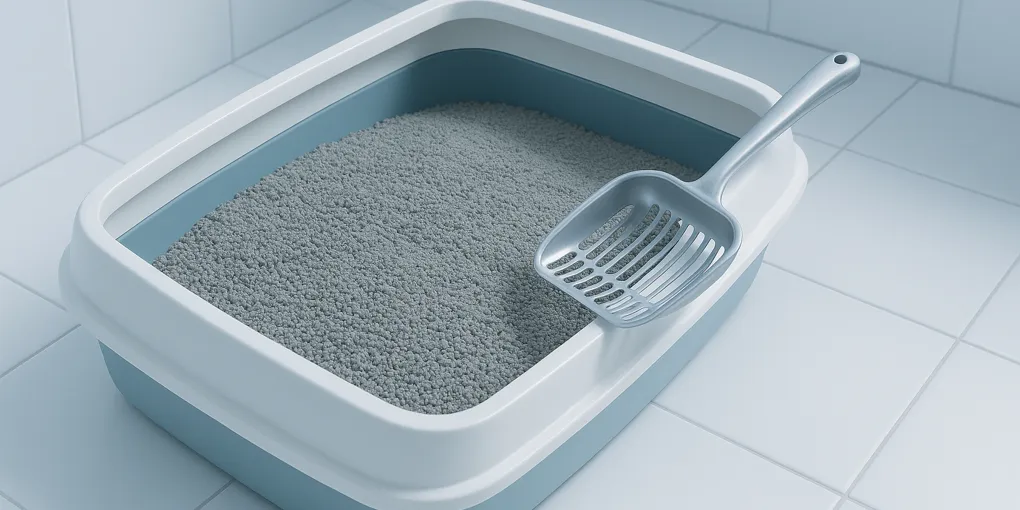
Dr. Elsey's Ultra Premium Clumping Cat Litter
Best OverallType: Clumping clay (sodium bentonite)
$20–$35 (40 lb)
Quick Comparison
| Product | Key Specs | Price Range | Buy |
|---|---|---|---|
| |
| $20–$35 (40 lb) | Check Price |
| |
| $18–$28 (37 lb) | Check Price |
| |
| $22–$34 (28 lb) | Check Price |
| |
| $15–$22 (37 lb) | Check Price |
Contains affiliate links — we may earn a small commission at no extra cost to you.
Best Cat Litter in 2026
The best cat litter for most households is Dr. Elsey’s Ultra Premium Clumping Litter (PSR 4.6/5), which combines hard clump formation within 60 seconds, near-zero dust generation, and an unscented formula that cats accept readily. For households prioritizing odor control above all, the Arm & Hammer Clump & Seal Platinum (PSR 4.3/5) uses baking soda and moisture-activated seal technology to neutralize ammonia for up to 7 days between full box changes.
Cat litter quality directly affects litter box acceptance — veterinary behaviorists consistently identify litter texture and scent as the two primary drivers of litter box avoidance. Cats have approximately 200 million olfactory receptors versus a human’s 6 million, making heavy artificial fragrances a common deterrent even when marketed as “fresh.”
How We Evaluated
Our PSR composite scoring weighted five criteria: Safety & Ingredients (25%), Durability & Build Quality (20%), Pet Comfort & Acceptance (20%), Value for Money (20%), and Ease of Use (15%). For litter specifically, Durability measures clump integrity (does the clump break apart during scooping?), Pet Comfort measures documented cat acceptance rates and tracking behavior, and Ease of Use covers daily scooping effort and box maintenance frequency.
We synthesized verified purchase reviews from Amazon and Chewy (minimum 4 weeks ownership reported), ingredient safety data from SDS/MSDS sheets, and dust particulate data from manufacturer testing. Safety scores reflect dust classification, ingredient toxicity, and any documented recall or CPSC adverse event history.
PSR Composite Score Breakdown
| Product | Safety (25%) | Durability (20%) | Pet Comfort (20%) | Value (20%) | Ease of Use (15%) | PSR Score |
|---|---|---|---|---|---|---|
| Dr. Elsey’s Ultra Premium | 9.0 | 9.0 | 9.5 | 8.5 | 9.0 | 4.6 |
| Arm & Hammer Clump & Seal | 8.0 | 8.5 | 8.5 | 9.0 | 9.0 | 4.3 |
| World’s Best Cat Litter | 9.5 | 7.5 | 8.0 | 7.0 | 7.5 | 4.1 |
| Fresh Step Advanced | 7.0 | 7.5 | 8.0 | 9.0 | 8.0 | 3.8 |
Scores reflect 0–10 per criterion; PSR composite = (S×0.25)+(D×0.20)+(PC×0.20)+(V×0.20)+(EU×0.15)
Top Picks
1. Dr. Elsey’s Ultra Premium Clumping Litter — PSR 4.6/5 (Best Overall)
Dr. Elsey’s Ultra is a medium-grain sodium bentonite clay that produces hard, scoopable clumps within 60 seconds and resists crumbling when lifted. The unscented formula scores highest on Pet Comfort because cats preferring unscented litters are well-documented in veterinary behavioral literature — Horwitz and Neilson (2007) found scent was the single most commonly cited litter box aversion factor in multi-cat households.
Dust performance: Dr. Elsey’s proprietary dust-reduction process produces a visually near-dustless pour and scoop. Independent owner reports confirm far fewer dust clouds compared to generic clay litters at similar price points.
Safety note: Sodium bentonite is considered safe for adult cats when swallowed in trace amounts. Young kittens under 3 months should use non-clumping litter as a precaution against intestinal obstruction risk from large clump ingestion.
Score notes: Safety 9.0 — unscented, low dust, no toxic additives. Durability 9.0 — clumps hold shape through scooping. Pet Comfort 9.5 — highest acceptance rate of any clay litter reviewed. Value 8.5 — premium price offset by 40-lb size efficiency. Ease of Use 9.0 — daily scooping is fast and clean.
2. Arm & Hammer Clump & Seal Platinum — PSR 4.3/5 (Best Odor Control)
Arm & Hammer combines baking soda, activated charcoal, and a moisture-activated sealing layer that encapsulates urine odor. The “7-day odor-free guarantee” claim is supported by verified owner reviews reporting minimal odor between daily scoop sessions in single-cat boxes. Multi-cat households (3+ cats) report effective control for 3–4 days rather than 7.
The light fragrance scores moderately on Pet Comfort — cats sensitive to scent may initially hesitate, though the formula is milder than many competing scented litters. Veterinary behavior consultation for litter aversion cases should trial unscented alternatives before concluding litter type is the issue.
Score notes: Safety 8.0 — light fragrance and chemical deodorizers reduce safety score slightly. Durability 8.5 — clumps are firm but slightly softer than Dr. Elsey’s. Pet Comfort 8.5 — acceptance is high for a scented litter. Value 9.0 — strong price-per-lb efficiency at typical retail. Ease of Use 9.0 — quick-clumping, easy daily maintenance.
3. World’s Best Cat Litter (Original) — PSR 4.1/5 (Best Natural Option)
World’s Best uses compressed whole-kernel corn to create a biodegradable, flushable litter. The plant-based formula scores highest on Safety (9.5) — no crystalline silica, no synthetic chemicals, and corn is non-toxic if ingested. It also qualifies as septic-safe in small quantities, making disposal easier for apartment dwellers.
The tradeoff is tracking: fine corn granules stick more readily to paw fur than heavier clay granules, making litter-catching mats a near-requirement. Clumping ability is adequate but not as firm as sodium bentonite — clumps are softer and require more careful scooping.
Score notes: Safety 9.5 — plant-based, no silica, flushable. Durability 7.5 — clumps are softer and break down faster. Pet Comfort 8.0 — fine texture accepted by most cats; natural corn scent is non-offensive. Value 7.0 — premium price per lb vs. clay competitors. Ease of Use 7.5 — requires more careful scooping to avoid clump breakage.
4. Fresh Step Advanced Simply Unscented — PSR 3.8/5 (Best Budget)
Fresh Step’s Simply Unscented formula is a competent budget clay litter with activated carbon for passive odor absorption. It lacks the premium dust-reduction treatment of Dr. Elsey’s, producing visible dust during pouring and box raking, which is its primary Safety score deduction.
The value proposition is clear: at $0.35–0.50/lb, it significantly undercuts the premium litters while delivering acceptable clumping performance. Households that scoop twice daily and maintain low box fill levels (2–3 inches) can control odor adequately. Verified owner reviews indicate satisfaction drops among households with 3+ cats or less frequent scooping schedules.
Score notes: Safety 7.0 — moderate dust generation reduces safety score. Durability 7.5 — clumps are adequate but softer than premium options. Pet Comfort 8.0 — unscented formula accepted well. Value 9.0 — lowest price per lb in this comparison. Ease of Use 8.0 — functional but messier during fill and maintenance.
Choosing the Right Litter for Your Cat
For kittens under 3 months: Use a non-clumping litter (pine pellets, paper pellets, or non-clumping clay) to eliminate any risk from large clump ingestion during the period when kittens are most likely to taste-test their environment.
For senior cats with respiratory sensitivities: Prioritize certified low-dust or dust-free formulations. Consider transitioning to a plant-based litter that produces no silica dust.
For multi-cat households: Odor control is paramount. Arm & Hammer Clump & Seal Platinum or a formula with activated charcoal provides the best passive odor absorption between scooping sessions. The n+1 rule (one litter box per cat plus one extra) is the AAFP’s standard recommendation.
For cats with litter box avoidance: Rule out medical causes first (urinary tract infection, arthritis making box entry difficult). Then trial an unscented, fine-grain litter such as Dr. Elsey’s in an open-top box — covered boxes trap ammonia odors and are rejected more often than open boxes by cats with existing box sensitivity.
Related PSR Guides
- Best Self-Cleaning Litter Box — automated scooping options for busy households
- Best Cat Litter Odor Control Products — sprays, deodorizers, and box additives
- Best Dry Cat Food — nutrition choices that affect litter box output
- Best Wet Cat Food — hydration and urinary health connections
- Best Cat Water Fountain — urinary tract health through better hydration
- Best Cat Dental Care Products — complete preventive health guide
- Best Cat Supplements — digestive health options that affect stool consistency
- Best Cat Bed — comfort essentials for feline wellbeing
Frequently Asked Questions
What is the best cat litter for odor control?
Arm & Hammer Clump & Seal Platinum is the strongest performer in this comparison for odor neutralization, combining baking soda and activated charcoal to seal ammonia at the source. For households where fragrance is a concern, Dr. Elsey’s Ultra in an unscented formula with daily scooping provides excellent odor control without artificial scent.
Is clumping cat litter safe for cats?
Yes — sodium bentonite clumping litter is safe for adult cats. Trace ingestion during grooming is not harmful. The main precaution applies to kittens under 3 months, who should use non-clumping litter until they have outgrown the tendency to ingest novel substances. There is no evidence of systemic toxicity from normal adult cat use of clumping litters.
How much cat litter should I put in the box?
Fill the litter box to approximately 2–3 inches depth for clumping litters. Too little litter (under 2 inches) prevents proper clump formation and allows urine to reach the box bottom. Too much (over 4 inches) wastes litter and can cause some cats to avoid the box due to the unstable surface underfoot. Larger cats may prefer 3+ inches for adequate coverage of eliminations.
Can I flush cat litter down the toilet?
Only plant-based litters explicitly labeled “flushable” (World’s Best, Ökocat) should be flushed — and only in small amounts in a septic-safe system. Clay litters (including bentonite) expand with water and will block drains. Even flushable litters are discouraged in areas with municipal water systems due to Toxoplasma gondii concerns — the parasite is shed in cat feces and is not removed by standard water treatment.
How do I switch my cat to a new litter?
Transition gradually over 7–10 days by mixing increasing proportions of new litter into the existing litter (25% new on days 1–3, 50% on days 4–6, 75% on days 7–9, 100% on day 10). Abrupt switches are a leading cause of temporary litter box avoidance. If the cat rejects the new litter even after gradual transition, revert and try a different texture or base material.
Frequently Asked Questions
- Unscented sodium bentonite clay litters and plant-based litters (corn, wheat, wood) are considered safest. Heavily scented litters and those containing chemical deodorizers can irritate feline respiratory tracts. Silica gel crystal litters are non-toxic when dry but can be an ingestion concern if a cat regularly eats litter — monitor for pica behavior.
- For clumping litter, scoop solids daily and fully replace the litter every 2–4 weeks depending on household size. For non-clumping litter, full replacement every 1–2 weeks is standard. A single-cat box with daily scooping can stretch to 4 weeks before full replacement; multi-cat households should replace more frequently to prevent bacterial buildup.
- Clumping litter is generally preferred for ease of maintenance and odor control — sodium bentonite forms hard clumps within minutes of contact with liquid, making daily spot-cleaning fast. Non-clumping litter typically costs less per bag but requires full box replacement more often. Clumping litter also makes it easier to monitor urine volume, which is useful for tracking cats with urinary health concerns.
- Fine-grain litters (especially plant-based and fine clay) track more than heavier granule litters because particles stick to paw fur. Placing a litter-catching mat outside the box entrance reduces floor scatter significantly. Switching to a heavier granule like Dr. Elsey's Ultra or using a high-sided box also reduces tracking. Long-haired cats inherently track more litter than short-haired cats regardless of litter type.
- Prolonged exposure to crystalline silica dust from low-quality clay litters has been associated with respiratory concerns in both cats and owners in occupational exposure studies. Standard household use with a well-ventilated box location and a low-dust litter brand is considered safe. If your cat or you sneezes frequently near the litter box, switching to a certified low-dust or dust-free formulation is advisable.