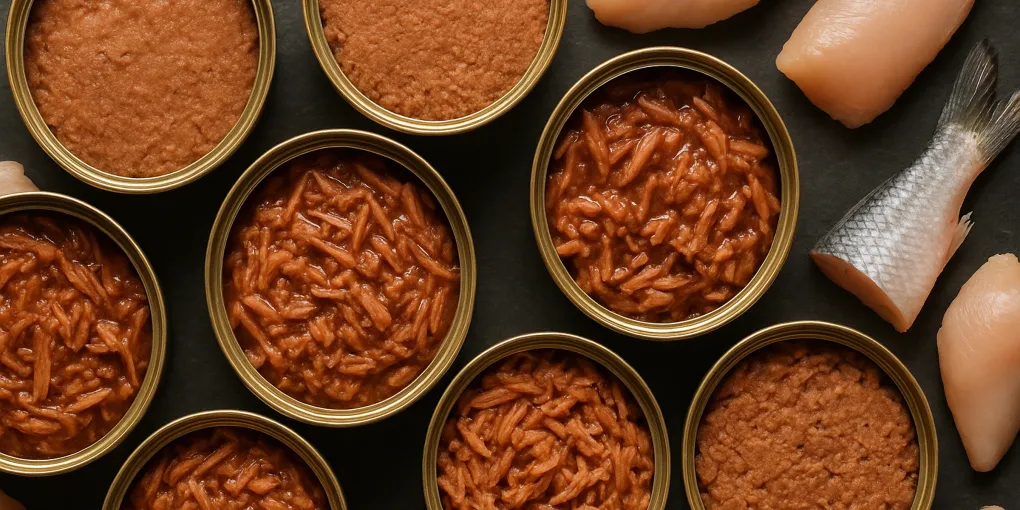
Weruva BFF OMG Wet Cat Food
Best Protein QualityProtein source: Tuna, chicken, or salmon (first ingredient)
$1.89–$2.29/can (3 oz)
Quick Comparison
| Product | Key Specs | Price Range | Buy |
|---|---|---|---|
| |
| $1.89–$2.29/can (3 oz) | Check Price |
| |
| $1.49–$1.79/can (3 oz) | Check Price |
| |
| $2.29–$2.79/can (2.8 oz) | Check Price |
| |
| $1.39–$1.69/can (3 oz) | Check Price |
Contains affiliate links — we may earn a small commission at no extra cost to you.
Best Wet Cat Food in 2026
The best wet cat food for most adult cats is Weruva BFF OMG (PSR 4.5/5), which provides the highest observable protein quality (real fish and poultry as the first ingredient), consistent AAFCO all-life-stages certification, and superior moisture content across formulas. For owners prioritizing high-protein pâté texture that cats with selectivity issues tend to accept more readily, Wellness CORE Grain-Free Pâté (PSR 4.4/5) is the strongest alternative.
TL;DR
- Best Overall: Weruva BFF OMG — real fish/poultry first, 78–82% moisture, no active recalls (PSR 4.5/5)
- Best Pâté: Wellness CORE Grain-Free — 45–58% DM protein, all-life-stages, grain-free (PSR 4.4/5)
- Best Whole Meat: Tiki Cat After Dark — whole organ meats, 79–82% moisture, nutrient-dense (PSR 4.4/5)
- Best Vet-Recommended: Royal Canin Feline Health — highest moisture (82%), veterinary trust, lower cost per can (PSR 4.0/5)
- Key Stat: Cats on wet food diets consume significantly more total water daily than dry-fed cats, reducing FLUTD and urinary crystal risk (Buckley CMF et al., 2011, PMID: 21295513)
Cats are obligate carnivores whose evolutionary biology requires animal-sourced protein, moisture-rich food, and specific nutrients — taurine, arachidonic acid, vitamin A — only found in animal tissue (NRC, 2006). Wet food aligns with these requirements more closely than dry kibble: higher protein density, substantially higher moisture content, and lower carbohydrate load. This guide evaluates the top wet cat food options using the PSR composite framework with particular attention to protein sourcing, AAFCO compliance, and moisture content.
What Makes a High-Quality Wet Cat Food?
Six factors distinguish premium wet cat food from the crowded mid-tier market:
1. AAFCO “complete and balanced” statement: This is the baseline — food without this designation is a topper or treat, not a complete diet. Verify it applies to your cat’s life stage (adult, kitten, all life stages).
2. Named protein as first ingredient: “Chicken,” “tuna,” or “salmon” as the first ingredient indicates higher-quality protein sourcing than “chicken by-products” or unspecified “meat.” Taurine is concentrated in cardiac muscle — organ inclusion (liver, heart) improves overall amino acid profiles.
3. Moisture content 75%+: Cats rely on food moisture for a significant portion of their daily hydration. Buckley CMF et al. (2011, PMID: 21295513) documented that cats fed wet diets consumed 2.5× more total daily water than kibble-fed cats.
4. Absence of toxic additives: Onion and garlic powder (hemolytic anemia at any dose in cats), carrageenan, propylene glycol, and artificial preservatives (BHA, BHT) are the primary concerns. All four reviewed formulas avoid these.
5. Taurine adequacy: Taurine deficiency causes dilated cardiomyopathy and retinal degeneration. AAFCO minimum is 0.1% taurine in wet food. Complete foods meeting AAFCO standards contain adequate taurine — supplements are only needed for home-cooked diets (NRC, 2006).
6. Recall history: FDA maintains an active pet food recall database. Clean recent recall records are a meaningful quality signal; isolated historical recalls from different manufacturing eras carry less weight than current records.
Weruva BFF OMG Review: Best Protein Quality
Weruva’s BFF OMG line positions itself on real, minimally processed animal protein — shredded fish and poultry in a low-thickener broth format that provides exceptional hydration alongside protein quality.
Key specifications:
- Primary protein: Tuna, chicken, or salmon (recipe-dependent, first ingredient)
- Protein: 9–12% as-fed (42–52% dry matter)
- Fat: 2–4% as-fed
- Moisture: 78–82%
- AAFCO: Complete and balanced for all life stages
- Carrageenan-free formulas available within the BFF OMG line
- No artificial preservatives, by-products, or grains
PSR Composite Score Breakdown:
| Criterion | Score | Weight | Weighted Score |
|---|---|---|---|
| Safety & Ingredients | 9.0 | 25% | 2.25 |
| Durability & Build Quality | 9.0 | 20% | 1.80 |
| Pet Comfort & Acceptance | 9.2 | 20% | 1.84 |
| Value for Money | 8.5 | 20% | 1.70 |
| Ease of Use | 9.0 | 15% | 1.35 |
| Composite | 8.94 → PSR 4.5/5 |
Safety & Ingredients (9.0): Named fish and poultry first ingredients, no toxic additives, AAFCO all-life-stages, and a clean recall history. BFF OMG’s carrageenan-free versions eliminate one of the most commonly questioned additives in cat wet food.
Pet Comfort & Acceptance (9.2): Owner reports across verified purchases consistently cite high palatability, particularly for cats who reject pâté textures. The shredded format in broth is the most common preference among cats transitioning from dry food per owner synthesis.
Value for Money (8.5): At $1.89–$2.29/can (3 oz), BFF OMG is priced in the premium tier. Buying variety packs or cases (24-pack) reduces per-can cost meaningfully.
Pros:
- Named fish/poultry as first ingredient
- 78–82% moisture — outstanding hydration support
- Carrageenan-free options available
- AAFCO all-life-stages
- Strong palatability — accepted by picky cats
- No artificial preservatives
Cons:
- Premium price ($1.89–$2.29/can)
- Broth/shredded format not appropriate for all cats (some prefer pâté)
- Lower caloric density than pâté — may require more cans per day for active cats
- Some formulas in the line do contain carrageenan — verify label
Wellness CORE Grain-Free Pâté Review: Best High-Protein Pâté
Wellness CORE delivers the highest protein density in pâté format of reviewed options — 45–58% dry matter protein — combined with AAFCO all-life-stages certification, no grains, and a broad protein variety.
Key specifications:
- Primary protein: Chicken or turkey (first ingredient)
- Protein: 10–13% as-fed (45–58% DM)
- Fat: 4–7% as-fed
- Moisture: 78%
- AAFCO: Complete and balanced, all life stages
- Grain-free, no artificial preservatives or colors
- Available in chicken, turkey, turkey & duck, and salmon recipes
PSR Composite Score Breakdown:
| Criterion | Score | Weight | Weighted Score |
|---|---|---|---|
| Safety & Ingredients | 8.8 | 25% | 2.20 |
| Durability & Build Quality | 9.0 | 20% | 1.80 |
| Pet Comfort & Acceptance | 8.8 | 20% | 1.76 |
| Value for Money | 8.8 | 20% | 1.76 |
| Ease of Use | 9.0 | 15% | 1.35 |
| Composite | 8.87 → PSR 4.4/5 |
Safety & Ingredients (8.8): Named poultry protein first, no artificial additives, AAFCO certification, grain-free. No active recalls. The high DM protein content (45–58%) meets obligate carnivore requirements with a significant margin above AAFCO minimums.
Pet Comfort & Acceptance (8.8): Pâté format is accepted by a broad range of cats — particularly cats transitioning off dry food or with textural preferences for uniform consistency. The higher fat content improves palatability for most cats.
Value for Money (8.8): At $1.49–$1.79/can, Wellness CORE is priced competitively for its protein density — higher caloric density per can means fewer cans per day vs. broth-style formulas.
Pros:
- Highest DM protein (45–58%) of reviewed options
- Pâté format — broad palatability
- AAFCO all-life-stages
- Grain-free, no artificial additives
- Higher caloric density reduces cost per calorie vs. broth formats
- Multiple protein varieties for rotation
Cons:
- Lower moisture (78%) than broth-style options
- Pâté texture not preferred by all cats
- Higher fat content requires caloric monitoring in overweight cats
- Grain-free may not suit all cats’ digestive profiles
Tiki Cat After Dark Review: Best Whole Meat Format
Tiki Cat After Dark emphasizes whole organ meat inclusion — chicken hearts, beef heart, pork liver — as the primary ingredients, providing the most complete amino acid and micronutrient profile from whole-food sources.
Key specifications:
- Primary protein: Chicken hearts, beef heart, pork liver (organ-focused)
- Protein: 11–14% as-fed
- Moisture: 79–82%
- AAFCO: Complete and balanced for all life stages
- No fillers, no carrageenan, no artificial additives
- Small 2.8-oz cans for freshness with single feeding
PSR Composite Score Breakdown:
| Criterion | Score | Weight | Weighted Score |
|---|---|---|---|
| Safety & Ingredients | 8.8 | 25% | 2.20 |
| Durability & Build Quality | 8.8 | 20% | 1.76 |
| Pet Comfort & Acceptance | 9.0 | 20% | 1.80 |
| Value for Money | 8.0 | 20% | 1.60 |
| Ease of Use | 8.8 | 15% | 1.32 |
| Composite | 8.68 → PSR 4.4/5 |
Safety & Ingredients (8.8): Whole organ meat inclusion provides naturally occurring taurine (concentrated in cardiac muscle), B vitamins, and iron at levels above synthetic supplementation in processing-intensive foods. No carrageenan.
Pet Comfort & Acceptance (9.0): Organ meats have higher palatability scores than muscle meat alone for most cats — verified owner reports consistently note that cats transition to Tiki Cat After Dark readily, including finicky cats.
Value for Money (8.0): At $2.29–$2.79 for 2.8-oz cans, the per-ounce cost is the highest reviewed. The small can size ensures freshness but increases handling frequency.
Pros:
- Whole organ meats for natural taurine and micronutrient completeness
- 79–82% moisture
- No carrageenan
- AAFCO all-life-stages
- Outstanding palatability (organ meats)
- Small can size ensures freshness per serving
Cons:
- Highest per-ounce cost reviewed
- 2.8-oz cans require more frequent opening for multi-cat households
- Organ meat flavor and smell not universally accepted by all owners
- Limited availability in some retail locations
Royal Canin Feline Health Nutrition Review: Best Veterinarian-Recommended
Royal Canin is the most frequently recommended brand by veterinary professionals in North America — a reflection of its extensive nutritional research history and consistent AAFCO compliance across formulas.
Key specifications:
- Primary protein: Chicken (first ingredient)
- Protein: 8–10% as-fed (38–45% DM)
- Moisture: 82% — highest reviewed
- AAFCO: Complete and balanced for all life stages
- Veterinary/scientific formulation team
- Broad formula range (breed-specific, age-specific, therapeutic lines)
PSR Composite Score Breakdown:
| Criterion | Score | Weight | Weighted Score |
|---|---|---|---|
| Safety & Ingredients | 8.2 | 25% | 2.05 |
| Durability & Build Quality | 8.5 | 20% | 1.70 |
| Pet Comfort & Acceptance | 8.2 | 20% | 1.64 |
| Value for Money | 8.5 | 20% | 1.70 |
| Ease of Use | 8.8 | 15% | 1.32 |
| Composite | 8.41 → PSR 4.0/5 |
Safety & Ingredients (8.2): AAFCO certified, no active recalls in current line. However, the ingredient list includes by-product meal and carrageenan in some formulas — less transparent sourcing than premium alternatives.
Durability & Build Quality (8.5): Packaging quality is consistent; 82% moisture provides excellent hydration.
Pet Comfort & Acceptance (8.2): Strong general acceptance; veterinary therapeutic variants are formulated for cats with specific conditions (urinary, renal, gastrointestinal) with palatability-enhancing ingredients.
Value for Money (8.5): At $1.39–$1.69/can, Royal Canin is the most cost-accessible premium option reviewed, particularly when purchased in 24-can cases.
Pros:
- Most recommended by veterinarians in North America
- Highest moisture content reviewed (82%)
- AAFCO all-life-stages
- Most formula diversity (breed, age, therapeutic)
- Lowest price per can of reviewed premium options
- Consistent quality across production runs
Cons:
- Lower DM protein (38–45%) vs. Wellness CORE and Weruva
- Some formulas include carrageenan and by-product meal
- Less ingredient transparency than premium competitors
- Ingredient sourcing less prominently disclosed
Wet Cat Food Comparison Table
| Product | Protein (DM) | Moisture | AAFCO | Price/can | PSR Score |
|---|---|---|---|---|---|
| Weruva BFF OMG | 42–52% | 78–82% | All life stages | $1.89–$2.29 | 4.5/5 |
| Wellness CORE Grain-Free | 45–58% | 78% | All life stages | $1.49–$1.79 | 4.4/5 |
| Tiki Cat After Dark | Variable | 79–82% | All life stages | $2.29–$2.79 | 4.4/5 |
| Royal Canin Feline Health | 38–45% | 82% | All life stages | $1.39–$1.69 | 4.0/5 |
Who Should Choose Which Wet Cat Food?
Weruva BFF OMG is for owners prioritizing named protein quality, carrageenan-free options, and cats who prefer shredded or flaked textures.
Wellness CORE Grain-Free Pâté suits owners who want the highest DM protein content in a pâté format — particularly for active cats or those with higher caloric needs.
Tiki Cat After Dark is the best choice for owners who want maximally natural nutrient sourcing through whole organ meats.
Royal Canin Feline Health is the practical choice for cost-conscious owners, cats with health conditions requiring veterinary nutrition guidance, or those whose veterinarian recommends the brand.
Wet food works best as part of an integrated hydration strategy — pair with a cat water fountain to maximize daily water intake. For cats who supplement with dry food, see our overview of feline nutrition in the cat supplements guide. Also see our guides to self-cleaning litter boxes (higher wet food intake increases urination frequency, making automated cleaning more valuable) and cat dental care products (wet food can adhere to teeth more than dry kibble, making dental hygiene more important).
Frequently Asked Questions
How much wet food should I feed my cat per day?
A 10-lb adult cat requires approximately 200–250 calories per day. Most 3-oz cans provide 70–110 calories, meaning roughly 2–3 cans per day. Adjust based on body condition score and consult the product feeding guide. Neutered cats have lower caloric requirements and are at higher obesity risk when fed ad libitum (German AJ et al., 2017, PMID: 27647685).
Is wet food better than dry food for cats?
Wet food provides significantly higher moisture — 78–82% vs. 10% in dry kibble — contributing to total daily water intake. Buckley CMF et al. (2011, PMID: 21295513) documented that wet-fed cats consume substantially more total water daily, reducing FLUTD and urinary crystal risk. Wet food also typically has lower carbohydrate content, reducing obesity risk in less active cats.
What ingredients should I avoid in wet cat food?
Avoid onion and garlic powder (toxic to cats), carrageenan (intestinal inflammation concerns), propylene glycol (banned by FDA in cat food), xylitol, and vague protein sources without species identification. All four reviewed formulas avoid the highest-risk additives.
Can I feed wet food to kittens?
Yes — all four reviewed formulas carry AAFCO all-life-stages certification covering kitten growth requirements. Kittens under 6 months require approximately double the caloric density per pound compared to adult cats. Wet food supports growth while providing adequate hydration.
How should I store opened wet cat food?
Cover and refrigerate immediately after opening — wet cat food spoils within 2–4 hours at room temperature. Refrigerated leftovers are safe for up to 48 hours. Warm to room temperature before serving for best palatability.
Final Verdict
Weruva BFF OMG (PSR 4.5/5) earns the top overall recommendation through named protein quality, consistently high moisture content, carrageenan-free formula options, and exceptional palatability across verified owner reports. Wellness CORE Grain-Free Pâté (PSR 4.4/5) is the best high-protein pâté option with the highest DM protein content reviewed. Tiki Cat After Dark (PSR 4.4/5) delivers the most nutrient-complete whole-food profile through organ meat inclusion. Royal Canin Feline Health (PSR 4.0/5) is the practical recommendation for owners prioritizing veterinary guidance, formula diversity, and the lowest per-can price.
Citations: Buckley CMF et al. (2011) J Feline Med Surg 13(8):561-9 (PMID: 21295513); NRC (2006) Nutrient Requirements of Dogs and Cats, National Academies Press; Gunn-Moore DA (2003) J Feline Med Surg 5(2):133-8 (PMID: 14562100); German AJ et al. (2017) J Anim Physiol Anim Nutr (PMID: 27647685); Backus RC et al. (2007) J Nutr 137(8):1969S-1972S (PMID: 17311943)
Frequently Asked Questions
- A 10-lb adult cat with moderate activity requires approximately 200–250 calories per day for maintenance. Most 3-oz cans of wet food provide 70–110 calories per can, meaning a 10-lb cat needs roughly 2–3 cans per day depending on caloric density. Always check the feeding guide on the specific product and adjust based on your cat's body condition score. Neutered cats have lower caloric requirements than intact adults — German AJ et al. (2017, PMID: 27647685) document weight gain risk in neutered cats fed ad libitum.
- Wet food provides significantly higher moisture — 78–82% vs. 10% in dry kibble. Buckley CMF et al. (2011, PMID: 21295513) documented that cats on wet food diets consume substantially more total water daily, which reduces urinary concentration and lowers risk of feline lower urinary tract disease (FLUTD) and struvite crystal formation. Wet food also typically has lower carbohydrate content than dry kibble, reducing obesity risk in less active cats. Most veterinary nutritionists recommend wet food as the primary diet for adult cats.
- Avoid formulas containing carrageenan (a common gelling agent associated with intestinal inflammation in feline studies), onion or garlic powder (toxic to cats at any dose), propylene glycol (toxic to cats; banned by FDA in cat food), and xylitol. Also avoid products with vague protein sources labeled as 'meat by-products' without species identification. For cats with cardiac history, discuss taurine content with your veterinarian — taurine deficiency causes dilated cardiomyopathy (NRC, 2006).
- Yes — all four reviewed formulas carry AAFCO 'all life stages' certification, which includes kitten growth requirements. Kittens under 6 months require approximately 2× the caloric density per pound of body weight compared to adult cats. Wet food supports growth in kittens while providing adequate hydration. Weruva BFF OMG and Wellness CORE are both appropriate for kittens; Royal Canin has kitten-specific formulas that some veterinarians prefer for the growth stage.
- Opened cans should be covered with a can lid or food wrap and refrigerated immediately — wet cat food spoils within 2–4 hours at room temperature. Refrigerated leftovers are safe for up to 48 hours. Warming refrigerated food to room temperature before serving improves palatability for most cats, who prefer food near body temperature. Never microwave food in cans; transfer to a dish and warm gently.