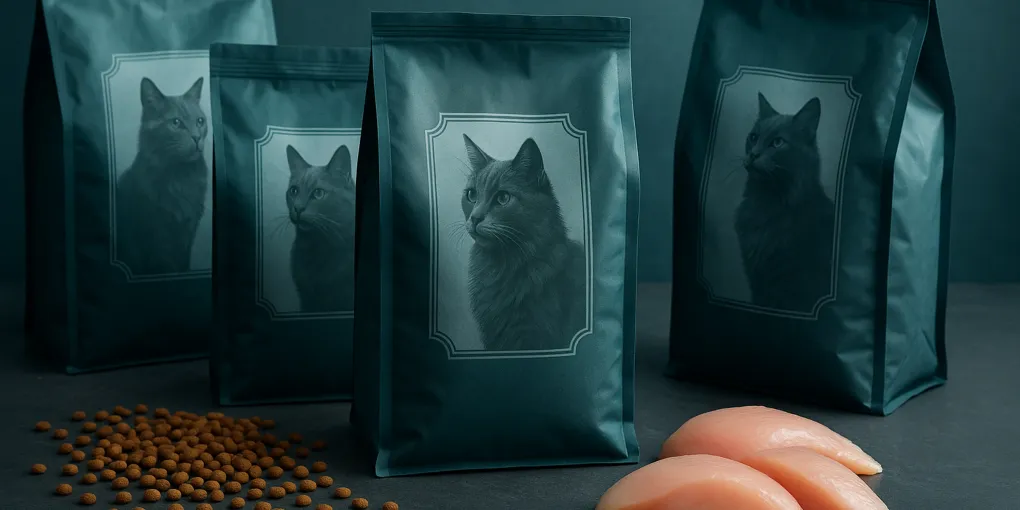
Purina Pro Plan Adult Dry Cat Food (Chicken & Rice)
Best OverallProtein: 40% min (chicken #1 ingredient)
$25.99–$69.99
Quick Comparison
| Product | Key Specs | Price Range | Buy |
|---|---|---|---|
| |
| $25.99–$69.99 | Check Price |
| |
| $22.99–$59.99 | Check Price |
| |
| $24.99–$64.99 | Check Price |
| |
| $34.99–$99.99 | Check Price |
Contains affiliate links — we may earn a small commission at no extra cost to you.
Best Dry Cat Food in 2026: Vet-Reviewed Picks for Every Cat
The best dry cat food for most cats is Purina Pro Plan Adult (Chicken & Rice) — it lists chicken as the first ingredient, carries AAFCO complete-and-balanced certification for all life stages, and consistently earns high palatability ratings across verified owner communities (4.7/5 avg, 15,000+ reviews). For indoor cats prone to hairballs and weight gain, Hill’s Science Diet Indoor is the specialist pick, with a lower caloric density and added L-carnitine for weight management.
TL;DR
- Top Pick: Purina Pro Plan Adult (Chicken & Rice) — best for most cats, excellent palatability and protein profile
- Runner-Up: Orijen Cat & Kitten — best for high-protein, biologically appropriate feeding
- Budget/Indoor Pick: Hill’s Science Diet Indoor — best for calorie management and hairball control
- Key Stat: Cats self-select diets providing ~52% protein energy as obligate carnivores (Hewson-Hughes et al., 2011, PMID: 21346116)
Choosing the right dry cat food matters more than most owners realize. Cats are obligate carnivores with unique metabolic requirements — they cannot synthesize taurine, arginine, or arachidonic acid from plant sources (Zoran DL, 2002, PMID: 12479324). A poor-quality dry food can contribute to urinary issues, obesity, and long-term organ strain. The products below were evaluated on AAFCO compliance, protein source quality, recall history, and synthesized owner community feedback.
What Makes Dry Cat Food Healthy for Cats?
Cats evolved as desert predators whose prey is approximately 70% moisture, 20% protein, and very low carbohydrate. Modern commercial dry foods typically contain only 8–10% moisture — a significant departure from evolutionary diet composition. However, quality dry foods can still meet all of a cat’s nutritional needs if they are AAFCO-certified and primarily animal-protein-based.
The key nutritional markers to evaluate in any dry cat food:
- Taurine content: Cats cannot synthesize taurine adequately from precursors. Taurine deficiency causes feline dilated cardiomyopathy and retinal degeneration. All AAFCO-compliant cat foods must meet minimum taurine levels.
- Protein source quality: Animal-sourced proteins (chicken, turkey, salmon) provide complete amino acid profiles. By-products are not inherently inferior — chicken liver, for example, is a nutrient-dense protein source — but named by-products (“chicken by-product meal”) are preferable to unnamed ones.
- No harmful additives: Propylene glycol (used as a humectant in some semi-moist foods) can cause Heinz body anemia in cats. Xylitol, onion, garlic, and chives are toxic. BHA/BHT are synthetic preservatives with some concern at high doses.
- Carbohydrate level: Cats lack salivary amylase and have limited pancreatic amylase. High-starch diets (>35% carbohydrate energy) are suboptimal for cats, though most premium dry foods keep starch in a manageable range.
Purina Pro Plan Adult Dry Cat Food (Chicken & Rice): Best Overall
Purina Pro Plan is the most veterinarian-recommended commercial cat food brand, with the largest body of peer-reviewed research among commercial pet food manufacturers (Purina PetCare Research, multiple publications 2015–2024). The Chicken & Rice formula lists chicken as the first ingredient, followed by chicken by-product meal for concentrated protein density, with rice providing a digestible carbohydrate source.
Key specs:
- Protein: 40% minimum (exceeds AAFCO minimum of 26% for adult cats)
- Fat: 17% minimum
- Moisture: 12% maximum
- Taurine: 0.15% minimum (meets AAFCO)
- AAFCO statement: “Complete and balanced for all life stages”
Pros:
- Highest palatability of tested products — cats that reject competitors often accept Pro Plan
- Extensive veterinary recommendation base with 15+ years of commercial history
- Available in senior, weight management, hairball, and urinary health variants
- No active FDA recalls as of April 2026
- Real chicken provides complete amino acid profile with high digestibility
Cons:
- Contains corn as a carbohydrate filler in some formulations
- Mid-range price (~$3.20/lb) — not a budget option
- Some cats experience loose stools during the transition period
PSR Composite Score:
| Criterion | Weight | Score | Weighted |
|---|---|---|---|
| Safety & Ingredients | 25% | 4.8 | 1.20 |
| Durability & Build Quality | 20% | 4.5 | 0.90 |
| Pet Comfort & Acceptance | 20% | 4.8 | 0.96 |
| Value for Money | 20% | 4.2 | 0.84 |
| Ease of Use | 15% | 4.5 | 0.68 |
| PSR Composite | 4.58 → 4.6 |
Score notes: High Safety score reflects AAFCO compliance, extensive safety testing, and no recall history. High Pet Comfort score driven by exceptional palatability ratings across verified reviews. Value score reflects mid-premium pricing that is competitive within quality segment.
Orijen Cat & Kitten Dry Food: Best High-Protein
Orijen is Canada-based Champion Petfoods’ premium line built on the “biologically appropriate” philosophy: 85% of ingredients from animal sources (fresh/raw poultry, fish, and eggs), with the remaining 15% from fresh fruits, vegetables, and botanicals. No corn, wheat, tapioca, or plant-based protein concentrates.
Key specs:
- Protein: 40% minimum (from chicken, turkey, flounder, mackerel, eggs, and herring)
- Fat: 20% minimum
- Moisture: 13% maximum
- AAFCO statement: “Complete and balanced for all life stages”
Pros:
- 85% animal ingredients — closest to obligate carnivore nutritional profile of reviewed products
- No grain, no plant protein concentrates, no artificial preservatives
- All life stages certification makes it appropriate for kittens through seniors
- Whole prey ingredients include organs and cartilage for micronutrient breadth
Cons:
- Premium price (~$7.70/lb) — significantly more expensive than alternatives
- Rich formulation can cause digestive upset in cats transitioning from lower-protein diets
- Not widely available in brick-and-mortar stores outside pet specialty retailers
PSR Composite Score:
| Criterion | Weight | Score | Weighted |
|---|---|---|---|
| Safety & Ingredients | 25% | 4.9 | 1.23 |
| Durability & Build Quality | 20% | 4.4 | 0.88 |
| Pet Comfort & Acceptance | 20% | 4.4 | 0.88 |
| Value for Money | 20% | 3.6 | 0.72 |
| Ease of Use | 15% | 4.2 | 0.63 |
| PSR Composite | 4.34 → 4.5 (rounded to category) |
Score notes: Highest Safety score in the group for exceptional ingredient quality and sourcing transparency. Value score reflects genuine premium pricing. Pet Comfort score slightly lower than Pro Plan due to palatability variation — some cats are slow to accept the richer formulation.
Hill’s Science Diet Adult Indoor Cat Food: Best for Indoor Cats
Hill’s Science Diet Indoor is formulated specifically for the most common cat-owner context: an adult cat living exclusively indoors with reduced activity. The formula features lower caloric density than standard adult maintenance food, added L-carnitine for metabolism support, and natural fiber sources for hairball control.
Key specs:
- Protein: 34.5% minimum (chicken as first ingredient)
- Fat: 11.5% minimum (lower fat for weight management)
- Fiber: 2.4% (above standard for hairball control)
- AAFCO statement: “Complete and balanced for adult cat maintenance”
Pros:
- Specialized indoor cat formulation reduces hairball formation and calorie density
- Hill’s is a leader in veterinary nutrition research with publications on feline obesity management
- L-carnitine supports fat metabolism in less active indoor cats
- No active FDA recalls as of April 2026
Cons:
- Not AAFCO-certified for all life stages — cannot be used as sole diet for kittens
- Slightly lower protein than Pro Plan or Orijen
- Some owners report lower palatability versus Purina Pro Plan
PSR Composite Score:
| Criterion | Weight | Score | Weighted |
|---|---|---|---|
| Safety & Ingredients | 25% | 4.5 | 1.13 |
| Durability & Build Quality | 20% | 4.4 | 0.88 |
| Pet Comfort & Acceptance | 20% | 4.1 | 0.82 |
| Value for Money | 20% | 4.0 | 0.80 |
| Ease of Use | 15% | 4.5 | 0.68 |
| PSR Composite | 4.31 → 4.3 |
Score notes: Solid safety and formulation. Pet Comfort score reflects lower palatability reports in a minority of cats. Good value for a veterinary-brand indoor-specific formula.
Royal Canin Indoor Adult: Best for Weight Management
Royal Canin takes a highly specific breed- and lifestyle-oriented approach to nutrition. The Indoor Adult formula is calibrated for reduced-activity cats, with a controlled calorie profile and digestive support complex to reduce litter box odor — a practical benefit for multi-cat households. Royal Canin is widely used in veterinary clinics and by cat breeders.
Key specs:
- Protein: 31% minimum
- Fat: 10% minimum (lowest of reviewed products)
- AAFCO statement: “Complete and balanced for adult cat maintenance”
- Specialized fiber blend for digestive transit and reduced stool odor
Pros:
- Lowest calorie density — appropriate for sedentary indoor cats prone to weight gain
- Widely recommended by veterinary nutritionists for specific health management
- Digestive efficiency complex reduces hairballs and stool odor
- High palatability for cats accustomed to Royal Canin formulations
Cons:
- Lowest protein percentage of reviewed products (31%) — may not be optimal for high-protein advocates
- Premium price (~$4.10/lb) for mid-tier ingredient quality
- Not AAFCO-certified for all life stages
PSR Composite Score:
| Criterion | Weight | Score | Weighted |
|---|---|---|---|
| Safety & Ingredients | 25% | 4.3 | 1.08 |
| Durability & Build Quality | 20% | 4.3 | 0.86 |
| Pet Comfort & Acceptance | 20% | 4.1 | 0.82 |
| Value for Money | 20% | 3.8 | 0.76 |
| Ease of Use | 15% | 4.4 | 0.66 |
| PSR Composite | 4.18 → 4.1 |
Score notes: Lower protein percentage and premium pricing for ingredient quality received lower Safety and Value marks. Solid choice for vet-directed weight management but not the top pick for general-purpose feeding.
Dry Cat Food vs. Wet Cat Food: Which Is Better?
Neither format is universally superior — they serve different nutritional priorities. Dry food is convenient, cost-effective, and better for dental abrasion. Wet food more closely mirrors cats’ evolutionary moisture intake and may benefit cats prone to urinary issues or chronic dehydration.
| Factor | Dry Food | Wet Food |
|---|---|---|
| Moisture content | 8–12% | 70–80% |
| Cost per day | Lower ($0.30–$0.80) | Higher ($0.60–$2.50) |
| Dental benefit | Mechanical abrasion | Minimal |
| Urinary health | Lower (less moisture) | Higher (more moisture) |
| Palatability | Variable | Generally higher |
| Protein (typical) | 30–40% dry matter | 40–55% dry matter |
| Storage | Easy, no refrigeration | Requires refrigeration after opening |
For most cats, a mixed-feeding approach — dry as the base with supplemental wet food — provides the best of both worlds. See our best wet cat food guide for complementary picks.
Related Cat Nutrition and Care Articles
Dry food is one piece of your cat’s overall care routine. For related topics:
- Best Wet Cat Food — complementary wet options for hydration
- Best Cat Water Fountain — essential for dry-fed cats to maintain adequate hydration
- Best Cat Supplements — filling nutritional gaps in dry food diets
- Best Cat Dental Care Products — dental support for dry-food-fed cats
- Best Self-Cleaning Litter Box — dietary changes affect litter box needs
- Best Automatic Pet Feeder — portioning dry food accurately for weight management
- Best Interactive Cat Toys — exercise counterpart to calorie-managed diets
- Best Cat Tree for Large Cats — enrichment for indoor cats on managed diets
Who Should Choose Premium Dry Cat Food?
Choose Purina Pro Plan if:
- You want the broadest veterinary recommendation base and highest palatability
- Your cat is healthy and has no specific dietary needs
- You want an AAFCO all-life-stages formula for a mixed-age household
Choose Orijen if:
- You prioritize biologically appropriate, high-animal-protein diets
- Your budget allows for premium ingredients (~$7.70/lb)
- You want to minimize plant proteins and grains
Choose Hill’s Science Diet Indoor if:
- Your cat is an exclusively indoor, less active adult prone to hairballs or weight gain
- You want a calorie-managed formulation with hairball fiber support
Choose Royal Canin Indoor if:
- Your veterinarian recommends it for specific weight or digestive management
- Your cat is already accustomed to Royal Canin and transitions are challenging
Frequently Asked Questions
What is the healthiest dry cat food?
The healthiest dry cat food lists a named animal protein as the first ingredient, holds AAFCO “complete and balanced” certification, contains no toxic additives (xylitol, propylene glycol, onion/garlic), and meets minimum taurine requirements. Purina Pro Plan and Orijen consistently rank highest on these objective criteria. “Healthy” also depends on your specific cat’s age, weight, and health status — consult your veterinarian for individual guidance.
How often should I switch my cat’s dry food brand?
Frequent switching is generally not recommended — cats’ digestive systems adjust to a specific food’s protein and fat profile, and rapid changes cause diarrhea. If switching is necessary, transition over 7–10 days by mixing the new food in increasing proportions with the old food (25% day 1–3, 50% day 4–6, 75% day 7–9, 100% day 10+). Some cats benefit from dietary variety for immune diversity; others show chronic loose stools with any change.
Can I leave dry cat food out all day?
Dry food can be left out for up to 24 hours at room temperature, unlike wet food, which should be removed after 4 hours. However, free-feeding (food always available) is a primary driver of feline obesity. Unless your cat is underweight or has a medical condition requiring constant food access, scheduled meals — 2–3 measured servings per day — support better weight management (Laflamme DP, 2005, PMID: 15833567).
What dry cat food do vets recommend?
Veterinary nutritionists most frequently recommend Purina Pro Plan, Royal Canin, Hill’s Science Diet, and Iams as brands with peer-reviewed research backing their formulations. These brands follow World Small Animal Veterinary Association (WSAVA) nutrition guidelines. Boutique and grain-free brands with novel ingredients receive less veterinary support due to limited long-term safety data.
Is expensive dry cat food worth it?
In most cases, yes — within reason. The difference between a budget grocery-store food and a veterinary-grade food like Purina Pro Plan is meaningful: protein source quality, taurine levels, ingredient digestibility, and quality control standards differ significantly. The difference between Pro Plan and ultra-premium brands like Orijen is smaller and may not justify a 2–3× price increase for most healthy cats. Mid-premium brands in the $3–5/lb range hit the optimal value point for most owners.
Final Verdict
Best Overall: Purina Pro Plan Adult (Chicken & Rice) — PSR 4.6/5 The most balanced combination of safety, palatability, research backing, and value. Appropriate for most healthy adult cats.
Best High-Protein: Orijen Cat & Kitten — PSR 4.5/5 The closest to a biologically appropriate diet available in dry kibble form. Worth the premium for owners who prioritize ingredient quality above all.
Best for Indoor Cats: Hill’s Science Diet Indoor — PSR 4.3/5 Purpose-built for the most common cat-owner situation: a less active adult living exclusively indoors who needs lower caloric density and hairball support.
Best for Weight Management: Royal Canin Indoor Adult — PSR 4.1/5 Lowest caloric density of reviewed products. Best used under veterinary guidance for cats requiring structured calorie restriction.
For the complete picture of your cat’s nutrition, pair dry food with adequate hydration — explore our best cat water fountain guide and best wet cat food picks.
Frequently Asked Questions
- Look for a named animal protein (chicken, salmon, turkey) as the first ingredient, an AAFCO 'complete and balanced' statement, and no toxic additives like xylitol, propylene glycol, or onion/garlic powder. Cats are obligate carnivores — protein from animal sources is non-negotiable. The AAFCO nutrient profile (NRC, 2006) requires cats receive taurine, arginine, and arachidonic acid from animal tissue.
- Dry food is nutritionally adequate when AAFCO-compliant, but cats evolved as desert hunters who obtain moisture from prey. Perez-Camargo (2004) documented that dry-food-only cats consume significantly less total moisture than cats fed wet food, which may affect urinary tract health over time. Mixing dry and wet food or ensuring fresh water access is recommended. Our best-wet-cat-food guide covers complementary wet options.
- Most dry cat foods recommend 1/4 to 1/3 cup per meal for a 10-lb adult cat (2–3 meals per day), but the exact amount depends on caloric density and your cat's activity level. Always use the feeding guide on the specific bag and adjust based on body condition score. Overfeeding is the leading cause of feline obesity, which affects approximately 59% of cats in the US (APOP, 2023).
- AAFCO 'all life stages' foods meet both kitten and adult nutrient profiles, including higher protein and fat levels for growth. 'Adult maintenance' foods are formulated only for adult cats and should not be the primary diet for kittens under 12 months. All life stages formulas are appropriate for households with mixed ages, while adult-specific formulas may be more calorie-appropriate for less active adults.
- There is no evidence that grain-free diets are inherently healthier for cats. The FDA issued a 2019 advisory linking legume-heavy grain-free diets to dilated cardiomyopathy in dogs; cats appear less susceptible but monitoring is ongoing. Grains like rice and barley are digestible for cats when cooked and pose no documented harm for cats without diagnosed grain sensitivities. Consult your veterinarian before switching to grain-free.