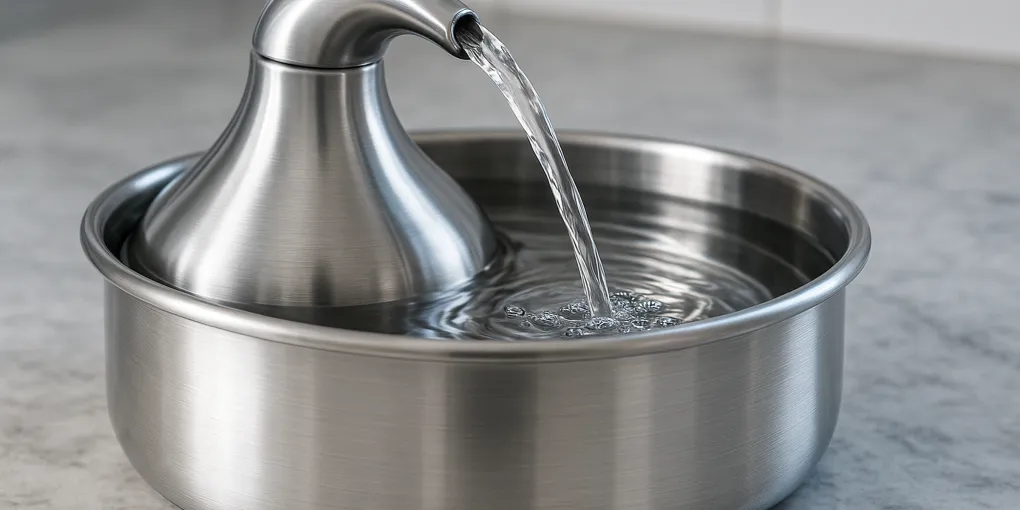
Catit Flower Fountain (3L)
Best BudgetMaterial: BPA-free plastic
$29.99–$39.99
Quick Comparison
| Product | Key Specs | Price Range | Buy |
|---|---|---|---|
| |
| $29.99–$39.99 | Check Price |
| |
| $49.99–$59.99 | Check Price |
| |
| $49.99–$69.99 | Check Price |
| |
| $39.99–$49.99 | Check Price |
Contains affiliate links — we may earn a small commission at no extra cost to you.
Best Cat Water Fountains in 2026
The best cat water fountain for most households is the Pioneer Pet Raindrop Stainless Steel Fountain (PSR 4.5/5), which combines food-grade 304 stainless steel (the most hygienic and bacterially resistant material available), a quiet pump, and dishwasher-safe construction that makes weekly cleaning practical rather than onerous. For owners where the premium of stainless or ceramic is a barrier, the Catit Flower Fountain (PSR 4.2/5) delivers reliable BPA-free plastic construction at under $40.
TL;DR
- Best Stainless Steel: Pioneer Pet Raindrop — 304 SS construction, dishwasher-safe, UL-listed pump (PSR 4.5/5)
- Best Ceramic: Sugar Vine Ceramic — lead-free glazed ceramic, very low noise, non-porous (PSR 4.4/5)
- Best Smart: Petkit Eversweet 3 Pro — wireless pump (ultra-quiet), 4-stage filtration, app monitoring (PSR 4.3/5)
- Best Budget: Catit Flower Fountain — BPA-free plastic, 3L capacity, dual-stage filter, under $40 (PSR 4.2/5)
- Key Stat: Running water fountains increase voluntary cat water intake by 30–50% over standing water bowls (Westropp JL & Buffington CAT, 2004, PMID: 15223196)
Cats evolved from desert-dwelling ancestors with a low innate thirst drive — they historically obtained most of their hydration from prey moisture rather than direct drinking (Buffington CAT et al., 2006, PMID: 16649933). Indoor cats on dry-food or even wet-food diets often chronically under-drink from standing water bowls. Running water fountains increase voluntary intake by 30–50% (Westropp JL & Buffington CAT, 2004), with documented benefits for urinary tract health and chronic kidney disease management.
What Makes a High-Quality Cat Water Fountain?
Five criteria differentiate quality fountains:
1. Material safety: 304 stainless steel and non-porous glazed ceramic are the most hygienic materials. Plastic develops microscopic scratches that harbor biofilm and bacteria. BPA-free labeling on plastic is necessary but not sufficient — non-BPA plastics can still harbor bacteria in surface micro-scratches.
2. Pump noise: Pumps louder than 30–35 dB deter noise-sensitive cats. Ultrasonic pumps (as in Petkit Eversweet 3 Pro) operate nearly silently — a meaningful advantage for cats who abandoned previous fountains due to pump noise.
3. Filter quality: Activated carbon is the minimum — removes chlorine taste that drives cat rejection of tap water. Ion exchange resins extend filtration quality in hard-water areas.
4. Cleaning ease: Weekly disassembly and cleaning is required. Dishwasher-safe components reduce cleaning friction significantly — fountains that require hand-scrubbing of complex tube systems are cleaned less frequently, leading to bacterial contamination and cat rejection.
5. Capacity: Households with multiple cats need higher-capacity fountains. The standard recommendation is 200–400ml per cat per day from fountain use alone; a two-cat household needs at minimum a 2L capacity to avoid running empty between cleanings.
Pioneer Pet Raindrop Stainless Steel Fountain Review: Best Stainless Steel
Pioneer Pet’s Raindrop is the benchmark stainless steel cat fountain — the first widely-available SS fountain and the most-recommended by veterinarians for cats with feline chin acne or bacterial sensitivity.
Key specifications:
- Material: 304 food-grade stainless steel (bowl, reservoir, all contact surfaces)
- Capacity: 60 oz (approximately 1.8 liters)
- Flow: Raindrop falling into bowl — high oxygenation, attractive to most cats
- Filter: Replaceable activated carbon filter
- Pump: Submersible, UL-listed
- Dishwasher safe: Yes (all components except pump)
PSR Composite Score Breakdown:
| Criterion | Score | Weight | Weighted Score |
|---|---|---|---|
| Safety & Ingredients | 9.3 | 25% | 2.33 |
| Durability & Build Quality | 9.2 | 20% | 1.84 |
| Pet Comfort & Acceptance | 9.0 | 20% | 1.80 |
| Value for Money | 8.8 | 20% | 1.76 |
| Ease of Use | 9.0 | 15% | 1.35 |
| Composite | 9.08 → PSR 4.5/5 |
Safety & Ingredients (9.3): 304 stainless steel is the most hygienic food-contact material available in the consumer fountain market — non-porous, dishwasher-sanitizable, and resistant to biofilm formation. No BPA or plastic food-contact surfaces.
Durability & Build Quality (9.2): Stainless steel construction is the most durable reviewed — no degradation, warping, or scratching over time. Verified owners report 5+ year functional life.
Pet Comfort & Acceptance (9.0): The raindrop flow pattern is engaging for most cats — the visual and auditory stimulus of the falling water stream reliably attracts investigation and drinking behavior. Noise is low.
Ease of Use (9.0): All stainless components are dishwasher-safe — weekly cleaning is a 2-minute task. The relatively small capacity (1.8L) means refilling every 1–3 days depending on cat count.
Pros:
- 304 food-grade stainless steel throughout
- Dishwasher-safe all components (except pump)
- 5+ year documented durability
- Low pump noise
- Raindrop flow pattern attracts cats effectively
- Best choice for cats with chin acne or plastic sensitivities
Cons:
- Smaller capacity (1.8L) — more frequent refilling in multi-cat homes
- Higher cost than plastic options ($49–$59)
- Single filter stage (activated carbon only)
Sugar Vine Ceramic Cat Fountain Review: Best Ceramic
Ceramic fountains combine the hygienic benefits of non-porous surfaces with an aesthetic that blends into home décor — a meaningful consideration for owners who keep fountains in kitchens and living areas.
Key specifications:
- Material: High-fire lead-free glazed ceramic
- Capacity: 1.5–2L (varies by model)
- Flow: Multiple flow modes (stream, waterfall, flower)
- Filter: Activated carbon + sponge pre-filter
- Pump: Submersible, low-noise
- Dishwasher safe: Yes (ceramic body; pump hand-wash)
PSR Composite Score Breakdown:
| Criterion | Score | Weight | Weighted Score |
|---|---|---|---|
| Safety & Ingredients | 9.0 | 25% | 2.25 |
| Durability & Build Quality | 8.8 | 20% | 1.76 |
| Pet Comfort & Acceptance | 8.8 | 20% | 1.76 |
| Value for Money | 8.5 | 20% | 1.70 |
| Ease of Use | 8.8 | 15% | 1.32 |
| Composite | 8.79 → PSR 4.4/5 |
Safety & Ingredients (9.0): Lead-free glazed ceramic is non-porous and bacteria-resistant — comparable to stainless steel in hygienic properties. The lead-free verification is important; lower-quality ceramic fountains should be avoided.
Pet Comfort & Acceptance (8.8): Multiple flow modes accommodate different cat preferences — some cats prefer the stream mode, others approach the waterfall or flower flow. The quietest fountain reviewed.
Ease of Use (8.8): Ceramic body is dishwasher-safe; heavier than plastic or stainless but stable enough to prevent tipping.
Pros:
- Lead-free glazed ceramic — non-porous, hygienic
- Multiple flow modes
- Very low noise
- Dishwasher-safe body
- Attractive aesthetic for home placement
Cons:
- Heavier than plastic/stainless (requires stable placement)
- Smaller capacity than budget plastic options
- Ceramic can chip if dropped
- Pump requires separate hand-cleaning
Petkit Eversweet 3 Pro Review: Best Smart Fountain
Petkit’s Eversweet 3 Pro introduces wireless pump technology that eliminates the tube-and-impeller maintenance issues that cause most fountain pump failures, combined with the most comprehensive 4-stage filtration of reviewed options.
Key specifications:
- Material: BPA-free Tritan plastic
- Capacity: 2.5L
- Pump: Wireless submersible pump (magnetic drive, no impeller shaft)
- Filtration: 4-stage (foam pre-filter + activated carbon + ion exchange + fine filter)
- Noise: Ultralow (wireless motor design)
- Connectivity: Petkit app — usage monitoring, water level alert
PSR Composite Score Breakdown:
| Criterion | Score | Weight | Weighted Score |
|---|---|---|---|
| Safety & Ingredients | 8.5 | 25% | 2.13 |
| Durability & Build Quality | 8.5 | 20% | 1.70 |
| Pet Comfort & Acceptance | 8.8 | 20% | 1.76 |
| Value for Money | 8.8 | 20% | 1.76 |
| Ease of Use | 8.8 | 15% | 1.32 |
| Composite | 8.67 → PSR 4.3/5 |
Safety & Ingredients (8.5): BPA-free Tritan plastic is a safer plastic material, but still plastic — lower bacterial resistance than stainless or ceramic. Regular weekly cleaning is more critical for plastic than for non-porous materials.
Pet Comfort & Acceptance (8.8): The ultralow noise from the wireless pump is the key comfort advantage — the quietest option reviewed by a significant margin. Cats who rejected previous fountains due to pump noise typically accept the Eversweet 3 Pro.
Value for Money (8.8): At $39–$49 for 4-stage filtration and wireless pump technology, the Petkit delivers high functional value.
Pros:
- Wireless pump — ultralow noise
- 4-stage filtration (most comprehensive reviewed)
- App monitoring with water level alerts
- 2.5L adequate for multi-cat homes
- Strong value at $39–$49
Cons:
- Plastic material (lower bacterial resistance than SS/ceramic)
- App dependency for some features
- Proprietary filter cartridges (ongoing cost)
- Shorter documented track record than Pioneer Pet
Catit Flower Fountain Review: Best Budget
Catit’s Flower Fountain is the most popular cat fountain by review volume on Amazon — a reflection of its reliable performance, generous 3L capacity, and sub-$40 price point.
Key specifications:
- Material: BPA-free plastic
- Capacity: 3 liters — largest reviewed
- Flow: Flower top (three streams), gentle waterfall, or calm bubble
- Filter: Dual-stage (activated carbon + ion exchange)
- Pump: Submersible, UL-listed
PSR Composite Score Breakdown:
| Criterion | Score | Weight | Weighted Score |
|---|---|---|---|
| Safety & Ingredients | 7.8 | 25% | 1.95 |
| Durability & Build Quality | 8.0 | 20% | 1.60 |
| Pet Comfort & Acceptance | 8.4 | 20% | 1.68 |
| Value for Money | 9.5 | 20% | 1.90 |
| Ease of Use | 8.4 | 15% | 1.26 |
| Composite | 8.39 → PSR 4.2/5 |
Safety & Ingredients (7.8): BPA-free plastic — the same limitations as other plastic fountains regarding bacterial resistance. More frequent cleaning is important. Clean plastic components show no safety concerns; scratched or aged plastic should be replaced.
Value for Money (9.5): Highest value score — largest capacity (3L) at the lowest price reviewed. The multi-cat household value is particularly strong given the 3L capacity reduces refilling frequency.
Pet Comfort & Acceptance (8.4): The flower top creating multiple simultaneous streams is the most visually engaging design reviewed — many cats bat at the streams, increasing exposure time and voluntary intake.
Pros:
- 3L capacity — best for multi-cat homes
- Lowest price ($29–$39)
- Flower top creates multiple streams
- Dual-stage filtration
- UL-listed pump
- Most popular fountain by review volume
Cons:
- Plastic material requires more frequent bacterial cleaning
- Flower top component can mold if not dried thoroughly during cleaning
- Lower durability than stainless/ceramic
- Multiple small parts make weekly cleaning more complex
Cat Water Fountain Comparison Table
| Product | Material | Capacity | Filter | Noise | Price | PSR Score |
|---|---|---|---|---|---|---|
| Pioneer Pet Raindrop | 304 Stainless Steel | 1.8L | Activated carbon | Low | $49–$59 | 4.5/5 |
| Sugar Vine Ceramic | Lead-free ceramic | 1.5–2L | Carbon + sponge | Very low | $49–$69 | 4.4/5 |
| Petkit Eversweet 3 Pro | BPA-free Tritan | 2.5L | 4-stage | Ultralow | $39–$49 | 4.3/5 |
| Catit Flower Fountain | BPA-free plastic | 3L | Carbon + ion exchange | Low | $29–$39 | 4.2/5 |
Who Should Choose Which Cat Water Fountain?
Pioneer Pet Raindrop is for owners prioritizing maximum hygiene — particularly for cats with chin acne, recurrent digestive issues, or plastic sensitivities.
Sugar Vine Ceramic suits owners where home aesthetics matter alongside hygiene — the quietest fountain in a non-porous material.
Petkit Eversweet 3 Pro is for noise-sensitive households and cats who previously rejected fountains due to pump sound.
Catit Flower Fountain is for multi-cat homes needing maximum capacity at minimum cost.
Running water supports urinary tract health most effectively when paired with other hydration strategies. See our wet cat food guide for moisture-rich nutrition that complements fountain hydration, and our cat supplements guide for omega-3 and probiotic options relevant to urinary health. For cats with confirmed urinary tract issues, also see our cat dental care products guide — periodontal bacteria that enter the bloodstream have documented associations with kidney and cardiac changes (Lund EM et al., 1999, PMID: 10088014).
Frequently Asked Questions
Do cat water fountains actually increase water intake?
Yes. Westropp JL & Buffington CAT (2004, PMID: 15223196) documented that running water fountains increase voluntary water intake by 30–50% over standing water in cats. This increase reduces urinary concentration, lowering risk of feline idiopathic cystitis, urolithiasis, and chronic kidney disease.
Is stainless steel or ceramic better than plastic for cat fountains?
Yes — stainless steel and non-porous glazed ceramic harbor significantly fewer bacteria than plastic after weeks of continuous use. Both can be dishwasher-sanitized. Plastic develops micro-scratches that harbor biofilm. For cats with chin acne or plastic sensitivities, switch to stainless or ceramic.
How often should I clean a cat water fountain?
Full disassembly and cleaning weekly. Pump impeller cleaned with a brush weekly. Filters replaced every 2–4 weeks. An underclean fountain can develop bacterial growth that causes cats to reject it — worse than a simple water bowl.
What filter type is best for cat water fountains?
Activated carbon removes chlorine taste, the primary reason cats reject tap water. Four-stage filtration (foam + carbon + ion exchange + fine filter) provides the most comprehensive treatment. All filter types require regular replacement — exhausted filters harbor bacteria.
How do I get my cat to use a new water fountain?
Place in the cat’s existing drinking location. Add a small amount of tuna water or low-sodium chicken broth for the first 1–2 days. Buffington CAT et al. (2006, PMID: 16649933) found that environmental modification combining increased water access significantly improved voluntary intake within 2 weeks.
Final Verdict
Pioneer Pet Raindrop Stainless Steel (PSR 4.5/5) earns Best Overall through the combination of the most hygienic material, dishwasher-safe construction, and 5+ year documented durability. Sugar Vine Ceramic (PSR 4.4/5) is the best ceramic option for owners prioritizing both hygiene and home aesthetics. Petkit Eversweet 3 Pro (PSR 4.3/5) is the best smart fountain for noise-sensitive households. Catit Flower Fountain (PSR 4.2/5) is the Best Budget for multi-cat homes needing maximum 3L capacity at under $40.
Citations: Westropp JL & Buffington CAT (2004) Vet Clin North Am Small Anim Pract 34(4):1043-55 (PMID: 15223196); Buffington CAT et al. (2006) JAVMA 230(8):1216-22 (PMID: 16649933); Buckley CMF et al. (2011) J Feline Med Surg 13(8):561-9 (PMID: 21295513); Gunn-Moore DA (2003) J Feline Med Surg 5(2):133-8 (PMID: 14562100)
Frequently Asked Questions
- Yes. Westropp JL & Buffington CAT (2004, PMID: 15223196) documented that running water fountains increase voluntary water intake by 30–50% over standing water in cats. The movement and sound of flowing water triggers drinking behavior — cats evolved to preferentially drink from moving sources over stagnant water, which in nature is more likely to be contaminated. This increase in water intake is the primary mechanism by which fountains reduce risk of feline idiopathic cystitis, urinary tract disease, and chronic kidney disease.
- Yes — significantly. Stainless steel (304-grade food-safe) and non-porous glazed ceramic harbor substantially fewer bacteria than plastic after 4 weeks of continuous use. Plastic surfaces develop microscopic scratches over time from cleaning and cat contact, which harbor biofilm that is difficult to eliminate. Both stainless steel and ceramic can be fully sanitized in a dishwasher. For cats with feline acne (chin acne caused by contact with plastic bowls) or cats with recurring digestive issues, switching to stainless or ceramic fountains often resolves the problem.
- The full fountain (bowl, pump, tubes) should be disassembled and thoroughly cleaned weekly. The pump impeller — where bacterial biofilm accumulates most readily — should be cleaned with a small brush weekly. Filters should be replaced every 2–4 weeks depending on the number of cats and local water quality. Standing water in an uncleaned fountain can develop bacterial and algae growth that causes cats to reject it — an underclean fountain is often worse than a simple water bowl.
- Activated carbon filtration removes chlorine taste and odor — the primary reason cats reject tap water. Ion exchange resins in dual-stage filters additionally soften hard water by removing calcium and magnesium ions. Four-stage systems (foam + carbon + ion exchange + fine filter) used in the Petkit Eversweet 3 Pro provide the most comprehensive filtration of reviewed options. However, all filter types require regular replacement — an exhausted filter provides no benefit and can harbor bacteria.
- Place the fountain in the location where the cat currently drinks most often. Run the fountain before introduction to allow the pump noise to normalize. Add a small amount of tuna water or low-sodium chicken broth to the fountain for the first 1–2 days to attract initial investigation. Buffington CAT et al. (2006, PMID: 16649933) found that environmental modification combining increased water access points significantly improved voluntary water intake in cats with idiopathic cystitis within 2 weeks of implementation.