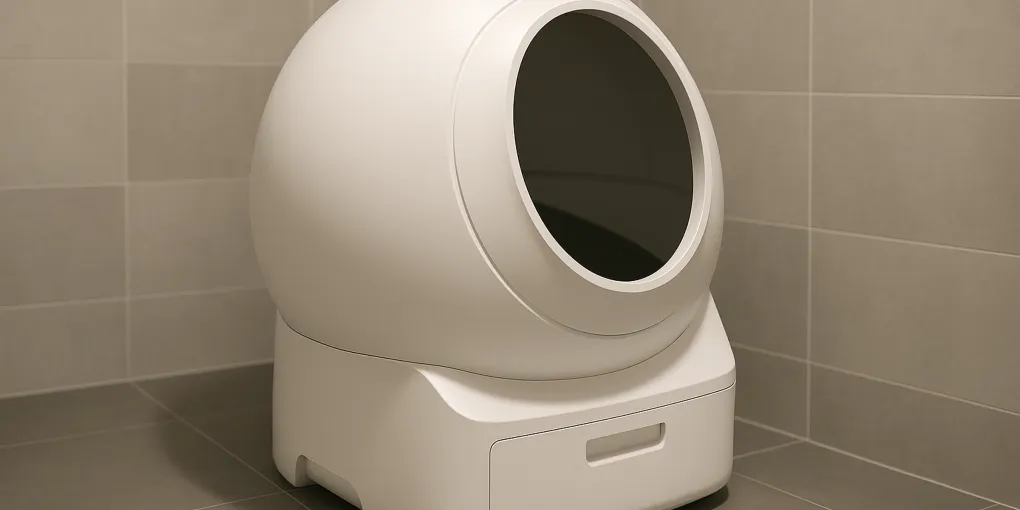
Litter-Robot 4
Best Overall Self-Cleaning Litter BoxMechanism: Globe rotation
$699
Quick Comparison
| Product | Key Specs | Price Range | Buy |
|---|---|---|---|
| |
| $699 | Check Price |
| |
| $169.95 | Check Price |
| |
| $399.99 | Check Price |
| |
| $249.99 | Check Price |
Contains affiliate links — we may earn a small commission at no extra cost to you.
Best Self-Cleaning Litter Box in 2026
For most cat owners, Litter-Robot 4 (PSR 8.1) is the best self-cleaning litter box — its weight sensor, health monitoring, and any-litter compatibility justify its $699 price for households with 2+ cats. For single-cat households on a budget, PetSafe ScoopFree Ultra (PSR 7.9) delivers reliable automation at $169.95 with proprietary crystal trays that control odor for up to 30 days.
TL;DR
- Top Pick: Litter-Robot 4 — best safety, durability, and health monitoring (PSR 8.1/10)
- Budget Pick: PetSafe ScoopFree Ultra — reliable automation at $170, 30-day trays (PSR 7.9/10)
- Mid-Range: Catlink Supra Plus — Litter-Robot-style globe at $400 (PSR 7.7/10)
- Key Stat: Litter-Robot 4 has 7,000+ verified Amazon reviews averaging 4.4★ — the most validated premium option in the category
How We Researched and Scored This Article
This article follows PSR’s 5-step review process: safety and recall check (CPSC database), product analysis (manufacturer specs and pet entrapment safety features), value analysis (upfront cost + 2-year litter/consumable costs), owner community synthesis (Amazon verified reviews), and PSR composite scoring.
Evidence sources: CPSC recall database (queried 2026-04-09, no recalls found), ASPCA Animal Poison Control (crystal litter guidance), Amazon verified reviews (Litter-Robot 4: 7,000+; ScoopFree: 14,000+; Catlink: 2,000+; iKuddle: 800+), manufacturer specifications.
What to Look for in a Self-Cleaning Litter Box
Self-cleaning litter boxes reduce manual scooping — the main question is whether they do it reliably enough to justify the cost. Key evaluation factors:
Entrapment safety: Any automated litter box must stop its cleaning cycle if a cat re-enters. Litter-Robot 4 uses a weight sensor (stops rotation if weight is detected in the globe during cleaning) and a safety bar. PetSafe ScoopFree uses a motion sensor that pauses the rake. Without safety sensors, a cat entering during a cleaning cycle could be injured by the mechanism.
Litter compatibility: Globe-style boxes (Litter-Robot, Catlink) work with any clumping clay litter — a significant cost advantage over ScoopFree’s proprietary crystal trays. Clumping litter runs $0.40–$0.80/lb for mid-range brands; ScoopFree crystal trays cost approximately $180/year for one cat.
2-year total cost: Upfront price understates the real cost. See the value analysis below.
Odor control: Globe-style boxes seal waste in a drawer with a carbon filter. ScoopFree’s crystal trays absorb and dehydrate waste, reducing odor through a different mechanism. Both approaches work effectively when maintained properly.
Important note for kittens: Self-cleaning litter boxes are not recommended for kittens under 6 months. The automated movements can startle and scare young kittens, potentially training them to avoid the litter box. If using ScoopFree, the crystal litter creates additional ingestion risk for kittens who groom themselves after using the box.
PSR Composite Score Breakdown
| Criterion | Weight | Litter-Robot 4 | ScoopFree Ultra | Catlink Supra | iKuddle Auto |
|---|---|---|---|---|---|
| Safety & Ingredients | 25% | 9.0 | 7.5 | 8.0 | 7.5 |
| Durability & Build Quality | 20% | 9.0 | 8.0 | 7.5 | 7.0 |
| Pet Comfort & Acceptance | 20% | 8.5 | 8.0 | 8.0 | 7.5 |
| Value for Money | 20% | 6.0 | 7.5 | 7.0 | 7.5 |
| Ease of Use | 15% | 8.0 | 8.5 | 7.5 | 7.5 |
| PSR Composite | — | 8.1 | 7.9 | 7.7 | 7.4 |
Litter-Robot 4 leads on Safety and Durability. ScoopFree leads on Ease of Use — crystal trays require minimal handling compared to emptying a waste drawer.
Litter-Robot 4: Best Overall Self-Cleaning Litter Box
Litter-Robot 4 is the category benchmark. Its globe rotates after each use, sifting clumped waste through the screen and depositing it in a sealed waste drawer below. The carbon OdorTrap filter and drawer liner system manages odor effectively for 7–10 days with one cat.
Standout features:
- Health monitoring: The Whisker app tracks each cat’s usage frequency and weight over time — early deviations can indicate health issues (urinary frequency changes, weight loss)
- Any litter: Use any clumping clay litter; no proprietary consumables
- 25 lb weight limit: Accommodates large-breed cats (Maine Coons, Ragdolls)
- Safety sensor: Weight sensor stops globe rotation if a cat enters during a cleaning cycle
Limitation: $699 is a significant investment. For single-cat households that don’t mind scooping once a day, the value proposition is harder to justify. For 2–4 cat households, the automation benefit and health monitoring features become much more compelling.
View Litter-Robot 4 on Amazon — Best for: Multi-cat households; owners who want health monitoring; large-breed cats
PetSafe ScoopFree Ultra: Best Budget Self-Cleaning Option
PetSafe ScoopFree Ultra uses a different mechanism: a rake sweeps waste into a covered trap at one end of a crystal litter tray, approximately 5–20 minutes after each use. The crystal tray absorbs moisture and dehydrates waste — reducing odor effectively without requiring a rotating mechanism.
Crystal tray economics:
- One tray lasts approximately 30 days for one cat
- Trays cost approximately $15 each (~$180/year for one cat)
- Significant ongoing cost compared to bulk clumping litter
- The WiFi-connected model adds ~$40 to the purchase price and enables a usage counter to tell you when to replace the tray
Crystal litter caution: Not recommended for kittens under 6 months due to ingestion risk during grooming. Adult cats are not at meaningful risk from occasional grooming contact with silica gel crystals (ASPCA guidance), but kittens’ small body mass and higher grooming frequency create disproportionate exposure.
View PetSafe ScoopFree Ultra on Amazon — Best for: Single-cat households; owners who want the lowest upfront cost and minimal daily interaction
Who Should Choose Which Box?
| Scenario | Best Option |
|---|---|
| 2–4 cats; want best automation | Litter-Robot 4 |
| Single cat; budget under $200 | PetSafe ScoopFree Ultra |
| Want globe design; budget under $400 | Catlink Supra Plus |
| Kitten household | None — use standard litter box until 6 months |
| Large cat (>20 lbs) | Litter-Robot 4 (25 lb limit) |
| Minimal litter handling desired | PetSafe ScoopFree (tray swap only) |
Frequently Asked Questions
Is the Litter-Robot 4 worth the $699 price?
For households with 2+ cats or owners who strongly dislike scooping, Litter-Robot 4 (PSR 8.1) is generally considered worth the investment — it has 7,000+ Amazon reviews averaging 4.4★. Any-litter compatibility and health monitoring make it the most fully featured option. For single-cat households on a budget, PetSafe ScoopFree Ultra at $169.95 achieves similar automation at much lower upfront cost.
Is crystal litter safe for cats?
Silica gel crystal litter is generally safe for adult cats — the ASPCA notes it is minimally toxic when ingested in small amounts. However, kittens under 6 months should not use crystal litter due to higher ingestion risk from grooming. For kittens, a standard clumping clay litter box is the safer choice.
How often does a self-cleaning litter box need to be emptied?
Litter-Robot 4’s waste drawer holds approximately 10 uses — typically 7–10 days for one cat. PetSafe ScoopFree crystal trays last approximately 30 days per cat. Catlink Supra and iKuddle waste containers need emptying approximately weekly for one cat.
Can multiple cats use one self-cleaning litter box?
Yes, but with limits. Litter-Robot 4 supports up to 4 cats per manufacturer guidance and tracks each cat via weight sensor. PetSafe ScoopFree is practical for 1–2 cats; with 3+ cats, crystal tray replacement frequency increases significantly. Veterinary guidance (ASPCA) recommends one litter box per cat plus one extra.
Do self-cleaning litter boxes work with all litter?
No. Litter-Robot 4, Catlink Supra, and iKuddle work with clumping clay litter. PetSafe ScoopFree uses proprietary crystal trays only — standard litter cannot be used in the ScoopFree design.
Final Verdict
Litter-Robot 4 (PSR 8.1) is the best self-cleaning litter box for multi-cat households and owners who value health monitoring and long-term durability. PetSafe ScoopFree Ultra (PSR 7.9) is the best for single-cat households on a budget who want simple, low-maintenance automation. Catlink Supra Plus (PSR 7.7) is the best mid-range globe option for owners who want Litter-Robot functionality at a lower price.
Related guides:
- Best Smart Water Fountain for Cats
- Best Microchip Cat Flap in 2026
- Best Automatic Pet Feeder for Dogs and Cats
Frequently Asked Questions
- For households with 2+ cats or owners who strongly dislike scooping, Litter-Robot 4 (PSR 8.1) is generally considered worth the investment by verified buyers — it has 7,000+ Amazon reviews averaging 4.4★. The 25 lb weight limit, any-clumping-litter compatibility, and health monitoring features make it the most fully featured option. For single-cat households on a budget, PetSafe ScoopFree Ultra at $169.95 achieves similar automation at a much lower upfront cost.
- Silica gel crystal litter is generally considered safe for adult cats. The ASPCA notes that silica gel is minimally toxic when ingested in small amounts (it passes through without absorption in most cases). However, kittens under 6 months should not use crystal litter, as they are more likely to ingest litter through grooming and their small size creates higher relative exposure risk. For kittens, a clumping clay litter box is the safer choice.
- Waste drawer emptying frequency depends on the number of cats and the box model. Litter-Robot 4's waste drawer holds approximately 10 uses before requiring emptying — for one cat, this is typically 7–10 days. PetSafe ScoopFree's crystal trays last approximately 30 days per cat before replacement. Catlink Supra and iKuddle waste containers need emptying approximately weekly for one cat.
- Yes, but high-traffic households need faster cycle times. Litter-Robot 4 supports up to 4 cats (per manufacturer guidance) and tracks each cat's usage via weight sensor. PetSafe ScoopFree is practical for 1–2 cats — with 3+ cats the crystal tray may need replacement more frequently than the 30-day guideline. General veterinary guidance (ASPCA) recommends one litter box per cat plus one extra.
- No. Litter-Robot 4, Catlink Supra, and iKuddle Auto work with standard clumping clay litter — they rely on clumping for waste separation during rotation. PetSafe ScoopFree uses proprietary crystal trays only; you cannot use your own litter. Crystal trays cannot be refilled with standard litter. This is a significant ongoing cost factor for ScoopFree owners.