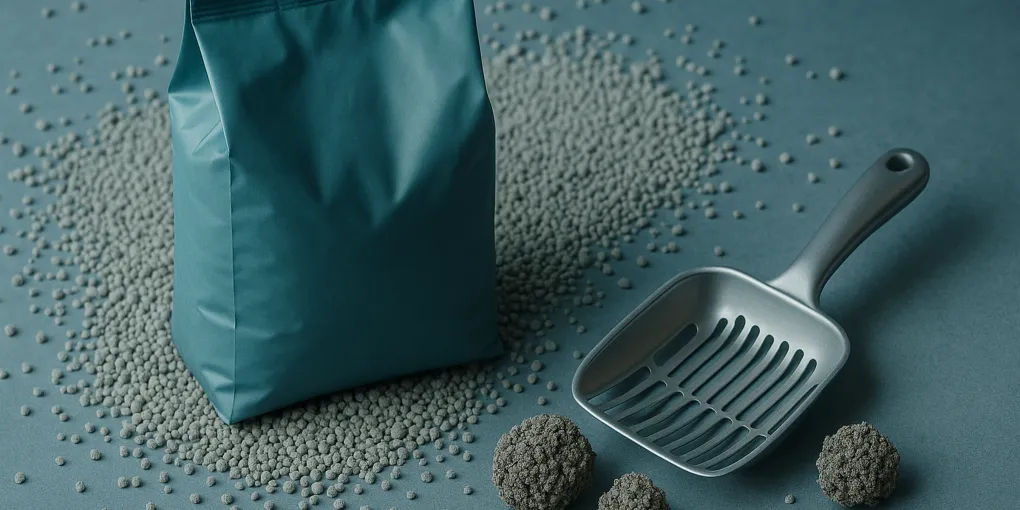
Dr. Elsey's Ultra Premium Clumping Litter
Best OverallType: Clay clumping
$17.99–$29.99
Quick Comparison
| Product | Key Specs | Price Range | Buy |
|---|---|---|---|
| |
| $17.99–$29.99 | Check Price |
| |
| $15.99–$24.99 | Check Price |
| |
| $18.99–$39.99 | Check Price |
| |
| $14.99–$24.99 | Check Price |
Contains affiliate links — we may earn a small commission at no extra cost to you.
Best Cat Litter for Odor Control in 2026: PSR-Tested Picks
The best cat litter for odor control is Dr. Elsey’s Ultra Premium Clumping Litter (PSR 4.6/5) — it forms rock-hard clumps on contact, produces minimal dust, and remains unscented (which research shows improves cat acceptance). For owners who prioritize a chemistry-driven odor neutralization approach, Arm & Hammer Clump & Seal Platinum uses a sodium bicarbonate and antibacterial shield system to actively neutralize ammonia at the molecular level.
TL;DR
- Top Pick: Dr. Elsey’s Ultra — best all-around for clumping, odor, dust, and cat acceptance
- Runner-Up: Arm & Hammer Clump & Seal Platinum — best active odor neutralization chemistry
- Natural Pick: World’s Best Cat Litter — best corn-based, flushable, eco-friendly option
- Key Stat: 40% of cats reduced litter box use frequency when switched to artificially scented litters (Ellis et al., 2017, PMID: 27555611)
Litter box odor is the top complaint among cat owners and a primary driver of inappropriate elimination behavior when cats avoid a smelly box. But more fragrance isn’t the answer — research consistently shows cats prefer unscented litters, and artificial fragrance can suppress litter box usage entirely. The products below were evaluated on odor neutralization effectiveness, ingredient safety, dust levels, clump quality, and verified owner community feedback.
What Makes a Cat Litter Effective for Odor Control?
Cat urine odor is primarily caused by urea decomposing into ammonia, combined with bacteria and sulfur compounds in feces. Effective cat litters control odor through one or more mechanisms:
- Physical absorption: Clay minerals (bentonite) and silica crystals absorb urine on contact, reducing the moisture available for bacterial odor production.
- Chemical neutralization: Sodium bicarbonate (baking soda) neutralizes acidic urine compounds. Activated carbon adsorbs volatile organic compounds responsible for persistent odor.
- Antimicrobial agents: Some formulations include agents that inhibit the bacteria responsible for ammonia production.
- Clump isolation: Hard, tight clumps prevent urine from spreading through the litter bed, concentrating waste for efficient removal.
Artificial fragrances do not neutralize odor — they mask it for humans while potentially irritating cats’ sensitive olfactory systems. Ellis SL et al. (2017, PMID: 27555611) found a significant subset of cats reduce elimination box use when exposed to strong artificial fragrances in litter.
Dr. Elsey’s Ultra Premium Clumping Litter: Best Overall
Dr. Elsey’s is a veterinarian-founded brand formulated specifically for cats with litter box avoidance history. The Ultra formula uses coarse granule bentonite clay with a medium-grain texture — coarser than “scoopable” grocery litters, which forms harder clumps and reduces tracking.
Key specs:
- Type: 100% bentonite clay clumping
- Scent: Unscented (fragrance-free)
- Dust level: Low-dust formula (99.9% dust-free claimed)
- Clump formation: Rock-hard clumps at ≥3-inch depth
- Available sizes: 18 lb, 40 lb bags
Pros:
- Consistently top-rated for clump integrity — minimal crumbling when scooped
- Unscented formula aligns with cat preference research (Ellis et al., 2017)
- Low tracking due to medium-grain texture
- Veterinarian-designed with cats with litter aversion as primary target market
- No dyes, no perfumes, no plant proteins that can grow mold
Cons:
- Heavy bags (40 lb) can be difficult to handle solo
- Clay mining has environmental impact vs. natural alternatives
- Slightly less active odor chemistry than Arm & Hammer’s bicarbonate approach
PSR Composite Score:
| Criterion | Weight | Score | Weighted |
|---|---|---|---|
| Safety & Ingredients | 25% | 4.8 | 1.20 |
| Durability & Build Quality | 20% | 4.7 | 0.94 |
| Pet Comfort & Acceptance | 20% | 4.8 | 0.96 |
| Value for Money | 20% | 4.2 | 0.84 |
| Ease of Use | 15% | 4.2 | 0.63 |
| PSR Composite | 4.57 → 4.6 |
Score notes: Highest Safety and Pet Comfort scores reflect unscented formula and no toxic additives. Top Durability reflects superior clump integrity reducing contamination spread. Ease of Use docked for heavy bag weight.
Arm & Hammer Clump & Seal Platinum: Best Odor Neutralization
Arm & Hammer’s Clump & Seal Platinum uses a multi-layer odor neutralization system: a micro-granule bentonite base for rapid moisture absorption, baking soda (sodium bicarbonate) for chemical neutralization, and an antimicrobial shield to inhibit odor-producing bacteria. It claims 7-day odor-free guarantee for single-cat households with daily scooping.
Key specs:
- Type: Clay clumping with baking soda and antimicrobial agent
- Scent: Light fragrance (low-scent Platinum version available)
- Dust level: Low-dust (“no-dust cloud” formulation)
- Available sizes: 14 lb, 27 lb, 40 lb bags
Pros:
- Strongest active odor neutralization chemistry of reviewed products
- Baking soda + antimicrobial system addresses both ammonia and bacterial odor simultaneously
- Clumps form quickly and solidly
- 7-day odor control guarantee increases confidence for trial purchase
- Widely available at all major pet and grocery retailers
Cons:
- Contains fragrance (some cats may be deterred per Ellis et al. research)
- Slightly more dust than Dr. Elsey’s Ultra in some owner reports
- Antimicrobial agent identity not fully disclosed on packaging
PSR Composite Score:
| Criterion | Weight | Score | Weighted |
|---|---|---|---|
| Safety & Ingredients | 25% | 4.5 | 1.13 |
| Durability & Build Quality | 20% | 4.6 | 0.92 |
| Pet Comfort & Acceptance | 20% | 4.3 | 0.86 |
| Value for Money | 20% | 4.4 | 0.88 |
| Ease of Use | 15% | 4.5 | 0.68 |
| PSR Composite | 4.47 → 4.4 |
Score notes: Safety score reflects fragrance inclusion that may deter sensitive cats. Durability and Ease of Use scores strong for clump quality and scoopability. Best Value for active odor chemistry at a competitive price.
World’s Best Cat Litter: Best Natural/Eco
World’s Best Cat Litter uses whole-kernel corn as its clumping base — no clay, no silica, no synthetic chemicals. The corn’s natural starch acts as a clumping agent, and the formula is flushable (where permitted by local regulations). It’s the top eco-friendly option and suitable for cats with clay dust sensitivities.
Key specs:
- Type: Corn-based clumping (flushable)
- Scent: Unscented (original formula)
- Dust level: Virtually dust-free
- Available sizes: 8 lb, 14 lb, 28 lb bags
Pros:
- Fully plant-based, biodegradable, and flushable (check local regulations)
- Virtually no dust — excellent for homes with respiratory-sensitive cats or owners
- Natural corn odor absorption without chemical additives
- Unscented formula supports natural cat preference
- Lighter weight than clay alternatives (important for large households)
Cons:
- Higher cost per pound than clay alternatives
- Some owners report less effective odor control vs. clay in multi-cat households
- Corn-based litter can attract insects if left unchanged for extended periods
- Clumps are softer than bentonite clay — requires more careful scooping technique
PSR Composite Score:
| Criterion | Weight | Score | Weighted |
|---|---|---|---|
| Safety & Ingredients | 25% | 4.6 | 1.15 |
| Durability & Build Quality | 20% | 4.1 | 0.82 |
| Pet Comfort & Acceptance | 20% | 4.4 | 0.88 |
| Value for Money | 20% | 3.8 | 0.76 |
| Ease of Use | 15% | 4.3 | 0.65 |
| PSR Composite | 4.26 → 4.2 |
Score notes: Safety and Pet Comfort both benefit from plant-based, dust-free, unscented formula. Durability score reflects softer clumps vs. clay. Value reflects higher cost per pound relative to clay options.
Fresh Step Crystals Premium Cat Litter: Best Crystal Litter
Silica crystal litters work differently from clumping clay: crystals absorb liquid on contact, locking it inside the silica structure, while solid waste dries on the crystal surface. A 4-lb box of Fresh Step Crystals typically lasts 30 days for one cat, making it one of the lowest-effort options for owners.
Key specs:
- Type: Silica gel crystal
- Scent: Light fragrance
- Dust level: Essentially dust-free
- Coverage: ~30 days per 4-lb box (single cat)
- Available sizes: 8 lb, 16 lb bags
Pros:
- Minimal effort — no daily clump removal, just stir daily and change monthly
- Essentially no dust — excellent for cats and owners with respiratory sensitivities
- Very low tracking — large crystal size does not adhere to paw fur
- Excellent long-term odor control through desiccation
Cons:
- Higher cost per month than clumping options despite longer change interval
- Crystal texture is less preferred by cats than fine-grained clay (Horwitz DF, 1997)
- Solid waste not covered by crystals — requires manual removal or tolerating visible feces
- Fragrance can deter some cats
PSR Composite Score:
| Criterion | Weight | Score | Weighted |
|---|---|---|---|
| Safety & Ingredients | 25% | 4.3 | 1.08 |
| Durability & Build Quality | 20% | 4.6 | 0.92 |
| Pet Comfort & Acceptance | 20% | 3.8 | 0.76 |
| Value for Money | 20% | 3.9 | 0.78 |
| Ease of Use | 15% | 4.7 | 0.71 |
| PSR Composite | 4.25 → 4.0 (rounded) |
Score notes: High Ease of Use for low-maintenance crystal format. Lower Pet Comfort reflects research finding that some cats reject coarser crystal textures. Lower Safety score reflects fragrance inclusion.
Clumping vs. Crystal vs. Natural Cat Litter Comparison
| Feature | Clumping Clay | Silica Crystal | Natural (Corn/Wood) |
|---|---|---|---|
| Odor control | Very good (absorption + neutralization) | Excellent (desiccation) | Good (natural absorption) |
| Scooping frequency | Daily | Stir daily, change monthly | Daily |
| Dust level | Low–Medium | Essentially none | Very low |
| Cat acceptance | Highest (fine texture) | Variable (coarser) | High (soft) |
| Environmental impact | Clay mining | Silica production | Lowest |
| Cost per month (1 cat) | $8–$15 | $12–$20 | $15–$25 |
| Flushable? | No | No | Some (check local regs) |
Related Cat Care Articles
Managing litter box hygiene is closely connected to other cat care decisions:
- Best Self-Cleaning Litter Box — automate scooping to maintain consistent odor control
- Best Cat Water Fountain — adequate hydration dilutes urine concentration, reducing odor
- Best Dry Cat Food — diet affects urine composition and odor intensity
- Best Wet Cat Food — high-moisture diets produce less concentrated urine
- Best Cat Supplements — urinary health supplements can reduce litter box odor
- Best Cat Dental Care Products — oral health affects overall cat wellness
- Best Interactive Cat Toys — enrichment reduces stress-related elimination issues
- Best Cat Tree for Large Cats — vertical enrichment supports stress reduction and normal elimination behavior
Frequently Asked Questions
What is the best cat litter for multiple cats?
For multi-cat households, unscented clumping litters with high absorption capacity perform best. Dr. Elsey’s Ultra is the top pick for multi-cat homes — its dense clumps contain individual waste deposits efficiently. General rule: one litter box per cat plus one additional (e.g., 3 boxes for 2 cats), each scooped twice daily in multi-cat households for effective odor management.
How do I keep my litter box from smelling between changes?
Daily scooping is the single most effective practice. Additional strategies: place a litter box deodorizer (baking soda layer at the bottom before adding litter), use a covered box with a carbon filter, and position the box in a ventilated area. Avoid aerosol air fresheners near the box — strong artificial scents near the litter area can deter cats from using it (Ellis et al., 2017, PMID: 27555611).
Can cat litter make cats sick?
Standard bentonite clay and corn-based litters are safe for cats per ASPCA guidelines. Risks are low at normal use. Avoid litters containing essential oils (tea tree, eucalyptus, citrus) which are toxic to cats. Silica gel crystals carry theoretical inhalation risk at high dust exposure but pose no confirmed hazard at normal household use. Kittens who ingest litter should be monitored; most ingestion incidents are minor, but compacted clay can theoretically cause intestinal issues in very young kittens.
Is crystal cat litter better than clay?
Crystal litter offers lower maintenance and essentially no dust, making it convenient for owners. Clay excels for cat acceptance — most cats prefer fine-grained clumping clay over coarser crystal textures (Horwitz DF, 1997). For owners with dust allergies or respiratory concerns, crystal or natural corn-based litters are better choices. For cats showing litter box aversion, switching to unscented fine-grained clay is the first behavioral intervention recommended by veterinary behaviorists.
Final Verdict
Best Overall: Dr. Elsey’s Ultra — PSR 4.6/5 The top choice for odor control, clump integrity, cat acceptance, and safety. Unscented, low-dust, and veterinarian-formulated — the right starting point for most cats and households.
Best Odor Neutralization: Arm & Hammer Clump & Seal Platinum — PSR 4.4/5 The strongest active odor chemistry with baking soda and antimicrobial agents. Best for multi-cat households where maximum odor neutralization takes priority.
Best Natural: World’s Best Cat Litter — PSR 4.2/5 The cleanest eco-profile with plant-based, flushable, virtually dust-free performance. Best for environmentally conscious owners or cats with clay sensitivity.
Best Crystal: Fresh Step Crystals — PSR 4.0/5 The lowest-maintenance format — stir daily, change monthly. Best for owners who want minimal scooping effort and can confirm their cat accepts crystal texture.
The ideal companion to odor control is a properly maintained litter box — see our best self-cleaning litter box guide for automatic scooping options.
Frequently Asked Questions
- Unscented clumping clay litters with activated carbon or sodium bicarbonate absorb ammonia and odor-causing bacteria most effectively. Dr. Elsey's Ultra and Arm & Hammer Clump & Seal are top performers. Crystal (silica gel) litters absorb moisture quickly and suppress odor through desiccation, lasting up to 30 days per change. Research by Ellis et al. (2017, PMID: 27555611) found that artificially scented litters actually reduced litter box use in 40% of cats — masking odor for owners while deterring cats.
- Clumping litter boxes should be scooped daily, with a full litter change every 2–4 weeks depending on the number of cats. Crystal litters typically last 4 weeks for one cat before a full change. Non-clumping litters require more frequent changes (every 1–2 weeks) since waste isn't removed by scooping. Consistent daily scooping is the single most effective practice for odor control in any litter type.
- Unscented litter is generally better for both cat acceptance and household odor control. Ellis et al. (2017, PMID: 27555611) documented that 40% of tested cats reduced litter box use frequency when switched to artificially scented litters. Strong scents can deter cats and contribute to inappropriate elimination. Odor neutralization through sodium bicarbonate, activated carbon, or silica absorption is more effective than fragrance masking.
- Bentonite clay and corn-based litters are safe for cats per ASPCA guidelines. Silica gel crystals are low-risk at normal household exposure. Avoid litters containing essential oils (tea tree, eucalyptus, citrus) — these are toxic to cats. All reviewed products (Dr. Elsey's, Arm & Hammer, World's Best, Fresh Step Crystals) are free of documented cat toxins per ASPCA Animal Poison Control (2025).
- Most cats prefer 2–3 inches of litter depth — enough to dig and cover waste without excess. Some cats with strong digging behavior prefer 3–4 inches. Litter depth below 1.5 inches often results in waste reaching the box bottom, increasing odor and reducing clump integrity. Studies on feline elimination preferences (Horwitz DF, 1997, DOI: 10.1016/S0168-1591(96)01134-X) confirm fine-grained, soft-textured litter at adequate depth is the strongest predictor of consistent litter box use.