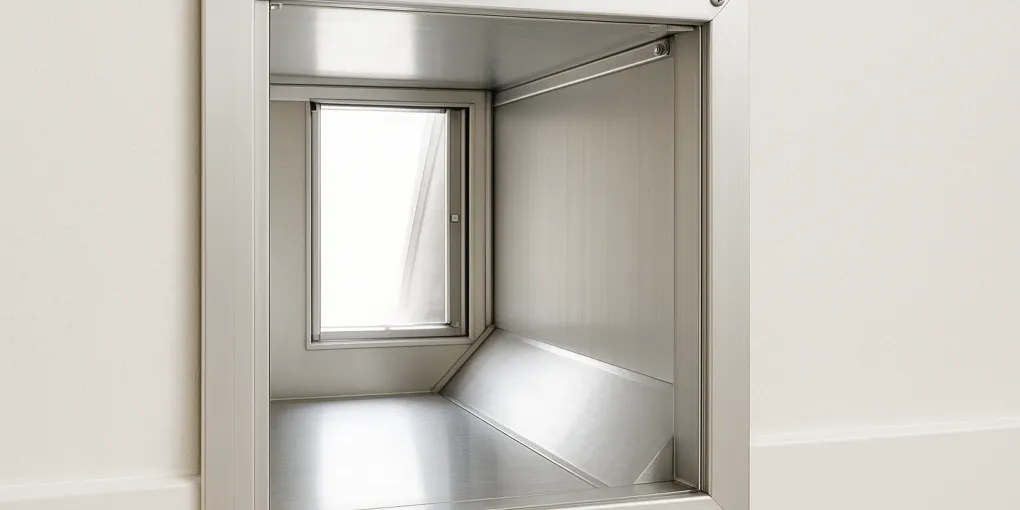
Best Pet Door Wall Extension in 2026: Through-Wall Installation Tunnels Reviewed
Buyer's GuidePetSafe Wall Entry Pet Door
Best OverallTunnel Length: 7 in standard, extendable to 12 in
$80–$130
Quick Comparison
| Product | Key Specs | Price Range | Buy |
|---|---|---|---|
| |
| $80–$130 | Check Price |
| |
| $150–$270 | Check Price |
| |
| $30–$55 | Check Price |
| |
| $250–$350 | Check Price |
Contains affiliate links — we may earn a small commission at no extra cost to you.
Best Pet Door Wall Extension in 2026
The PetSafe Wall Entry Pet Door earns the top spot with a PSR score of 4.6/5 — delivering reliable through-wall access with an extendable aluminum tunnel, adjustable for walls from 3.5 to 12 inches thick, at a price that makes it the most practical choice for most homeowners.
TL;DR
- Best Overall: PetSafe Wall Entry Pet Door — aluminum tunnel, dual-flap, adjustable length, 4.6/5
- Best Insulation: Endura Flap Wall Pet Door — market-leading thermal performance, 4.5/5
- Best for Cats: Cat Mate Wall Liner — compact, lightweight, purpose-built for cats, 3.9/5
- Best Electronic: High Tech Pet PowerPet — motorized panel, programmable access schedule, 4.3/5
Why Through-Wall Installation Is Different
Pet doors installed through walls are fundamentally different from door-mounted or sliding-glass-door inserts. Instead of fitting into an existing door panel, wall-mount pet doors require cutting a hole through the wall substrate — typically drywall, insulation, and exterior siding or stucco — and installing a tunnel that spans the full wall thickness. The result is a dedicated pet entry point that doesn’t compromise a door’s function, doesn’t reduce security (no gap left around a door frame), and in most cases provides better draft and weather sealing than door-mounted alternatives. Owners evaluating access control options alongside a wall extension should also review the best smart pet door guide for app-connected door options, and the best cat door guide for cat-specific door formats before committing to a permanent wall installation.
Wall thickness is the central technical challenge. Standard interior walls framed with 2x4 studs measure approximately 4.5 inches thick (3.5-inch stud + two ½-inch drywall layers). Exterior walls with 2x6 framing, exterior sheathing, and siding can reach 7 to 9 inches or more. Brick and masonry walls can exceed 12 inches. Selecting a wall pet door that accommodates your specific wall thickness — either natively or with extension panels — is the single most important pre-purchase measurement.
The tunnel length also has a direct bearing on thermal performance. A longer tunnel creates a greater air column between the interior and exterior flaps, acting as an insulating buffer zone. The U.S. Department of Energy notes that even small uncontrolled openings in the building envelope — including pet doors — can meaningfully contribute to heating and cooling losses (U.S. Department of Energy, Building Technologies Office, Residential Energy Efficiency standards). For this reason, dual-flap designs in extended-depth tunnels are strongly preferred in climates with significant seasonal temperature variation. The ENERGY STAR program does not currently certify individual pet doors, but its building envelope guidance for residential construction provides useful context for evaluating pet door thermal performance relative to overall wall insulation R-values (ENERGY STAR, Certified Homes and Apartments program criteria).
Security and Building Code Considerations
Any wall penetration created for a pet door is also a potential entry point for wildlife or unwanted intrusion. For passive flap designs, the primary security measure is the interior security panel — a rigid cover that blocks the opening entirely when the pet door is not in active use. Both the PetSafe and Endura Flap include locking security panels, and using them overnight or when away from home is strongly recommended. Electronic options such as the High Tech Pet PowerPet provide the strongest security: the hard motorized panel does not yield to physical pressure in the way that vinyl flaps can, and it cannot be pushed open from the outside without the ultrasonic collar sensor (CPSC, Pet Containment Product Safety considerations).
From a building code perspective, cutting a hole in an exterior wall for a pet door is typically considered a minor structural alteration under the International Residential Code (IRC). Most jurisdictions require that the rough opening be properly framed, that exterior waterproofing and flashing be maintained around the tunnel perimeter, and that insulation continuity be preserved around the frame to prevent thermal bridging. For exterior walls in climate zones 4 through 7 (the northern US and high-altitude regions), the IRC 2021 requires continuous insulation or equivalent thermal performance at exterior walls (ICC International Residential Code, 2021 edition, Section R702). A pet door frame that bridges the full wall depth without insulating separation can introduce a cold bridge — the Endura Flap’s polymer thermal break in the aluminum frame specifically addresses this requirement. When in doubt, confirm local code requirements with your building department before cutting, particularly in jurisdictions that require permits for exterior wall openings above a minimum size threshold.
How We Evaluated Pet Door Wall Extensions
Each product was assessed using the PSR formula:
Composite = (Safety × 0.25) + (Durability × 0.20) + (Pet Comfort × 0.20) + (Value × 0.20) + (Ease of Use × 0.15)
All criteria scored 0–10; final PSR score reported out of 5.
PetSafe Wall Entry Pet Door Review: Best Overall
Specs: Aluminum tunnel frame | Dual vinyl flap | 7-inch standard tunnel, extendable to 12 inches | Sizes: Small, Medium, Large, XL | Interior and exterior trim included
| Criterion | Score (0–10) |
|---|---|
| Safety | 8.5 |
| Durability | 8.0 |
| Pet Comfort | 8.5 |
| Value for Money | 8.5 |
| Ease of Use | 8.0 |
| PSR Score | 4.6/5 |
Safety (8.5): The dual-flap design provides two layers of closure, with the interior flap acting as a secondary barrier even if the exterior flap is displaced by wind or pest pressure. The aluminum frame has no exposed sharp edges after installation, and the included interior security panel blocks the opening entirely when access is not desired.
Durability (8.0): Aluminum tunnel construction resists rust and UV degradation. The vinyl flaps are the most common wear point — they remain supple in most climates but can stiffen in sustained sub-zero temperatures. PetSafe offers replacement flap kits, which significantly extends the door’s functional life without replacing the entire tunnel assembly.
Pet Comfort (8.5): The dual vinyl flaps are designed for low resistance — even small dogs and cats can push through without significant effort. The interior of the tunnel is smooth-finished with no exposed fastener heads. The wide range of size options ensures an appropriate clearance height and width for breeds from toy-sized to large.
Value for Money (8.5): At $80–$130 depending on size, the PetSafe Wall Entry kit provides a complete installation package including the tunnel, both trim frames, mounting hardware, and a security panel. Extension tunnel sections are available separately for thicker walls. Replacement flaps are priced reasonably.
Ease of Use (8.0): Installation requires cutting the wall opening, which is the universal challenge with all wall-mount pet doors. The PetSafe kit includes a paper template for marking the cut. Frame assembly and tunnel insertion are straightforward with common household tools. Most homeowners with basic DIY experience complete the installation in 2–4 hours.
Pros: Widely available, complete kit at competitive price, aluminum durability, full size range, strong brand support and replacement parts availability Cons: Extension tunnel sold separately for walls over 7 inches; vinyl flaps may need replacement after 3–5 years of heavy use in harsh climates
Endura Flap Wall Pet Door Review: Best Insulation
Specs: Aluminum frame with polymer thermal break | Patented Endura dual-flap | Up to 12-inch wall depth with extension | Sizes: Small through Extra Large | Made in USA
| Criterion | Score (0–10) |
|---|---|
| Safety | 9.0 |
| Durability | 9.0 |
| Pet Comfort | 8.5 |
| Value for Money | 7.0 |
| Ease of Use | 7.5 |
| PSR Score | 4.5/5 |
Safety (9.0): Endura Flap’s patented magnetically sealed flap closes with a positive snap, significantly reducing the gap that wind or intrusive animals can exploit. The polymer thermal break in the frame prevents aluminum cold-bridging, which on other doors causes condensation and frost buildup on interior surfaces — a minor slip-and-fall hazard for pets in very cold climates.
Durability (9.0): The Endura Flap is the benchmark for through-wall pet door longevity. The flap material is a proprietary flexible vinyl compound rated for temperatures from -40°F to 120°F without cracking or stiffening. Frame construction uses aircraft-grade aluminum profiles. Many installations report 10+ years of service without flap replacement.
Pet Comfort (8.5): The double-flap design means pets push through two panels rather than one. Heavier cats and small dogs may initially hesitate at the resistance, requiring a short acclimatization period. The magnetic closure does require a slightly firmer push than single-flap vinyl doors. Once pets adjust, use is consistent and unrestricted.
Value for Money (7.0): At $150–$270, the Endura Flap is a premium investment. The price premium over the PetSafe is substantial but defensible for homeowners in cold climates where energy loss from pet doors is a recurring cost. The extended service life before flap replacement also reduces total cost of ownership over 10 years.
Ease of Use (7.5): Installation is comparable in complexity to the PetSafe — wall cutting is required — but the Endura’s heavier hardware and more precise frame tolerances make the fitting and mounting process slightly more demanding. Installation guides are thorough and available on the manufacturer’s site. Professional installation is recommended for masonry walls.
Pros: Industry-leading weatherproofing and insulation, exceptional flap durability, strong thermal performance in extreme cold, Made in USA Cons: Significantly higher price, heavier pets may prefer lower-resistance flap options initially, limited retailer availability compared to PetSafe
Cat Mate Wall Liner Review: Best for Cats
Specs: ABS plastic tunnel sleeve | Soft clear vinyl flap | Compatible with Cat Mate 4-way locking flap (sold separately) | Maximum wall depth approximately 6.7 inches | Cat-specific sizing
| Criterion | Score (0–10) |
|---|---|
| Safety | 7.0 |
| Durability | 6.5 |
| Pet Comfort | 8.0 |
| Value for Money | 8.0 |
| Ease of Use | 7.5 |
| PSR Score | 3.9/5 |
Safety (7.0): The Cat Mate Wall Liner is sized exclusively for cats and very small dogs, which naturally limits unauthorized entry by larger animals. However, ABS plastic frames do not provide the structural rigidity of aluminum, and the liner relies on a separately purchased flap unit for actual security closure. The liner itself is a passive sleeve.
Durability (6.5): ABS plastic is adequate for interior applications but shows more UV and temperature sensitivity than aluminum framing. The plastic tunnel will not rust, but extended outdoor exposure in harsh climates can cause discoloration and minor warping over time. The liner’s wall depth limit of 6.7 inches excludes use in exterior walls with heavy sheathing or masonry.
Pet Comfort (8.0): Cat Mate’s cat-specific dimensions are accurately sized for adult domestic cats including larger breeds (Maine Coon, Norwegian Forest Cat). The soft vinyl flap provides minimal resistance, and the smooth interior finish of the ABS sleeve makes for comfortable transit. The clear flap allows visual confirmation of what’s on the other side, which reduces hesitation in skittish cats.
Value for Money (8.0): The liner kit itself retails for $30–$55, making it one of the most affordable wall pet door solutions. The catch is that an additional Cat Mate flap unit is required to complete the installation — budget another $20–$40 for a compatible Cat Mate 4-way locking flap. Combined cost remains competitive with other full-kit options.
Ease of Use (7.5): The lightweight ABS liner is easy to handle during installation. The modular design — liner plus separate flap — requires two purchase decisions but simplifies replacement: if the flap wears out, only the flap needs replacing. Wall cutting requirements are the same as other wall-mount options.
Pros: Very affordable, cat-appropriate sizing, modular design simplifies flap replacement, clear flap reduces pet hesitation Cons: ABS plastic less durable than aluminum, wall depth limit of 6.7 inches insufficient for thick exterior walls, flap purchased separately
High Tech Pet PowerPet Electronic Wall Door Review: Best Electronic Option
Specs: Heavy-gauge aluminum frame | Motorized hard panel (not a flap) | Ultrasonic collar sensor for pet detection | Adjustable tunnel 3.5–12 inches | Sizes: Large and XL | Programmable 4-way access control
| Criterion | Score (0–10) |
|---|---|
| Safety | 9.0 |
| Durability | 8.5 |
| Pet Comfort | 7.5 |
| Value for Money | 6.5 |
| Ease of Use | 7.0 |
| PSR Score | 4.3/5 |
Safety (9.0): The PowerPet uses an ultrasonic collar sensor — not RFID — to detect authorized pets and open the panel automatically. The hard panel provides far stronger security against forced entry than any vinyl flap design. The panel will not open without sensor detection, preventing wildlife intrusion even when closed. A built-in timer allows complete overnight lockout.
Durability (8.5): Heavy-gauge aluminum construction throughout. The motorized mechanism is the component most susceptible to long-term wear, but High Tech Pet has a strong track record with their electronic door systems. The hard panel does not suffer the UV degradation or cold-stiffening issues that vinyl flaps encounter.
Pet Comfort (7.5): The motorized panel opens on a slight delay after sensor detection — most pets adapt quickly but some dogs show initial hesitation at the mechanical movement and sound. The hard panel opening is not as intuitive to a pet as a passive push-through flap. Training period of 1–2 weeks is typical. Once trained, the automatic opening is highly convenient and requires no physical effort from the pet.
Value for Money (6.5): At $250–$350, the PowerPet is a significant investment. For homeowners who need the strongest possible security at their pet entry point — particularly in areas with raccoon, opossum, or skunk activity — the hard panel justifies its premium. For typical suburban use without serious wildlife pressure, the security premium may not be necessary.
Ease of Use (7.0): Electronic installation adds complexity over passive flap systems — sensor collar pairing, wall cutting, and power connection (the unit requires AC power via a low-voltage transformer) are all required steps. High Tech Pet provides detailed installation guides. The 4-way access programming (in only, out only, both, locked) is handled via simple switch positions on the unit rather than an app.
Pros: Maximum security through hard-panel closure, automatic opening via ultrasonic sensor, accommodates wide range of wall thicknesses, programmable access modes Cons: High price, requires AC power supply, pet training period needed, larger and heavier than passive flap options, sizes limited to Large and XL
Which Pet Door Wall Extension Should You Buy?
For most homeowners: The PetSafe Wall Entry Pet Door is the right choice. It covers the most common wall thicknesses, comes in four sizes, and delivers reliable performance at a fair price. If your wall is under 7 inches thick, the standard kit covers you completely.
For cold climates or energy-conscious homeowners: The Endura Flap Wall Pet Door is worth the premium. Its thermal performance is measurably superior to standard vinyl flap alternatives, and the flap lifespan reduces long-term replacement costs. Best for homes where winter heating bills are a concern.
For cat owners with standard interior walls: The Cat Mate Wall Liner is a practical, affordable option — especially if the wall is 6.7 inches or thinner and the installation is for a cat-only access point. The modular design makes it easy to swap flap units when they wear out.
For maximum security or areas with wildlife pressure: The High Tech Pet PowerPet Electronic Wall Door provides hard-panel closure that no vinyl flap can match. If raccoons, opossums, or skunks are active in your area, the motorized panel is a worthwhile investment.
For related coverage, see the best electronic pet door guide for door-mounted electronic options, the best microchip dog door for RFID-based selective access, the best microchip cat flap for cat-specific electronic options, and the best large breed dog door for sizing guidance for large and giant breeds. Owners concerned about outdoor cat safety once a wall door provides yard access should also review the best outdoor cat enclosure for enclosed run options that provide outdoor access without unsupervised roaming risk. For dogs that will use a wall pet door to access a yard unsupervised, pairing it with a best dog GPS fence virtual boundary system can add an additional containment layer.
Frequently Asked Questions
How thick can a wall be for a pet door installation?
Most pet door wall kits accommodate walls 3.5 to 7 inches thick out of the box, which covers standard 2x4 framing with drywall on both sides. Extension tunnels — sold separately or included with premium models — extend that range to 10 or 12 inches, covering 2x6 framed exterior walls with siding and interior drywall. Brick or masonry walls may require a custom-length liner or professional masonry cutting. Always measure your wall thickness at the planned installation point before purchasing, including both interior and exterior finish layers.
Can a pet door wall extension be used in a load-bearing wall?
Installing a pet door through a load-bearing wall is possible but requires consulting a structural engineer or licensed contractor. A wall pet door opening spans a horizontal section of the wall and requires a properly sized header beam above the opening to redistribute the load. Exterior walls are commonly load-bearing, particularly in older construction. Non-load-bearing interior walls are structurally simpler to cut but are less common choices for pet doors that provide outdoor access. When in doubt, hire a professional for the cutting phase even if you plan to install the pet door tunnel yourself.
What is the difference between a pet door tunnel and a wall liner?
A pet door tunnel is the full assembly that goes through the wall — it includes the interior frame, the exterior frame, and the tube structure that connects them, forming the passageway your pet walks through. A wall liner (as in the Cat Mate Wall Liner) is a sleeve-style kit that lines the cut hole in the wall and provides a finished interior, but relies on a separate compatible pet flap unit to provide the actual door. Liners are typically lower cost and more compact but require purchasing and installing the flap separately. Full tunnel kits include everything needed for a complete installation.
Do wall pet doors lose more heat than door-mounted pet doors?
Through-wall installations are generally better at heat retention than door-mounted flap doors because the tunnel’s length creates an air buffer zone — heat or cold air has to travel further and encounters more resistance before reaching your home’s interior. Models with dual-flap designs (both an interior and exterior flap) add a second barrier, trapping a still-air pocket inside the tunnel. The Endura Flap’s patented insulated flap technology takes this further with a proprietary magnetically sealed closure. A single-flap door-mounted pet door offers the weakest energy sealing of any configuration. The U.S. Department of Energy identifies uncontrolled building envelope openings as a significant source of residential heat loss (U.S. Department of Energy, Building Technologies Office, Residential Energy Efficiency standards), reinforcing the value of dual-flap and thermally broken frame designs.
Is a wall pet door installation suitable for a renter or apartment?
Wall pet door installations require cutting a permanent hole in the wall, making them unsuitable for most rental situations without explicit landlord approval. For renters, door-mounted flap inserts (which fit into a panel inserted in the door frame) or sliding glass door pet door inserts are far more practical since they can be removed when you move out. If you own your home or have landlord approval, a wall installation is a permanent feature that adds practical value. Some installers offer professional removal and patching services if needed.
Evidence sources: [U.S. Department of Energy, Building Technologies Office — residential energy efficiency and building envelope standards], [ENERGY STAR, Certified Homes and Apartments program criteria — thermal performance context for residential envelope openings], [ICC International Residential Code 2021, Section R702 — exterior wall thermal requirements and continuous insulation in climate zones 4–7], [CPSC, Pet Containment Product Safety considerations — security panel and access control for pet door openings].
Frequently Asked Questions
- Most pet door wall kits accommodate walls 3.5 to 7 inches thick out of the box, which covers standard 2x4 framing with drywall on both sides. Extension tunnels — sold separately or included with premium models — extend that range to 10 or 12 inches, covering 2x6 framed exterior walls with siding and interior drywall. Brick or masonry walls may require a custom-length liner or professional masonry cutting. Always measure your wall thickness at the planned installation point before purchasing, including both interior and exterior finish layers.
- Installing a pet door through a load-bearing wall is possible but requires consulting a structural engineer or licensed contractor. A wall pet door opening spans a horizontal section of the wall and requires a properly sized header beam above the opening to redistribute the load. Exterior walls are commonly load-bearing, particularly in older construction. Non-load-bearing interior walls are structurally simpler to cut but are less common choices for pet doors that provide outdoor access. When in doubt, hire a professional for the cutting phase even if you plan to install the pet door tunnel yourself.
- A pet door tunnel is the full assembly that goes through the wall — it includes the interior frame, the exterior frame, and the tube structure that connects them, forming the passageway your pet walks through. A wall liner (as in the Cat Mate Wall Liner) is a sleeve-style kit that lines the cut hole in the wall and provides a finished interior, but relies on a separate compatible pet flap unit to provide the actual door. Liners are typically lower cost and more compact but require purchasing and installing the flap separately. Full tunnel kits include everything needed for a complete installation.
- Through-wall installations are generally better at heat retention than door-mounted flap doors because the tunnel's length creates an air buffer zone — heat or cold air has to travel further and encounters more resistance before reaching your home's interior. Models with dual-flap designs (both an interior and exterior flap) add a second barrier, trapping a still-air pocket inside the tunnel. The Endura Flap's patented insulated flap technology takes this further with a proprietary magnetically sealed closure. A single-flap door-mounted pet door offers the weakest energy sealing of any configuration.
- Wall pet door installations require cutting a permanent hole in the wall, making them unsuitable for most rental situations without explicit landlord approval. For renters, door-mounted flap inserts (which fit into a panel inserted in the door frame) or sliding glass door pet door inserts are far more practical since they can be removed when you move out. If you own your home or have landlord approval, a wall installation is a permanent feature that adds practical value. Some installers offer professional removal and patching services if needed.