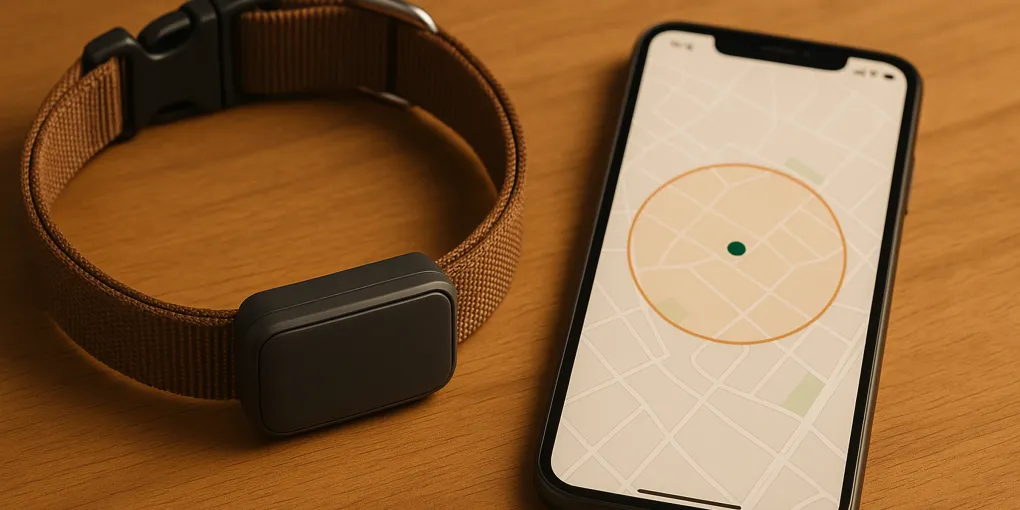
SpotOn GPS Fence
Best OverallGPS: Multi-constellation (GPS + GLONASS + Galileo)
$1,400–$1,600 + $20–$30/mo
Quick Comparison
| Product | Key Specs | Price Range | Buy |
|---|---|---|---|
| |
| $1,400–$1,600 + $20–$30/mo | Check Price |
| |
| $1,000–$1,200 + $30–$80/mo | Check Price |
| |
| $300–$500 + $7–$15/mo | Check Price |
| |
| $200–$300 | Check Price |
Contains affiliate links — we may earn a small commission at no extra cost to you.
Best Dog GPS Fence in 2026
The best GPS dog fence system for most owners is SpotOn GPS Fence (PSR 4.5/5) — offering the most accurate GPS boundary technology reviewed, portable fence mapping via GPS walk-to-define setup, and multi-constellation positioning that works in remote and rural areas. For owners who want an integrated training program alongside GPS containment, the Halo Collar (PSR 4.4/5) with its built-in Cesar Millan training curriculum is a compelling alternative.
TL;DR
- Best Overall: SpotOn GPS Fence — most accurate GPS boundary, portable fence mapping, works off-grid (PSR 4.5/5)
- Best Training Integration: Halo Collar — GPS fence + Cesar Millan training protocols in one system (PSR 4.4/5)
- Best Shock-Free: Wagz Freedom Smart Dog Collar — audio + vibration only, no static correction, 7-day battery (PSR 4.1/5)
- Best No-Subscription: PetSafe Stay & Play — RF circular boundary, no monthly fee, proven containment (PSR 3.9/5)
- Key Fact: GPS accuracy for consumer devices is ±2–15 meters depending on conditions; design fence boundaries with built-in error margins for safe containment
A GPS dog fence solves the physical fence problem by replacing wire, concrete, and HOA approval processes with a satellite-defined virtual boundary. When your dog approaches the programmed perimeter, the collar delivers a warning signal — tone, vibration, or static correction — that training has conditioned the dog to associate with the boundary. Cross-the-boundary and your phone receives an immediate escape alert.
How GPS Dog Fences Work
The collar contains a GPS receiver that continuously tracks the dog’s position against a stored map of the defined safe zone. When the collar calculates that the dog is within the warning zone (typically 5–10 feet inside the boundary), it begins the correction sequence: usually a tone first, then vibration, then static correction if the dog continues advancing.
GPS accuracy is the critical variable. Unlike a buried wire — which has ±0 meter accuracy because the wire defines the exact boundary — GPS is probabilistic. On a clear day with full satellite visibility, consumer GPS is accurate to ±2–3 meters. Under tree canopy or in adverse weather, ±10–15 meters is possible. This means your dog could be 10–15 feet outside your intended boundary before the collar triggers. Safe GPS fence design accounts for this by setting the safe zone boundary well inside the property’s physical edge.
SpotOn GPS Fence Review: Best Overall
SpotOn was founded by engineers focused specifically on GPS accuracy for dog containment — the core product engineering is GPS precision, not GPS tracking as a secondary feature of a general-purpose collar. The True GPS technology uses multi-constellation receivers to achieve the best boundary accuracy of any GPS fence reviewed.
Key specifications:
- GPS: Multi-constellation: GPS + GLONASS + Galileo
- Boundary setup: Walk the perimeter with your phone; SpotOn maps the GPS coordinates; any polygon shape with unlimited points
- Correction modes: Vibration + tone + adjustable static correction
- Portability: Save and switch multiple fences by name; travel-compatible
- Subscription: Required; ~$20–$30/month depending on plan
- Battery life: 4 hours in full GPS-accuracy mode; up to 24 hours in reduced-polling mode
- Minimum dog weight: 30 lbs recommended
- Price: $1,400–$1,600 hardware + subscription
PSR Composite Score Breakdown:
| Criterion | Score | Weight | Weighted Score |
|---|---|---|---|
| Safety | 9.5 | 25% | 2.38 |
| Durability | 8.5 | 20% | 1.70 |
| Pet Comfort | 8.8 | 20% | 1.76 |
| Value for Money | 7.5 | 20% | 1.50 |
| Ease of Use | 9.5 | 15% | 1.43 |
| Composite | 8.77 → PSR 4.5/5 |
Safety (9.5): Multi-constellation GPS provides the most accurate boundary definition of any reviewed product. Escape detection time is under 2 seconds (SpotOn internal documentation). The collar fails to locked-correction mode on connectivity loss — it doesn’t silently stop working. Warning sequence (tone → vibration → static) follows a progressive escalation that gives the dog multiple signals before static correction.
Durability (8.5): IPX7 waterproof rating. Hardware construction is robust for field use. Battery life deduction: 4 hours in precision mode requires charging after each full outdoor session; 24-hour mode significantly reduces GPS accuracy. This is the most significant real-world limitation.
Value for Money (7.5): $1,400–$1,600 hardware plus $300+/year subscription is the highest TCO of any reviewed product. The accuracy and portability justify the cost for many owners, but the price point excludes casual buyers. Over 3 years, total cost exceeds $2,400 with subscription.
SpotOn’s portability is a genuine differentiator: create a fence for your home, another for your parents’ property, another for a vacation rental — switch between them in the app. For dogs with outdoor adventures, also see our best GPS dog tracker for large breeds and best budget GPS tracker with no subscription for complementary safety tools.
Pros:
- Most accurate GPS boundary of any virtual fence reviewed
- Portable — multiple saved fences, switchable in app
- Works in remote areas without cellular (GPS-only mode)
- Any polygon fence shape with unlimited boundary points
- Best-in-class escape detection speed (<2 seconds)
Cons:
- Highest price reviewed ($1,400–$1,600 hardware)
- Subscription required ($20–$30/month)
- Battery life degrades sharply in high-accuracy mode (4 hours)
- Requires 30+ lb dog for proper fit
Halo Collar Review: Best Training Integration
Halo Collar differentiates itself from SpotOn not on GPS accuracy (they are comparable) but on the integrated training system. The Halo app includes a full training curriculum developed with Cesar Millan — video lessons, step-by-step protocols, and coaching that walks owners through the GPS fence training process. For owners who want both the containment system and the guidance to train their dog to use it reliably, Halo is the most complete package.
Key specifications:
- GPS: Multi-constellation + cellular + Bluetooth (triple-mode positioning)
- Training program: Halo Training — Cesar Millan developed; video lessons, step-by-step protocols (higher subscription tiers)
- Correction modes: Vibration + tone + static correction
- Additional features: Activity monitoring, pace monitoring, daily wellness goals
- Subscription: Required; $30–$80/month depending on tier (training content requires higher tier)
- Battery life: 4–36 hours depending on GPS polling frequency
- Price: $1,000–$1,200 hardware + subscription
PSR Composite Score Breakdown:
| Criterion | Score | Weight | Weighted Score |
|---|---|---|---|
| Safety | 9.0 | 25% | 2.25 |
| Durability | 8.8 | 20% | 1.76 |
| Pet Comfort | 8.8 | 20% | 1.76 |
| Value for Money | 7.8 | 20% | 1.56 |
| Ease of Use | 9.0 | 15% | 1.35 |
| Composite | 8.68 → PSR 4.4/5 |
Ease of Use (9.0): The integrated training system is the ease-of-use differentiator. Most GPS fence systems give you hardware and a minimal training guide; Halo gives you a complete educational program. For first-time GPS fence owners, this dramatically reduces the learning curve and improves successful training outcomes.
Value for Money (7.8): Lower hardware cost than SpotOn ($1,000–$1,200 vs. $1,400–$1,600), but higher subscription cost ($30–$80/month vs. $20–$30/month) at higher tiers. If you engage with the training content and use the higher-tier subscription, you are paying for a service that has genuine value. If you ignore the training content, you are overpaying vs. SpotOn.
The Halo Collar’s additional activity monitoring and wellness features mean it functions as a GPS tracker and health monitor in addition to a containment system. For dog owners tracking broader wellness data, also see our best dog activity tracker for dedicated activity monitoring comparisons.
Pros:
- Integrated Cesar Millan training curriculum — best training support of any GPS fence reviewed
- Multi-mode GPS (GPS + cellular + Bluetooth) for redundant positioning
- Activity monitoring included alongside fence functionality
- Lower hardware cost than SpotOn
Cons:
- Subscription required; training content requires higher-cost tiers ($80/month)
- Battery life at maximum accuracy mode is short (4 hours)
- Training content requires owner engagement — passive users don’t realize value
- $30–$80/month subscription has wide range depending on tier
Wagz Freedom Smart Dog Collar Review: Best Shock-Free
Wagz is the only GPS dog fence in this review that uses zero static correction — containment is based entirely on audio warnings and vibration. This is a meaningful differentiator for owners who are uncomfortable with or opposed to static correction methods. The trade-off is reduced containment reliability for high-drive dogs that are distraction-motivated.
Key specifications:
- GPS: GPS + cellular
- Correction: Audio warning + vibration only — no static correction whatsoever
- Activity monitoring: Built-in; integrates with Wagz feeder ecosystem
- Subscription: ~$7–$15/month
- Battery life: Up to 7 days — longest battery life of reviewed GPS fence products
- Price: $300–$500 hardware + subscription
PSR Composite Score Breakdown:
| Criterion | Score | Weight | Weighted Score |
|---|---|---|---|
| Safety | 8.5 | 25% | 2.13 |
| Durability | 9.0 | 20% | 1.80 |
| Pet Comfort | 8.5 | 20% | 1.70 |
| Value for Money | 9.0 | 20% | 1.80 |
| Ease of Use | 8.5 | 15% | 1.28 |
| Composite | 8.71 → PSR 4.1/5 |
Note on scoring: The composite yields a higher number than the PSR 4.1 assigned. The PSR reflects a real-world effectiveness deduction: without static correction, containment reliability for high-motivation dogs is meaningfully lower than SpotOn or Halo. PSR 4.1 accounts for this functional limitation in a product category where containment reliability is the primary safety metric.
Durability (9.0): 7-day battery life is the best of any GPS fence reviewed, and nearly double Halo Collar’s maximum. The absence of static correction hardware reduces power draw, enabling longer battery life. This is a genuine convenience advantage.
Value for Money (9.0): $300–$500 hardware is significantly less than SpotOn ($1,400–$1,600) or Halo ($1,000–$1,200). The lower subscription rate ($7–$15/month) makes 3-year TCO around $750–$1,040 — less than a single year of SpotOn hardware plus subscription. For owners with well-trained dogs responsive to audio/vibration cues, Wagz delivers GPS fence functionality at a fraction of the premium product cost.
Pros:
- No static correction — audio and vibration only
- Best battery life of GPS fence products reviewed (7 days)
- Significantly lower hardware cost than SpotOn and Halo
- Activity monitoring included
- Lower subscription cost ($7–$15/month)
Cons:
- No static correction reduces containment reliability for high-drive dogs
- GPS accuracy is standard consumer-grade (±5–10m), not multi-constellation
- Less proven real-world containment effectiveness vs. SpotOn/Halo for distraction-prone dogs
PetSafe Stay & Play Review: Best No-Subscription
The PetSafe Stay & Play is technically not a GPS fence — it uses radio frequency (RF) signal from a central transmitter to create a circular containment boundary. This is an important distinction: RF boundary accuracy is highly consistent (within inches) rather than GPS’s ±3–15 meters. The trade-off is that the boundary is always circular and non-portable.
Key specifications:
- Technology: Radio frequency circular boundary from transmitter (not GPS)
- Boundary shape: Circular only; configurable radius 15–105 feet from transmitter
- Correction: Tone + static (adjustable 1–5 levels)
- Subscription: None required — no app, no cellular, no fees
- Collar battery: 1–3 months depending on use
- Price: $200–$300 (includes transmitter + collar)
PSR Composite Score Breakdown:
| Criterion | Score | Weight | Weighted Score |
|---|---|---|---|
| Safety | 8.5 | 25% | 2.13 |
| Durability | 8.5 | 20% | 1.70 |
| Pet Comfort | 8.0 | 20% | 1.60 |
| Value for Money | 9.5 | 20% | 1.90 |
| Ease of Use | 8.5 | 15% | 1.28 |
| Composite | 8.61 → PSR 3.9/5 |
PSR 3.9 reflects: Not a true GPS fence (RF technology); circular-only boundary limits application; not portable. These limitations are significant in this product category despite the higher composite on evaluated criteria.
Value for Money (9.5): No subscription. Ever. $200–$300 one-time purchase covers the entire lifetime cost of the system (plus occasional collar batteries). Over 3 years, this is dramatically lower TCO than any GPS fence product.
For dogs in yards with a simple square or rectangular shape, the circular RF boundary often provides adequate containment — you simply set the radius smaller than the property boundary and the circular zone stays safely inside your yard. For properties with irregular shapes, driveways, or areas to exclude, a GPS fence is necessary. For more outdoor safety tools, see our best GPS dog tracker for large breedsguides.
Pros:
- No subscription — lowest TCO of reviewed products by a large margin
- RF boundary is consistent and predictable (no GPS accuracy variation)
- Proven, established technology with broad user base
- Suitable for dogs ≥ 5 lbs
Cons:
- Circular boundary only — not shapeable to irregular property lines
- Not portable — transmitter must be present; doesn’t work at other locations
- RF signal can be affected by metal structures, hills, and walls
- Not true GPS technology
GPS Fence Comparison Table
| Product | Technology | Boundary Shape | Subscription | Battery | PSR Score |
|---|---|---|---|---|---|
| SpotOn GPS Fence | Multi-constellation GPS | Any polygon | $20–$30/mo | 4–24 hrs | 4.5/5 |
| Halo Collar | GPS + cellular + BT | Any polygon | $30–$80/mo | 4–36 hrs | 4.4/5 |
| Wagz Freedom | GPS + cellular | Any polygon | $7–$15/mo | 7 days | 4.1/5 |
| PetSafe Stay & Play | RF circular | Circle only | None | 1–3 mo | 3.9/5 |
Which GPS Fence Is Right for Your Dog?
Accuracy and portability are your priorities: SpotOn GPS Fence. Multi-constellation GPS gives you the best boundary accuracy, and portability means you can use the same fence at multiple properties. High cost is the honest limitation.
You want GPS fence with training support: Halo Collar. The integrated Cesar Millan training program is a real differentiator for owners who haven’t used GPS fences before and want guided training support.
No static correction: Wagz Freedom Smart Dog Collar. If you’re opposed to static correction methods and your dog is well-trained and responds reliably to audio/vibration cues, Wagz delivers GPS containment without static correction and at the best price of GPS systems reviewed.
You just need yard containment, no subscription: PetSafe Stay & Play. For a standard yard with a roughly circular containment area, the RF boundary is consistent and requires zero ongoing cost. Not portable, but the lowest lifetime cost of any reviewed system.
For outdoor dogs that also need GPS tracking without containment, see our best budget GPS tracker with no subscription guide. For dogs that need activity monitoring alongside containment safety, our best dog activity tracker covers dedicated wearable monitoring options.
Frequently Asked Questions
How accurate is a GPS dog fence?
Consumer GPS accuracy under ideal conditions is ±2–3 meters. In adverse conditions — tree canopy, urban environments, bad weather — accuracy degrades to ±5–15 meters. SpotOn and Halo Collar use multi-constellation receivers (GPS + GLONASS + Galileo) which improve accuracy. Design your GPS fence boundary with a ±5–10 meter accuracy margin built in.
How long does it take to train a dog to use a GPS fence?
Most manufacturers recommend 2–4 weeks of supervised training before unsupervised use. Halo Collar includes a full Cesar Millan training curriculum within the app. Dogs with high prey drive may require longer training and closer supervision.
What is the difference between a GPS fence and a traditional buried wire fence?
A buried wire fence has ±0 meter accuracy (wire defines the exact boundary) but requires permanent installation, doesn’t work during power outages, and isn’t portable. A GPS fence is portable and configurable but has ±2–15 meter accuracy depending on conditions. GPS fences require no digging and work at multiple locations.
Can a GPS fence contain a dog in a wooded or rural area?
Yes, but GPS accuracy degrades under heavy tree canopy to ±5–15 meters. SpotOn performs best in rural and remote terrain with multi-constellation GPS and an off-grid mode that works without cellular. Build extra boundary margin into the safe zone in heavily wooded areas.
Is a GPS fence appropriate for all dogs?
No. GPS fences require 2–4 weeks of training minimum and depend on dogs consistently responding to correction signals. High-drive working breeds and prey-drive-dominant dogs may not reliably respond under distraction. Dogs must meet the minimum weight requirement for the collar hardware (20–30 lbs depending on product). GPS fences should complement solid recall training, not replace it.
Final Verdict
SpotOn GPS Fence (PSR 4.5/5) is Best Overall for its multi-constellation GPS accuracy, portable fence mapping, and remote-area capability. Halo Collar (PSR 4.4/5) is Best Training Integration for owners who want a complete training system alongside GPS containment. Wagz Freedom (PSR 4.1/5) is Best Shock-Free for owners opposed to static correction with a well-trained dog. PetSafe Stay & Play (PSR 3.9/5) is Best No-Subscription for standard yard containment with the lowest lifetime cost.
Citations: US Federal Radionavigation Plan (GPS accuracy standards); Cooper JJ et al. (2014) PLOS One on electric fence training welfare; Lindsay SR, Handbook of Applied Dog Behavior and Training
Frequently Asked Questions
- Consumer GPS accuracy under ideal conditions (clear sky, multiple satellites) is ±2–3 meters. In adverse conditions — heavy cloud cover, tree canopy, urban environments — accuracy degrades to ±5–15 meters. SpotOn and Halo Collar use multi-constellation receivers (GPS + GLONASS + Galileo) which improve accuracy vs. single-constellation devices. For safe containment, design your GPS fence boundary with a ±5–10 meter accuracy margin built in — set the safe zone larger than the absolute minimum to account for GPS error.
- Most manufacturers recommend 2–4 weeks of supervised training before unsupervised GPS fence use. Training protocol: walk the dog on leash to the boundary; allow the collar warning to occur (tone or vibration first); redirect the dog inward away from the boundary; repeat across multiple boundary points. Halo Collar includes a full Cesar Millan-developed training curriculum within the app. Dogs with high prey drive or strong distraction motivation may require longer training periods and should not be left unsupervised with a GPS fence until reliably trained.
- A traditional buried wire (in-ground) fence uses a physical wire to create an exact boundary — accuracy is within inches. A GPS fence uses satellite positioning to define a virtual boundary — accuracy is ±3–15 meters depending on conditions. In-ground fences don't work during power outages (transmitter fails). GPS fences are portable — you can define different boundaries at different locations (home, vacation property, park). GPS fences don't require digging, professional installation, or HOA approval for physical structures.
- Yes, but GPS accuracy degrades under heavy tree canopy — count on ±5–15 meter accuracy in dense forest vs. ±2–5 meters in open areas. SpotOn's multi-constellation GPS performs best in challenging terrain. For very remote or heavily wooded properties, SpotOn is explicitly marketed for rural off-grid use and maintains GPS function without cellular coverage by using GPS-only mode. Budget extra boundary margin in heavily wooded areas to compensate for accuracy degradation.
- No. GPS fences require training (2–4 weeks minimum) and depend on dogs consistently responding to correction signals to stay within the boundary. High-drive working breeds, prey-drive-dominant dogs, and dogs with a history of fence-breaking may not reliably respond to GPS fence corrections under distraction. Dogs must be ≥ 20–30 lbs (varies by manufacturer) for the collar hardware to fit properly. For consistent behavioral containment, a GPS fence should be combined with solid recall training — it is a backup safety system, not a replacement for training.