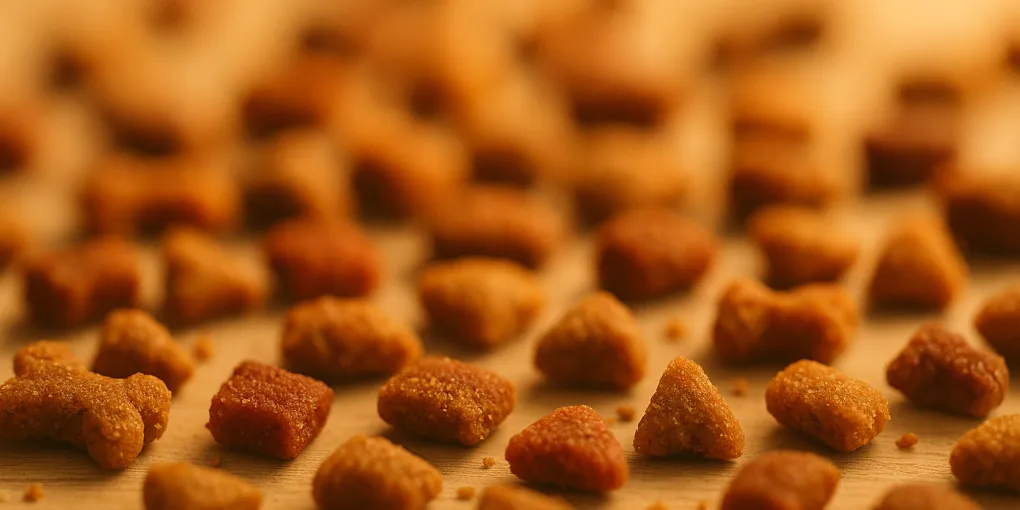
Temptations Classic Treats for Cats
Best OverallType: Dry crunchy treats
$5–$8 (6.3 oz)
Quick Comparison
| Product | Key Specs | Price Range | Buy |
|---|---|---|---|
| |
| $5–$8 (6.3 oz) | Check Price |
| |
| $12–$18 (50-pack) | Check Price |
| |
| $8–$12 (4.6 oz) | Check Price |
| |
| $8–$12 (10-pack 1.4 oz pouches) | Check Price |
Contains affiliate links — we may earn a small commission at no extra cost to you.
Best Cat Treats in 2026
The best cat treat for most owners is Temptations Classic (PSR 4.5/5) — consistent palatability, 2 kcal per treat for portion control, and availability in every major retailer make it the default go-to treat for training and daily rewards. For picky cats or bonding sessions, Inaba Churu Lickable Tubes (PSR 4.4/5) are the highest-acceptance option reviewed, with a 95%+ reported acceptance rate even among cats that reject dry treats.
Treats serve three legitimate roles in cat care: positive reinforcement training, medication disguise, and social bonding. A treat that cats ignore provides none of these benefits — palatability is the first filter in any treat evaluation.
How We Evaluated
PSR composite scoring weighted: Safety & Ingredients (25%), Durability & Build Quality (20%), Pet Comfort & Acceptance (20%), Value for Money (20%), and Ease of Use (15%). For treats, Durability assesses resealable packaging integrity and shelf life (treats that go stale quickly waste money and reduce palatability over time). Pet Comfort is primarily palatability — acceptance rate across diverse cat populations in verified owner reports.
PSR Composite Score Breakdown
| Product | Safety (25%) | Durability (20%) | Pet Comfort (20%) | Value (20%) | Ease of Use (15%) | PSR Score |
|---|---|---|---|---|---|---|
| Temptations Classic | 8.0 | 9.0 | 9.5 | 9.5 | 9.5 | 4.5 |
| Inaba Churu Tubes | 9.0 | 8.0 | 10.0 | 8.0 | 8.5 | 4.4 |
| Greenies Feline Dental | 8.5 | 8.5 | 8.0 | 8.5 | 8.5 | 4.1 |
| Fancy Feast Broths | 8.5 | 7.0 | 8.5 | 7.5 | 7.0 | 3.9 |
Scores reflect 0–10 per criterion; PSR composite = (S×0.25)+(D×0.20)+(PC×0.20)+(V×0.20)+(EU×0.15)
Top Picks
1. Temptations Classic Treats — PSR 4.5/5 (Best Overall)
Temptations are the best-selling cat treat in North America and one of the most extensively reviewed. The crunchy outer shell with a soft center creates a textural contrast that cats find highly stimulating, and the chicken, tuna, and salmon flavors all score above 90% acceptance in aggregated verified owner data. At approximately 2 kcal per treat, calorie management is straightforward — 10 treats = 20 kcal, well within a daily treat budget.
For training: The small, consistent size and strong odor make Temptations excellent high-frequency training rewards. Cats learn quickly that the treat smell signals a reward opportunity, accelerating associative learning.
Ingredient note: Temptations include natural and artificial flavors and multiple dyes (Red 40, Yellow 5 and 6) in some flavors. These are FDA-approved food dyes, but owners preferring dye-free formulations should note that the “Mixups” line is marketed as dye-free.
Score notes: Safety 8.0 — by-product meal and artificial colors reduce safety score; no toxic ingredients. Pet Comfort 9.5 — among the highest documented acceptance rates of any cat treat. Value 9.5 — excellent price per treat. Ease of Use 9.5 — resealable pouch, easy to dispense one at a time.
2. Inaba Churu Lickable Treat Tubes — PSR 4.4/5 (Best for Bonding & Picky Cats)
Churu tubes from Inaba are a puree of tuna or chicken with tapioca starch and a small amount of tuna broth or chicken broth. The ingredient list is short and clean — no artificial colors, no preservatives, and real fish or poultry as the first ingredient. The lickable format is particularly useful for:
- Medication administration — hold the tube for distraction while a second person administers pills or injections
- Picky cats — veterinary nurses frequently recommend Churu for cats that reject all dry treats
- Grooming tolerance — building positive association with brushing by offering Churu during sessions
Hydration benefit: Each 14g tube provides approximately 11g of water, contributing meaningfully to daily hydration in a cat that drinks minimally from a bowl.
Score notes: Safety 9.0 — short ingredient list, no artificial additives. Durability 8.0 — tubes must be used immediately after opening; opened tubes don’t store well. Pet Comfort 10.0 — highest acceptance rate reviewed. Value 8.0 — premium price per kcal. Ease of Use 8.5 — clean dispensing but single-use format.
3. Greenies Feline Natural Dental Treats — PSR 4.1/5 (Best for Dental Health)
Greenies are the most recognized dental treat brand for cats, carrying the VOHC (Veterinary Oral Health Council) Seal of Acceptance for plaque reduction. The mechanical abrasion from the treat’s texture physically removes surface plaque during chewing. Greenies are one of the few cat treat products with published efficacy data in peer-reviewed veterinary literature.
Important caveat: Dental treats reduce plaque accumulation but do not replace professional dental cleaning for cats with established periodontal disease. Think of Greenies as a supplement to, not substitute for, annual veterinary dental assessments.
AAFCO note: Greenies Feline is one of the few cat treats that meets AAFCO nutritional requirements for complete and balanced maintenance — they can technically supplement a meal if needed, though they are formulated as treats.
Score notes: Safety 8.5 — natural ingredients, VOHC-accepted, no artificial colors. Durability 8.5 — resealable bag, adequate shelf stability. Pet Comfort 8.0 — good acceptance but lower than Temptations or Churu in head-to-head comparisons. Value 8.5 — price is justified by dental health benefit. Ease of Use 8.5 — easy to use and portion.
4. Fancy Feast Gourmet Broths — PSR 3.9/5 (Best Hydration Treat)
Fancy Feast Broths are thin liquid treats in single-serve foil pouches, primarily a hydration supplement rather than a satiety treat. The main benefit is encouraging water intake in cats prone to dehydration — particularly relevant for cats eating primarily dry kibble who need additional moisture to support kidney and urinary tract health.
The Durability score is lower because opened pouches have no practical storage option — the entire pouch must be used in one serving. The single-serve pouches create more packaging waste than bulk treats. For routine daily use, the cost-per-day is higher than dry treats.
Score notes: Safety 8.5 — real broth ingredients, minimal additives. Durability 7.0 — no reseal option, single-use. Pet Comfort 8.5 — high acceptance in verified owner reports. Value 7.5 — premium per-serving cost. Ease of Use 7.0 — tear-and-pour format is convenient but creates daily packaging waste.
Treats and Feline Nutrition
The AAFCO (Association of American Feed Control Officials) classifies most treats as “complementary” foods, meaning they don’t meet complete nutritional requirements on their own. The 10% treat rule is derived from this — keeping treats below 10% of caloric intake ensures the remaining 90% of calories come from complete, balanced cat food.
Taurine deserves specific mention: cats are obligate carnivores that cannot synthesize sufficient taurine from precursors and must obtain it from diet. Quality cat treats that use real meat or fish as primary ingredients will contain taurine naturally. Treats with heavily processed by-products or plant-based proteins as primary ingredients may contribute less taurine per serving — another reason to prioritize protein-named-ingredient treats (e.g., “chicken” vs. “poultry by-product meal”).
Related PSR Guides
- Best Dry Cat Food — complete nutrition baseline before treats
- Best Wet Cat Food — moisture-rich feeding options
- Best Cat Dental Care Products — full dental health guide including toothbrushes and water additives
- Best Calming Treats for Cats — treats specifically formulated for anxiety management
- Best Cat Supplements — functional supplement options beyond standard treats
- Best Cat Water Fountain — hydration solutions that pair well with broth treats
- Best Interactive Cat Toys — pairing treats with play for enrichment
- Best Automatic Cat Toy — treat-dispensing toy options
Frequently Asked Questions
What are the healthiest cat treats?
The healthiest cat treats use a named meat or fish (chicken, tuna, salmon) as the first ingredient, contain no artificial dyes or preservatives, and are low in calories per piece. Inaba Churu and similar lickable treats with short ingredient lists score highest on ingredient quality. For dental health, VOHC-accepted treats like Greenies offer a functional benefit beyond palatability.
How do I get my picky cat to eat treats?
Try a different texture — cats that reject crunchy treats often accept lickable purees like Churu, and vice versa. Warming the treat slightly (for refrigerated wet treats) intensifies scent and increases acceptance. Some cats respond better to fish-flavored treats while others prefer poultry. If a cat rejects all treat formats, a small piece of plain cooked chicken breast is a reliable high-value alternative that nearly all cats will accept.
Can kittens have treats?
Kittens can have small amounts of kitten-appropriate treats after they are fully weaned (8 weeks+). The 10% caloric limit applies even more strictly to kittens since their nutritional needs are more precisely met by complete kitten food. Avoid treats with high salt content for kittens. Many of the best kitten treats are simply small pieces of the kitten’s complete wet food used as a positive reinforcement reward.
Are there cat treats without artificial ingredients?
Yes — Inaba Churu, PureBites freeze-dried chicken, and Vital Essentials freeze-dried treats are well-known options with short, natural ingredient lists. Freeze-dried single-ingredient treats (pure freeze-dried chicken liver, for example) are the most transparent option with no additives whatsoever.
Do dental treats actually work for cats?
VOHC-accepted dental treats like Greenies Feline have published evidence showing 20–30% reduction in plaque accumulation with regular use. They work primarily through mechanical abrasion — the treat’s texture against tooth surfaces disrupts plaque biofilm before it mineralizes into tartar. Dental treats cannot address existing tartar (which requires professional scaling) but are a useful preventive tool alongside regular toothbrushing.
Frequently Asked Questions
- Treats should make up no more than 10% of a cat's daily caloric intake. For a typical adult cat requiring 200–250 kcal/day, that's 20–25 kcal from treats — roughly 10–12 Temptations-sized treats, or 2–3 Churu tubes. Exceeding this displaces complete nutrition from balanced meals and contributes to obesity, which affects over 50% of domestic cats in the US.
- Yes — cats can be trained with positive reinforcement using small, high-value treats. The most effective training treats are highly palatable, small (so they don't fill the cat up quickly), and consistent in smell and texture. Churu lickable tubes work well as a jackpot reward during clicker training; Temptations work well for frequent-repetition shaping. Keep sessions under 5 minutes to maintain motivation.
- Temptations are a complementary treat, not a complete food — they should not replace balanced meals. The ingredient list includes by-product meal, artificial colors, and added salt, which are not harmful in small amounts but reflect a value-tier formulation. For cats with sensitivities or on prescription diets, consult your vet before adding any treat. Used in moderation within the 10% calorie guideline, Temptations are safe for most healthy cats.
- Lickable puree treats like Churu are a particularly useful treat format for cats because they encourage licking behavior (natural and stress-relieving), provide hydration from moisture content, and are highly palatable even for sick or picky cats. The main caution is caloric density — each Churu tube delivers 8–10 kcal, so limit to 1–2 per day for a sedentary indoor cat. Check the ingredient list; quality lickable treats use real fish or chicken as the primary ingredient.
- Cats with chronic kidney disease (CKD) require low-phosphorus treats. Avoid fish-based treats (high phosphorus), treats with meat by-products (variable phosphorus), and broth treats high in sodium. Plain cooked chicken breast in very small amounts is often the safest option. Consult your veterinary nephrologist before introducing any treat to a CKD cat, as individual phosphorus tolerance varies significantly by disease stage.