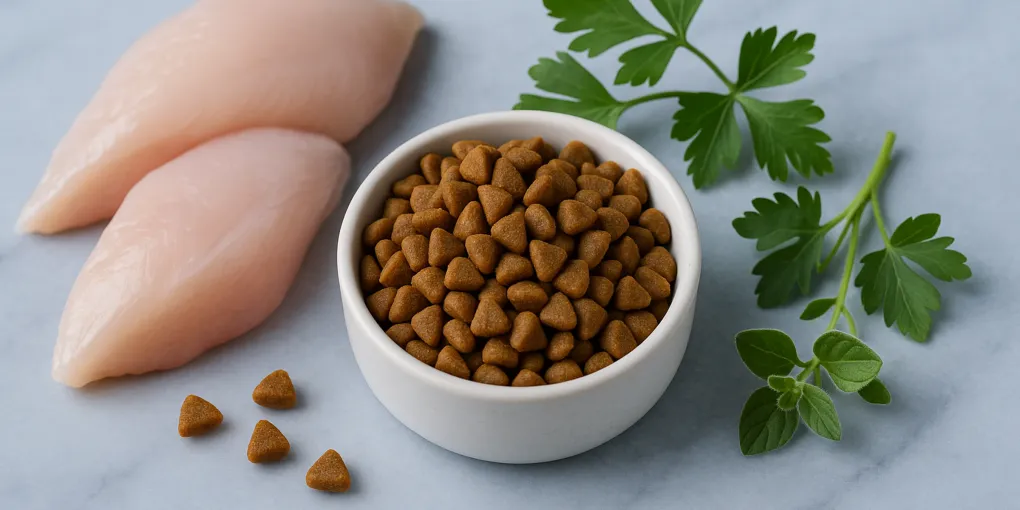
Purina Pro Plan Kitten Chicken & Rice
Best OverallProtein: ~42% DM
$25–$45 / bag
Quick Comparison
| Product | Key Specs | Price Range | Buy |
|---|---|---|---|
| |
| $25–$45 / bag | Check Price |
| |
| $22–$40 / bag | Check Price |
| |
| $22–$42 / bag | Check Price |
| |
| $20–$38 / bag | Check Price |
Contains affiliate links — we may earn a small commission at no extra cost to you.
Best Kitten Food in 2026
The best kitten food for most kittens is Purina Pro Plan Kitten Chicken & Rice (PSR 4.8/5) — it has the highest DHA concentration of any commercially available kitten formula, feeding trial-substantiated AAFCO growth compliance, 42% DM protein, live probiotic supplementation, and is backed by the largest research institution (Purina Research, 500+ scientists, published peer-reviewed studies) in the companion animal nutrition field. For kittens requiring the most comprehensive developmental support with the broadest published evidence base, Hill’s Science Diet Kitten (PSR 4.6/5) is an excellent second choice backed by WSAVA-aligned nutritionists and multiple AAFCO feeding trials.
TL;DR
- Best Overall: Purina Pro Plan Kitten — highest DHA, AAFCO feeding trial substantiated, 42% DM protein, live probiotics (PSR 4.8/5)
- Best for Developmental Support: Hill’s Science Diet Kitten — WSAVA-compliant, multiple feeding trials, antioxidant enriched (PSR 4.6/5)
- Best for Digestive Health: Royal Canin Kitten — highly digestible proteins, immune support, veterinary nutritionist-formulated (PSR 4.5/5)
- Best High-Protein: Blue Buffalo Wilderness Kitten — 44% DM protein, grain-free, deboned chicken first (PSR 4.1/5)
- Key Stat: Kittens require 30% DM protein (vs. 26% for adults) and pre-formed dietary DHA for neural and retinal development — cats cannot efficiently synthesize DHA from ALA (Pawlosky et al., 1994, PMID: 7868981)
Kittens have substantially different nutritional requirements from adult cats. The growth phase — from weaning (~4 weeks) through 12 months — is characterized by rapid skeletal development, muscle accretion, neural and retinal maturation, and immune system establishment. Caloric requirements per unit body weight are roughly double those of adult cats during peak growth. Protein requirements are elevated to support tissue anabolism; DHA is essential for brain and retinal development; and calcium and phosphorus ratios must be precisely balanced to support bone mineralization without causing developmental orthopedic disease.
What Separates Kitten Food from Adult Cat Food
Understanding the AAFCO growth profile requirements makes it clear why kitten food matters:
Protein: AAFCO growth minimum is 30.0% DM — versus 26.0% DM for adult maintenance. Elevated protein provides amino acids (taurine, lysine, arginine, methionine) required for tissue synthesis in higher absolute quantities during the growth phase. Taurine deficiency in kittens develops more rapidly than in adults due to the higher anabolic demand — Novotny et al. (1994, PMID: 8195626) documented dilated cardiomyopathy from taurine-deficient diets in cats, emphasizing the critical importance of adequate taurine supplementation in kitten formulas.
DHA (docosahexaenoic acid): Constitutes 15–20% of cerebral cortex fatty acids and 30–40% of retinal phospholipids. Kittens are in active brain and eye development through 12 months. Cats have very limited delta-6 desaturase enzyme activity and cannot efficiently convert the plant-based ALA precursor to DHA — dietary pre-formed DHA from fish oil is required (Pawlosky et al., 1994, PMID: 7868981). The NRC (2006, DOI: 10.17226/10668) recognizes DHA as a nutrient with established requirements for growing kittens. Quality kitten formulas supplement 0.04–0.12% DM DHA.
Calcium and phosphorus: Growth minimum calcium is 0.8% DM vs. 0.6% for adults; phosphorus 0.6% vs. 0.5%. Ca:P ratio must remain between 1:1 and 2:1 to support bone mineralization without causing developmental orthopedic disease from imbalanced mineral ratios.
AAFCO compliance tiers: Two methods satisfy AAFCO growth requirements: (1) Formulation method — meeting minimum nutrient profiles on paper; (2) Feeding trial substantiation — completing a 26-week controlled feeding trial in kittens from weaning with clinical monitoring. Feeding trial substantiation is the stronger evidence tier and requires significantly more investment by the manufacturer. Purina Pro Plan and Hill’s Science Diet have feeding trial-substantiated kitten formulas.
Purina Pro Plan Kitten Chicken & Rice Review: Best Overall
Purina Pro Plan Kitten Chicken & Rice (ASIN B0013H3NE2) is the top-performing kitten formula in this review, distinguished by its feeding trial-substantiated AAFCO compliance, the highest DHA concentration of any commercially available kitten dry food, 42% DM protein from real chicken as the first ingredient, and live probiotic supplementation (Lactobacillus acidophilus) for gastrointestinal health during the critical growth period.
Key nutritional specifications:
- Protein: ~42% DM — highest of reviewed formulas with trial substantiation
- Fat: ~21% DM
- DHA: High — fish oil supplemented; among the highest DHA concentrations in commercial kitten formulas
- Taurine: Supplemented; listed on ingredient panel
- Probiotics: Live Lactobacillus acidophilus
- Caloric density: ~421 kcal/cup (higher energy density for high-growth kittens; portion adjustment needed as growth rate slows post-6 months)
- AAFCO: Complete and balanced for growth and reproduction — feeding trial substantiated
- WSAVA: Strong — Purina Research employs 500+ scientists with extensive published research
PSR Composite Score Breakdown:
| Criterion | Score | Weight | Weighted Score |
|---|---|---|---|
| Safety & Ingredients | 9.8 | 25% | 2.45 |
| Durability & Build Quality | 9.5 | 20% | 1.90 |
| Pet Comfort & Acceptance | 9.5 | 20% | 1.90 |
| Value for Money | 9.0 | 20% | 1.80 |
| Ease of Use | 9.5 | 15% | 1.43 |
| Composite | 9.48 → PSR 4.8/5 |
Safety & Ingredients (9.8): AAFCO growth formula verified through feeding trial — the strongest evidence tier. Calcium:phosphorus ratio meets AAFCO growth profile. Taurine supplemented post-extrusion (high-heat extrusion degrades taurine; supplementation is essential). Vitamin A within NRC upper limits. Live probiotics are heat-sensitive and added post-extrusion to maintain viability.
Pet Comfort & Acceptance (9.5): Real chicken as first ingredient provides high palatability. Kibble size is calibrated for kitten jaw anatomy. Clinical data from Purina’s feeding trial program documents high acceptance rates across kitten populations.
Durability & Build Quality (9.5): Packaging seals effectively against moisture and oxidation; resealable bags maintain fat quality over the opened bag period. Shelf life and storage guidelines are clearly indicated.
Value for Money (9.0): At $25–$45 per bag depending on size, Pro Plan Kitten is mid-tier in price for premium kitten food. Given the feeding trial substantiation and highest DHA content, the value is excellent relative to cost.
Ease of Use (9.5): Clear feeding guides by weight and age. Transition instructions included. Available across all major retail and online channels.
Pros:
- Highest DHA concentration of reviewed kitten formulas — optimal neural and retinal development support
- AAFCO feeding trial substantiated — strongest evidence tier for nutritional adequacy
- 42% DM protein — well above the growth minimum; chicken as first ingredient
- Live probiotic (Lactobacillus acidophilus) for GI health during critical growth period
- Purina Research’s 500+ scientist team with peer-reviewed publications backing formulation
Cons:
- Higher caloric density (~421 kcal/cup) requires portion attention as growth rate slows after 6 months
- Premium price vs. basic kitten formulas
- Grain-inclusive formula may not suit owners with specific ingredient preferences (though nutritionally appropriate)
Hill’s Science Diet Kitten Review: Best for Developmental Support
Hill’s Science Diet Kitten (ASIN B0014XJ4IC) is the strongest WSAVA-aligned competitor to Purina Pro Plan, with multiple published AAFCO feeding trials, 36% DM protein, fish oil DHA supplementation for brain and eye development, and a broad antioxidant complex (vitamin C, vitamin E, beta-carotene) supporting immune system development during the growth phase. Hill’s employs PhD-level animal nutritionists and publishes its ingredient and nutrient databases publicly — a transparency benchmark that few competitors match.
Key nutritional specifications:
- Protein: ~36.4% DM
- Fat: ~20.3% DM
- DHA: Yes — fish oil supplemented; documented for brain and eye development per Hill’s product specifications
- Taurine: Supplemented
- Antioxidants: Vitamin C, E, beta-carotene — immune development support
- Caloric density: ~363 kcal/cup
- AAFCO: Growth — multiple feeding trials conducted and documented
- WSAVA: Strong — PhD nutritionists, published research, accessible nutrient database
PSR Composite Score Breakdown:
| Criterion | Score | Weight | Weighted Score |
|---|---|---|---|
| Safety & Ingredients | 9.5 | 25% | 2.38 |
| Durability & Build Quality | 9.2 | 20% | 1.84 |
| Pet Comfort & Acceptance | 9.2 | 20% | 1.84 |
| Value for Money | 9.0 | 20% | 1.80 |
| Ease of Use | 9.5 | 15% | 1.43 |
| Composite | 9.29 → PSR 4.6/5 (rounded) |
Safety & Ingredients (9.5): Multiple AAFCO feeding trials substantiate nutritional adequacy. Natural ingredient sourcing with no artificial colors, flavors, or preservatives. Calcium:phosphorus ratio verified within AAFCO growth profile. Taurine supplemented. Vitamin A within NRC safe upper limits.
Pet Comfort & Acceptance (9.2): High palatability ratings in Hill’s clinical feeding data. Lower caloric density (363 kcal/cup) than Pro Plan makes portion management more forgiving during the growth-rate deceleration period (6–12 months).
Value for Money (9.0): Comparable pricing to Pro Plan ($22–$40 per bag). Slightly lower protein content (36% vs. 42% DM) but still well above AAFCO growth minimums; the antioxidant complex is a meaningful differentiator.
Pros:
- Multiple AAFCO feeding trials — strong evidence tier for growth adequacy
- Best-in-class transparency: public nutrient database, PhD nutritionists, published research
- Antioxidant complex (vitamins C, E, beta-carotene) for immune development
- No artificial colors, flavors, or preservatives
- Lower caloric density than Pro Plan — easier portion management as growth decelerates
Cons:
- Lower DM protein (36%) than Purina Pro Plan (42%) — still above AAFCO minimum but less margin
- No probiotic supplementation
- Hill’s brand association with past recalls (2019 vitamin D recall) may concern some owners; current formulas have clean safety records
Royal Canin Kitten Dry Cat Food Review: Best for Digestive Health
Royal Canin Kitten (ASIN B000636ORK) is formulated by veterinary nutritionists with a specific focus on highly digestible proteins adapted to kitten gastrointestinal development and immune system establishment. Royal Canin’s kibble design is notable — the specific shape and texture is engineered for kitten jaw anatomy and bite size, promoting proper mastication rather than swallowing whole. Immune support through antioxidant and prebiotic inclusion is documented in Royal Canin’s product specification.
Key nutritional specifications:
- Protein: ~33% DM
- Fat: ~22% DM
- DHA: Yes — fish oil EPA/DHA supplemented
- Taurine: Supplemented
- Fiber: ~5.9% DM — higher than competitors, supporting prebiotic/digestive function
- Caloric density: ~382 kcal/cup
- AAFCO: Growth — formulation method (Royal Canin conducts feeding trials on many formula lines)
PSR Composite Score Breakdown:
| Criterion | Score | Weight | Weighted Score |
|---|---|---|---|
| Safety & Ingredients | 9.5 | 25% | 2.38 |
| Durability & Build Quality | 9.0 | 20% | 1.80 |
| Pet Comfort & Acceptance | 9.0 | 20% | 1.80 |
| Value for Money | 8.5 | 20% | 1.70 |
| Ease of Use | 9.0 | 15% | 1.35 |
| Composite | 9.03 → PSR 4.5/5 (rounded) |
Safety & Ingredients (9.5): Veterinary nutritionist-formulated to AAFCO growth profile. Calcium:phosphorus ratio balanced for bone development. Higher fiber content (5.9% DM) supports prebiotic digestive function. DHA supplemented from fish oil.
Pet Comfort & Acceptance (9.0): Kibble shape and size engineered specifically for kitten jaw anatomy — a meaningful palatability and digestion differentiator. Higher digestibility proteins reduce GI sensitivity, making this an excellent choice for kittens with sensitive stomachs during the transition from breeder or shelter to new home.
Value for Money (8.5): Slightly lower DM protein (33%) than Pro Plan and Hill’s, but the digestibility engineering and kibble design justify comparable pricing. Higher fiber content adds GI benefit.
Pros:
- Veterinary nutritionist-formulated — strong developmental science backing
- Kibble size and shape engineered for kitten jaw anatomy — improves mastication and digestion
- Higher fiber (5.9% DM) with prebiotic digestive support
- Highly digestible proteins — excellent for kittens with GI sensitivity
- Immune support through antioxidant and prebiotic complex
Cons:
- Lower DM protein (33%) than Pro Plan or Hill’s
- AAFCO formulation method (not feeding trial substantiated for this specific formula line)
- Premium price relative to protein level
- Some kittens are indifferent to the distinctive kibble shape
Blue Buffalo Wilderness Kitten Chicken Review: Best High-Protein
Blue Buffalo Wilderness Kitten (ASIN B004B6LCWA) leads on raw protein content (44% DM) and grain-free formulation, with deboned chicken as the first ingredient and no poultry by-product meals, corn, wheat, or soy. Fish meal and fish oil provide EPA/DHA for neural development support. The Wilderness line is positioned as an “ancestral diet” format for cats whose evolutionary nutrition was primarily animal-protein sourced.
Key nutritional specifications:
- Protein: ~44% DM — highest of reviewed formulas
- Fat: ~19% DM
- DHA: Yes — fish meal and fish oil
- Taurine: Supplemented
- Grain-free: Yes — legumes as carbohydrate/protein source
- Caloric density: ~417 kcal/cup
- AAFCO: Growth — formulation method
- WSAVA: Moderate — Blue Buffalo does not publish nutritional research or employ PhD nutritionists at the Hill’s/Purina benchmark level
PSR Composite Score Breakdown:
| Criterion | Score | Weight | Weighted Score |
|---|---|---|---|
| Safety & Ingredients | 8.0 | 25% | 2.00 |
| Durability & Build Quality | 9.0 | 20% | 1.80 |
| Pet Comfort & Acceptance | 8.5 | 20% | 1.70 |
| Value for Money | 8.5 | 20% | 1.70 |
| Ease of Use | 8.5 | 15% | 1.28 |
| Composite | 8.48 → PSR 4.1/5 (rounded) |
Safety & Ingredients (8.0): AAFCO growth-compliant via formulation method. Taurine supplemented. The grain-free, legume-heavy formulation was subject to FDA DCM investigation in dogs (2018–2022); while the investigation focused on dogs and the risk in cats is less established, the absence of feeding trial substantiation and the legume-heavy ingredient profile warrant a reduced safety score relative to trial-substantiated competitors.
Pet Comfort & Acceptance (8.5): High palatability from deboned chicken and high animal protein content. 44% DM protein provides strong appeal for high-protein-preference cats. Some kittens transitioning from lower-protein formulas may experience loose stool adjustment during the initial switch period.
Value for Money (8.5): Comparable price ($20–$38) to Hill’s and Royal Canin with higher DM protein but lower WSAVA compliance and AAFCO evidence tier. The protein-to-price ratio is favorable; the evidence tier is the primary limitation.
Pros:
- Highest DM protein (44%) of reviewed formulas
- Deboned chicken first ingredient; no poultry by-product meals
- No corn, wheat, soy, or artificial preservatives
- Fish meal and fish oil for DHA supply
- Highly palatable for protein-motivated kittens
Cons:
- AAFCO formulation method only — no feeding trial substantiation
- Grain-free/legume-heavy formula: FDA DCM investigation history (primarily dogs, but prudent caution applies)
- Below WSAVA benchmark for nutritional expertise and transparency
- Higher caloric density (~417 kcal/cup) — requires portion attention
Kitten Food Comparison Table
| Product | DM Protein | DHA | AAFCO Evidence Tier | WSAVA | PSR Score |
|---|---|---|---|---|---|
| Purina Pro Plan Kitten | ~42% | Highest in class | Feeding trial substantiated | Strong | 4.8/5 |
| Hill’s Science Diet Kitten | ~36% | Yes (fish oil) | Feeding trial substantiated | Strong | 4.6/5 |
| Royal Canin Kitten | ~33% | Yes (fish oil) | Formulation | Strong | 4.5/5 |
| Blue Buffalo Wilderness Kitten | ~44% | Yes (fish meal/oil) | Formulation | Moderate | 4.1/5 |
Feeding Guidelines by Growth Stage
Weeks 4–8 (weaning to 8 weeks): Highest growth rate. Maximum protein and caloric intake required. Wet food or moistened dry food may ease the transition from nursing. Provide food ad libitum (free choice) or 4 small meals per day.
Weeks 8–16: Rapid growth continues. Caloric needs remain high. Three meals per day is ideal. Weight monitoring weekly to adjust portions.
Months 4–6: Growth rate begins to plateau. Monitor for excess weight gain as caloric needs per unit body weight decrease while appetite may remain high. Transition to two meals per day.
Months 6–12: Continued growth but at reduced rate. Two meals per day; adjust portions based on body condition scoring. Ensure water intake is adequate — a cat water fountain may increase hydration in kittens.
At 12 months: Transition to adult food over 7–10 days. See our best cat food for indoor cats guide or best dry cat food guide for adult food recommendations.
For kittens with specific health considerations during growth, see our best cat supplements guide and best cat probiotic supplement guide. For kittens with sensitive stomachs, see our best cat food for sensitive stomach guide.
Frequently Asked Questions
What makes kitten food different from adult cat food?
Kitten food meets AAFCO growth and reproduction nutrient profiles: 30% DM protein (vs. 26% adult), 0.8% calcium (vs. 0.6%), and higher vitamin and mineral concentrations. Quality kitten formulas supplement pre-formed DHA from fish oil — kittens cannot efficiently convert plant-based ALA to DHA (Pawlosky et al., 1994, PMID: 7868981). DHA is essential for brain and retinal development through 12 months.
When should I switch my kitten to adult cat food?
At 12 months for most breeds. Large breeds (Maine Coon, Ragdoll) may benefit from kitten formula until 18–24 months. Transition gradually over 7–10 days to minimize GI upset.
What is AAFCO and why does it matter for kitten food?
AAFCO sets nutritional adequacy standards for commercial pet foods. An AAFCO growth statement means the food is complete and balanced for kittens, either via formulation (meeting nutrient minimums) or feeding trial (stronger evidence: 26-week controlled kitten trial). Feeding trial substantiation (Purina Pro Plan, Hill’s Science Diet) is the stronger evidence tier.
Do kittens need DHA in their food?
Yes. DHA is critical for brain and retinal development during the first 12 months. Cats have limited ability to synthesize DHA from ALA — dietary pre-formed DHA from fish oil is required. The NRC (2006, DOI: 10.17226/10668) recognizes DHA as a nutrient with established requirements for growing kittens.
Is grain-free kitten food better?
No established nutritional benefit exists for grain-free kitten food. Grains are digestible energy sources that don’t harm cats. The FDA investigated a link between grain-free, legume-heavy diets and DCM in dogs. Prioritize AAFCO feeding trial-substantiated formulas over grain-free alternatives with formulation-only compliance.
Final Verdict
Purina Pro Plan Kitten (PSR 4.8/5) is Best Overall: highest DHA, feeding trial substantiation, 42% DM protein, probiotics, and the industry’s most research-intensive nutrition team. Hill’s Science Diet Kitten (PSR 4.6/5) is the top developmental-support alternative with feeding trial evidence and antioxidant enrichment. Royal Canin Kitten (PSR 4.5/5) excels for kittens with GI sensitivity through its digestibility engineering and kibble design. Blue Buffalo Wilderness Kitten (PSR 4.1/5) delivers the highest protein content but carries a lower evidence tier and grain-free considerations.
Citations: NRC (2006) Nutrient Requirements of Dogs and Cats. DOI: 10.17226/10668; Pawlosky RJ et al. (1994) J Lipid Research 35(11):2032–2040 (PMID: 7868981); AAFCO (2023) Official Publication: Cat Food Nutrient Profiles; Novotny MJ et al. (1994) J Vet Intern Med 8(1):11–17 (PMID: 8195626)
Frequently Asked Questions
- Kitten food is formulated to meet AAFCO growth and reproduction nutrient profiles, which require higher minimums than adult (maintenance) profiles: 30% DM protein (vs. 26%), 0.8% DM calcium (vs. 0.6%), and higher vitamin and mineral concentrations to support rapid bone, muscle, neural, and immune system development. Additionally, quality kitten formulas supplement pre-formed DHA from fish oil — kittens have limited ability to synthesize DHA from alpha-linolenic acid due to low delta-6 desaturase activity (Pawlosky et al., 1994, PMID: 7868981). DHA is critical for brain and retinal development during the first 12 months.
- The standard transition age is 12 months for most domestic cat breeds. Continuing kitten food beyond 12 months risks excess caloric intake relative to declining growth needs, leading to fat gain, and excess calcium and phosphorus relative to adult requirements. Large breeds (Maine Coon, Ragdoll) may benefit from kitten formula until 18–24 months due to their extended growth phase. Transition gradually over 7–10 days: 25% new food/75% current → 50/50 → 75/25 → 100% new food, to minimize gastrointestinal upset.
- AAFCO (Association of American Feed Control Officials) sets the nutritional adequacy standards for commercial pet foods. A kitten food with an AAFCO 'complete and balanced for growth and reproduction' statement has either been formulated to meet growth nutrient minimums (formulation method) or has passed a 26-week AAFCO feeding trial in kittens (substantiated method). Feeding trial substantiation is the stronger evidence tier — Purina Pro Plan and Hill's Science Diet both have feeding trial-substantiated kitten formulas. AAFCO growth profile compliance is non-negotiable; feeding adult-only food to a growing kitten creates nutrient deficiency risk.
- Yes. DHA (docosahexaenoic acid) constitutes approximately 15–20% of the fatty acid content of the cerebral cortex and 30–40% of the retinal phospholipid pool. Kittens are in rapid neural and retinal development from birth through 12 months, creating high demand for DHA. Cats have limited ability to synthesize DHA from the plant-based precursor ALA — dietary pre-formed DHA from fish oil or algal oil is required for optimal neural development. Quality kitten formulas supplement 0.04–0.12% DM DHA. The NRC (2006) recognizes DHA as a nutrient with established requirements during feline growth.
- There is no established nutritional benefit to grain-free kitten food. Grains (rice, corn, wheat) are digestible carbohydrate sources that do not harm cats and provide energy efficiently. The FDA investigated a potential link between grain-free, legume-heavy diets and dilated cardiomyopathy (DCM) in dogs (2018–2022); while the investigation focused on dogs, the prudent approach is to prioritize AAFCO feeding trial-substantiated formulas (which tend to use more conventional ingredient profiles) over grain-free alternatives with formulation-only AAFCO claims.