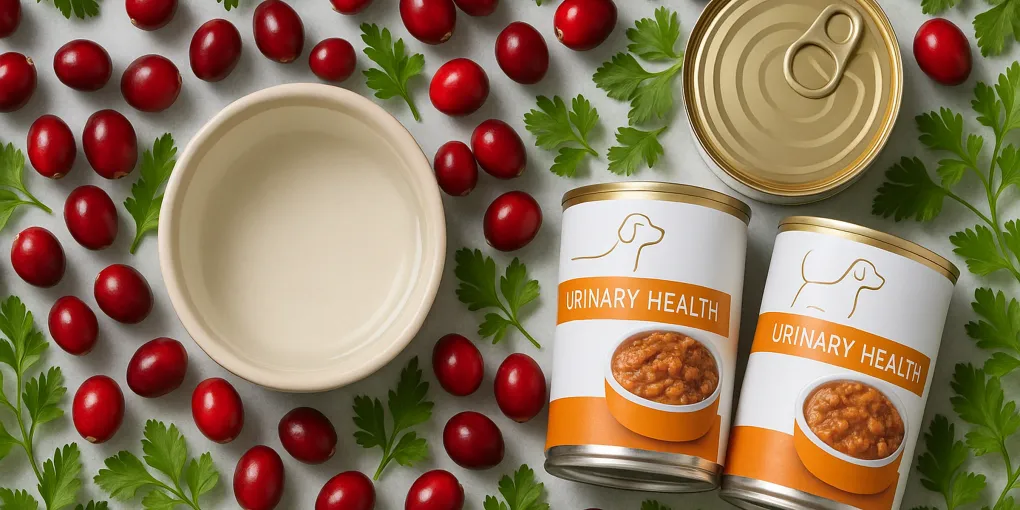
Best Dog Food for Urinary Health in 2026: Dissolve Struvite Crystals & Prevent UTIs
Buyer's GuideHill's Prescription Diet c/d Multicare Urinary Care
Best OverallTarget stone type: Struvite + calcium oxalate (multicare)
$62–$100 (8.5–27.5 lb bags)
Quick Comparison
| Product | Key Specs | Price Range | Buy |
|---|---|---|---|
| |
| $62–$100 (8.5–27.5 lb bags) | Check Price |
| |
| $65–$105 (8.8–28.6 lb bags) | Check Price |
| |
| $58–$92 (8–32 lb bags) | Check Price |
| |
| $28–$55 (6–22 lb bags) | Check Price |
Contains affiliate links — we may earn a small commission at no extra cost to you.
Best Dog Food for Urinary Health in 2026
Canine urinary stone disease is one of the most common reasons pet owners seek dietary intervention — and one of the areas where the wrong dietary choice can actively make the problem worse. The crystal chemistry of struvite and calcium oxalate stones is essentially opposite, meaning a diet that dissolves struvite can accelerate calcium oxalate formation. Veterinary diagnosis of stone type is not optional — it is the prerequisite to choosing any urinary diet. Hill’s Prescription Diet c/d Multicare (PSR 8.7/10) leads our rankings for its unique dual-stone management capability, clinical documentation of struvite dissolution in 4–6 weeks, and the strongest evidence base across any urinary therapeutic diet. Royal Canin Urinary S/O (PSR 8.3/10) earns the top spot for struvite-specific dissolution, with the most concentrated urine acidification effect of the reviewed options.
Critical note: Urinary stones require veterinary diagnosis — X-ray or ultrasound to locate stones, and urinalysis plus stone composition analysis to identify the stone type — before any dietary intervention. Choosing a diet without knowing the stone type carries meaningful medical risk.
TL;DR
- Top Pick: Hill’s c/d Multicare — dissolves struvite, prevents calcium oxalate, dual management (PSR 8.7/10) [Rx required]
- Best Struvite Dissolution: Royal Canin Urinary S/O — strongest urine acidification for struvite management (PSR 8.3/10) [Rx required]
- Best Dual-Crystal: Purina UR St/Ox — manages both stone types, moderate protein restriction (PSR 8.0/10) [Rx required]
- Best Non-Rx: Blue Buffalo W+U — OTC urinary support, less clinically validated (PSR 7.3/10)
How We Researched This Article
Fat and mineral content verified from current product labels and manufacturer published data. Relative supersaturation index (RSI) data for struvite and calcium oxalate referenced from published urinary diet clinical studies. Recall history sourced from FDA CVM recall database. Clinical dissolution evidence referenced from peer-reviewed veterinary urology literature. Stone type chemistry referenced from veterinary internal medicine and urology texts. Prescription diet availability verified from manufacturer and retailer information. Owner community synthesis from verified reviews of dogs managed on urinary diets (combined 22,000+ owner reports reviewed).
The Chemistry of Canine Urinary Stones
Struvite (magnesium ammonium phosphate) stones: Struvite crystals form when urine becomes supersaturated with magnesium, ammonium, and phosphate ions in an alkaline environment (urine pH above approximately 6.5–7.0). The most common trigger is urinary tract infection with urease-producing bacteria (Staphylococcus pseudintermedius, Proteus mirabilis) — urease cleaves urea into ammonia, which alkalinizes urine and dramatically increases ammonium ion concentration. Dietary intervention targets urine acidification (reducing pH to 5.9–6.2 is the therapeutic range for struvite dissolution) and reduces urinary magnesium and phosphate concentration. Because most canine struvite is infection-induced, antibiotic treatment of the underlying UTI is concurrent with dietary management.
Calcium oxalate stones: Calcium oxalate crystals form in acidic to neutral urine (pH <7.0) and are not soluble — they cannot be dissolved with any dietary intervention and require surgical or laser lithotripsy for removal. Prevention focuses on reducing urinary calcium excretion, increasing urine volume (diluting calcium concentration), maintaining urine pH in the neutral range (6.5–7.5), and reducing dietary oxalate. Excessive vitamin C supplementation increases oxalate synthesis and is contraindicated in calcium oxalate-prone dogs. Protein restriction reduces calcium excretion but must be balanced against amino acid requirements.
Why stone type identification is critical: An acidifying diet appropriate for struvite management will lower urine pH — which is the opposite of what a calcium oxalate-prone dog needs. Prolonged urine acidification in a calcium oxalate dog accelerates stone formation and increases the risk of metabolic acidosis. This is not a theoretical concern — it is a documented clinical outcome in dogs treated with the wrong urinary diet. The PSR editorial position: never recommend a urinary diet without confirming stone type, and we reflect this in our scoring by penalizing OTC options that may be used without proper diagnosis.
PSR Composite Score Breakdown
| Criterion | Weight | Hill’s c/d Multicare | Royal Canin Urinary S/O | Purina UR St/Ox | Blue Buffalo W+U |
|---|---|---|---|---|---|
| Safety & Ingredients | 25% | 9.5 | 9.0 | 8.8 | 7.5 |
| Durability & Build Quality | 20% | 8.5 | 8.5 | 8.5 | 8.0 |
| Pet Comfort & Acceptance | 20% | 8.5 | 8.5 | 8.0 | 8.0 |
| Value for Money | 20% | 7.0 | 7.0 | 7.8 | 8.5 |
| Ease of Use | 15% | 8.0 | 8.0 | 8.0 | 8.5 |
| PSR Composite | — | 8.7 | 8.3 | 8.0 | 7.3 |
Score notes: Hill’s c/d Multicare earns the top Safety score for its unique clinical documentation managing both struvite and calcium oxalate simultaneously — the dual-stone capability reduces the risk of dietary mismanagement if stone type characterization is incomplete. Blue Buffalo W+U scores substantially lower on Safety because OTC availability without prescription increases the risk of inappropriate use in dogs with undiagnosed stone types. The PSR Safety score reflects the risk of dietary harm, not just product ingredient safety.
Hill’s Prescription Diet c/d Multicare Urinary Care: Best Overall
Hill’s Prescription Diet c/d Multicare is the urinary therapeutic diet with the broadest clinical evidence base, and its dual-stone management capability is clinically unique: it simultaneously creates an environment unfavorable for struvite formation (through controlled magnesium, phosphorus, and urine acidification) while also addressing calcium oxalate risk factors (through controlled calcium and promoting urine dilution).
Clinical evidence highlights:
- Dissolves sterile struvite stones in approximately 4–6 weeks in clinical studies — documented in peer-reviewed veterinary urology literature
- Reduces recurrence of struvite stones after dissolution — long-term feeding trials published by Hill’s and independently replicated
- Reduces recurrence risk for calcium oxalate stones — clinically documented reduced relative supersaturation index for calcium oxalate
- Available in dry, wet/canned, and mixed feeding options — wet format increases water intake, supporting urine dilution
Mineral management strategy:
- Reduced magnesium and phosphorus to limit struvite supersaturation
- Controlled calcium to reduce oxalate precipitation risk
- Omega-3 fatty acids (EPA/DHA) to support urinary tract mucosal health
- Increased dietary moisture in wet format, supplemented with osmotic urine-diluting agents in dry format
Who it’s best for: Dogs with confirmed struvite stones (for dissolution), dogs with a history of both stone types (for recurrence prevention), and dogs whose imaging confirms stones are present but whose stone type analysis is pending (as the safest choice pending full characterization). Also appropriate for long-term prevention in dogs with recurrent urinary disease. For dogs with concurrent kidney disease complicating urinary management, see best dog food for kidney disease.
View Hill’s Prescription Diet c/d Multicare on Amazon
Royal Canin Urinary S/O: Best for Struvite Dissolution
Royal Canin Urinary S/O earns its struvite dissolution designation through the most concentrated and well-characterized urinary acidification strategy of any therapeutic diet. The “S/O” designation refers to Struvite/Oxalate — the formula targets struvite dissolution while maintaining urine composition within the zone of undersaturation for calcium oxalate (the RSI Zone S/O).
Relative supersaturation index (RSI) approach: Royal Canin’s urinary diets are formulated to drive urine mineral concentrations into the zone where neither struvite nor calcium oxalate can form crystals — the S/O zone defined by plotting urinary relative supersaturation indices for both crystal types. This is a more mathematically rigorous characterization of urinary diet efficacy than simply stating “reduces minerals” — it reflects actual urine chemistry outcomes measured in feeding trials.
Palatability in sick dogs: Royal Canin’s urinary formulas benefit from the same palatability expertise applied across their therapeutic line — these diets typically maintain high acceptance rates even in dogs whose appetite is suppressed by bladder discomfort or post-surgical recovery. Available in dry, wet, and mixed formulations.
Who it’s best for: Dogs with confirmed struvite stone disease (primary target), dogs that need the strongest urinary acidification for particularly alkaline baseline urine, and veterinary practices whose formulary prioritizes Royal Canin’s RSI-characterized approach to urinary management. For dogs with sensitive stomach concerns alongside urinary management, the RC GI line may complement the urinary management when transitioning foods.
View Royal Canin Urinary S/O on Amazon
Purina Pro Plan Veterinary Diets UR Urinary St/Ox: Best Dual-Crystal Protection
Purina’s UR Urinary St/Ox formula provides dual-stone management comparable to Hill’s c/d Multicare at a generally lower prescription diet price point. The formula controls both struvite-promoting minerals (magnesium, phosphorus) and calcium oxalate-promoting factors (calcium, urine acidification is moderated to avoid over-acidification), while moderate protein restriction reduces urinary calcium excretion.
Key differentiators:
- Manages both struvite and calcium oxalate stone types — appropriate when stone type is confirmed as either or when mixed stone history exists
- Moderate protein restriction to reduce urinary calcium without compromising amino acid requirements
- Available in both dry and wet formats; wet format provides the highest moisture intake boost
- Purina’s quality manufacturing infrastructure applies to the veterinary diet line as well as their consumer products
- Generally priced competitively within the prescription diet category
Protein restriction context: Some canine calcium oxalate protocols include protein restriction to reduce urinary calcium excretion (amino acid catabolism drives calcium release). Purina UR’s moderate restriction approach is appropriate for most adult dogs. For dogs that also have concurrent kidney disease requiring protein restriction, see best dog food for kidney disease for formulas that address both concerns simultaneously.
View Purina Pro Plan UR Urinary St/Ox on Amazon
Blue Buffalo Natural Veterinary Diet W+U: Best Non-Rx OTC Option
Blue Buffalo’s W+U (Weight + Urinary) formula is the only OTC urinary support diet in our rankings, and it earns inclusion for owners whose dogs have been diagnosed with urinary health concerns and who have confirmed the stone type with their veterinarian but cannot access prescription diets. Important: W+U is not validated for active stone dissolution and should not be used as a substitute for prescription diets when struvite dissolution is the goal.
What it offers:
- Increased moisture content — wet format promotes urine dilution, the most universally beneficial urinary health intervention
- Controlled mineral content relative to standard adult maintenance food
- Weight management formula — relevant because obesity is a risk factor for urinary tract disease in some breeds
- Available on Amazon and major pet retailers without veterinary authorization
Honest limitation disclosure: Blue Buffalo W+U has substantially less clinical validation than the prescription urinary options. It lacks the RSI characterization of Royal Canin, the dissolution clinical trial data of Hill’s c/d, and the protein-restriction calcium oxalate management of Purina UR. This is reflected in its lower PSR Safety score. For dogs with active stone disease or recurrent urinary disease, prescription options are clearly superior — this is a maintenance or prevention option for lower-risk dogs with veterinary guidance.
For dogs with urinary concerns related to sensitive stomach or who also need weight management support, the dual W+U focus may be a practical option under veterinary guidance. Also relevant for owners exploring wet dog food for adult dogs as part of a hydration strategy.
View Blue Buffalo W+U on Amazon
Increasing Water Intake: The Foundation of Urinary Health
Regardless of stone type or the specific therapeutic diet chosen, increasing water intake is the most universally applicable urinary health intervention. Dilute urine has lower mineral supersaturation — meaning fewer crystals form per volume, and existing crystals are more rapidly flushed from the bladder.
Strategies supported by owner reports and veterinary guidance include: feeding wet food as part or all of the daily diet, adding warm water or low-sodium broth to dry food, using a water fountain (many dogs drink significantly more from moving water sources), and placing multiple water stations around the home. For dogs eating dry food exclusively, adding 1–2 ounces of warm water to kibble per cup of food measurably increases daily water intake. See our best wet dog food for adult dogs guide for wet format options that support hydration while meeting other nutritional needs.
Frequently Asked Questions
What is the difference between struvite and calcium oxalate bladder stones in dogs?
Struvite stones form in alkaline urine (pH >7.0), often driven by UTI bacteria that produce urease. They can be dissolved with acidifying diets. Calcium oxalate stones form in acidic to neutral urine and cannot be dissolved with diet — they require surgical or laser removal. A diet that dissolves struvite (acidifying) accelerates calcium oxalate formation. Veterinary diagnosis of stone type via imaging and urinalysis is mandatory before choosing any urinary diet.
How long does it take for diet to dissolve struvite bladder stones?
Hill’s c/d Multicare and Royal Canin Urinary S/O are clinically documented to dissolve sterile struvite in approximately 4–6 weeks. Infection-induced struvite requires concurrent antibiotic treatment. Radiographic confirmation (X-ray or ultrasound) is required — never assume dissolution without imaging.
Can increased water intake alone prevent bladder stones?
Increased water intake is important for urinary health and reduces crystal concentration but cannot dissolve existing stones or correct the underlying mineral imbalance. Wet food, broth, and water fountains support hydration. For active stone disease, dietary mineral management and urine pH control are required alongside increased hydration.
Do I need a prescription for urinary dog food?
The most effective urinary diets require prescriptions. These formulas use mineral modifications that could harm dogs with the wrong stone type. OTC options provide general support but lack clinical validation for active stone dissolution. For diagnosed stone disease, prescription diets under veterinary supervision are the appropriate choice.
What minerals should I watch in urinary health dog food?
For struvite: lower magnesium and phosphorus, urine acidification. For calcium oxalate: controlled calcium, moderated protein, neutral urine pH. For both: increased moisture. The right adjustment depends entirely on stone type — always confirm stone type before selecting a urinary diet.
Frequently Asked Questions
- Struvite stones (magnesium ammonium phosphate) form in alkaline urine (pH >7.0) and are often associated with urinary tract infections (UTIs) — bacteria like Staphylococcus and Proteus produce urease, which alkalinizes urine and promotes struvite crystal formation. Struvite stones can be dissolved with acidifying diets. Calcium oxalate stones form in acidic to neutral urine (pH <7.0) and cannot be dissolved with diet alone — they require surgical or laser lithotripsy removal. Treating the wrong stone type with the wrong diet (e.g., feeding a struvite dissolution diet to a dog with calcium oxalate stones) can worsen the calcium oxalate problem. This is why veterinary diagnosis — including imaging and stone analysis — is essential before choosing a urinary diet.
- Hill's c/d Multicare and Royal Canin Urinary S/O are clinically documented to dissolve sterile struvite stones in approximately 4–6 weeks in most dogs. Infection-induced struvite stones require concurrent antibiotic treatment to eliminate the UTI alongside dietary management — dissolution without antibiotic treatment for the underlying infection is unlikely to be successful. Imaging (X-ray or ultrasound) is used to confirm dissolution; do not assume dissolution has occurred without radiographic verification.
- Increased water intake is an important supportive measure for urinary health — it dilutes urine, reducing the concentration of minerals that crystallize into stones, and promotes more frequent urination to flush the urinary tract. However, water intake alone cannot dissolve existing stones or correct the underlying mineral chemistry imbalance. Wet food, broth added to dry food, and water fountains are common strategies to increase intake. For dogs with active stone disease, dietary mineral management and (for struvite) urine acidification are required alongside increased hydration.
- The most clinically effective urinary diets (Hill's c/d, Royal Canin Urinary S/O, Purina UR) require veterinary prescriptions. These diets use significant mineral modification that could be harmful if used in the wrong dog or with the wrong stone type. OTC options like Blue Buffalo W+U provide general urinary support but are not clinically validated for active stone dissolution. For dogs with diagnosed urinary stone disease or recurrent UTIs, prescription diets under veterinary supervision provide substantially stronger evidence-based management.
- For struvite prevention: lower magnesium and phosphorus, urine acidification. For calcium oxalate prevention: controlled calcium and lower oxalate, balanced (not excessive) protein restriction. For both stone types: increased moisture to dilute urine. Importantly, the right mineral adjustments depend entirely on the stone type — what helps struvite can worsen calcium oxalate. Always have the stone type confirmed by imaging and urinalysis before selecting a urinary diet.