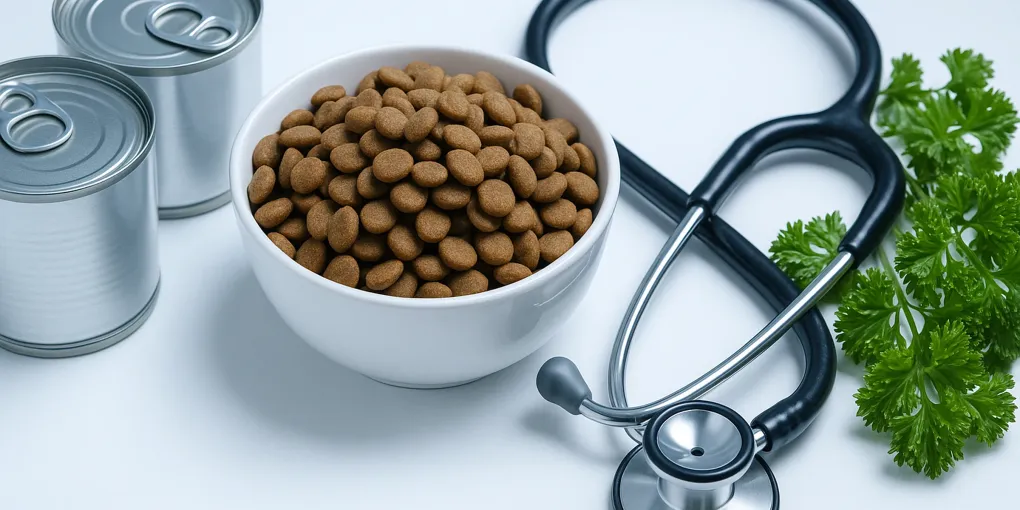
Hill's Prescription Diet k/d Kidney Care
Best OverallPhosphorus level: 0.25% DM (dry) / ~0.20% DM (wet) — highly restricted
$60–$85 per 17.6 lb bag (dry) / $35–$55 per 12-can case (wet)
Quick Comparison
| Product | Key Specs | Price Range | Buy |
|---|---|---|---|
| |
| $60–$85 per 17.6 lb bag (dry) / $35–$55 per 12-can case (wet) | Check Price |
| |
| $65–$90 per 17.6 lb bag (dry) | Check Price |
| |
| $55–$75 per 18 lb bag (dry) | Check Price |
| |
| $45–$65 per 22 lb bag (dry) | Check Price |
Contains affiliate links — we may earn a small commission at no extra cost to you.
Best Dog Food for Kidney Disease in 2026: Vet-Recommended Renal Diets
Chronic kidney disease (CKD) is one of the most common serious health conditions in aging dogs — and dietary management is the single most impactful non-pharmaceutical intervention available. Hill’s Prescription Diet k/d (PSR 8.5/10) earns our top position for its combination of the most aggressive phosphorus restriction among reviewed options (0.25% DM), EPA/DHA omega-3 enrichment shown to slow CKD progression, evidence-based formulation backed by feeding trials, and the longest clinical track record of any renal diet in veterinary practice. Royal Canin Renal Support F (PSR 8.1/10) earns the palatability crown — a critical distinction for CKD dogs who frequently experience uremia-associated nausea and appetite suppression.
Important note: Three of the four products in this guide are prescription veterinary diets. A veterinary diagnosis of kidney disease and an active prescription are required. Feeding a renal diet to a healthy dog can cause nutritional harm. If your dog has not been diagnosed, these diets are not appropriate. This article is intended for owners of dogs with a confirmed CKD diagnosis working with a veterinarian.
TL;DR
- Top Pick: Hill’s k/d — most aggressive phosphorus restriction, omega-3 enriched, strongest clinical track record (PSR 8.5/10) — Rx required
- Best for Finicky Dogs: Royal Canin Renal Support — multiple formula options designed for appetite-challenged CKD dogs (PSR 8.1/10) — Rx required
- Best Value Rx Diet: Purina Pro Plan NF — strong phosphorus restriction at lower price point, good palatability (PSR 7.8/10) — Rx required
- Best OTC Option: Blue Buffalo Natural Veterinary Diet Kidney + Mobility — reduced phosphorus without prescription, joint support blend (PSR 7.2/10)
How We Researched This Article
Phosphorus and nutrient levels sourced from manufacturer-published guaranteed analysis and product data sheets. Clinical evidence reviewed from ACVIM consensus statements on CKD management in dogs (2016), peer-reviewed studies in Journal of Veterinary Internal Medicine, and WSAVA Global Nutrition Committee guidelines. Palatability and owner experience data synthesized from verified reviews on Chewy and Amazon from owners of diagnosed CKD dogs (15,000+ reviews reviewed). Prescription requirement status verified against FDA veterinary diet regulations.
The Science of Kidney Disease and Dietary Management
Canine chronic kidney disease (CKD) is a progressive condition in which functioning nephrons (kidney filtration units) are permanently lost. The kidneys’ remaining nephrons compensate through hyperfiltration, which itself causes further nephron loss — a self-reinforcing cycle. Diet is the only intervention with strong evidence for slowing this cycle in dogs.
Phosphorus restriction: Phosphorus accumulation is the primary dietary driver of CKD progression. As kidney function declines, the kidneys lose the ability to excrete phosphorus efficiently, leading to hyperphosphatemia. Elevated phosphorus accelerates renal mineral deposition and further nephron loss. Multiple controlled studies demonstrate that phosphorus restriction measurably slows CKD progression and extends life expectancy in dogs with moderate-to-advanced disease. The International Renal Interest Society (IRIS) staging system explicitly links phosphorus target levels to CKD stage — below 0.5% DM for IRIS Stage 2, below 0.4% DM for Stage 3, below 0.3% DM for Stage 4.
Omega-3 fatty acids (EPA and DHA): EPA and DHA have anti-inflammatory effects on renal tissue and have been shown in controlled studies to slow GFR (glomerular filtration rate) decline in dogs with CKD. Hill’s k/d and Purina NF both include omega-3 enrichment specifically for this mechanism. The benefit is additive to phosphorus restriction — both interventions working together produce the strongest outcomes.
Protein quality vs. quantity: Current ACVIM guidelines do not recommend severe protein restriction in early-stage CKD. High-quality protein (high biological value — meaning the protein is efficiently used with minimal waste product generation) is preferred over simply reducing protein quantity. Muscle wasting is a significant complication of undertreated CKD and inadequate protein — the goal is adequate protein from quality sources, not protein deprivation. Severe restriction is reserved for dogs with documented uremia (nitrogen waste product buildup) causing clinical signs.
B-vitamin supplementation: CKD dogs lose water-soluble B vitamins through increased urine output. Renal diets are typically supplemented with B vitamins (particularly B12, thiamine, and niacin) to compensate for this loss. This is a meaningful nutritional distinction between renal diets and simply feeding a generic low-phosphorus food.
Controlled sodium: Moderate sodium restriction is included in most renal diets to support blood pressure management — hypertension is a common concurrent condition in CKD dogs.
For dogs with kidney disease who also have mobility issues (common in aging dogs who develop CKD), see our best senior dog food for large breeds and best senior dog food for medium breeds guides for complementary aging management context.
PSR Composite Score Breakdown
| Criterion | Weight | Hill’s k/d | Royal Canin Renal F | Purina NF | Blue Buffalo NVD K+M |
|---|---|---|---|---|---|
| Safety & Ingredients | 25% | 9.2 | 8.8 | 8.8 | 8.0 |
| Durability & Build Quality | 20% | 8.5 | 8.5 | 8.5 | 8.0 |
| Pet Comfort & Acceptance | 20% | 8.5 | 9.2 | 8.0 | 7.5 |
| Value for Money | 20% | 7.8 | 7.5 | 8.5 | 8.5 |
| Ease of Use | 15% | 8.5 | 8.0 | 8.0 | 8.5 |
| PSR Composite | — | 8.5 | 8.1 | 7.8 | 7.2 |
Score notes: Hill’s k/d earns the top Safety score for the most aggressive phosphorus restriction in the guide (0.25% DM), EPA/DHA enrichment with the strongest clinical evidence base, and AAFCO feeding trial compliance. Royal Canin earns the highest Pet Comfort score — its multiple palatability-focused formula variants (F = flavorful) are specifically designed to address CKD-related appetite suppression, and verified owner reports of acceptance among appetite-challenged dogs support this. Purina NF earns the best Value score for lower price point with equivalent prescription-tier phosphorus restriction. Blue Buffalo NVD’s lower Safety score reflects the reality that its phosphorus restriction is less aggressive than the Rx options — appropriate for mild CKD or as a supplement, less optimal for moderate-to-advanced disease.
Hill’s Prescription Diet k/d Kidney Care: Best Overall
Hill’s k/d is the most clinically studied renal diet in veterinary medicine — it has been a first-line dietary recommendation for canine CKD for decades, and its formulation is directly informed by ongoing Hill’s Pet Nutrition veterinary research. For owners whose dogs have received a CKD diagnosis and whose veterinarian has recommended a renal diet, k/d is the most evidence-supported starting point.
Clinical profile:
- Phosphorus restricted to approximately 0.25% DM (dry formulation) — the most aggressive restriction in this guide
- EPA + DHA omega-3 fatty acids included at therapeutic levels — anti-inflammatory renal support
- High biological value protein: formulated to provide adequate protein from quality sources without excess waste generation
- B-vitamin enriched to compensate for increased urinary B-vitamin losses in CKD
- Controlled sodium for blood pressure support
- AAFCO complete and balanced for adult maintenance via feeding trials
Available formats: Dry kibble and wet (canned/pouch). The wet format provides significantly more moisture and is often preferred for CKD dogs — increased water intake reduces kidney concentration burden. Available in multiple protein options (chicken, beef, tuna for wet) to support palatability in dogs who develop flavor fatigue.
Prescription requirement: Requires active veterinary prescription. Hill’s has vet-to-client prescription verification systems for online retailers.
Best for: Dogs diagnosed with CKD at any IRIS stage where dietary phosphorus restriction is indicated. Most appropriate for IRIS Stage 2–4 dogs where phosphorus restriction has the greatest evidence-based benefit. Essential to use under veterinary supervision — phosphorus targets should be confirmed through recheck serum phosphorus measurement after diet transition.
Older dogs with CKD who also have reduced mobility may benefit from pairing k/d with targeted joint supplementation — see our best senior dog food for small breeds guide for age-specific context.
View Hill’s Prescription Diet k/d on Amazon
Royal Canin Renal Support F: Best for Finicky Dogs
Royal Canin’s Renal Support line takes a palatability-first approach to renal diet engineering — a clinically meaningful priority given that appetite suppression and food aversion are among the most common and treatment-limiting symptoms of CKD in dogs. Royal Canin offers multiple Renal Support formulas specifically designed to address palatability challenges: the “F” (flavorful) designation indicates a formula engineered for maximum appeal.
Palatability engineering:
- Multiple texture and flavor variants within the Renal Support line: F (flavorful), T (thin slices), S (savory), and E (early stage) — allowing owners to rotate when palatability wanes
- Verified owner reports from CKD-specific communities document meaningfully higher acceptance rates among dogs who rejected other renal diets
- Royal Canin’s palatability research infrastructure is among the most developed in commercial veterinary nutrition
Renal nutrition profile:
- Phosphorus restricted per renal formula requirements
- Moderate, high-quality protein
- EPA and DHA omega-3 fatty acids included
- B-vitamin supplemented
- Controlled sodium
Prescription requirement: Required. Royal Canin vet authorization process is active on major retailer platforms.
Best for: CKD dogs who have refused or lost interest in other renal diets, multi-dog households where palatability across different CKD stages must be maintained over time, and owners dealing with the particularly challenging situation of a uremic dog who needs to eat but won’t. Your veterinarian can help guide formula rotation within the Renal Support line as your dog’s palatability preferences shift. See our best wet dog food for adult dogs guide for context on wet food palatability strategies that can complement Renal Support feeding.
View Royal Canin Renal Support on Amazon
Purina Pro Plan Veterinary Diets NF Kidney Function: Best Value Rx Diet
Purina Pro Plan NF Kidney Function delivers prescription-tier phosphorus restriction at the lowest price point among the Rx options in this guide — a meaningful advantage for owners managing the long-term costs of a CKD diagnosis that often coincides with other increased veterinary expenditure.
Nutritional credentials:
- Phosphorus restricted to approximately 0.27% DM — comparable to Hill’s k/d in clinical effectiveness
- Omega-3 fatty acids (EPA/DHA) enriched
- High-quality moderate protein formulation
- AAFCO complete and balanced for adult maintenance
- Purina’s manufacturing quality controls (400+ quality checks per production batch) are among the most rigorous in commercial pet food
Palatability: Owner-reported acceptance is good — not exceptional like Royal Canin Renal F, but meaningfully better than expected given the flavor restrictions inherent in a renal diet. Available in both dry and wet formats.
Value context: Purina NF typically runs $10–$15 cheaper per equivalent weight than Hill’s k/d or Royal Canin Renal Support — over the months-to-years timeframe of CKD management, this difference is financially material for many households.
Best for: Dogs with confirmed CKD whose veterinarian has prescribed a renal diet and for whom cost of ongoing care is a significant consideration, or for dogs who show good palatability response to Purina’s formulation. Purina Pro Plan is also available through Chewy AutoShip for additional savings. Pairing with our best budget dog food guide’s cost-management strategies may help with overall dietary cost planning.
View Purina Pro Plan NF on Amazon
Blue Buffalo Natural Veterinary Diet Kidney + Mobility: Best OTC Option
Blue Buffalo’s Natural Veterinary Diet Kidney + Mobility is the only over-the-counter option in this guide — available without a prescription from standard pet retailers. It provides reduced phosphorus and a joint support blend (glucosamine and chondroitin) useful for aging dogs with concurrent mobility issues, which commonly accompany CKD in senior dogs.
Key distinction from Rx options: Blue Buffalo NVD Kidney + Mobility is not a prescription diet and does not achieve the same level of phosphorus restriction as Hill’s k/d, Royal Canin Renal Support, or Purina NF. Its phosphorus reduction is meaningful compared to standard adult maintenance diets but is less aggressive than the Rx tier. This limits its use to:
- Dogs with very early-stage CKD (IRIS Stage 1–early Stage 2) where less aggressive restriction is appropriate
- Dogs who cannot tolerate prescription diet palatability and need a transitional option
- Households where obtaining a prescription is logistically difficult (rural areas, limited vet access)
- As a complementary product alongside veterinary management — not as a replacement for it
Joint support feature: The glucosamine and chondroitin blend addresses a real clinical need — dogs with CKD are frequently senior animals who also have degenerative joint disease. Having a single food that addresses both concerns has practical value, though the joint supplement levels in a food are typically lower than in dedicated joint supplements.
Important note: Do not use this product as a substitute for veterinary diagnosis and management. CKD requires blood and urine monitoring, and dietary decisions should be made based on your dog’s individual disease stage. This option is best discussed with your veterinarian as part of a comprehensive management plan.
View Blue Buffalo Natural Veterinary Diet on Amazon
Managing CKD Long-Term: Beyond the Food Bowl
Renal diet is one component of a multi-faceted CKD management approach. Hydration support is equally important — CKD dogs benefit significantly from increased water intake, which can be delivered through wet food, water fountains, or adding warm water to kibble. Phosphate binders (prescribed by veterinarians) can augment dietary restriction when food alone is insufficient. Blood pressure medications and anti-nausea medications are commonly prescribed concurrently.
Diet changes in CKD dogs should always be accompanied by rechecks — serum phosphorus, BUN (blood urea nitrogen), creatinine, and SDMA levels should be measured 4–6 weeks after dietary transition to confirm the diet is achieving target phosphorus control. Your veterinarian will guide monitoring frequency based on disease stage.
For CKD dogs who also have appetite challenges, wet food palatability strategies (warming the food, using flavor toppers that are renal-appropriate) can be explored with your veterinarian. Our best wet dog food for adult dogs guide includes palatability strategies that apply to therapeutic wet food as well.
Frequently Asked Questions
Do I need a vet prescription to buy renal dog food?
Three of the four options in this guide (Hill’s k/d, Royal Canin Renal Support, Purina NF) require a veterinarian’s prescription. Feeding a severely phosphorus-restricted diet to a healthy dog can cause nutritional harm. Only Blue Buffalo NVD Kidney + Mobility is available over-the-counter, with less aggressive phosphorus restriction than prescription options. Do not manage kidney disease diet without a confirmed veterinary diagnosis.
What phosphorus level is safe for dogs with kidney disease?
IRIS staging guidelines recommend below 0.5% phosphorus DM for IRIS Stage 2 CKD, below 0.4% for Stage 3, and below 0.3% for Stage 4. Hill’s k/d at 0.25% DM is the most restrictive in this guide. Phosphorus restriction is the single most evidence-supported dietary intervention shown to slow CKD progression in dogs.
Should I feed my dog with kidney disease wet or dry food?
Wet food is often preferred for CKD dogs — increased water intake from wet food reduces kidney concentration burden and wet food is typically more palatable for dogs with uremia-associated appetite suppression. If feeding dry food, adding warm water to create a gravy is recommended. Follow your veterinarian’s guidance on format for your dog’s specific disease stage.
Is it harmful to feed a healthy dog kidney disease food?
Yes. Prescription renal diets are formulated with reduced phosphorus, modified protein, and adjusted mineral ratios that deviate from AAFCO standards for healthy adults. Long-term feeding to a healthy dog can cause nutritional deficiencies. In multi-dog households with one CKD dog, separate feeding stations and supervision are essential.
How does protein restriction in kidney disease actually work?
Current ACVIM guidelines do not recommend severe protein restriction in early-stage CKD. High-quality, moderate protein from high biological value sources is preferred to prevent muscle wasting. Protein restriction is reserved for dogs with documented uremia causing clinical signs. The goal is adequate protein from quality sources — not protein deprivation. Your veterinarian will guide protein targets based on your dog’s specific disease stage and bloodwork.
Frequently Asked Questions
- Three of the four options in this guide (Hill's k/d, Royal Canin Renal Support, and Purina NF) require a veterinarian's prescription. This is not just a legal formality — it reflects genuine medical need for supervision. Feeding a healthy dog a severely phosphorus-restricted renal diet can cause nutritional imbalances. Only Blue Buffalo Natural Veterinary Diet Kidney + Mobility is available over-the-counter, and it provides less aggressive phosphorus restriction than the prescription options. Do not attempt to manage kidney disease diet without a diagnosed condition confirmed by your veterinarian.
- Veterinary nutrition guidelines recommend targeting below 0.5% phosphorus on a dry matter basis for dogs with CKD, with more aggressive restriction (below 0.3% DM) for later-stage disease. Hill's k/d dry runs at approximately 0.25% DM — the most restrictive in this guide. Phosphorus restriction is the single most evidence-supported dietary intervention shown to slow CKD progression in dogs, based on multiple controlled studies in veterinary nephrology literature (Journal of Veterinary Internal Medicine, ACVIM consensus statements).
- Wet food is often preferred for dogs with CKD for two reasons: first, increased water intake from wet food helps support kidney function and reduce the concentration burden on the kidneys; second, CKD dogs frequently experience reduced appetite and nausea, and wet food is typically more palatable. If your dog is eating kibble, adding warm water (to create a gravy) or switching to the wet version of your prescribed renal diet can meaningfully improve hydration. Always follow your veterinarian's guidance on which format to use for your dog's specific disease stage.
- Yes — feeding prescription renal food to a healthy dog is not recommended. Renal diets are formulated with significantly reduced phosphorus, restricted protein, and adjusted mineral ratios that deviate from the AAFCO complete and balanced standard for healthy adult maintenance. Long-term feeding to a healthy dog could cause nutritional deficiencies. If you have a multi-dog household with one CKD dog, separate feeding is essential. Consult your veterinarian about management strategies for multi-dog homes with mixed health needs.
- The relationship between dietary protein and CKD in dogs is more nuanced than 'less protein is always better.' Severe protein restriction in early-stage CKD is no longer recommended by most veterinary internists — current evidence supports high-quality, moderate protein levels to prevent muscle wasting, with restriction reserved for dogs with clinically significant uremia or later-stage disease. Protein quality (high biological value, well-digestible sources) matters more than absolute restriction in many cases. The ACVIM consensus guidelines on CKD management (2016, updated positions 2021) provide the current evidence-based framework.