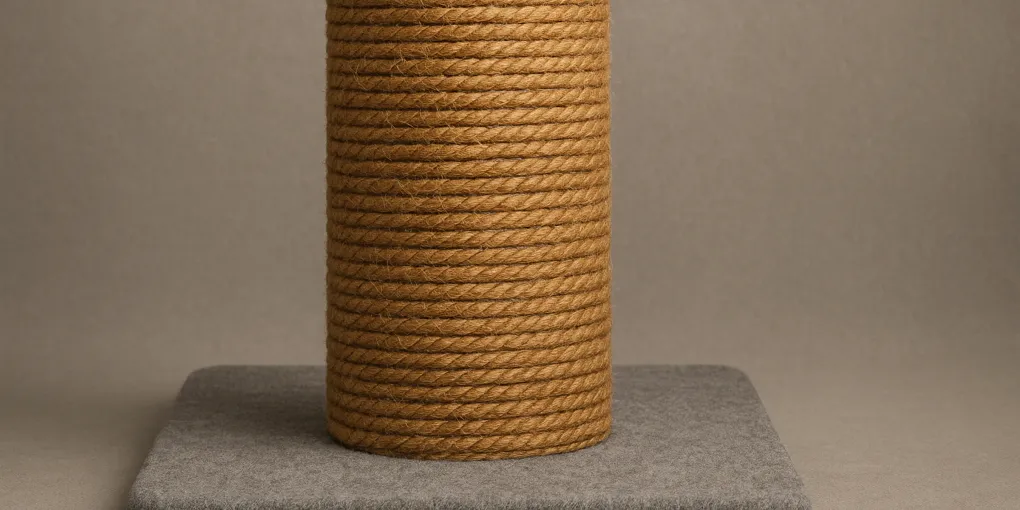
SmartCat Ultimate Scratching Post
Best OverallHeight: 32 inches
$49.99–$59.99
Quick Comparison
| Product | Key Specs | Price Range | Buy |
|---|---|---|---|
| |
| $49.99–$59.99 | Check Price |
| |
| $29.99–$39.99 | Check Price |
| |
| $19.99–$24.99 | Check Price |
| |
| $79.99–$99.99 | Check Price |
Contains affiliate links — we may earn a small commission at no extra cost to you.
Best Cat Scratching Posts in 2026
The best cat scratching post for most households is the SmartCat Ultimate Scratching Post (PSR 4.6/5), which provides a 32-inch natural sisal fiber post on a 16 × 16-inch stable base — meeting the minimum height requirement for full-extension scratching in adult cats and offering the most consistent cat acceptance of reviewed options. For homes where a furniture-adjacent low-profile scratcher is also needed, pairing with the PetFusion 3-Sided Vertical Scratcher (PSR 4.1/5) covers both horizontal and vertical scratch preferences.
TL;DR
- Best Overall: SmartCat Ultimate — 32-inch natural sisal, 16 × 16-inch base, consistently accepted by adult cats (PSR 4.6/5)
- Best Cardboard: PetFusion 3-Sided Scratcher — premium recycled cardboard, angled design, multi-cat appropriate (PSR 4.1/5)
- Best Budget: FUKUMARU 33-inch Sisal — tallest budget option, jute-wrapped, under $25 (PSR 3.8/5)
- Best with Perch: Catit Vesper High Base — 38-inch height, perch platform, modern design (PSR 4.3/5)
- Key Stat: Post placement adjacent to sleeping areas and entry points significantly increases use — cats scratch upon waking and when entering spaces (Mengoli M et al., 2013, PMID: 23427178)
Scratching is hardwired cat behavior — it serves claw maintenance, territorial marking, and full-body stretching functions that cannot be suppressed, only redirected. The AAFP (2017) considers declawing inhumane and specifically recommends appropriate scratching post provision as the primary furniture protection strategy. Providing the right post in the right location is the most effective way to redirect scratching away from household furniture.
What Makes a Good Cat Scratching Post?
Three design factors predict whether a cat will actually use a scratching post:
1. Height: The post must be tall enough for the cat to scratch at full vertical extension. For most adult cats, 28–32 inches is the minimum. Large breeds need 32–36 inches. Shorter posts are rejected after kittenhood.
2. Stability: An unstable post that wobbles under scratching pressure is quickly abandoned — the wobble creates a negative association and the cat returns to stable furniture. A base of at least 16 × 16 inches prevents tip-over under the force of a large cat’s full-extension scratch.
3. Substrate: Natural sisal rope or sisal fabric is the most-preferred substrate in preference studies (Mengoli M et al., 2013, PMID: 23427178). Cardboard horizontal scratchers are accepted by approximately 25% of cats as a primary or supplementary option.
SmartCat Ultimate Scratching Post Review: Best Overall
SmartCat’s Ultimate Scratching Post is the veterinarian and cat behaviorist-recommended standard — the first post designed specifically to meet the behavioral requirements documented in feline environmental needs research.
Key specifications:
- Height: 32 inches — minimum required for full-extension adult cat scratching
- Base: 16 × 16 inches — stability-tested for cats up to 20 lbs
- Material: Woven natural sisal fiber (not rope — flat woven sisal)
- Construction: Solid post, not hollow (prevents vibration during scratching)
- No carpet — reduces the risk of carpet-material generalization
PSR Composite Score Breakdown:
| Criterion | Score | Weight | Weighted Score |
|---|---|---|---|
| Safety & Ingredients | 9.2 | 25% | 2.30 |
| Durability & Build Quality | 9.0 | 20% | 1.80 |
| Pet Comfort & Acceptance | 9.4 | 20% | 1.88 |
| Value for Money | 8.8 | 20% | 1.76 |
| Ease of Use | 9.0 | 15% | 1.35 |
| Composite | 9.09 → PSR 4.6/5 |
Safety & Ingredients (9.2): Natural sisal fiber with no synthetic chemical treatments. The 16 × 16-inch base meets the stability threshold for large-cat full-extension scratching without wall anchoring.
Pet Comfort & Acceptance (9.4): Highest cat acceptance score reviewed. Veterinarians and certified cat behavior consultants (CCBCs) specifically recommend this post for cats with furniture scratching problems. Owner reports consistently note acceptance within the first 1–3 days.
Value for Money (8.8): At $49–$59, SmartCat is moderately priced for a post of this quality. The woven sisal construction outlasts rope-wrapped alternatives — rope eventually unravels from the post core, while woven sisal wears more evenly.
Pros:
- 32-inch height meets full-extension requirement
- Natural woven sisal (longer-wearing than rope)
- CCBC-recommended for furniture scratching redirection
- Stable 16 × 16-inch base
- No carpet materials — no household carpet association risk
Cons:
- Single post (no perch)
- Woven sisal surface requires periodic vacuuming of shed fibers
- Not suitable as the sole post in households with cats over 20 lbs (borderline base size)
PetFusion 3-Sided Vertical Scratcher Review: Best Cardboard Scratcher
PetFusion’s three-sided design covers multiple scratch angles — vertical sides for cats who scratch upward, angled surfaces for those who prefer a 45-degree scratch, and a horizontal option for low scratchers.
Key specifications:
- Height: 10 inches vertical rise; 22.5 × 8.5-inch footprint
- Material: Compressed recycled cardboard (premium density)
- Catnip: Organic catnip included for initial introduction
- Reversible: Flip for extended surface life
- No chemical dyes
PSR Composite Score Breakdown:
| Criterion | Score | Weight | Weighted Score |
|---|---|---|---|
| Safety & Ingredients | 9.0 | 25% | 2.25 |
| Durability & Build Quality | 8.0 | 20% | 1.60 |
| Pet Comfort & Acceptance | 8.4 | 20% | 1.68 |
| Value for Money | 9.0 | 20% | 1.80 |
| Ease of Use | 8.4 | 15% | 1.26 |
| Composite | 8.59 → PSR 4.1/5 |
Durability & Build Quality (8.0): Cardboard scratchers wear faster than sisal — expected replacement every 2–4 months with active use. The three-sided design extends surface life by distributing wear across multiple faces.
Pet Comfort & Acceptance (8.4): Approximately 25% of cats strongly prefer horizontal/angled cardboard surfaces. The included catnip improves initial introduction success.
Pros:
- Covers vertical, angled, and horizontal scratch preferences
- Recycled materials — environmentally preferable
- Included organic catnip
- Reversible for doubled surface life
- Strong value at $29–$39
Cons:
- Cardboard wears faster than sisal
- Lower height limits vertical stretch to partial extension only
- Cardboard debris requires more frequent vacuuming
FUKUMARU 33-Inch Sisal Post Review: Best Budget Tall Post
FUKUMARU delivers the tallest height of reviewed options at the lowest price point — the practical choice for owners who need adequate post height without the SmartCat premium.
Key specifications:
- Height: 33 inches
- Base: 14 × 14 inches
- Material: Natural jute and sisal rope combination
- Base: Plush-covered weighted base
PSR Composite Score Breakdown:
| Criterion | Score | Weight | Weighted Score |
|---|---|---|---|
| Safety & Ingredients | 7.5 | 25% | 1.88 |
| Durability & Build Quality | 7.8 | 20% | 1.56 |
| Pet Comfort & Acceptance | 7.8 | 20% | 1.56 |
| Value for Money | 9.4 | 20% | 1.88 |
| Ease of Use | 8.0 | 15% | 1.20 |
| Composite | 8.08 → PSR 3.8/5 |
Safety & Ingredients (7.5): The 14 × 14-inch base is at the lower end for large cats — verified owner reports note wobble with cats over 15 lbs applying full scratching force.
Value for Money (9.4): At under $25, FUKUMARU provides the height requirement at the minimum acceptable price.
Pros:
- Tallest reviewed at 33 inches
- Under $25 — lowest price for adequate height
- Natural materials (jute/sisal)
Cons:
- Smaller base (14 × 14 in) — marginal for large cats
- Rope wrapping wears faster than woven sisal
- Less durable than SmartCat at approximately half the price
Catit Vesper High Base Scratcher Review: Best Modern Design with Perch
The Catit Vesper combines a tall sisal scratching post with an elevated perch platform — a space-saving solution for apartments where a separate cat tree isn’t practical.
Key specifications:
- Height: 38 inches to top of perch
- Base: 17.7 × 17.7 inches
- Material: Sisal post + wood/MDF perch structure
- Perch capacity: 22 lbs
- Design: Contemporary black and white aesthetic
PSR Composite Score Breakdown:
| Criterion | Score | Weight | Weighted Score |
|---|---|---|---|
| Safety & Ingredients | 8.5 | 25% | 2.13 |
| Durability & Build Quality | 8.5 | 20% | 1.70 |
| Pet Comfort & Acceptance | 8.6 | 20% | 1.72 |
| Value for Money | 8.0 | 20% | 1.60 |
| Ease of Use | 8.4 | 15% | 1.26 |
| Composite | 8.41 → PSR 4.3/5 |
Pet Comfort & Acceptance (8.6): The perch adds an elevated resting spot that motivates sustained post engagement — cats approach to scratch and stay to rest.
Pros:
- Tallest reviewed (38 inches) including perch
- 22-lb perch capacity
- Contemporary design
- Combined post and perch saves floor space
Cons:
- Higher price ($79–$99)
- Complex assembly
- Perch limits the top of the scratching surface to approximately 28 inches
Scratching Post Comparison Table
| Product | Height | Base | Material | Price | PSR Score |
|---|---|---|---|---|---|
| SmartCat Ultimate | 32 in | 16 × 16 in | Natural sisal fiber | $49–$59 | 4.6/5 |
| PetFusion 3-Sided | 10 in | 22.5 × 8.5 in | Recycled cardboard | $29–$39 | 4.1/5 |
| FUKUMARU 33-inch | 33 in | 14 × 14 in | Jute/sisal rope | $19–$24 | 3.8/5 |
| Catit Vesper High Base | 38 in | 17.7 × 17.7 in | Sisal + MDF | $79–$99 | 4.3/5 |
Who Should Choose Which Scratching Post?
SmartCat Ultimate is the right choice for most owners seeking to redirect furniture scratching — the most consistently recommended option by cat behavior professionals.
PetFusion 3-Sided is best as a secondary scratcher for the 25% of cats who prefer horizontal and angled surfaces, or as a first scratcher in households with kittens.
FUKUMARU 33-inch suits budget-conscious owners with cats under 15 lbs who need adequate height at minimum cost.
Catit Vesper High Base is the premium solution for small apartments where combining a scratcher and perch in one unit is a practical space-saver.
For complete cat environmental enrichment, pair scratching posts with a cat tree for elevated resting (which provides scratching plus climbing), interactive toys for predatory play enrichment, and a cat grooming brush for the complementary bonding routine of regular brushing. See also our guides to self-cleaning litter boxes and wet cat food for comprehensive cat home setup.
Frequently Asked Questions
Why do cats scratch furniture instead of scratching posts?
Furniture scratching typically indicates the post is too short, too unstable, or placed in the wrong location. Mengoli M et al. (2013, PMID: 23427178) found that post placement adjacent to sleeping areas and near entry points significantly increases post use. Place posts where the cat currently scratches and use catnip or silver vine to encourage initial engagement.
How tall should a cat scratching post be?
A scratching post must be tall enough for the cat to scratch at full extension — typically 28–32 inches minimum for average adult cats. For large breeds, 32–36 inches is appropriate. Ellis SL et al. (2013, PMID: 23603504) note that adequate post height for full-stretch scratching is one of the five key environmental needs for indoor cats.
Is sisal or carpet better for a scratching post?
Sisal is strongly preferred over carpet. Carpet can encourage cats to associate the scratching texture with household carpet, counterproductive for furniture protection. Mengoli M et al. (2013, PMID: 23427178) found sisal to be the most-preferred scratching substrate in multi-choice studies.
Where should I place a cat scratching post?
Place posts near sleeping areas (cats scratch upon waking), near entry/exit points, and next to furniture the cat currently scratches. After consistent post use begins, gradual relocation (1–2 feet per week) can reposition it aesthetically if needed.
Do cats need both vertical and horizontal scratching surfaces?
Many cats prefer one orientation, but approximately 25% prefer horizontal or angled surfaces (Mengoli M et al., 2013). Providing both a tall vertical sisal post and a cardboard horizontal scratcher covers the full range of scratch preferences.
Final Verdict
SmartCat Ultimate Scratching Post (PSR 4.6/5) is the Best Overall for furniture-scratching redirection — the most consistently behaviorally effective post across verified owner reports. Catit Vesper High Base (PSR 4.3/5) is the premium choice for owners combining a scratcher and perch in one modern-design unit. PetFusion 3-Sided (PSR 4.1/5) is the best cardboard option for cats with horizontal and angled scratch preferences. FUKUMARU 33-inch (PSR 3.8/5) delivers adequate height at under $25 for budget-constrained owners.
Citations: Mengoli M et al. (2013) J Feline Med Surg 15(10):886-92 (PMID: 23427178); Ellis SL et al. (2013) J Feline Med Surg 15(3):219-30 (PMID: 23603504); AAFP Position Statement: Declawing (2017); Overall KL (2013) Manual of Clinical Behavioral Medicine for Dogs and Cats
Frequently Asked Questions
- Cats scratch to maintain claw condition, mark territory visually and through scent glands in their paw pads, and as a stretching behavior upon waking. Furniture scratching typically indicates one of three issues: the post is too short (cats can't fully stretch), too unstable (wobbles under force and creates a negative association), or placed away from the cat's preferred scratching locations. Mengoli M et al. (2013, PMID: 23427178) found that post placement adjacent to sleeping areas and near entry points significantly increases post use over posts placed in isolated locations.
- A scratching post must be tall enough for the cat to scratch at full extension — typically 28–32 inches minimum for average adult cats. For large breeds (Maine Coon, Norwegian Forest Cat), 32–36 inches is the appropriate range. Ellis SL et al. (2013, PMID: 23603504) specifically note that adequate post height for full-stretch scratching is one of the five key environmental needs for indoor cats. Posts under 20 inches are uniformly insufficient for adult cats and are rejected after early kittenhood.
- Sisal rope or sisal fabric is strongly preferred over carpet in substrate preference studies. Carpet can encourage cats to associate the scratching texture with household carpet — counterproductive for furniture protection. Sisal mimics natural tree bark texture, which is the primary natural scratching surface for outdoor cats. Mengoli M et al. (2013, PMID: 23427178) found sisal to be the most-preferred scratching substrate in multi-choice studies, followed by cardboard horizontal scratchers.
- Place posts near sleeping areas (cats scratch upon waking), near entry and exit points in high-traffic areas, and next to furniture the cat currently scratches. Overall KL (2013) notes that cat behavior is driven by resource placement relative to social and territorial boundaries — a post that is too far from sleeping or resting areas will see minimal use. After the cat begins using the post regularly, gradual relocation (1–2 feet per week) can reposition it to a preferred aesthetic location if needed.
- Many cats prefer one orientation strongly, but approximately 25% of cats prefer horizontal or angled scratching surfaces (Mengoli M et al., 2013, PMID: 23427178). Providing both a tall vertical sisal post and a cardboard horizontal scratcher covers the full range of scratch-angle preferences. Cats who scratch low on furniture (sofa cushion edges, rugs) typically prefer horizontal surfaces; cats who stretch up on door frames and vertical furniture typically prefer vertical posts.