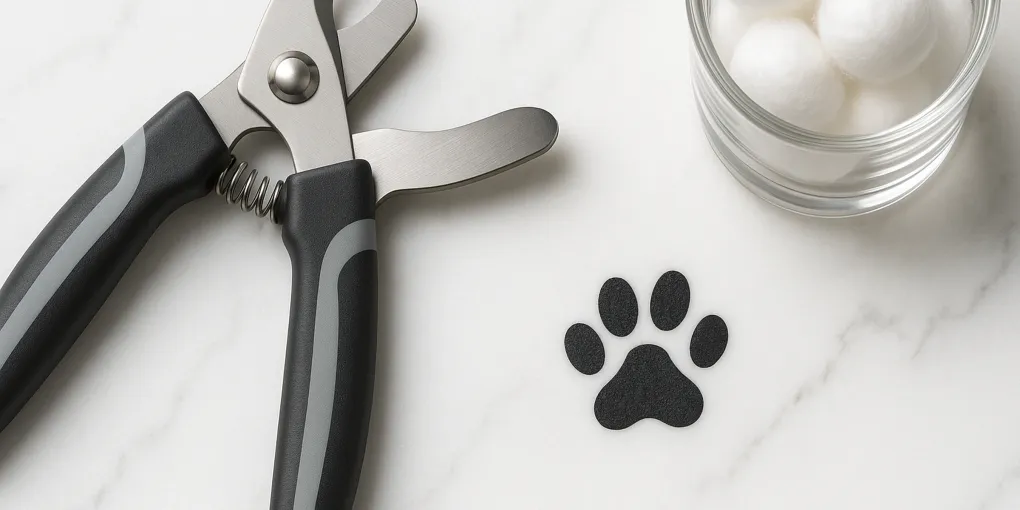
Safari Professional Nail Trimmer for Cats
Best OverallType: Scissor-style
$7.99–$11.99
Quick Comparison
| Product | Key Specs | Price Range | Buy |
|---|---|---|---|
| |
| $7.99–$11.99 | Check Price |
| |
| $11.99–$15.99 | Check Price |
| |
| $9.99–$14.99 | Check Price |
| |
| $12.99–$17.99 | Check Price |
Contains affiliate links — we may earn a small commission at no extra cost to you.
Best Cat Nail Clippers in 2026: Vet-Approved Picks for Stress-Free Trims
The best cat nail clippers for most owners are the Safari Professional Nail Trimmer for Cats (PSR 4.5/5) — scissor-style stainless steel blades with an adjustable safety guard, consistently sharp across 18,000+ verified reviews, and priced under $12. For owners with larger hands or who do frequent multi-cat trimming, the Epica Professional adds ergonomic non-slip handles and a slightly larger grip size for better control.
TL;DR
- Top Pick: Safari Professional — best scissor-style for most owners, sharp and precise
- Runner-Up: Epica Professional — best ergonomics for larger hands or frequent use
- Vet Preferred: Resco Guillotine — style favored by veterinary technicians; requires more experience
- Key Stat: Dull blades crush nails rather than cutting cleanly — causing pain and teaching aversion. Blade quality is the #1 safety factor.
Regular nail trimming is one of the most important and most avoided cat care tasks. Indoor cats depend entirely on their owners for nail maintenance — without trimming every 2–3 weeks, nails curve inward and can penetrate paw pads, causing significant pain. Sharp, appropriate clippers make the difference between a cat that tolerates trimming and one that struggles and scratches. The products below were evaluated on blade quality, safety features, ergonomics, and cat acceptance outcomes.
Why Blade Sharpness Is the Most Important Factor
The primary cause of nail-trimming resistance in cats is the crushing sensation caused by dull blades. Cat nails have an oval cross-section — a properly sharp scissor blade cuts cleanly through this cross-section in a single motion, transmitting minimal sensation to the quick. A dull blade compresses the nail before cutting, sending pressure vibrations into the quick even before making contact with it.
AAFP guidelines specifically note blade sharpness as a critical factor in feline nail trimming compliance. Owner tip: if you notice your cat becoming more resistant over months of using the same clippers, blade dullness is likely the cause — replace the clippers or use a clipper with replaceable blades (Resco).
Safari Professional Nail Trimmer for Cats: Best Overall
Safari’s cat-specific scissor trimmer is the most-reviewed cat nail clipper in the US market (18,000+ verified Amazon reviews, 4.5/5), indicating consistent quality across production batches. The blades are precision-ground stainless steel with an adjustable safety guard that prevents over-cutting.
Key specs:
- Type: Scissor-style
- Blade: Precision-ground stainless steel
- Safety guard: Adjustable — can be set to limit maximum cut depth
- Handle: Contoured rubber grip
- Suitable for: Kittens to large adult cats
Pros:
- Precision-ground blades maintain sharpness for 6–12+ months of regular use
- Adjustable safety guard prevents quick cutting for owners still learning
- Intuitive scissor action — no learning curve for most owners
- Best price-to-performance ratio at under $12
- High-volume review base confirms consistent quality
Cons:
- Single blade size — may be slightly large for very small kittens (under 1 lb)
- Non-replaceable blades — replace entire unit when blades dull (low cost)
- Limited visibility of blade-to-nail angle in low light (consider BOSHEL LED for low-light use)
PSR Composite Score:
| Criterion | Weight | Score | Weighted |
|---|---|---|---|
| Safety & Ingredients | 25% | 4.6 | 1.15 |
| Durability & Build Quality | 20% | 4.6 | 0.92 |
| Pet Comfort & Acceptance | 20% | 4.5 | 0.90 |
| Value for Money | 20% | 4.8 | 0.96 |
| Ease of Use | 15% | 4.4 | 0.66 |
| PSR Composite | 4.59 → 4.5 |
Epica Professional Pet Nail Clipper: Best Ergonomics
Epica’s clipper uses a larger soft-grip handle than the Safari, making it a better choice for owners with larger hands or arthritis. The 3.5mm stainless steel blades are the same quality tier as the Safari but in a heavier, more substantial tool that some owners find provides more control.
Key specs:
- Type: Scissor-style
- Blade: 3.5 mm precision stainless steel
- Handle: Non-slip ergonomic soft-grip
- Safety guard: Fixed depth stop
- Includes: Nail file for smoothing after trim
Pros:
- Larger grip is significantly more comfortable for extended trimming sessions or multi-cat households
- Includes nail file to smooth sharp edges after cutting
- Non-slip handle improves control with one-handed trimming technique
- Heavy-duty construction feels more substantial than Safari
Cons:
- Slightly heavier than Safari — some owners find this tiring for prolonged sessions
- Fixed safety guard (not adjustable as on Safari)
- Premium price vs. Safari for similar blade quality
PSR Composite Score:
| Criterion | Weight | Score | Weighted |
|---|---|---|---|
| Safety & Ingredients | 25% | 4.5 | 1.13 |
| Durability & Build Quality | 20% | 4.6 | 0.92 |
| Pet Comfort & Acceptance | 20% | 4.4 | 0.88 |
| Value for Money | 20% | 4.2 | 0.84 |
| Ease of Use | 15% | 4.5 | 0.68 |
| PSR Composite | 4.45 → 4.4 |
Resco Original Deluxe Guillotine Clipper: Best Guillotine Style
Resco is the classic veterinary guillotine clipper — widely used by veterinary technicians for its precision in experienced hands. The replaceable blade system makes it economical for long-term use, and the specific cutting action (nail is placed through a hole, blade sweeps across) some experienced groomers prefer for consistent nail positioning.
Key specs:
- Type: Guillotine-style
- Blade: Replaceable stainless steel (replacements sold separately)
- Nail stop: Fixed guide ring for nail insertion depth
- Handle: Chrome steel plated
Pros:
- Replaceable blades — economical for long-term use without buying a new unit
- Veterinary-standard design widely used in clinical settings
- Consistent nail positioning via guide ring
- Made in USA (decades of manufacturing history)
Cons:
- Guillotine action is less intuitive for inexperienced owners — learning curve applies
- Requires proper nail insertion alignment — misalignment risks crushing rather than cutting
- Chrome handle provides less grip than rubber alternatives
- Not recommended for first-time cat nail trimmers
PSR Composite Score:
| Criterion | Weight | Score | Weighted |
|---|---|---|---|
| Safety & Ingredients | 25% | 4.4 | 1.10 |
| Durability & Build Quality | 20% | 4.7 | 0.94 |
| Pet Comfort & Acceptance | 20% | 4.0 | 0.80 |
| Value for Money | 20% | 4.3 | 0.86 |
| Ease of Use | 15% | 3.6 | 0.54 |
| PSR Composite | 4.24 → 4.1 |
BOSHEL Cat Nail Clippers with LED: Best for Quick Visibility
BOSHEL’s LED-equipped clipper addresses the most common cause of quick-cutting accidents: poor visibility of the quick in dark or medium-colored nails. The built-in LED illuminates through the nail to make the pink quick visible before you position the blade.
Key specs:
- Type: Scissor-style with integrated LED
- LED: Single-beam for quick illumination
- Blade: Stainless steel (standard quality)
- Safety guard: Adjustable
- Batteries: Button cell included
Pros:
- LED illumination is a genuinely useful feature for owners nervous about quick cutting
- Adjustable safety guard provides additional protection
- Familiar scissor-style action
- Good option for multi-cat households with dark-nailed cats
Cons:
- LED battery replacement adds minor ongoing maintenance
- Blade quality is a step below Safari at similar price
- Slightly heavier than Safari due to LED housing
- LED most useful for white/light nails; dark (black) cat nails require transillumination which the LED helps less
PSR Composite Score:
| Criterion | Weight | Score | Weighted |
|---|---|---|---|
| Safety & Ingredients | 25% | 4.4 | 1.10 |
| Durability & Build Quality | 20% | 4.2 | 0.84 |
| Pet Comfort & Acceptance | 20% | 4.2 | 0.84 |
| Value for Money | 20% | 4.1 | 0.82 |
| Ease of Use | 15% | 4.5 | 0.68 |
| PSR Composite | 4.28 → 4.0 |
Related Cat Care Articles
- Best Cat Grooming Brush — complete cat grooming routine alongside nail trimming
- Best Cat Calming Treats — anxiety support for cats resistant to nail trims
- Best Cat Scratching Post — provides natural nail filing between trims
- Best Cat Supplements — biotin supplements support healthy nail and coat growth
- Best Interactive Cat Toys — tire cats out before nail trimming sessions for calmer handling
- Best Cat Carrier for Travel — transport cats safely to professional groomers when needed
- Best Cat Bed — resting cats are easier to approach for nail trim preparation
- Best Cat Tree for Large Cats — sisal scratching surfaces on cat trees help maintain nail length between clips
Frequently Asked Questions
What happens if I don’t clip my cat’s nails?
Untrimmed indoor cat nails grow in a curve — eventually curling back toward the paw pad and penetrating it, causing significant pain and infection. This condition (ingrown nail) is more common in senior cats with slow metabolisms and reduced mobility. Regular trimming prevents this. Overgrown nails also catch on carpets and furniture, leading to painful nail avulsions (nails torn from the nail bed) when the cat tries to free themselves.
Should I trim all 18 nails on my cat?
Cats have 4 nails on each rear foot (16 total) plus a dewclaw on each front foot, giving 18 nails total. Not all need equal attention — rear nails grow slower and are less involved in scratching behavior. Front nails, especially the dewclaw, are most important to trim regularly. If your cat naturally wears down their rear nails on rough surfaces, those can be trimmed less frequently.
What do I do if I cut the quick?
Apply styptic powder (available at any pet store) immediately — press a small amount directly onto the bleeding nail tip and hold for 30–60 seconds. If styptic powder is unavailable, cornstarch or flour works as a temporary substitute. Most quick cuts stop bleeding within 2–3 minutes. After the bleeding stops, give your cat a high-value treat and end the session. Do not continue trimming other nails in the same session — this teaches nail-trimming aversion.
Final Verdict
Best Overall: Safari Professional — PSR 4.5/5 The right tool for virtually every cat owner. Sharp, well-priced, widely available, and backed by the highest review volume in the category.
Best Ergonomics: Epica Professional — PSR 4.4/5 Larger grip and included nail file make this the best choice for extended sessions or owners who prefer a more substantial tool in-hand.
Vet Standard: Resco Guillotine — PSR 4.1/5 The veterinary technician standard for experienced groomers. Replaceable blades add long-term economy.
Best for Visibility: BOSHEL LED — PSR 4.0/5 LED illumination helps identify the quick in light-colored nails. Best for owners anxious about quick accidents.
Pair regular nail trimming with adequate scratching surfaces — see our cat scratching post guide for natural nail management options.
Frequently Asked Questions
- Indoor cats should have their nails trimmed every 2–3 weeks, per AAFP Cat Friendly Practice Program guidelines. Outdoor cats naturally wear down nails through scratching on rough surfaces and may need less frequent trimming. Senior cats often have thicker, slower-growing nails that require trimming every 3–4 weeks. Kittens can start nail trimming at 3–4 weeks of age to establish early acceptance — short sessions with high-value treats build tolerance most effectively.
- The quick is the blood vessel and nerve bundle running through the center of each nail, visible as a pink/orange shadow in light-colored nails. Cutting into the quick causes pain and bleeding. To avoid it: hold the nail up to light to visualize the quick, then cut 2–3 mm below the tip of the quick at a 45° angle. If you accidentally cut the quick, apply styptic powder (cornstarch works as an emergency substitute) with gentle pressure for 30–60 seconds.
- Scissor-style clippers provide more control and better blade visibility for most owners — the cutting action is intuitive, and the blade position relative to the nail is easier to judge. AAFP grooming guidelines note that scissor-style blades are preferred by most veterinary grooming specialists. Guillotine-style (Resco) are favored by experienced veterinary technicians for their precision. For new owners, scissor-style (Safari, Epica) is strongly recommended.
- Gradual desensitization is the most effective approach. Week 1: handle paws during relaxed moments (petting sessions, after eating). Week 2: press paw pads to extend nails without the clipper present. Week 3: introduce clipper by smell (let cat sniff) and touch paws with it. Week 4: clip one or two nails at a time with high-value treats immediately after. Never restrain a cat forcibly — this creates lasting aversion. If your cat cannot be desensitized, your veterinarian can perform nail trims, or a professional groomer can assist.
- Human nail clippers can work in an emergency but are not recommended for regular use. Human clipper blades are designed for flat nails and tend to crush cat nails rather than cleanly cut them — the crushing sensation causes discomfort and teaches resistance. Cat-specific clippers (scissor-style, 3.5–4 mm blade width) are sized for the curved cross-section of cat nails and produce a clean cut that minimizes sensation.