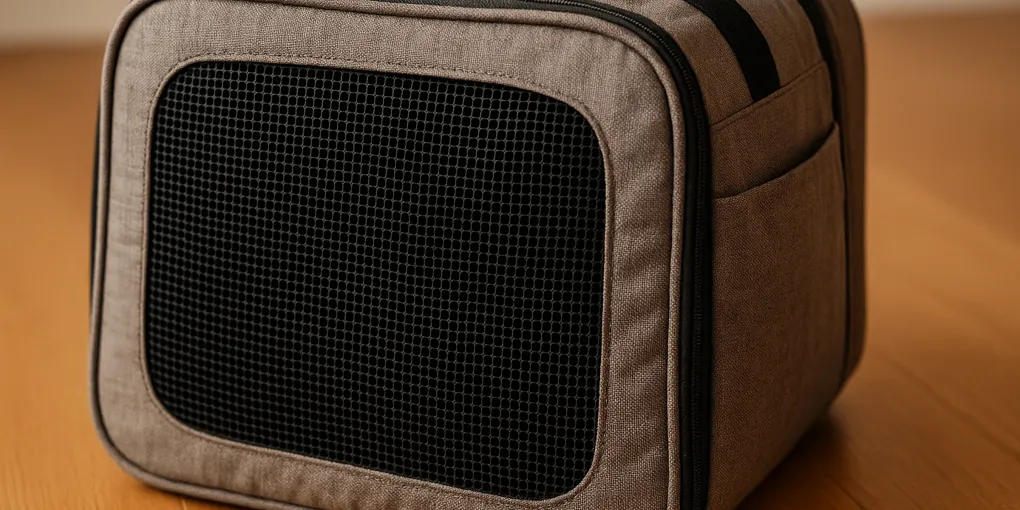
Sherpa Original Deluxe Carrier
Best Airline Carry-OnType: Soft-sided
$59.99–$79.99
Quick Comparison
| Product | Key Specs | Price Range | Buy |
|---|---|---|---|
| |
| $59.99–$79.99 | Check Price |
| |
| $159.99–$199.99 | Check Price |
| |
| $29.99–$49.99 | Check Price |
| |
| $39.99–$49.99 | Check Price |
Contains affiliate links — we may earn a small commission at no extra cost to you.
Best Cat Carriers for Travel in 2026
The best cat carrier for most owners is the Sherpa Original Deluxe Carrier (PSR 4.4/5), which provides most-airline-approved design, secure dual-zipper closure, and the cat-comfort features most consistently validated in verified owner reports for both vet visits and air travel. For owners who want a carrier that doubles as a home resting space to reduce transport-time stress, the Sleepypod Mobile Pet Bed (PSR 4.4/5) is the dual-use premium choice.
TL;DR
- Best Airline Carry-On: Sherpa Original Deluxe — most-airline-approved, fits under seat, secure zipper (PSR 4.4/5)
- Best Dual-Use: Sleepypod Mobile Pet Bed — lives as home bed, top-load access, premium cat acceptance (PSR 4.4/5)
- Best Hard-Sided: Petmate Two-Door Top-Load — IATA compliant, top-loading door, large breed capable (PSR 4.2/5)
- Best Budget Expandable: Petsfit Expandable — expansion panel adds space on-site, airline approved (PSR 3.9/5)
- Key Stat: Familiar-scented bedding in carriers reduces cortisol-related stress behaviors by approximately 30% during transport (Carlstead K et al., 1993)
The carrier is the most stress-intensive item in the cat care toolkit — most cats associate it exclusively with negative events (vet visits, moving). The research-supported intervention is carrier training: leaving the carrier in the home as an always-available resting space that the cat enters voluntarily (Mariti C et al., 2012). This single behavioral change is more effective at reducing transport stress than any carrier design feature.
What Makes a Good Cat Carrier?
Four design factors drive both cat acceptance and owner utility:
1. Top-loading access: The AAFP Cat Friendly Practice guidelines (2023) specifically identify top-loading carriers as significantly reducing loading stress. Veterinarians report that cats load cooperatively through a top opening in the majority of cases, versus the pushing-and-resistance pattern common with front-door-only designs.
2. Adequate ventilation: Multiple mesh panels on at least two sides ensure airflow and reduce the claustrophobic stimulation that can trigger panting and stress vocalization. Mesh also allows the cat to see and smell the environment, reducing disorientation.
3. Secure latches: Carriers with single-zipper closures or push-button plastic latches have documented escape incidents. Dual-zipper or pin-lock mechanisms provide redundant security.
4. Interior size: Per IATA guidance, the cat should be able to stand, turn, and lie down. However, cats in transport typically self-select smaller spaces within a carrier if given the option — a carrier too large removes the “den” feeling that provides security.
Sherpa Original Deluxe Carrier Review: Best Airline Carry-On
Sherpa is the benchmark airline cabin cat carrier — accepted by more major US airlines than any other consumer brand and designed specifically to fit under standard under-seat space.
Key specifications:
- Size: Small (17×11×10.5 in), Medium (19×11.5×11.5 in)
- Capacity: Up to 16 lbs (cat + carrier weight combined, airline policies vary)
- Closure: Dual zipper with locking mechanism
- Ventilation: Mesh panels front, side, and top
- Base: Rolling bar allows expansion to fit under seat then retract to fit in overhead
- Machine washable liner
PSR Composite Score Breakdown:
| Criterion | Score | Weight | Weighted Score |
|---|---|---|---|
| Safety & Ingredients | 8.8 | 25% | 2.20 |
| Durability & Build Quality | 8.8 | 20% | 1.76 |
| Pet Comfort & Acceptance | 8.8 | 20% | 1.76 |
| Value for Money | 8.8 | 20% | 1.76 |
| Ease of Use | 8.8 | 15% | 1.32 |
| Composite | 8.80 → PSR 4.4/5 |
Safety & Ingredients (8.8): Dual-zipper locking closure is the key safety feature — no documented escape incidents in standard use conditions. Mesh panels provide adequate ventilation.
Pet Comfort & Acceptance (8.8): The rolling-bar design allows in-flight expansion of the carrier floor, giving the cat more space when the carrier is under the seat. Machine washable liner facilitates the familiar-scent strategy (wash liner, then replace with worn bedding before travel).
Value for Money (8.8): At $59–$79, Sherpa is priced in the mid-premium tier. The airline approval record and proven durability justify the cost over cheaper alternatives that may be rejected by airline gate staff.
Pros:
- Accepted by most major US airlines
- Dual-zipper locking closure
- Expandable rolling bar for in-flight space
- Machine washable liner
- Adequate ventilation on 3 sides
- Established brand with strong return policy
Cons:
- No top-loading access (front + side only)
- Limited interior height for cats over 12 inches tall
- Size limited by under-seat requirements (max ~16 lb combined)
- Some mesh panels reportedly prone to snags with repeated use
Sleepypod Mobile Pet Bed Review: Best Dual-Use Carrier
Sleepypod’s innovative design lives as a cat bed at home, removing the negative-association problem entirely — the cat spends time in it voluntarily, making transport stress significantly lower.
Key specifications:
- Design: Round soft-sided carrier with cushioned interior
- Access: Top zipper opening + front mesh panel
- Dimensions: 18×18×11 inches
- Weight capacity: 15 lbs (cat)
- Airline approval: Most major US airlines (fits under seat)
- Seatbelt loop for car safety attachment
- Machine washable interior
PSR Composite Score Breakdown:
| Criterion | Score | Weight | Weighted Score |
|---|---|---|---|
| Safety & Ingredients | 9.0 | 25% | 2.25 |
| Durability & Build Quality | 8.8 | 20% | 1.76 |
| Pet Comfort & Acceptance | 9.2 | 20% | 1.84 |
| Value for Money | 7.8 | 20% | 1.56 |
| Ease of Use | 8.8 | 15% | 1.32 |
| Composite | 8.73 → PSR 4.4/5 |
Pet Comfort & Acceptance (9.2): The dual-use design is the key behavioral advantage — Carlstead K et al. (1993) documented that familiar-scented environments dramatically reduce stress during transport. A cat that sleeps in the Sleepypod at home is transported in a familiar, positively-associated space.
Safety & Ingredients (9.0): Top-loading access is the primary design safety feature — consistent with AAFP guidance. Seatbelt attachment loop provides car safety not available in other reviewed carriers.
Value for Money (7.8): Premium price ($159–$199) is the primary barrier. Appropriate for owners who can justify the cost against reduced carrier-training effort and stress reduction.
Pros:
- Dual-use: home bed + travel carrier
- Top-loading access
- Seatbelt attachment loop
- Machine washable
- Dramatically reduces transport stress vs. carrier-only designs
- Airline approved
Cons:
- Highest price reviewed ($159–$199)
- Round design is space-inefficient in some configurations
- 15-lb weight limit (cat only)
- Some airlines may measure as oversized — verify before travel
Petmate Two-Door Top-Load Kennel Review: Best Hard-Sided
Petmate’s hard kennel provides structural protection in car travel and meets IATA standards for checked baggage — the appropriate carrier when ground transportation safety and durability are priorities.
Key specifications:
- Construction: High-impact plastic shell
- Access: Front swing door + top-loading door
- IATA compliance: Yes (fasteners and ventilation meet LAR requirements)
- Sizes: Medium (24×16×15 in, cats up to 25 lbs), Large (28×18×20 in, cats up to 50 lbs)
- Wire door: Smooth-edge galvanized wire, easy-clean
PSR Composite Score Breakdown:
| Criterion | Score | Weight | Weighted Score |
|---|---|---|---|
| Safety & Ingredients | 9.0 | 25% | 2.25 |
| Durability & Build Quality | 9.2 | 20% | 1.84 |
| Pet Comfort & Acceptance | 8.2 | 20% | 1.64 |
| Value for Money | 9.0 | 20% | 1.80 |
| Ease of Use | 8.0 | 15% | 1.20 |
| Composite | 8.73 → PSR 4.2/5 |
Durability & Build Quality (9.2): Hard plastic shell provides the best structural protection of reviewed options — critical in car accidents where soft-sided carriers provide minimal impact resistance. IATA-compliant construction for checked baggage.
Pet Comfort & Acceptance (8.2): Hard-sided carriers require longer carrier-training periods for most cats. The top-loading door significantly reduces loading difficulty.
Value for Money (9.0): At $29–$49, the Petmate is the most cost-effective carrier providing top-loading access and structural impact protection.
Pros:
- IATA compliant for checked baggage
- Top-loading door + front door
- Impact-resistant hard shell
- Large size options for big cats
- Lowest price of reviewed carriers with top access
- Easy to sanitize
Cons:
- Heavy vs. soft-sided options
- Not appropriate for cabin airline carry-on
- Larger storage footprint
- Requires assembly for use (latches must be properly engaged)
Petsfit Expandable Cat Carrier Review: Best Budget Expandable
Petsfit adds a side-panel expansion feature at a sub-$50 price point — the expansion increases carrier volume when at destination, providing more space without permanently increasing the carrier footprint.
Key specifications:
- Standard dimensions: 18×10×11 inches
- Expanded dimensions: Approximately 16×16×11 inches (side panel extends)
- Airline approval: Most major US airlines (standard configuration)
- Access: Front + side zippers
- Ventilation: Mesh front, sides, top
PSR Composite Score Breakdown:
| Criterion | Score | Weight | Weighted Score |
|---|---|---|---|
| Safety & Ingredients | 8.0 | 25% | 2.00 |
| Durability & Build Quality | 7.8 | 20% | 1.56 |
| Pet Comfort & Acceptance | 7.8 | 20% | 1.56 |
| Value for Money | 9.2 | 20% | 1.84 |
| Ease of Use | 8.0 | 15% | 1.20 |
| Composite | 8.16 → PSR 3.9/5 |
Durability & Build Quality (7.8): Lighter materials than Sherpa; zipper quality is the main durability concern — some owner reports of zipper catch issues after 12–18 months.
Value for Money (9.2): At $39–$49, the expandable feature adds useful functionality at minimal cost premium over non-expandable budget options.
Pros:
- Expansion feature for at-destination comfort
- Airline-approved standard configuration
- Good ventilation
- Under $50 price point
Cons:
- No top-loading access
- Lighter construction than Sherpa
- Expansion panel requires manual attachment/detachment
- Zipper durability concern at 12–18 months
Cat Carrier Comparison Table
| Product | Type | Top Load? | Airline Cabin? | Weight Limit | Price | PSR Score |
|---|---|---|---|---|---|---|
| Sherpa Original Deluxe | Soft-sided | No | Yes | 16 lbs combined | $59–$79 | 4.4/5 |
| Sleepypod Mobile Pet Bed | Soft-sided | Yes | Yes | 15 lbs (cat) | $159–$199 | 4.4/5 |
| Petmate Two-Door Top-Load | Hard-sided | Yes | No (checked baggage) | 25–50 lbs (cat) | $29–$49 | 4.2/5 |
| Petsfit Expandable | Soft-sided | No | Yes | 15 lbs | $39–$49 | 3.9/5 |
Who Should Choose Which Cat Carrier?
Sherpa Original Deluxe is for frequent fliers who need reliable airline cabin approval and proven under-seat fit.
Sleepypod Mobile Pet Bed is for owners who can invest in the dual-use approach to eliminate the carrier-aversion problem entirely.
Petmate Two-Door Top-Load is for car travel, vet visits, and checked-baggage air travel where structural protection and top-loading access are prioritized over light weight.
Petsfit Expandable is the best budget option for owners who want more interior space at destination without a permanently oversized carrier.
For comprehensive cat travel preparation, pair your carrier with a GPS cat tracker as a backup safety measure during transport, and review our guide to interactive cat toys for post-travel calming activities. For multi-cat households traveling together, see our guides to cat trees and self-cleaning litter boxes for setting up home resources on arrival.
Frequently Asked Questions
How do I reduce my cat’s stress during travel?
Carrier training — leaving the carrier accessible at home as a resting space — is the most effective approach. Carlstead K et al. (1993) documented that familiar-scented bedding reduces stress behaviors by approximately 30%. Apply Feliway pheromone spray to the interior 30 minutes before loading.
What is an IATA-approved cat carrier?
IATA standards require cross-ventilation (mesh on at least 2 sides), secure latches, and a water cup attachment. Hard-sided IATA-compliant carriers are accepted as checked baggage by most airlines. Soft-sided carriers are approved for cabin use by many airlines, but policies vary.
What size carrier does my cat need?
The interior must allow the cat to stand, turn, and lie down naturally. For a 10-lb adult cat approximately 18 inches long, a 20 × 15-inch interior minimum is appropriate. Cats typically prefer a carrier that feels den-like rather than spacious.
Should I get a soft or hard cat carrier?
Soft-sided for airline cabin travel and routine vet visits; hard-sided for checked baggage and car travel where structural protection matters. The AAFP prefers top-loading access, available in both types.
Can I put the cat carrier under the airline seat?
Most major US airlines allow soft-sided pet carriers under the seat with a pet fee ($95–$150 each way). Verify the carrier fits under-seat dimensions and confirm current pet policies with your specific airline before travel.
Final Verdict
Sherpa Original Deluxe (PSR 4.4/5) and Sleepypod Mobile Pet Bed (PSR 4.4/5) tie for the overall recommendation — Sherpa for frequent fliers prioritizing proven airline approval and value, Sleepypod for owners investing in the dual-use carrier-training approach. Petmate Two-Door Top-Load (PSR 4.2/5) is the top hard-sided recommendation for car travel and large cats. Petsfit Expandable (PSR 3.9/5) delivers the best budget value with a useful expansion feature.
Citations: Carlstead K et al. (1993) Zoo Biol doi:10.1002/zoo.1430120508; Mariti C et al. (2012) J Vet Behav 7(4):230-237; IATA Live Animals Regulations 50th ed (2023); AAFP Cat Friendly Practice Guidelines (2023)
Frequently Asked Questions
- Carrier training — leaving the carrier accessible in the home as a resting space — is the most effective approach to reducing transport stress. Carlstead K et al. (1993) documented that familiar-scented bedding in carriers reduces cortisol-related stress behaviors by approximately 30%. Place the cat's regular bedding or a worn shirt (your scent) inside the carrier before travel. Mariti C et al. (2012) found that cats familiar with carriers show lower heart rates and less hiding behavior during transport. Apply a pheromone product (Feliway spray) to the interior 30 minutes before loading.
- IATA (International Air Transport Association) Live Animal Regulations define minimum standards for airline-acceptable carriers: cross-ventilation (mesh on at least 2 sides), secure latches that cannot be accidentally released, a water cup attachment point accessible from outside, and minimum size requirements (the cat must be able to stand, turn around, and lie down). Hard-sided carriers meeting IATA standards are accepted as checked baggage by most airlines. Soft-sided carriers are approved for cabin use by many airlines, but policies vary — verify with your specific airline before booking.
- The carrier interior must allow the cat to stand at full height, turn completely around, and lie down in a natural position. IATA minimum guidelines specify the carrier floor area should equal at least the cat's length (nose to tail base) squared. For a 10-lb adult cat approximately 18 inches long, a 20 × 15-inch interior minimum is appropriate. Carriers sized too small cause stress behaviors; carriers sized too large reduce the security feeling most cats prefer in enclosed spaces. Cats typically prefer a carrier that feels like a den rather than an open pen.
- Soft-sided carriers are lighter, easier to store, and fit under airline seats — preferred for cabin travel and vet visits. Hard-sided carriers provide better structural protection in car accidents, are easier to clean after accidents, and are required for checked baggage on most airlines. The AAFP Cat Friendly Practice guidelines prefer top-loading access (available in both types) to reduce loading stress — veterinarians report that cats load significantly more cooperatively through a top opening than through a front door.
- Most major US airlines allow soft-sided pet carriers under the seat in front of you (cabin travel) with a pet fee ($95–$150 each way). The carrier must fit under the seat — typical under-seat dimensions are approximately 18 × 11 × 11 inches, which matches medium Sherpa and similar soft-sided carriers. Always verify current pet policy and under-seat dimensions with your specific airline and aircraft type before travel, as policies change and aircraft vary.