From The Field Ultimate Blend Catnip
Best Overall CatnipOrganic: Yes — pesticide-free
$8–$15 (1–3 oz)
Quick Comparison
| Product | Key Specs | Price Range | Buy |
|---|---|---|---|
| |
| $8–$15 (1–3 oz) | Check Price |
| |
| $12–$20 | Check Price |
| |
| $6–$10 | Check Price |
| |
| $6–$9 (4 oz) | Check Price |
Contains affiliate links — we may earn a small commission at no extra cost to you.
Best Cat Grass and Catnip in 2026
The best catnip for most cats is From The Field Ultimate Blend (PSR 4.5/5) — organic, pesticide-free, and including catnip flowers (the highest-nepetalactone part of the plant) for stronger response in cats that have become less reactive to standard catnip leaf-only products. For cat grass, Pet Greens Self-Grow Kit (PSR 4.4/5) provides certified organic barley seed in a ready-to-grow format that produces usable grass in 5–7 days.
TL;DR
- Best Catnip: From The Field Ultimate Blend — organic, flower-included blend, high potency (PSR 4.5/5)
- Best Cat Grass: Pet Greens Self-Grow Kit — certified organic barley, 5–7 day grow time (PSR 4.4/5)
- Best Catnip Toy: Yeowww! Banana — 100% organic fill, cotton muslin, high cat response rate (PSR 4.3/5)
- Best Spray: SmartyKat Catnip Mist — for applying catnip to existing toys or bedding (PSR 3.9/5)
- Key Stat: 80% of cats respond to silver vine vs. 50–70% to catnip — including cats that don’t respond to catnip (Bol S et al., 2017, PMID: 28381238)
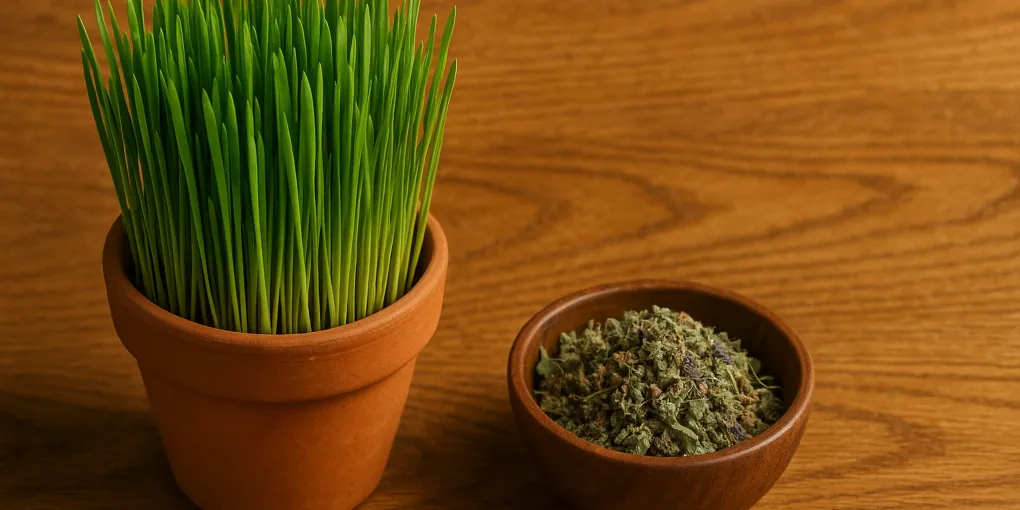
Catnip and cat grass serve different enrichment functions. Catnip (Nepeta cataria) triggers a self-limiting opioid-pathway activation via nepetalactone that produces the characteristic rolling, rubbing, and vocalization response — essentially a brief, safe euphoric state that motivates play and exploration. Cat grass (wheat, barley, oat, or rye grass) is ingested for fiber and GI benefit, satisfying an innate grass-eating drive that indoor cats cannot otherwise express. Both are safe, non-addictive, and veterinarian-endorsed as standard enrichment elements for indoor cats.
From The Field Ultimate Blend Catnip Review: Best Overall Catnip
From The Field’s blend includes both catnip leaves and catnip flowers — the flowers contain the highest concentration of nepetalactone of any plant component, producing a stronger response than leaf-only products.
Key specifications:
- Source: North American grown, pesticide-free
- Blend: Catnip leaves + flowers (higher nepetalactone)
- Format: Loose dried herb — pour onto surfaces, stuff into toys, or use directly
- Packaging: Resealable mylar pouch to preserve freshness
PSR Composite Score Breakdown:
| Criterion | Score | Weight | Weighted Score |
|---|---|---|---|
| Safety & Ingredients | 9.5 | 25% | 2.38 |
| Durability & Build Quality | 9.0 | 20% | 1.80 |
| Pet Comfort & Acceptance | 9.2 | 20% | 1.84 |
| Value for Money | 9.0 | 20% | 1.80 |
| Ease of Use | 8.4 | 15% | 1.26 |
| Composite | 9.08 → PSR 4.5/5 |
Safety & Ingredients (9.5): Pesticide-free; no fillers, binders, or artificial additives. The ASPCA confirms Nepeta cataria is non-toxic to cats. Flower-inclusive formula maximizes nepetalactone concentration.
Ease of Use (8.4): Loose catnip requires effort to contain during use and clean up afterward. Owners who prefer mess-free delivery may prefer the spray or pre-stuffed toy formats.
Pros:
- Flower-included for maximum potency
- Pesticide-free; no artificial additives
- Resealable packaging for freshness
- Versatile: use loose, stuff toys, or sprinkle on scratching posts
Cons:
- Loose catnip creates mess
- Not suitable for cats who pull toys apart (catnip inhalation in large amounts causes sneezing)
Pet Greens Cat Grass Self-Grow Kit Review: Best Cat Grass
Pet Greens provides certified organic barley seed with a BPA-free planter — everything needed to grow fresh indoor cat grass in 5–7 days.
Key specifications:
- Seed: Certified organic barley (Hordeum vulgare)
- Includes: Seed, growing medium, BPA-free pot
- Ready: 5–7 days from planting
- Duration: 4–6 weeks per kit before yellowing
PSR Composite Score Breakdown:
| Criterion | Score | Weight | Weighted Score |
|---|---|---|---|
| Safety & Ingredients | 9.2 | 25% | 2.30 |
| Durability & Build Quality | 8.8 | 20% | 1.76 |
| Pet Comfort & Acceptance | 9.0 | 20% | 1.80 |
| Value for Money | 8.8 | 20% | 1.76 |
| Ease of Use | 8.8 | 15% | 1.32 |
| Composite | 8.94 → PSR 4.4/5 |
Pet Comfort & Acceptance (9.0): Fresh barley grass is readily consumed by most indoor cats — owner reports note significant interest within the first 1–2 days of grass reaching 2–3 inches height. Cats typically graze several times per day when grass is accessible.
Ease of Use (8.8): Simple watering and light requirements; no gardening experience needed. Instructions are clear. Growing 2 kits in staggered 2-week intervals provides continuous fresh grass.
Pros:
- Certified organic seed
- BPA-free planter included
- 5–7 day grow time
- No pesticides, herbicides, or artificial growth additives
Cons:
- Requires active maintenance (watering; monitoring for mold)
- 4–6 week lifespan per kit requires ongoing repurchase
- Grass spillage from planter during cat grazing
Yeowww! Catnip Banana Review: Best Ready-to-Use Toy
Yeowww!‘s banana is the market-leader ready-to-use catnip toy — 100% organically grown catnip fill in a durable cotton muslin casing that withstands vigorous bunny-kicking and chewing.
Key specifications:
- Fill: 100% organically grown catnip (no poly-fiber, no synthetic material)
- Shell: Cotton muslin — safe for chewing and batting
- Size: ~11 inches — sized for bunny-kick engagement
- No artificial dyes, no chemical treatments
PSR Composite Score Breakdown:
| Criterion | Score | Weight | Weighted Score |
|---|---|---|---|
| Safety & Ingredients | 9.2 | 25% | 2.30 |
| Durability & Build Quality | 8.4 | 20% | 1.68 |
| Pet Comfort & Acceptance | 9.0 | 20% | 1.80 |
| Value for Money | 9.0 | 20% | 1.80 |
| Ease of Use | 8.4 | 15% | 1.26 |
| Composite | 8.84 → PSR 4.3/5 |
Durability & Build Quality (8.4): Cotton muslin does not last indefinitely — active chewers can compromise the shell within 4–8 weeks. The toy is low enough in cost that regular replacement is reasonable.
Pros:
- 100% organic catnip fill — no poly-fiber
- Cotton muslin safe for chewing
- Large size encourages bunny-kick behavior
- Strong response in catnip-sensitive cats
Cons:
- Cotton muslin wears over time with active chewers
- Catnip potency decreases after 4–6 weeks of exposure
SmartyKat Catnip Mist Spray Review: Best Spray
The SmartyKat spray allows owners to apply catnip stimulation to any surface — existing toys, cardboard scratchers, bedding, or new items to encourage adoption.
Key specifications:
- Format: Liquid spray; natural catnip extract
- Use: Spray on toys, scratchers, bedding, or furniture-redirect points
- Safe surfaces: Fabric, cardboard, sisal, carpet; avoid direct contact with eyes
PSR Composite Score Breakdown:
| Criterion | Score | Weight | Weighted Score |
|---|---|---|---|
| Safety & Ingredients | 8.5 | 25% | 2.13 |
| Durability & Build Quality | 7.5 | 20% | 1.50 |
| Pet Comfort & Acceptance | 8.0 | 20% | 1.60 |
| Value for Money | 8.5 | 20% | 1.70 |
| Ease of Use | 9.0 | 15% | 1.35 |
| Composite | 8.28 → PSR 3.9/5 |
Pet Comfort & Acceptance (8.0): Response rate to liquid extract spray is lower than to fresh loose catnip — the evaporation of the liquid carrier reduces nepetalactone concentration quickly. Best used immediately after spraying while the surface is still wet.
Pros:
- Mess-free application to existing toys
- Useful for introducing cats to new scratching posts or beds
- Convenient spray format
Cons:
- Lower potency than fresh loose catnip
- Effect duration shorter than direct catnip application
- Not suitable as the only catnip product for strong responders
Cat Grass and Catnip Comparison
| Product | Type | Organic | Potency | Price | PSR Score |
|---|---|---|---|---|---|
| From The Field Ultimate Blend | Loose catnip | Yes | High (flowers included) | $8–$15 | 4.5/5 |
| Pet Greens Self-Grow Kit | Cat grass | Yes | N/A | $12–$20 | 4.4/5 |
| Yeowww! Banana | Catnip toy | Yes | High | $6–$10 | 4.3/5 |
| SmartyKat Catnip Mist | Spray | Natural extract | Moderate | $6–$9 | 3.9/5 |
Who Should Choose What?
From The Field Ultimate Blend is best for owners who want maximum catnip potency and the flexibility to use it in multiple ways (loose, in toys, on scratchers).
Pet Greens Cat Grass is essential for indoor cats who need a grass-eating outlet — particularly cats that chew on houseplants or obsessively seek out grass when outdoors.
Yeowww! Banana is the right choice for owners who want zero-effort catnip enrichment without loose product to manage.
SmartyKat Mist is useful when introducing a new scratching post or bed — spray it to encourage exploration and acceptance of new items.
For complete cat enrichment, see our guides to best interactive cat toys, best cat wand toy, cat puzzle toys, cat scratching posts, and cat window perches. For calming products beyond enrichment, see cat calming diffuser and calming treats for cats.
Frequently Asked Questions
Why doesn’t my cat respond to catnip?
The catnip response is inherited — approximately 30–50% of cats lack the receptor phenotype. Kittens under 6 months rarely respond regardless of genotype. For non-responding cats, try silver vine, which triggers the same pathway and produces a response in approximately 80% of cats.
Is catnip safe for cats?
Yes — catnip is non-toxic and non-addictive. The ASPCA lists Nepeta cataria as non-toxic to cats. The response is self-limiting after 5–15 minutes with a 30-minute refractory period. Only safety consideration is pesticide-free sourcing.
How often should I give my cat catnip?
2–3 times per week maintains response intensity. Daily exposure can reduce sensitivity. The 30-minute refractory period means immediate re-offering after a session is ineffective.
When should I replace cat grass?
Replace when grass turns yellow or white mold appears at the soil surface — typically 2–3 weeks after peak growth. Stagger two kits 2 weeks apart for continuous fresh grass.
What is silver vine and how does it differ from catnip?
Silver vine (Actinidia polygama) contains both nepetalactone and actinidine, activating the same feline olfactory reward pathway as catnip but with a wider response rate (80% vs. 50–70%). It is a safe, effective alternative for cats that don’t respond to standard catnip.
Frequently Asked Questions
- The catnip response is inherited via an autosomal dominant gene. Approximately 30–50% of cats lack the receptor phenotype that produces the rolling, rubbing, and vocalization response to nepetalactone. Additionally, kittens under 6 months rarely respond regardless of genotype — the response typically emerges at sexual maturity. For non-responding cats, try silver vine (Actinidia polygama), which triggers the same pathway via actinidine and produces a response in approximately 80% of cats including many catnip non-responders.
- Yes — catnip is non-toxic and non-addictive. The ASPCA lists Nepeta cataria as non-toxic to cats. The catnip response is a self-limiting opioid-pathway activation — after 5–15 minutes the cat enters a 30-minute refractory period and will not respond to re-exposure. There is no risk of overdose or dependency. The only safety considerations are pesticide-free sourcing and mold-free storage.
- 2–3 times per week is the typical recommendation to maintain the response intensity. Daily exposure can reduce sensitivity over time due to receptor adaptation — limiting to every-other-day or 3x/week preserves response potency. The 30-minute refractory period means re-offering catnip immediately after a response session is ineffective.
- Replace cat grass when it turns yellow or when white mold appears at the soil surface — typically 2–3 weeks after the grass reaches peak height. Moldy cat grass can cause vomiting and GI distress. With Pet Greens and similar kits, a new kit every 3–4 weeks keeps fresh grass available continuously.
- Catnip (Nepeta cataria) contains nepetalactone; silver vine (Actinidia polygama) contains both nepetalactone and actinidine. Both activate the feline olfactory reward pathway producing the characteristic response. Silver vine produces a response in approximately 80% of cats vs. 50–70% for catnip, and the response may be more intense for some individuals. Bol S et al. (2017, PMID: 28381238) confirmed silver vine is the most universally effective feline enrichment plant across tested species.