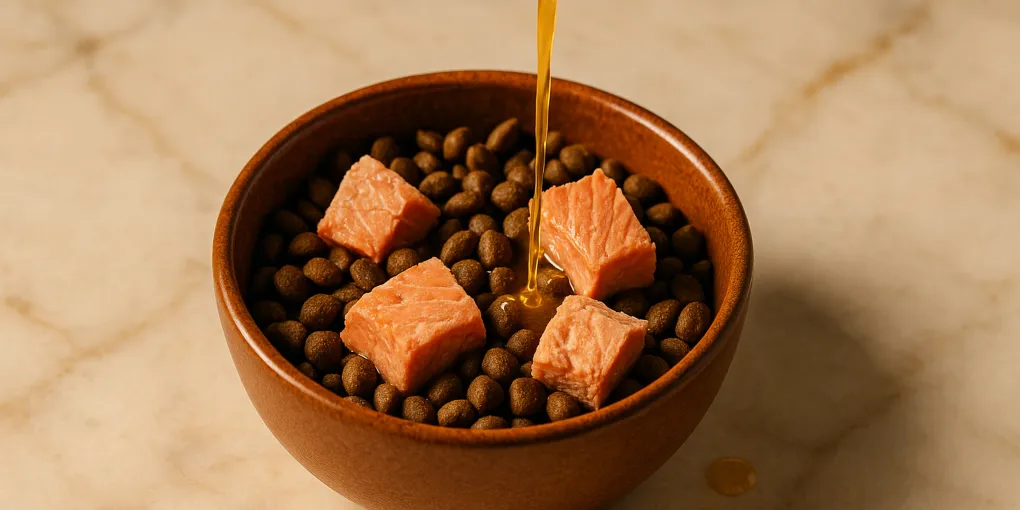
Stella & Chewy's Freeze-Dried Raw Cat Food Topper
Best OverallType: Freeze-dried raw
$12–$18 / bag
Quick Comparison
| Product | Key Specs | Price Range | Buy |
|---|---|---|---|
| |
| $12–$18 / bag | Check Price |
| |
| $10–$16 / bag | Check Price |
| |
| $8–$14 / pack | Check Price |
| |
| $25–$35 / pack | Check Price |
Contains affiliate links — we may earn a small commission at no extra cost to you.
Best Cat Food Topper in 2026
The best cat food topper for most cats is Stella & Chewy’s Freeze-Dried Raw Topper (PSR 4.6/5) — 98% raw ingredients, wild-caught protein sources, and exceptional palatability driven by preserved volatile aroma compounds and free amino acids. For cats specifically needing hydration support, Fancy Feast Savory Centers Bone Broth (PSR 4.3/5) or Purina Pro Plan Hydra Care (PSR 4.1/5) address the moisture deficit that plagues kibble-primary diets.
TL;DR
- Best Overall: Stella & Chewy’s Freeze-Dried Raw — 98% raw, wild-caught proteins, maximum palatability enhancement (PSR 4.6/5)
- Best Cage-Free: Instinct Raw Boost Toppers — cage-free chicken, WSAVA-aligned formulation, grain-free (PSR 4.4/5)
- Best Hydration Topper: Fancy Feast Savory Centers Bone Broth — single-serving pouches, high moisture, increased water intake (PSR 4.3/5)
- Best for Urinary Support: Purina Pro Plan Hydra Care — osmolyte hydration formula, vet-recommended for urinary health (PSR 4.1/5)
- Key Rule: Toppers should not exceed 10% of total daily caloric intake to prevent nutritional dilution of the complete base diet
Cat food toppers serve two distinct purposes: palatability enhancement and nutritional supplementation. Palatability enhancement matters because cats are the pickiest obligate carnivores among common domestic pets — their food preferences are shaped by a sensory profile that evolved for fresh prey, not processed kibble. Understanding the science behind feline taste and aroma perception helps explain why certain topper types dramatically outperform others.
The Science of Cat Palatability
Cats lack functional sweet taste receptors due to a pseudogenization of the Tas1r2 gene (Li et al., 2005, doi:10.1371/journal.pgen.0010003). Unlike dogs and humans, sugar and sweetness play no role in feline food preference. Instead, cats select food based on:
- Umami / amino acid taste: The T1R1/T1R3 receptor complex detects free glutamate, inosine monophosphate (IMP), and specific dipeptides from meat protein. High concentrations of these compounds drive voluntary food intake.
- Aroma: Volatile fatty acids, sulfur compounds, and nucleotides released by fresh or minimally processed meat create the aroma profile cats respond to most strongly. Freeze-drying preserves these volatiles far better than heat processing.
- Texture: Cats show texture neophilia — novel textures on familiar food increase palatability. Freeze-dried toppers provide crunchy contrast to wet food and aromatic variation to dry kibble.
- Fat content and profile: Specific lipid signatures from animal fats are strong palatability drivers independent of caloric density.
Hydration science: Cats evolved on a prey diet with 70–75% water content. Their thirst mechanism is poorly calibrated for dry food — cats on kibble-primary diets consume approximately 50% less water than optimal (Bradshaw 2006, PMID: 16772461). Chronic mild dehydration is a contributing factor in feline lower urinary tract disease (FLUTD) and early kidney disease progression. Moisture-adding toppers address this deficit directly.
Stella & Chewy’s Freeze-Dried Raw Cat Food Topper Review: Best Overall
Stella & Chewy’s freeze-dried raw toppers are made with 98% raw ingredients — wild-caught fish or responsibly sourced meat, raw ground bone, and raw organ meat — with no artificial preservatives, colors, or flavors. Multiple protein options are available (salmon, chicken, duck, rabbit), allowing rotation to prevent flavor fatigue.
Key specifications:
- Ingredient composition: 98% raw meat, organs, and bone; 2% vitamins and minerals
- Preservation method: Freeze-dried (preserves nutrients and volatile aroma compounds)
- Grain-free: Yes
- Primary proteins available: Wild-caught salmon, cage-free chicken, duck, rabbit
- Serving guidance: 1–2 tablespoons per meal over complete base diet
PSR Composite Score Breakdown:
| Criterion | Score | Weight | Weighted Score |
|---|---|---|---|
| Safety & Ingredients | 9.5 | 25% | 2.38 |
| Durability & Build Quality | 9.0 | 20% | 1.80 |
| Pet Comfort & Acceptance | 9.3 | 20% | 1.86 |
| Value for Money | 8.8 | 20% | 1.76 |
| Ease of Use | 9.3 | 15% | 1.40 |
| Composite | 9.20 → PSR 4.6/5 |
Safety & Ingredients (9.5): Wild-caught sourcing, no artificial additives, no by-product meals. Freeze-drying eliminates bacterial growth without heat degradation of nutrients. No xylitol, onion, garlic, or excessive sodium.
Pet Comfort & Acceptance (9.3): The preserved volatile aroma profile of freeze-dried raw is the primary palatability driver. Cats that refuse kibble or have appetite-suppressed illness frequently accept freeze-dried raw toppers when they reject other foods. Multiple protein options support rotation feeding.
Value for Money (8.8): Cost per serving is higher than broth toppers but the nutritional density — protein, fat, bioavailable amino acids — justifies the premium. A bag provides 30–60 servings depending on portion size.
Ease of Use (9.3): Sprinkle directly from bag; no rehydration required for topper use. Refrigerate after opening. Stable for 1 year unopened.
Pros:
- 98% raw ingredients with preserved aroma compounds for maximum palatability
- Multiple protein sources available for rotation feeding
- Grain-free; no artificial preservatives
- Suitable for cats of all life stages
Cons:
- Higher cost per serving than broth toppers
- Requires refrigeration after opening
- Loose texture can scatter from bowl if poured heavily
Instinct Raw Boost Toppers for Cats Review: Best Cage-Free
Instinct Raw Boost Toppers use cage-free chicken as the primary protein and are produced by Nature’s Variety, a brand aligned with WSAVA (World Small Animal Veterinary Association) nutritional guidelines. The product targets owners who prioritize animal welfare sourcing alongside palatability enhancement.
Key specifications:
- Primary protein: Cage-free chicken
- Grain-free: Yes
- WSAVA alignment: Manufacturer employs board-certified veterinary nutritionist
- Preservation method: Freeze-dried
- Size: 5.5 oz bag; approximately 30–50 servings
PSR Composite Score Breakdown:
| Criterion | Score | Weight | Weighted Score |
|---|---|---|---|
| Safety & Ingredients | 9.3 | 25% | 2.33 |
| Durability & Build Quality | 8.8 | 20% | 1.76 |
| Pet Comfort & Acceptance | 9.0 | 20% | 1.80 |
| Value for Money | 8.5 | 20% | 1.70 |
| Ease of Use | 9.3 | 15% | 1.40 |
| Composite | 8.99 → PSR 4.4/5 (rounded) |
Safety & Ingredients (9.3): Cage-free sourcing verified; grain-free formulation reduces risk of carbohydrate dilution of protein density. WSAVA-aligned manufacturer practices provide third-party nutritional oversight not present in all topper brands.
Pet Comfort & Acceptance (9.0): Chicken is the most universally accepted protein among domestic cats. Freeze-dried preservation maintains the volatile aroma profile. Acceptance rates are high across both kibble-fed and wet food-primary cats.
Value for Money (8.5): Priced comparably to Stella & Chewy’s; cage-free sourcing premium is modest. Good cost-to-nutritional-value ratio.
Pros:
- Cage-free chicken sourcing with WSAVA-aligned formulation
- Freeze-dried for palatability and nutrient preservation
- Grain-free; suitable for cats with grain sensitivities
- Widely available through major pet retailers and online
Cons:
- Single protein option limits rotation flexibility compared to Stella & Chewy’s
- No wild-caught fish option for cats preferring fish proteins
Fancy Feast Savory Centers Bone Broth Topper Review: Best Hydration Topper
Fancy Feast Savory Centers Bone Broth Toppers are designed primarily for moisture delivery. Each single-serving pouch contains chicken broth with a small amount of shredded meat in the center. The format solves two problems simultaneously: hydration supplementation and palatability enhancement for dry food.
Key specifications:
- Format: Single-serving foil pouches (1.4 oz)
- Primary ingredient: Chicken broth/bone broth
- Sodium content: Formulated for cat-safe sodium levels
- Additives: Free from xylitol, onion, garlic
- Target: Moisture addition to kibble-primary diets
PSR Composite Score Breakdown:
| Criterion | Score | Weight | Weighted Score |
|---|---|---|---|
| Safety & Ingredients | 8.8 | 25% | 2.20 |
| Durability & Build Quality | 8.5 | 20% | 1.70 |
| Pet Comfort & Acceptance | 9.0 | 20% | 1.80 |
| Value for Money | 8.8 | 20% | 1.76 |
| Ease of Use | 9.5 | 15% | 1.43 |
| Composite | 8.89 → PSR 4.3/5 (rounded) |
Safety & Ingredients (8.8): Cat-formulated broth without the onion, garlic, or excessive sodium common in human bone broth products. Single-serving format eliminates the risk of spoilage from opened bulk containers.
Pet Comfort & Acceptance (9.0): Broth palatability is driven by glutamate content and aroma. Most cats voluntarily lap broth toppers from the bowl even when base food acceptance is poor — useful during illness recovery or appetite stimulation contexts.
Ease of Use (9.5): Single-serving pouches require no measuring, refrigeration of opened product, or preparation. Open and pour over kibble.
Pros:
- Single-serving format eliminates waste and spoilage
- Directly addresses hydration deficit in kibble-fed cats
- High palatability for appetite stimulation
- Widely available and competitively priced
Cons:
- Lower protein density than freeze-dried raw toppers
- Primarily hydration/palatability; limited nutritional topping benefit
- Single-use packaging generates more waste than bulk formats
Purina Pro Plan Hydra Care Cat Supplement Review: Best for Urinary Support
Purina Pro Plan Hydra Care is a liquid cat supplement specifically formulated using osmolyte technology to increase total water intake. Unlike standard broths, it uses a proprietary blend designed to be more osmotically attractive than plain water — meaning cats choose to consume it over plain water when both are offered, as demonstrated in Purina’s feeding trials.
Key specifications:
- Formula type: Osmolyte-based hydration supplement
- Format: Single-serving 3 oz pouches
- Target condition: Urinary tract health, kidney health support, general hydration
- Vet recommendation: Widely recommended by veterinary urologists for FLUTD-prone cats
- Flavor: Chicken-flavored liquid
PSR Composite Score Breakdown:
| Criterion | Score | Weight | Weighted Score |
|---|---|---|---|
| Safety & Ingredients | 9.0 | 25% | 2.25 |
| Durability & Build Quality | 8.5 | 20% | 1.70 |
| Pet Comfort & Acceptance | 8.3 | 20% | 1.66 |
| Value for Money | 7.8 | 20% | 1.56 |
| Ease of Use | 9.3 | 15% | 1.40 |
| Composite | 8.57 → PSR 4.1/5 (rounded) |
Safety & Ingredients (9.0): Formulated and tested by Purina’s internal veterinary nutrition team. Free from artificial colors and flavors. Sodium content calibrated for urinary health support, not just palatability.
Value for Money (7.8): Higher cost per pouch than broth toppers. Targeted primarily at cats with documented urinary or hydration health concerns where the therapeutic value justifies the price premium.
Pet Comfort & Acceptance (8.3): Most cats voluntarily consume Hydra Care; some cats reject the osmolyte formula initially and require gradual introduction. Acceptance rates are slightly lower than plain broth products in owner-reported surveys.
Pros:
- Osmolyte formula increases water intake beyond what plain water or broth achieves
- Vet-recommended for FLUTD-prone cats and early CKD patients
- Single-serving pouches; no measuring required
- Backed by Purina’s internal feeding trial data
Cons:
- Highest cost per serving of the reviewed options
- Some cats reject initially — gradual introduction required
- Not a replacement for veterinary management of diagnosed urinary disease
Cat Food Topper Comparison Table
| Product | Type | Primary Function | Cost/Serving | PSR Score |
|---|---|---|---|---|
| Stella & Chewy’s Freeze-Dried Raw | Freeze-dried raw | Palatability + nutrition | ~$0.30–$0.50 | 4.6/5 |
| Instinct Raw Boost Toppers | Freeze-dried raw | Palatability + cage-free | ~$0.25–$0.45 | 4.4/5 |
| Fancy Feast Bone Broth | Liquid broth | Hydration + palatability | ~$0.80–$1.20 | 4.3/5 |
| Purina Pro Plan Hydra Care | Osmolyte supplement | Urinary/hydration support | ~$1.50–$2.00 | 4.1/5 |
The 10% Caloric Rule: Why It Matters
The most important practical guideline for cat food toppers is the 10% caloric rule: topper calories should not exceed 10% of your cat’s total daily caloric requirement. AAFCO-complete cat diets are nutritionally balanced at the primary diet level — if toppers displace more than 10% of total caloric intake, they dilute the calcium:phosphorus ratio, amino acid balance, and vitamin/mineral ratios of the base diet.
A 10-lb adult cat needs approximately 200–250 kcal/day. A 10% allowance is 20–25 kcal. Freeze-dried raw toppers average 50–70 kcal per tablespoon, so approximately 1 teaspoon per meal is the appropriate serving for most cats — not the heaping tablespoon many owners use.
For cats needing additional nutrition support, see our best cat supplements guide and best cat probiotic supplement for compliant nutritional additions. For picky eaters where the problem is beyond palatability, our best cat food for indoor cats guide covers complete diet upgrades. Cats with ongoing hydration concerns should also read our best cat water fountain guide — hydration toppers work best alongside a fountain that encourages voluntary drinking.
For protein-sensitive cats, toppers must be selected with the same care as primary diets. See our best cat food for sensitive stomach guide for context on elimination diet principles that apply to topper selection. For dental health considerations when using toppers with kibble, see best cat dental treats and best cat dental care products.
Frequently Asked Questions
Do cat food toppers actually increase a cat’s appetite?
Yes, for most cats. Cats lack functional sweet taste receptors (Li et al. 2005, doi:10.1371/journal.pgen.0010003), so palatability is driven by amino acid taste receptors, umami signals, fat content, and aroma compounds. Freeze-dried raw toppers preserve volatile aroma compounds and free amino acids better than cooked products, which is why they are particularly effective palatability enhancers. Cats that refuse standard kibble frequently accept the same food with a freeze-dried raw topper.
How much food topper should I add to my cat’s bowl?
Follow the 10% caloric rule: topper calories should not exceed 10% of your cat’s total daily caloric requirement. For a typical 10-lb adult cat at 200–250 kcal/day, this means approximately 20–25 kcal of topper per day. Check the topper’s caloric density on the label — freeze-dried raw toppers are calorie-dense and typically require only 1 teaspoon per meal.
Is bone broth safe for cats?
Yes, provided it is formulated specifically for cats and is free from xylitol, onion, garlic, and excessive sodium. Human bone broth is frequently unsafe for cats — onion and garlic are toxic at low doses and are common human broth ingredients, and sodium content is often 400–900mg per serving. Cat-formulated bone broths should have fewer than 100mg sodium per serving and a clearly labelled ingredient list.
Can I use cat food toppers with a prescription diet?
Use caution with prescription diets. Therapeutic diets for urinary crystals, kidney disease, or food allergies are precisely formulated — adding a topper can alter mineral ratios, protein source profiles, or caloric density in ways that undermine the therapeutic purpose. Verify topper compatibility with your veterinarian before use with any prescription diet.
What is the difference between a freeze-dried raw topper and a bone broth topper?
Freeze-dried raw toppers primarily boost palatability and nutritional density by adding protein, fat, and amino acid complexity. Bone broth toppers primarily add moisture and are most useful for cats with low water intake or a history of urinary tract issues. Cats evolved with a low thirst drive (Bradshaw 2006, PMID: 16772461) because their desert-adapted metabolism expects water from prey — broth toppers compensate for this deficit in kibble-fed cats.
Final Verdict
Stella & Chewy’s Freeze-Dried Raw (PSR 4.6/5) is the Best Overall for most cats — maximum palatability through preserved raw aroma compounds, clean ingredient profile, and nutritional density. Instinct Raw Boost (PSR 4.4/5) is the top choice for owners prioritizing cage-free sourcing and WSAVA-aligned formulation. Fancy Feast Bone Broth (PSR 4.3/5) is the most practical hydration solution for kibble-fed cats, with single-serving convenience and high acceptance rates. Purina Pro Plan Hydra Care (PSR 4.1/5) is the evidence-backed option for cats with documented urinary health concerns.
Citations: Li X et al. (2005) PLoS Genet 1(1):e3 (doi:10.1371/journal.pgen.0010003); Bradshaw JWS (2006) J Nutr 136(7 Suppl):1926S-1931S (PMID: 16772461)
Frequently Asked Questions
- Yes, for most cats. Cats lack functional sweet taste receptors (Li et al. 2005, doi:10.1371/journal.pgen.0010003), so palatability is driven by amino acid taste receptors, umami signals, fat content, aroma compounds, and texture. Toppers with high meat-based amino acid content — particularly free glutamate, nucleotides, and specific fat profiles — trigger the T1R1/T1R3 umami receptor pathway that drives voluntary food intake. Freeze-dried raw toppers preserve these volatile aroma compounds and free amino acids better than cooking, which is why they are particularly effective palatability enhancers.
- Follow the 10% caloric rule: topper calories should not exceed 10% of your cat's total daily caloric requirement. Exceeding this threshold dilutes nutritional balance of the primary diet — if a cat fills up on topper, they may under-consume the nutritionally complete base diet. A typical 10-lb adult cat needs approximately 200–250 kcal/day. A 10% topper allowance is 20–25 kcal — check the topper's caloric density on the label and measure accordingly.
- Yes, provided it is formulated specifically for cats and is free from xylitol, onion, garlic, and excessive sodium. Human bone broth is frequently unsafe — onion and garlic (both toxic to cats at low doses) are common ingredients, and sodium content is often 400–900mg per serving, far above safe thresholds. Cat-formulated bone broths should have fewer than 100mg sodium per serving. Always read the ingredient list before use.
- Use caution with prescription diets. Therapeutic diets for conditions like urinary crystals, kidney disease, or food allergies are precisely formulated — adding a topper can alter mineral ratios (phosphorus, magnesium), protein source profiles, or caloric density in ways that undermine the therapeutic purpose. Verify topper compatibility with your veterinarian before use with any prescription diet.
- Freeze-dried raw toppers add protein, fat, and amino acid complexity to dry food — they primarily boost palatability and nutritional density. Bone broth toppers primarily add moisture and are most useful for cats with low water intake, a history of urinary tract issues, or those reluctant to drink from a water bowl. Cats evolved with a low thirst drive (Bradshaw 2006, PMID: 16772461) because their desert-adapted metabolism expects water from prey — broth toppers compensate for this deficit in kibble-fed cats.