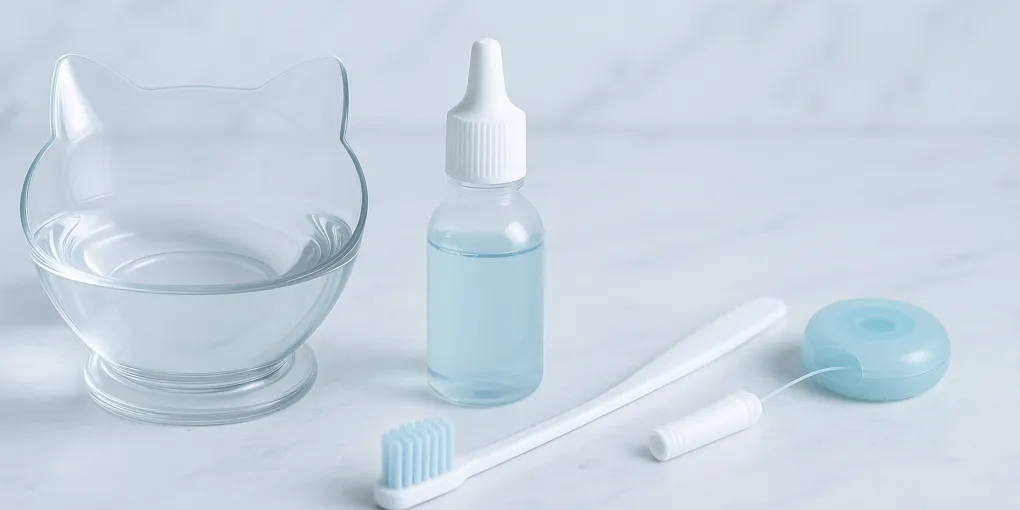
Oxyfresh Premium Pet Dental Care Water Additive
Best OverallActive: Stabilized chlorine dioxide + zinc acetate
$18–$22 / bottle
Quick Comparison
| Product | Key Specs | Price Range | Buy |
|---|---|---|---|
| |
| $18–$22 / bottle | Check Price |
| |
| $15–$20 / bottle | Check Price |
| |
| $25–$35 / bottle | Check Price |
| |
| $8–$12 / bottle | Check Price |
Contains affiliate links — we may earn a small commission at no extra cost to you.
Best Cat Dental Water Additive in 2026
The best cat dental water additive for most cats is Oxyfresh Premium Pet Dental Care Water Additive (PSR 4.6/5) — VOHC-accepted, tasteless in dilution (critical for cat acceptance), and using a stabilized chlorine dioxide plus zinc acetate formula with documented antimicrobial efficacy against the bacterial biofilm that initiates plaque and periodontal disease. HealthyMouth Anti-Plaque Water Additive (PSR 4.4/5) is the best alternative for cats that benefit from chicken-flavored incentive to approach the water bowl.
TL;DR
- Best Overall: Oxyfresh — VOHC-accepted, tasteless/odorless, stabilized chlorine dioxide formula (PSR 4.6/5)
- Best Concentrated Formula: HealthyMouth — VOHC-accepted, green tea catechins, chicken flavor for palatability (PSR 4.4/5)
- Best Enzymatic: Vetoquinol Enzadent — VOHC-accepted, glucose oxidase/lactoperoxidase system (PSR 4.3/5)
- Best Budget: Arm & Hammer — baking soda + enzymatic, widely available, no VOHC seal (PSR 3.9/5)
- Critical rule: Never use xylitol-containing products; always maintain a separate unaltered water bowl during acclimation; VOHC seal is the primary quality signal
Periodontal disease is the most prevalent health condition in domestic cats — estimated to affect over 70% of cats over age 3 (Niemiec 2008, PMID: 18721928). The pathological cascade begins with bacterial biofilm (plaque) mineralizing into calculus (tartar), followed by gingivitis, periodontal pocket formation, bone loss, and tooth loss. Water additives target the earliest stage of this cascade by reducing the bacterial load and biofilm formation in the oral cavity.
The Science of Feline Dental Disease and Water Additives
Plaque formation mechanism: Oral bacteria adhere to tooth surfaces within minutes of tooth eruption or cleaning. The biofilm matures over 24–48 hours, mineralizes into calculus within 5–7 days if not mechanically disrupted, and initiates inflammatory periodontal response within weeks of calculus accumulation. Bellows et al. (2019, DOI: 10.5326/JAAHA-MS-6933) documented this cascade in the American Animal Hospital Association’s feline dental guidelines.
Water additive mechanism: Dental water additives work by one of three mechanisms:
- Oxidative antimicrobial (Oxyfresh): Stabilized chlorine dioxide releases reactive oxygen species that disrupt bacterial cell walls in the oral biofilm. Zinc acetate has complementary antimicrobial and anti-inflammatory properties.
- Enzymatic (Vetoquinol Enzadent): The glucose oxidase/lactoperoxidase system generates hydrogen peroxide, which the lactoperoxidase enzyme converts to hypothiocyanite — an antimicrobial compound that kills gram-negative periodontal pathogens.
- Polyphenol antimicrobial (HealthyMouth): Green tea catechins (EGCG and related compounds) have documented antibiofilm activity against Streptococcus mutans and periodontal pathogens in vitro.
The VOHC standard: The Veterinary Oral Health Council evaluates submissions from manufacturers who present controlled trial data. The VOHC seal is awarded when products demonstrate ≥10% reduction in plaque or ≥20% reduction in tartar accumulation versus untreated controls. Products without the VOHC seal have not met this evidence threshold.
Important limitation: Water additives reach the oral cavity only when the cat drinks — they cannot mechanically disrupt established calculus. Niemiec (2008, PMID: 18721928) and all AVDC guidelines are explicit that established periodontal disease requires professional dental cleaning under anesthesia; adjunctive home care including water additives is preventive maintenance, not treatment.
Oxyfresh Premium Pet Dental Care Water Additive Review: Best Overall
Oxyfresh is the most recommended cat dental water additive by veterinary dental professionals, and its tasteless formulation in dilution is the primary reason. Cats are among the most sensitive domestic animals to flavor changes in water — even small concentrations of mint, herbal, or chemical tastes cause water avoidance, which negates any dental benefit. Oxyfresh’s stabilized chlorine dioxide is genuinely tasteless at the recommended 1 capful per 8 oz water dilution.
Key specifications:
- Active ingredients: Stabilized chlorine dioxide (Oxygene), zinc acetate
- VOHC accepted: Yes (plaque reduction in cats and dogs)
- Flavor in dilution: Tasteless / odorless
- Xylitol-free: Yes
- Concentration: 1 capful (6 ml) per 8 oz water
- Bottle size: 16 oz (~45 day supply for single-bowl household)
PSR Composite Score Breakdown:
| Criterion | Score | Weight | Weighted Score |
|---|---|---|---|
| Safety & Ingredients | 9.5 | 25% | 2.38 |
| Durability & Build Quality | 9.0 | 20% | 1.80 |
| Pet Comfort & Acceptance | 9.3 | 20% | 1.86 |
| Value for Money | 8.8 | 20% | 1.76 |
| Ease of Use | 9.3 | 15% | 1.40 |
| Composite | 9.20 → PSR 4.6/5 |
Safety & Ingredients (9.5): Stabilized chlorine dioxide at the diluted concentration in water bowls has extensive human and veterinary safety data. Zinc acetate is an approved antimicrobial and anti-inflammatory agent. No xylitol. No artificial flavors or dyes. No documented adverse events at recommended concentrations.
Pet Comfort & Acceptance (9.3): The tasteless formulation is the key differentiator. In owner surveys, water intake is unchanged or increased (due to cleaner-tasting water) in the majority of cats. This is in contrast to flavored products where a minority of cats reject treated water entirely.
Value for Money (8.8): At $18–22 for a 16 oz bottle providing approximately 45 days of single-bowl treatment, the daily cost is approximately $0.40–0.50 — comparable to other VOHC products.
Pros:
- VOHC seal — controlled trial evidence of plaque reduction
- Tasteless in dilution — maximizes cat water intake acceptance
- Dual mechanism: chlorine dioxide + zinc acetate
- No xylitol, artificial flavors, or dyes
- Consistent concentration via capful dosing
Cons:
- Higher upfront cost than budget options
- Stabilized chlorine dioxide degrades in sunlight — store in a dark location and change bowl water daily
- Available primarily online; less frequently stocked in brick-and-mortar stores
Vetoquinol Enzadent Oral Care Water Additive Review: Best Enzymatic
Vetoquinol Enzadent uses the same enzymatic system (glucose oxidase/lactoperoxidase) found in some enzymatic toothpastes — a well-documented antimicrobial mechanism that generates hypothiocyanite to kill periodontal bacteria. The VOHC seal confirms its efficacy in controlled trials.
Key specifications:
- Active ingredients: Glucose oxidase, lactoperoxidase system
- VOHC accepted: Yes
- Flavor: Mild mint
- Xylitol-free: Yes
- Manufacturer: Vetoquinol — established veterinary pharmaceutical company
- Concentration: Per label (approximately 1 pump per bowl)
PSR Composite Score Breakdown:
| Criterion | Score | Weight | Weighted Score |
|---|---|---|---|
| Safety & Ingredients | 9.3 | 25% | 2.33 |
| Durability & Build Quality | 8.8 | 20% | 1.76 |
| Pet Comfort & Acceptance | 8.5 | 20% | 1.70 |
| Value for Money | 8.8 | 20% | 1.76 |
| Ease of Use | 9.0 | 15% | 1.35 |
| Composite | 8.90 → PSR 4.3/5 (rounded) |
Safety & Ingredients (9.3): The glucose oxidase/lactoperoxidase system is a natural antimicrobial mechanism found in mammalian saliva — it is not a foreign chemical antimicrobial but an amplification of the oral immune system’s own defense. Vetoquinol is a regulated veterinary pharmaceutical manufacturer with robust quality control.
Pet Comfort & Acceptance (8.5): The mild mint flavoring is acceptable to most cats but not all. Cats with strong flavor sensitivity may reduce water intake when Enzadent is added. The gradual introduction protocol — starting at 25% of recommended dose and increasing over 5–7 days — significantly improves acceptance rates.
Pros:
- VOHC seal with enzymatic mechanism evidence
- Vetoquinol manufacturing quality — veterinary pharmaceutical standards
- Pump dispenser for easy, consistent dosing
- Well-tolerated by most cats when introduced gradually
Cons:
- Mild mint flavoring reduces acceptance in some cats versus tasteless Oxyfresh
- Less widely available than Oxyfresh or budget options
- Must be introduced gradually to prevent water avoidance
HealthyMouth Anti-Plaque Water Additive for Cats Review: Best Concentrated Formula
HealthyMouth uses green tea catechins as the primary active antimicrobial agent, combined with a chicken flavor to encourage water acceptance — a combination that works particularly well for cats that are attracted to savory tastes. The concentrated formula means a small bottle provides a disproportionately long supply relative to its price.
Key specifications:
- Active ingredients: Green tea catechins (polyphenols), thymol
- VOHC accepted: Yes (cats and dogs)
- Flavor: Chicken
- Concentration: High — very small dose volume per bowl
- Xylitol-free: Yes
PSR Composite Score Breakdown:
| Criterion | Score | Weight | Weighted Score |
|---|---|---|---|
| Safety & Ingredients | 9.3 | 25% | 2.33 |
| Durability & Build Quality | 9.0 | 20% | 1.80 |
| Pet Comfort & Acceptance | 8.8 | 20% | 1.76 |
| Value for Money | 8.5 | 20% | 1.70 |
| Ease of Use | 8.8 | 15% | 1.32 |
| Composite | 8.91 → PSR 4.4/5 (rounded) |
Safety & Ingredients (9.3): Green tea catechins are well-characterized polyphenols with established antimicrobial activity against oral biofilm pathogens. Thymol is an established antiseptic agent. No xylitol. No artificial dyes. EGCG (the primary catechin) has extensive mammalian safety data at supplement doses.
Pet Comfort & Acceptance (8.8): The chicken flavoring increases water bowl approach rates in cats that would otherwise avoid a flavored product. This is the recommended product for cats that show reduced water intake with tasteless or mint-flavored additives.
Value for Money (8.5): Higher upfront price ($25–35) but the concentrated formula — typically 1–2 drops per 8 oz — means a bottle lasts significantly longer than competitors. Long-term cost per day is competitive.
Pros:
- VOHC seal with green tea catechin mechanism
- Chicken flavoring improves acceptance in cats attracted to meat-based tastes
- Highly concentrated — bottle lasts significantly longer than standard formulations
- Dual antimicrobial mechanism (catechins + thymol)
Cons:
- Highest upfront cost of reviewed options
- Chicken flavor is not universally accepted — some cats remain indifferent
- Concentration requires precise dosing — measuring drops can be less consistent than capfuls
Arm & Hammer Advanced Care Water Additive Review: Best Budget
Arm & Hammer’s pet dental water additive uses baking soda (sodium bicarbonate) for pH buffering and a secondary enzymatic component for antimicrobial activity. It does not carry the VOHC seal, meaning it has not been evaluated against the controlled trial standard that VOHC requires. At $8–12, it is the most accessible price point and is available at grocery stores and pharmacies.
Key specifications:
- Active ingredients: Sodium bicarbonate, enzymatic antimicrobial
- VOHC accepted: No
- Flavor: Fresh mint
- Price: $8–$12
- Availability: Grocery stores, pharmacies, pet retailers
PSR Composite Score Breakdown:
| Criterion | Score | Weight | Weighted Score |
|---|---|---|---|
| Safety & Ingredients | 8.3 | 25% | 2.08 |
| Durability & Build Quality | 8.5 | 20% | 1.70 |
| Pet Comfort & Acceptance | 7.8 | 20% | 1.56 |
| Value for Money | 9.5 | 20% | 1.90 |
| Ease of Use | 9.3 | 15% | 1.40 |
| Composite | 8.64 → PSR 3.9/5 (rounded) |
Safety & Ingredients (8.3): Sodium bicarbonate is safe for cats in the diluted concentrations used in water bowls. No xylitol. Mint flavoring is the primary palatability concern. Score is lower than VOHC products due to absence of third-party efficacy validation.
Pet Comfort & Acceptance (7.8): Mint flavoring in a budget product is less precisely calibrated than in veterinary-grade products, and some cats find the scent off-putting. Water avoidance is a more common owner report for this product than for Oxyfresh.
Value for Money (9.5): Best absolute price and most accessible retail availability. Appropriate as a starting trial for owners who are budget-constrained and want to assess their cat’s acceptance before investing in a VOHC product.
Pros:
- Lowest cost and most accessible retail availability
- Baking soda pH buffering provides some plaque environment disruption
- Good for first-time trialing of water additive acceptance
- Available at grocery stores without specialty ordering
Cons:
- No VOHC seal — no controlled trial evidence of plaque or tartar reduction
- Mint flavoring reduces water acceptance in some cats
- Lower confidence in active ingredient concentration and efficacy
Cat Dental Water Additive Comparison Table
| Product | Active Mechanism | VOHC Seal | Flavor | Daily Cost | PSR Score |
|---|---|---|---|---|---|
| Oxyfresh | Chlorine dioxide + zinc acetate | Yes | Tasteless | ~$0.40–$0.50 | 4.6/5 |
| HealthyMouth | Green tea catechins | Yes | Chicken | ~$0.35–$0.50 | 4.4/5 |
| Vetoquinol Enzadent | Enzymatic (lactoperoxidase) | Yes | Mild mint | ~$0.35–$0.45 | 4.3/5 |
| Arm & Hammer | Baking soda + enzymatic | No | Fresh mint | ~$0.15–$0.20 | 3.9/5 |
Critical Implementation Protocol
Acclimation: Introduce dental water additives gradually. Start at 25% of the recommended dose for the first 3–4 days, 50% for days 5–7, 75% for days 8–10, and full dose from day 11. Abrupt introduction of the full concentration causes more water avoidance than gradual acclimation.
Parallel water bowl: During the full acclimation period (at least 2 weeks), maintain a separate bowl of plain, unaltered water. This ensures your cat does not become dehydrated during the adjustment period. Once acceptance is confirmed and voluntary treated-water intake is stable, the plain bowl can be discontinued at your discretion.
Bowl hygiene: Water additives do not eliminate the need for bowl cleaning. Biofilm can develop on the bowl walls independent of the additive. Clean water bowls daily with mild dish soap; rinse thoroughly before refilling. Stainless steel and ceramic bowls are preferred over plastic — plastic bowls harbor microscopic scratches that accumulate bacteria and chemical residues from additives.
Water fountain compatibility: Most dental water additives are compatible with cat water fountains. Check manufacturer guidance — stabilized chlorine dioxide (Oxyfresh) is compatible with standard fountain filters; enzymatic products may interact with activated charcoal filters and require filter removal or more frequent replacement.
Dental water additives are one component of a comprehensive oral care program. For the highest-efficacy approach, see our best cat dental treats for VOHC-accepted mechanical dental treat options and our best cat dental care products guide for the full home oral care toolkit. For overall health context, water additives that improve dental health also have documented downstream effects on systemic inflammatory load — see best cat food for senior cats for the connection between periodontal disease and systemic aging in cats. Cats with adequate hydration (supported by both water additives and a best cat water fountain) show reduced urinary tract disease risk alongside dental benefits.
Frequently Asked Questions
Do cat dental water additives actually reduce plaque?
Yes, for VOHC-accepted products. The Veterinary Oral Health Council awards its seal only to products demonstrating at least 10% reduction in plaque or tartar accumulation in controlled trials. Oxyfresh, Vetoquinol Enzadent, and HealthyMouth all carry the VOHC seal for cats. Products without the VOHC seal have not met this evidence threshold.
Will my cat notice the dental water additive in the water bowl?
It depends on the product. Oxyfresh is specifically formulated to be tasteless and odorless in dilution — most cats do not reduce water intake. Flavored products (mint, chicken) are accepted by most cats but rejected by some. Always maintain a separate bowl of plain water during the initial acclimation period.
How long does it take to see results?
VOHC trials typically run 28–90 days and demonstrate measurable plaque reduction within that period. Niemiec (2008, PMID: 18721928) and Bellows et al. (2019, DOI: 10.5326/JAAHA-MS-6933) note that additives are preventive — they slow plaque accumulation but cannot remove established calculus. Begin use after a professional dental cleaning for the best baseline effect.
Is xylitol in dental water additives safe for cats?
No. Xylitol toxicity in dogs is well documented, and its safety in cats is not established. Always verify any dental water additive is xylitol-free. All four products reviewed here are xylitol-free. Human dental rinses frequently contain xylitol and should never be used in pet water bowls.
Can I use a dental water additive instead of brushing my cat’s teeth?
Water additives are adjunctive, not replacement therapy. Daily toothbrushing with a pet enzymatic toothpaste is the gold standard for feline plaque control. Bellows et al. (2019, DOI: 10.5326/JAAHA-MS-6933) rank daily brushing as the highest-efficacy home dental intervention. For cats that refuse brushing, a VOHC-accepted water additive combined with VOHC dental treats provides meaningful adjunctive plaque control.
Final Verdict
Oxyfresh (PSR 4.6/5) is Best Overall — VOHC-accepted, tasteless formulation that maximizes cat water acceptance, dual antimicrobial mechanism. HealthyMouth (PSR 4.4/5) is the best choice for cats that respond better to chicken-flavored palatability incentives and benefits from the concentration efficiency. Vetoquinol Enzadent (PSR 4.3/5) offers VOHC-validated enzymatic efficacy from a veterinary pharmaceutical manufacturer. Arm & Hammer (PSR 3.9/5) is the accessible budget option for owners trialing water additive acceptance before committing to premium products.
Citations: Niemiec BA (2008) Top Companion Anim Med 23(1):18-22 (PMID: 18721928); Bellows J et al. (2019) J Am Anim Hosp Assoc 55(2):70-82 (DOI: 10.5326/JAAHA-MS-6933); Veterinary Oral Health Council (VOHC) accepted product list
Frequently Asked Questions
- Yes, for VOHC-accepted products. The Veterinary Oral Health Council (VOHC) awards its seal only to products demonstrating at least 10% reduction in plaque or tartar accumulation in controlled trials, relative to untreated controls. Oxyfresh, Vetoquinol Enzadent, and HealthyMouth all carry the VOHC seal for cats, meaning controlled trial data exists demonstrating their efficacy. Products without the VOHC seal have not demonstrated equivalent evidence and should be considered unverified.
- This depends heavily on the product. Oxyfresh is specifically formulated to be tasteless and odorless in diluted form — most cats do not reduce water intake when Oxyfresh is added at the recommended concentration. Enzymatic products with mild mint flavoring (Vetoquinol Enzadent) are accepted by most cats but rejected by some. HealthyMouth's chicken flavor increases acceptance in cats that prefer meat-adjacent tastes. Always maintain a separate bowl of plain, unaltered water during the initial acclimation period so cats have an alternative while adjusting to the treated water.
- Clinical trials supporting VOHC acceptance typically run 28–90 days and demonstrate measurable plaque reduction relative to baseline within that period. Niemiec (2008, PMID: 18721928) and Bellows et al. (2019, DOI: 10.5326/JAAHA-MS-6933) emphasize that adjunctive products like water additives should be understood as plaque reduction tools — they slow accumulation rather than remove established calculus (tartar). Established calculus requires professional dental cleaning. Begin additives after a professional cleaning for optimal baseline effect.
- No — xylitol is toxic to dogs and its safety in cats is not established. Always verify that any dental water additive is xylitol-free before use. All four products reviewed here are xylitol-free. When evaluating any dental water additive not listed here, check the ingredient panel specifically for xylitol, birch sugar, or E967 (xylitol's EU food additive designation). Human dental rinses are frequently xylitol-containing and are never appropriate for use in pet water bowls.
- Water additives are adjunctive, not replacement therapy. Toothbrushing with a pet-formulated enzymatic toothpaste remains the gold standard for feline plaque control because mechanical disruption of the biofilm is more effective than chemical antimicrobial alone. Bellows et al. (2019, DOI: 10.5326/JAAHA-MS-6933) rank daily brushing as the highest-efficacy home dental care intervention. For the many cats that refuse brushing, a VOHC-accepted water additive combined with VOHC dental treats provides meaningful adjunctive plaque control that is better than no oral care.