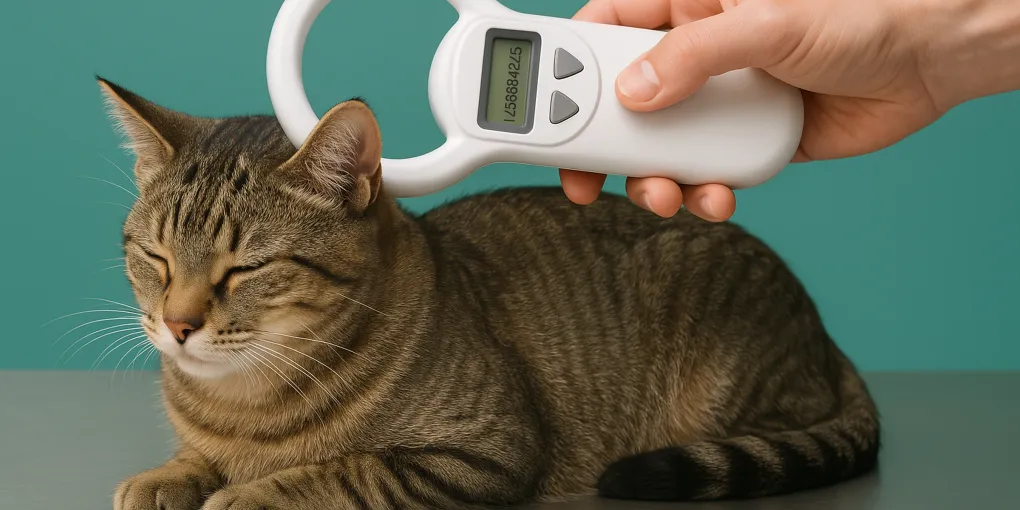
HomeAgain Universal Pet Microchip Scanner
Best OverallProtocols: ISO FDX-B, HDX, AVID 125kHz
~$49–$79
Quick Comparison
| Product | Key Specs | Price Range | Buy |
|---|---|---|---|
| |
| ~$49–$79 | Check Price |
| |
| ~$35–$55 | Check Price |
| |
| ~$65–$99 | Check Price |
| |
| ~$79–$120 | Check Price |
Contains affiliate links — we may earn a small commission at no extra cost to you.
Best Pet Microchip Scanner in 2026
The best pet microchip scanner for most shelters, rescue organizations, and veterinary practices is the HomeAgain Universal Pet Microchip Scanner (PSR 4.6/5) — a reliable multi-protocol reader that covers ISO 11784/11785 FDX-B, HDX, and AVID 125 kHz formats with a large, legible LCD display and a proven track record in professional animal care settings. For organizations that need the broadest possible chip compatibility including encrypted AVID variants, the Trio Pet Microchip Scanner (PSR 4.5/5) edges ahead on protocol coverage at a mid-range price. Individual rescue volunteers on a tight budget will find adequate ISO coverage in the HALO Scanner (PSR 4.4/5).
TL;DR
- Best Overall: HomeAgain Universal — multi-protocol, large display, professional track record (PSR 4.6/5)
- Best Budget Professional: HALO Scanner — ISO coverage, lowest price, adequate for most found-animal scenarios (PSR 4.4/5)
- Best Multi-Protocol: Trio Pet Microchip Scanner — widest protocol coverage including encrypted AVID (PSR 4.5/5)
- Best for Shelters: AVID MiniTracker Pro — high-volume durability, deepest read distance, shelter-grade build (PSR 4.3/5)
What Separates a Good Microchip Scanner from an Inadequate One
A microchip scanner that misses an implanted chip is not just a product limitation — it’s a failure with real consequences for a lost animal’s chance of being reunited with its owner. Understanding what makes scanners differ is essential before purchasing.
Protocol coverage is the most critical variable. The U.S. pet population contains animals microchipped across four decades of technology: older AVID 125 kHz encrypted chips (dominant before ~2005), Destron 125 kHz chips, and ISO 11784/11785 FDX-B chips (the current global standard). A scanner that only reads ISO FDX-B chips will fail to detect a meaningful percentage of older U.S. pets. Budget scanners that advertise “universal” compatibility sometimes only cover ISO FDX-B — verify the spec sheet before purchasing.
Read distance and sensitivity matter for obese animals. In animals with thick subcutaneous fat layers (common in overweight cats and dogs), a chip implanted at standard depth may be effectively further from the scanner surface. Scanners with 2–3 inch read depths are meaningfully better than 1-inch models for high-intake shelters that regularly process animals in all body conditions.
Audible and visual alerts improve workflow. In a noisy shelter environment, a scanner with only a visual LCD alert can be easy to miss. Models with audible beeps — particularly the Trio scanner — improve scanning speed and reduce the chance of moving on before confirming a chip read.
Battery management affects reliability. All four reviewed products use standard AA batteries, which is the right choice for professional environments — proprietary rechargeable batteries create supply chain risk in a shelter setting. AA availability in any convenience store means no scanning interruption due to a dead proprietary battery.
1. HomeAgain Universal Pet Microchip Scanner — Best Overall
Key Specs
- Protocols: ISO 11784/11785 FDX-B (134.2 kHz), HDX, AVID 125 kHz
- Display: Large backlit LCD
- Battery: AA (included)
- Read distance: ~1–2 inches
- Weight: ~6 oz
| Criterion | Weight | Score | Weighted |
|---|---|---|---|
| Safety | 25% | 9.0 | 2.250 |
| Durability | 20% | 9.5 | 1.900 |
| Pet Comfort | 20% | 9.0 | 1.800 |
| Value for Money | 20% | 8.5 | 1.700 |
| Ease of Use | 15% | 9.5 | 1.425 |
| Composite | 9.075 | ||
| PSR Score | 4.6/5 |
Safety (9.0/10): HomeAgain is one of the two dominant U.S. microchip registries (alongside AVID/24PetWatch), and its scanner is designed specifically to read the full range of chips in active U.S. circulation. Multi-protocol coverage is the primary safety factor — a scanner that detects implanted chips correctly means animals with chips are more likely to be identified rather than incorrectly declared unchipped. The device’s electrical components pose no risk to animals in normal use.
Durability (9.5/10): HomeAgain scanners are standard equipment in thousands of U.S. veterinary practices and shelters, and the track record of professional-use durability is well-documented. Housing is impact-resistant ABS plastic. The device tolerates the dropping, disinfecting spray, and heavy daily use typical of shelter environments. Replacement battery covers are available. No firmware or software updates are required — the device reads chips mechanically and displays results immediately.
Pet Comfort (9.0/10): Scan duration is brief — under 5 seconds for a clean read. The scanner does not produce sounds that distress animals, and the RF signal at standard read distances has no documented sensory effect on pets. Animals that must be held still briefly during scanning respond better when the operator is practiced and confident; the HomeAgain’s clear display and fast response time supports efficient scans that minimize handling time. For shelters that also use smart pet health monitors to track animal wellness data, a reliable scanner ensures incoming animals’ chip data integrates correctly with records.
Value for Money (8.5/10): At $49–$79, the HomeAgain is priced appropriately for a professional multi-protocol scanner. Individual rescue volunteers may find the price slightly high compared to the HALO, but for any organization that intakes significant volume, the cost per scan over months of use is negligible. The multi-protocol capability eliminates the need for a backup scanner to catch AVID chips.
Ease of Use (9.5/10): The large backlit LCD is the HomeAgain’s standout usability feature — legible in the bright lights of an exam room or the dim light of a field situation. Single-button operation: power on, scan, read. No menu navigation. Chip numbers display clearly and are easily transcribed. The scanner’s weight and grip design suit extended use sessions without hand fatigue.
Pros:
- Trusted brand in U.S. microchip ecosystem
- Large, legible backlit LCD
- Multi-protocol including AVID 125 kHz
- Single-button operation; no learning curve
Cons:
- Higher price than ISO-only budget alternatives
- 1–2 inch read depth can require closer positioning on obese animals
2. HALO Universal Microchip Scanner — Best Budget Professional
Key Specs
- Protocols: ISO FDX-B (134.2 kHz), 125 kHz (some formats)
- Display: LCD
- Battery: AA
- Read distance: ~1 inch
- Weight: ~5 oz
| Criterion | Weight | Score | Weighted |
|---|---|---|---|
| Safety | 25% | 9.0 | 2.250 |
| Durability | 20% | 8.5 | 1.700 |
| Pet Comfort | 20% | 8.5 | 1.700 |
| Value for Money | 20% | 9.5 | 1.900 |
| Ease of Use | 15% | 8.5 | 1.275 |
| Composite | 8.825 | ||
| PSR Score | 4.4/5 |
Safety (9.0/10): The HALO reads ISO FDX-B reliably, which covers the majority of chips implanted in the U.S. over the past two decades. Protocol coverage is narrower than the HomeAgain or Trio, but for recently chipped animals (post-2005), the HALO will identify them correctly. The primary safety gap is with older AVID-encrypted 125 kHz chips, which may not be detected on every scanner in this price range. Organizations whose intake population skews older should use a more comprehensive multi-protocol scanner as their primary device.
Durability (8.5/10): Owner and operator reports describe consistent performance across 12–24 months of regular use. The plastic housing is solid and handles normal drop events. Battery life is adequate but some heavy-use reports note depletion within a multi-day high-intake event — keeping spare AA batteries on hand is recommended. No proprietary components.
Pet Comfort (8.5/10): Scan speed and process are identical to higher-priced alternatives — the animal’s experience is the same regardless of scanner price. The HALO’s smaller form factor is slightly easier to maneuver around small cats and puppies that resist handling. For rescues that also deploy bluetooth pet trackers as a secondary recovery layer for recently adopted animals, the HALO provides a cost-effective first-check tool at intake.
Value for Money (9.5/10): At $35–$55, the HALO is the most affordable multi-format scanner in this review. For individual rescue volunteers, small breed clubs, or organizations equipping multiple volunteers at low per-unit cost, the HALO delivers strong functionality per dollar. Buying two HALO scanners costs less than one AVID MiniTracker Pro while covering substantially more scanning situations.
Ease of Use (8.5/10): Single-button operation with LCD display. The display is smaller than the HomeAgain’s, which can reduce legibility in bright or dim lighting conditions. Chip numbers are displayed clearly enough for transcription in normal conditions. Audible alert confirms chip detection. No complex menus.
Pros:
- Lowest price for a professional-grade ISO scanner
- Reliable ISO FDX-B performance
- Compact form factor for small animal handling
- Good choice for multi-volunteer equipping
Cons:
- Narrower protocol coverage than HomeAgain or Trio
- Smaller display reduces legibility in challenging lighting
- Read depth limited to ~1 inch — may miss chips in obese animals
3. Trio Pet Microchip Scanner — Best Multi-Protocol
Key Specs
- Protocols: ISO 11784/11785 FDX-B, HDX, AVID encrypted 125 kHz, Destron 125 kHz
- Display: Digital LCD with audible beep alert
- Battery: AA
- Read distance: ~2 inches
- Weight: ~6 oz
| Criterion | Weight | Score | Weighted |
|---|---|---|---|
| Safety | 25% | 9.0 | 2.250 |
| Durability | 20% | 9.0 | 1.800 |
| Pet Comfort | 20% | 9.0 | 1.800 |
| Value for Money | 20% | 8.5 | 1.700 |
| Ease of Use | 15% | 9.0 | 1.350 |
| Composite | 8.900 | ||
| PSR Score | 4.5/5 |
Safety (9.0/10): The Trio’s protocol coverage matrix is the widest in this review — ISO FDX-B, HDX, encrypted AVID 125 kHz, and Destron 125 kHz. This breadth means the Trio is the most complete tool for correctly identifying the full range of microchipped animals in U.S. circulation. The 2-inch read distance also improves the scanner’s ability to detect chips in obese animals where chip depth increases. For shelters aiming to eliminate missed chip identification as a root cause of failed reunions, the Trio is the most reliable tool in this category.
Durability (9.0/10): The Trio is built for professional use, with a housing designed to withstand shelter-environment handling. Operator reports from multi-year users describe consistent chip detection performance without drift or accuracy degradation. The audible alert mechanism shows no reported wear-related failures under normal use. Battery consumption is comparable to other AA-powered scanners.
Pet Comfort (9.0/10): The 2-inch read distance is a meaningful comfort improvement — operators can scan animals with less direct contact pressure, which is useful for fractious cats or anxious dogs that resist close handling. The audible beep confirmation means the operator can look at the animal rather than the display during scanning, allowing the scanner to stay further from the animal’s face while confirming a successful read. This pairs well with practices that also use indoor pet cameras to monitor animals in recovery kennels after intake processing.
Value for Money (8.5/10): At $65–$99, the Trio occupies the middle of the price range. The multi-protocol coverage justifies the premium over the HomeAgain and HALO — the incremental cost is small when measured against the consequence of a missed AVID chip. For shelters processing 50+ animals per week, the Trio is a worthy investment as the primary scanner.
Ease of Use (9.0/10): The audible beep is the Trio’s most practical usability advantage over the HomeAgain. In noisy environments — kennels, field rescues, veterinary reception areas — an audible chip-detected alert is more reliable than watching an LCD screen. The display is clear and chip numbers are legible. Single-button operation.
Pros:
- Widest protocol coverage in the review
- 2-inch read distance for obese/deep-implant animals
- Audible beep alert for noisy environments
- Professional-grade durability
Cons:
- Higher price than HomeAgain and HALO
- No significant advantage over HomeAgain for recently chipped animals (post-2005)
4. AVID MiniTracker Pro — Best for Shelters
Key Specs
- Protocols: AVID 125 kHz, ISO FDX-B, HDX
- Display: LCD
- Battery: AA
- Read distance: ~2–3 inches (highest in category)
- Lanyard attachment: Yes
| Criterion | Weight | Score | Weighted |
|---|---|---|---|
| Safety | 25% | 9.0 | 2.250 |
| Durability | 20% | 9.5 | 1.900 |
| Pet Comfort | 20% | 8.5 | 1.700 |
| Value for Money | 20% | 7.5 | 1.500 |
| Ease of Use | 15% | 8.5 | 1.275 |
| Composite | 8.625 | ||
| PSR Score | 4.3/5 |
Safety (9.0/10): AVID is one of the original U.S. microchip manufacturers, and the MiniTracker Pro is designed specifically to ensure no AVID-chipped animal is missed — an important commitment given the large installed base of AVID chips in older U.S. pets. ISO FDX-B coverage handles the current standard. The 2–3 inch read distance exceeds all other scanners in this review, providing the greatest margin for detecting chips in obese or densely muscled animals.
Durability (9.5/10): The MiniTracker Pro is unambiguously shelter-grade hardware. Its housing is designed for the high-drop, disinfectant-spray, high-volume conditions of busy intake operations. The lanyard attachment allows consistent carry without set-down between scans, reducing drop frequency. Long-term operator reports from large municipal shelters describe the MiniTracker Pro as a multi-year daily-use tool without performance degradation. For high-volume operations, this durability track record justifies the premium price. Organizations that also use dog GPS fencing systems as a post-adoption safety layer will want reliable scanner records for every animal in their database.
Pet Comfort (8.5/10): The 2–3 inch read distance is the best comfort feature — animals can be scanned with minimal physical contact pressure. The device itself produces no sounds or vibrations that distress animals during normal use. Scan time is brief. Pet comfort score is slightly lower than the Trio due to the device’s slightly larger form factor, which can be more awkward to maneuver around very small animals.
Value for Money (7.5/10): At $79–$120, the AVID MiniTracker Pro is the most expensive product in this review, and the price premium is hard to justify for individual rescue volunteers or small organizations. For large-volume shelters where per-unit cost is amortized across thousands of annual scans and reliability risk is consequential, the value proposition improves. The 2–3 inch read distance is a genuine functional advantage not available at lower price points.
Ease of Use (8.5/10): Single-button operation, clear LCD display, lanyard attachment for consistent carry. The display is legible in typical shelter lighting. Chip numbers are clear. The MiniTracker Pro’s slightly larger housing than the other scanners requires a bit more deliberate maneuvering around small animals, but experienced shelter staff report no usability issues after the first day.
Pros:
- Deepest read distance (2–3 inches) in the category
- Shelter-grade durability for high-volume use
- Lanyard attachment for continuous carry
- From the original AVID chip manufacturer
Cons:
- Highest price in the review
- Size/weight less convenient for individual volunteers
- Per-unit cost hard to justify for low-volume use
Full Comparison Table
| Product | Badge | Price | Protocols | Read Distance | Audible Alert | PSR Score |
|---|---|---|---|---|---|---|
| HomeAgain Universal | Best Overall | ~$49–$79 | ISO FDX-B, HDX, AVID 125kHz | ~1–2 in | No | 4.6/5 |
| HALO Scanner | Best Budget | ~$35–$55 | ISO FDX-B, 125kHz | ~1 in | Yes | 4.4/5 |
| Trio Scanner | Best Multi-Protocol | ~$65–$99 | ISO FDX-B, HDX, AVID encrypted | ~2 in | Yes | 4.5/5 |
| AVID MiniTracker Pro | Best for Shelters | ~$79–$120 | AVID 125kHz, ISO FDX-B, HDX | ~2–3 in | No | 4.3/5 |
Which Pet Microchip Scanner Is Right for You?
You’re a veterinary clinic or multi-species rescue with mixed intake: The HomeAgain Universal covers the protocol range needed for the realistic U.S. pet chip population at a professional price point. Its large display and proven track record in clinical settings make it the right standard tool.
You need the widest possible chip compatibility: The Trio Scanner is the best choice — its explicit support for encrypted AVID variants and the broader 2-inch read distance make it the most complete tool in this review.
You’re an individual rescue volunteer on a budget: The HALO Scanner provides reliable ISO FDX-B coverage for recently chipped animals at the lowest price. Supplement it with a multi-protocol scanner at your base organization for older animals.
You operate a high-volume municipal shelter: The AVID MiniTracker Pro is built for your workload. The shelter-grade housing, lanyard design, and 2–3 inch read depth deliver the reliability needed at high daily scan volumes where a missed chip has real consequences.
Frequently Asked Questions
What microchip protocols does a universal scanner need to read?
A truly universal scanner should read at minimum: ISO 11784/11785 FDX-B (134.2 kHz, the global standard used by most chips implanted since 2000), ISO HDX, and AVID/Destron 125 kHz encrypted chips. The 125 kHz AVID and Destron formats represent a significant portion of older chips in U.S. pets. A scanner that only reads ISO FDX-B will miss these chips, which is a meaningful gap for shelters and rescue organizations.
Can I use a microchip scanner at home to verify my pet’s chip?
Yes, home microchip scanners use the same technology as professional models. Position the scanner at the back of the neck between the shoulder blades, move it slowly in a grid pattern, and listen for the audible alert. Owner reports suggest most chips read within 2–3 slow passes. If no chip is detected, verify with a veterinarian — chip migration is documented and may require scanning a wider body area.
What is the difference between ISO FDX-B and AVID 125 kHz microchips?
ISO FDX-B (Full Duplex B) operates at 134.2 kHz and is the current international standard. AVID 125 kHz chips are an older U.S.-specific format. Both formats remain active in the U.S. pet population, particularly in older animals. A scanner that reads only one format will miss animals chipped with the other.
Do microchip scanners work through fur and fat?
Yes, all four reviewed scanners are designed to read chips through normal fur and subcutaneous fat. Read distance decreases in obese animals or those with very dense coats. The AVID MiniTracker Pro and Trio scanner earn the best marks for deep-tissue read performance, with read distances of 2–3 inches versus ~1 inch for budget alternatives.
Should rescue organizations buy one universal scanner or multiple budget models?
For shelters with high intake volume, the Trio or AVID MiniTracker Pro is recommended as the primary scanner due to multi-protocol coverage and read depth. For individual rescue volunteers scanning occasional found animals, the HALO offers adequate ISO coverage at a budget price. Having at least one multi-protocol scanner on-site is strongly recommended — a missed AVID 125 kHz chip on an older dog is a preventable failure with the right equipment.
Final Verdict
The HomeAgain Universal Pet Microchip Scanner (PSR 4.6/5) remains the best overall choice for most veterinary practices and rescue organizations — reliable multi-protocol coverage, a large legible display, and a long professional track record make it the benchmark in the category. When maximum protocol breadth is the priority, the Trio Scanner (PSR 4.5/5) earns the Best Multi-Protocol title with its wider chip compatibility and 2-inch read depth. Individual volunteers stretching a budget will find the HALO (PSR 4.4/5) covers the majority of modern chip formats at the lowest price in the review. And for high-volume shelter environments where the scanner must survive years of daily use without failure, the AVID MiniTracker Pro (PSR 4.3/5) delivers shelter-grade durability and the deepest read distance in the category.
Frequently Asked Questions
- A truly universal scanner should read at minimum: ISO 11784/11785 FDX-B (134.2 kHz, the global standard used by most chips implanted since 2000), ISO HDX, and AVID/Destron 125 kHz encrypted chips. The 125 kHz AVID and Destron formats represent a significant portion of older chips in U.S. pets. A scanner that only reads ISO FDX-B will miss these chips, which is a meaningful gap for shelters and rescue organizations.
- Yes, home microchip scanners are available and use the same technology as professional models. Position the scanner at the back of the neck (standard implant site between the shoulder blades), move it slowly in a grid pattern, and listen for the audible alert. Owner reports suggest most chips read within 2–3 slow passes. If you cannot detect a chip, verify with a veterinarian — chip migration (where the chip moves from the original implant site) is documented and may require scanning a wider body area.
- ISO FDX-B (Full Duplex B) operates at 134.2 kHz and is the international standard used by most microchips implanted globally since the mid-2000s. AVID 125 kHz chips are an older U.S.-specific format developed before the ISO standard was widely adopted. Both formats are still active in the U.S. pet population — particularly older animals. A scanner that only reads one format will miss animals chipped with the other.
- Yes, all four reviewed scanners are designed to read chips through normal fur and subcutaneous fat. Read distance decreases in obese animals or animals with very dense coats — scanner sensitivity matters in these cases. The AVID MiniTracker Pro and Trio scanner earn the best marks for deep-tissue read performance based on shelter operator reports, with read distances of 2–3 inches versus 1 inch for budget alternatives.
- For shelters and rescues with high intake volume, the Trio or AVID MiniTracker Pro is recommended as the primary scanner due to their multi-protocol coverage and read depth. For individual rescue volunteers who scan occasional found animals, the HALO offers adequate ISO coverage at a budget price. Having at least one multi-protocol scanner on-site is strongly recommended — a missed AVID 125 kHz chip on an older dog is a preventable failure with the right equipment.