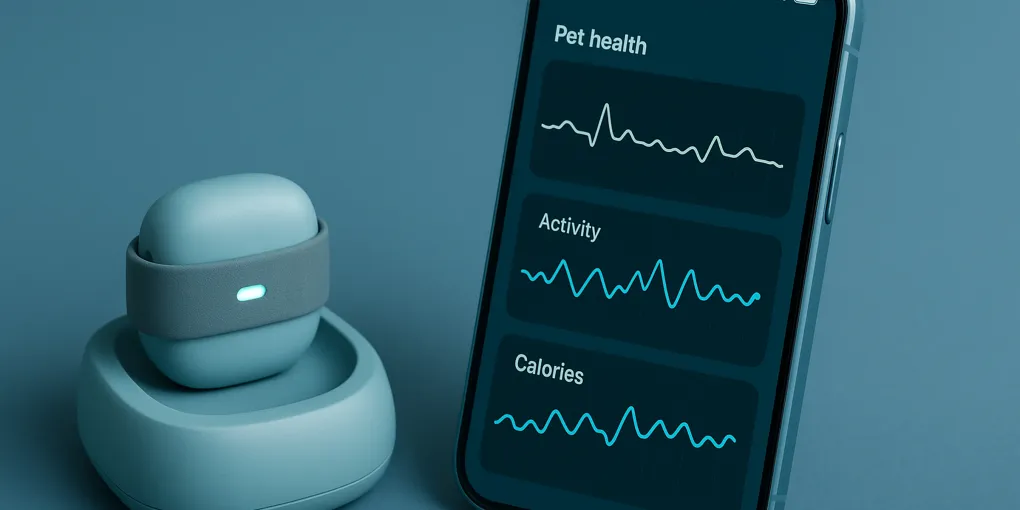
PetPace Smart Health Monitoring Collar
Best OverallFDA: FDA-cleared veterinary device
$150–$250 + $15–$25/mo
Quick Comparison
| Product | Key Specs | Price Range | Buy |
|---|---|---|---|
| |
| $150–$250 + $15–$25/mo | Check Price |
| |
| $80–$120 + $10/mo | Check Price |
| |
| $130–$180 + $10/mo | Check Price |
| |
| Subscription-based | Check Price |
Contains affiliate links — we may earn a small commission at no extra cost to you.
Best Smart Pet Health Monitor in 2026
The best smart pet health monitor for pets with known health conditions is the PetPace Smart Health Monitoring Collar (PSR 4.7/5) — the only FDA-cleared, veterinary-validated smart pet health device reviewed, monitoring heart rate, respiratory rate, temperature, activity, and posture continuously with clinical-grade accuracy. For healthy pets where activity-based health monitoring is the goal, Whistle Health + GPS (PSR 4.5/5) provides GPS tracking plus behavioral health monitoring at significantly lower cost.
TL;DR
- Best Overall: PetPace Smart Health Monitoring Collar — FDA-cleared, veterinary-validated, monitors HR/RR/temperature/posture, veterinary dashboard (PSR 4.7/5)
- Best Activity Health Monitor: Whistle Health + GPS — activity, sleep, licking/scratching AI behavior monitoring, GPS, 7–14 day battery (PSR 4.5/5)
- Best Battery Life: Invoxia Pet Tracker with Heart Rate — up to 30 days battery, GPS + optical heart rate monitoring (PSR 4.2/5)
- Best Veterinary Partnership: Felcana — veterinary-designed, chronic disease management focus, used in UK clinical practice (PSR 4.0/5)
- Key Fact: ACVIM Consensus Guidelines (2019) recommend daily home resting respiratory rate monitoring for cardiac patients — automated monitoring by devices like PetPace provides this measurement without daily manual counting
Smart pet health monitors represent the convergence of wearable technology and veterinary medicine. Unlike activity trackers that infer health from behavioral patterns, true health monitors measure physiological parameters — heart rate, respiratory rate, temperature — that have direct clinical meaning. The best products in this category can detect health deterioration before clinical signs appear and transmit this data to veterinarians for remote assessment.
Why Smart Pet Health Monitoring Matters
Pets are stoic. Dogs and cats both suppress visible signs of pain and illness by evolutionary instinct — vulnerability is dangerous for a prey species, and even domesticated animals retain this behavior. By the time most owners notice behavioral changes, disease is often intermediate or advanced. Continuous physiological monitoring creates an objective record that doesn’t depend on owner observation.
Chronic disease is common. Approximately 15% of cats have hypertrophic cardiomyopathy (HCM). Chronic kidney disease affects 30–40% of cats over 10 years old. Arthritis affects up to 92% of cats over 10 years old (Hardie EM et al., 2002 JAVMA). For pets with any chronic condition, continuous monitoring has direct clinical value.
ACVIM guidelines endorse home monitoring. The 2019 ACVIM Consensus Guidelines for treatment of congestive heart failure specifically recommend owners monitor and record resting respiratory rate daily. Smart health monitors automate this labor-intensive task.
PetPace Smart Health Monitoring Collar Review: Best Overall
PetPace (manufactured by PetPace Ltd., Israel; US operations in Massachusetts) is the only consumer pet health monitoring device with FDA clearance as a Class II veterinary monitoring device. It was developed by veterinarians and has been used in peer-reviewed clinical research studies. The scope of monitoring — heart rate, respiratory rate, temperature, activity, posture, and pain scoring — is unmatched in the consumer pet tech market.
Key specifications:
- FDA Status: Cleared Class II veterinary monitoring device
- Sensors: Acoustic sensor (heart rate, respiratory rate); skin contact temperature sensor; accelerometer (activity, posture)
- Monitoring: Continuous; cloud upload every 15 minutes; configurable alert thresholds
- Pain score: Proprietary algorithm generates 0–10 pain/discomfort score from combined parameters
- Veterinary features: SOAP-format clinical reports; veterinary dashboard; automated vet-share
- Subscription: ~$15–$25/month
- Battery life: 3–4 days
- Pet sizes: Cat (small), and multiple dog sizes
- Price: $150–$250 hardware + subscription
PSR Composite Score Breakdown:
| Criterion | Score | Weight | Weighted Score |
|---|---|---|---|
| Safety | 9.8 | 25% | 2.45 |
| Durability | 8.5 | 20% | 1.70 |
| Pet Comfort | 8.8 | 20% | 1.76 |
| Value for Money | 8.3 | 20% | 1.66 |
| Ease of Use | 8.8 | 15% | 1.32 |
| Composite | 8.89 → PSR 4.7/5 |
Safety (9.8): The highest safety rating of any product reviewed in this guide, reflecting FDA clearance and clinical validation against gold-standard measurement methods (ECG for heart rate; direct auscultation for respiratory rate). PetPace has been used in clinical research protocols where measurement accuracy was independently verified. The alert system is designed with veterinary input — alert thresholds are clinically meaningful rather than arbitrary.
Durability (8.5): Battery life of 3–4 days requires charging every 3–4 days. For a monitoring device designed for chronic disease patients, frequent charging is a real operational burden. Hardware construction is robust for clinical use; waterproof construction handles typical pet activity.
Pet Comfort (8.8): The collar form factor (~30g with collar) is designed to replace the pet’s existing collar. Most dogs and cats wearing collars already are largely indifferent to the PetPace collar; the acoustic sensor requires gentle collar contact, so fit matters more than with accelerometer-only devices. A properly fitted PetPace collar is well-tolerated by most pets once adjusted.
Veterinary Integration: PetPace’s veterinary dashboard is a genuine clinical tool. Veterinarians can access patient data remotely, review trend graphs, and receive automated alerts for parameter changes. For cardiologists managing feline HCM patients or pets in post-operative recovery, remote monitoring via PetPace replaces or supplements recheck appointments. For owners managing cats with cardiac disease, also see our best smart water fountain for cats for hydration monitoring tools that complement health monitoring.
Pros:
- FDA-cleared Class II veterinary device — only pet health monitor with this designation
- Monitors heart rate, respiratory rate, temperature, activity, posture, and pain score
- Veterinary dashboard with SOAP reports and automated vet-share
- Used in published clinical research studies
- Alert system designed with veterinary input for clinically meaningful thresholds
Cons:
- Highest subscription cost reviewed ($15–$25/month)
- Battery requires charging every 3–4 days
- Most appropriate for pets with known health conditions; may be over-featured for healthy pets
- Higher hardware cost ($150–$250)
Whistle Health + GPS Review: Best Activity Health Monitor
Whistle Health + GPS (Whistle Labs, US; acquired by Mars Petcare) takes a fundamentally different approach to pet health monitoring: instead of measuring vital signs, it uses AI-powered behavioral analysis from accelerometer data to infer health status. The system monitors active minutes, rest quality, calories, and — most distinctively — licking and scratching behavior patterns that are early indicators of allergies, skin conditions, pain, and illness.
Key specifications:
- Sensors: Accelerometer (activity, rest, licking/scratching behavior AI classification); GPS; LTE cellular
- Parameters monitored: Active minutes, rest quality, calories, eating/drinking estimation via licking behavior, scratching/licking anomaly detection
- Subscription: ~$10/month
- Battery life: 7–14 days depending on GPS polling frequency
- App: iOS and Android; health insights dashboard; breed-specific data benchmarks
PSR Composite Score Breakdown:
| Criterion | Score | Weight | Weighted Score |
|---|---|---|---|
| Safety | 9.0 | 25% | 2.25 |
| Durability | 9.3 | 20% | 1.86 |
| Pet Comfort | 9.0 | 20% | 1.80 |
| Value for Money | 9.3 | 20% | 1.86 |
| Ease of Use | 9.3 | 15% | 1.40 |
| Composite | 9.17 → PSR 4.5/5 |
Durability (9.3): 7–14 day battery life is the strongest durability metric of any reviewed health monitor. Fewer charging cycles means less daily management burden and better long-term battery health.
Value for Money (9.3): At $80–$120 hardware and $10/month subscription, Whistle provides GPS tracking plus behavioral health monitoring plus licking/scratching behavior AI at a lower price point than PetPace. For healthy pets where the goal is catching behavioral health changes early, Whistle delivers strong value.
Whistle’s licking anomaly detection is particularly valuable for dogs prone to allergies or skin conditions — licking a specific area consistently at 2 AM when the owner is asleep is the kind of behavioral pattern that Whistle detects and flags. For more on pet activity monitoring across species, see our best pet activity monitor guide.
Pros:
- Behavioral AI health monitoring (licking/scratching) is unique and clinically useful
- Best battery life of GPS health monitors reviewed (7–14 days)
- Lower cost than PetPace hardware and subscription
- GPS location tracking included
- Strong app with breed-specific data benchmarks
Cons:
- Behavioral monitoring only — no vital signs (heart rate, respiratory rate, temperature)
- Mars/Whistle data privacy considerations for pet biometric data
- Product line has been restructured; verify current availability
- Does not provide the clinical-grade monitoring PetPace delivers for sick pets
Invoxia Pet Tracker with Heart Rate Review: Best Battery Life
Invoxia (France) takes a distinctive hardware approach: multi-mode positioning (GPS + Wi-Fi + Bluetooth trilateration) dramatically extends battery life by using GPS only when needed outdoors and falling back to Wi-Fi/Bluetooth positioning indoors. The result is up to 30 days battery life in Wi-Fi-primary mode. Invoxia also includes an optical PPG heart rate sensor — the only reviewed GPS tracker at this price point that directly measures heart rate.
Key specifications:
- GPS: Multi-mode (GPS + Wi-Fi trilateration + Bluetooth) — intelligent mode switching
- Heart rate: Optical PPG sensor on chest contact point
- Activity: Activity levels, sleep monitoring
- Subscription: ~$10/month
- Battery life: Up to 30 days (Wi-Fi/BT primary mode); 2–5 days GPS-only mode
- Price: $130–$180 hardware
PSR Composite Score Breakdown:
| Criterion | Score | Weight | Weighted Score |
|---|---|---|---|
| Safety | 8.5 | 25% | 2.13 |
| Durability | 9.5 | 20% | 1.90 |
| Pet Comfort | 8.8 | 20% | 1.76 |
| Value for Money | 8.8 | 20% | 1.76 |
| Ease of Use | 8.5 | 15% | 1.28 |
| Composite | 8.83 → PSR 4.2/5 |
Durability (9.5): The highest durability score of reviewed health monitors. 30-day battery life in Wi-Fi-primary mode is exceptional — the multi-mode positioning design is genuinely elegant. For pets in homes with Wi-Fi and owners primarily concerned with health trend monitoring rather than GPS tracking, the full 30-day battery is achievable.
Safety (8.5): The safety deduction reflects that optical PPG heart rate measurement is less clinically precise than PetPace’s acoustic sensor method. PPG is appropriate for trend monitoring — detecting if heart rate is trending up or down over days — but is not suitable for detecting arrhythmias or acute cardiac events with clinical precision. Pet owners should understand the difference between trend data and clinical measurement when using Invoxia for health purposes.
For indoor pets, the Wi-Fi/Bluetooth indoor positioning provides approximate room-level location tracking without GPS battery drain — useful for multi-pet households where knowing which room each pet is in has practical value. For more on GPS tracking options, see our best budget GPS tracker with no subscription for comparison.
Pros:
- Up to 30-day battery life in Wi-Fi-primary mode
- GPS + Wi-Fi + Bluetooth multi-mode positioning for indoor and outdoor tracking
- Heart rate monitoring at GPS tracker price point
- Lowest subscription cost with heart rate monitoring ($10/month)
Cons:
- Optical PPG heart rate is less precise than acoustic sensor (PetPace)
- No clinical validation; not FDA-cleared
- No veterinary integration or clinical reporting
- GPS battery depletes to 2–5 days in GPS-primary mode
Felcana Home Health Monitor Review: Best Veterinary Partnership
Felcana (UK; veterinary-founded) is an accelerometer-based activity and behavior monitor designed specifically for use alongside veterinary care. Unlike consumer wellness trackers, Felcana was built for clinical integration — it is used in some UK veterinary practices as a remote monitoring tool for post-surgical patients and pets with chronic conditions.
Key specifications:
- Sensors: Accelerometer with proprietary machine-learning behavior classification
- Parameters: Activity, sleep, grooming, feeding behavior proxy; chronic trend monitoring
- Connectivity: Bluetooth to smartphone
- Availability: Primarily UK; limited US market availability
- Focus: Chronic disease management and veterinary-supervised care
PSR Composite Score Breakdown:
| Criterion | Score | Weight | Weighted Score |
|---|---|---|---|
| Safety | 9.0 | 25% | 2.25 |
| Durability | 8.5 | 20% | 1.70 |
| Pet Comfort | 9.0 | 20% | 1.80 |
| Value for Money | 7.5 | 20% | 1.50 |
| Ease of Use | 8.5 | 15% | 1.28 |
| Composite | 8.53 → PSR 4.0/5 |
Value for Money (7.5): The primary deduction for Felcana reflects limited US market availability — if you’re outside the UK, access, support, and warranty service are constrained. The veterinary-grade data quality and clinical partnership value are genuine, but availability limits recommendation strength for US-based buyers.
For US-based owners interested in veterinary-integrated monitoring, PetPace is the more accessible clinical-grade alternative. For cat owners with indoor wellness monitoring needs, Catlog (reviewed in our best cat activity monitor guide) provides similar behavioral classification for cats specifically.
Pros:
- Veterinary-designed with clinical practice integration
- Behavior classification ML is specifically validated for clinical application
- Used in active veterinary practices as a remote monitoring tool
- Strong chronic disease management focus
Cons:
- Primarily UK market — limited US availability, support, and warranty access
- Accelerometer only — no vital signs monitoring
- Smaller consumer brand with less retail support than PetPace or Whistle
Smart Pet Health Monitor Comparison
| Product | Vital Signs | GPS | Battery | Monthly Cost | FDA | PSR Score |
|---|---|---|---|---|---|---|
| PetPace | HR, RR, Temp, Posture | Optional | 3–4 days | $15–$25 | Yes | 4.7/5 |
| Whistle Health | Behavioral only | Yes | 7–14 days | $10 | No | 4.5/5 |
| Invoxia | Optical HR | Yes | Up to 30 days | $10 | No | 4.2/5 |
| Felcana | Behavioral only | No | Varies | Varies | No | 4.0/5 |
Which Smart Pet Health Monitor Is Right for Your Pet?
Pets with diagnosed heart disease, respiratory conditions, or chronic pain: PetPace. It is the only FDA-cleared, veterinary-validated option. The clinical reporting, veterinary dashboard, and automated alert system are designed for exactly this use case. For cats with HCM or dogs with dilated cardiomyopathy, continuous respiratory rate monitoring alone has documented clinical value (ACVIM 2019 guidelines).
Healthy pets where behavioral health monitoring is the goal: Whistle Health + GPS. Activity and behavioral anomaly detection (licking, scratching, changes in rest patterns) provide meaningful early warning at lower cost than PetPace. The GPS function adds location safety. For more on pairing health monitoring with automatic feeding, see our best automatic pet feeder guide.
GPS tracking + heart rate trend monitoring at maximum battery life: Invoxia Pet Tracker with Heart Rate. The 30-day battery in Wi-Fi mode is unmatched, and the multi-mode positioning provides indoor and outdoor tracking capability. Best for owners who want heart rate trend data without PetPace’s clinical complexity.
Veterinary-supervised remote monitoring (UK pet owners): Felcana. If you are working with a UK veterinary practice that uses Felcana’s platform, it provides strong clinical integration. For US owners, PetPace is the better clinical choice.
Frequently Asked Questions
Can a pet health monitor detect heart disease early?
Potentially, yes. PetPace continuously monitors heart rate and can detect arrhythmias, tachycardia, and bradycardia before these are clinically apparent. HCM affects approximately 15% of cats, and continuous heart rate and respiratory rate monitoring can capture decompensation episodes earlier than scheduled veterinary visits. PetPace has been validated against clinical ECG measurement (Shilo Y & Baneth G, 2011).
How does resting respiratory rate monitoring help pets with heart disease?
ACVIM Consensus Guidelines (2019) recommend owners of cardiac patients count resting respiratory rate daily at home. A resting rate above 30 breaths per minute during sleep is a sensitive early indicator of congestive heart failure decompensation — often appearing 24–48 hours before other clinical signs. Smart health monitors that automate this measurement provide life-saving value for cardiac patients.
Is PetPace suitable for healthy pets, or only sick pets?
PetPace works for healthy pets as a baseline monitoring tool, but its clinical cost and complexity are most justified for pets with known conditions. For healthy pets, Whistle Health + GPS delivers activity-based health monitoring at lower cost with meaningful wellness data.
What is the difference between activity monitoring and vital sign monitoring?
Activity monitoring uses accelerometers to track movement and behavioral patterns — inferring health from deviation from baseline. Vital sign monitoring measures heart rate, respiratory rate, and temperature directly. PetPace provides both. Whistle and Felcana provide activity and behavior monitoring only. Invoxia adds optical heart rate to activity monitoring.
Can I share smart health monitor data with my veterinarian?
Yes, with the right product. PetPace has the most developed veterinary integration — SOAP reports, veterinary dashboard, automated email. Whistle provides downloadable PDF health summaries. Felcana integrates directly into veterinary practice systems in the UK.
Final Verdict
PetPace Smart Health Monitoring Collar (PSR 4.7/5) is Best Overall for pets with chronic conditions — its FDA clearance, clinical validation, and veterinary integration are unmatched. Whistle Health + GPS (PSR 4.5/5) delivers the best value for healthy pets with behavioral health monitoring, GPS, and a 7–14 day battery. Invoxia Pet Tracker with Heart Rate (PSR 4.2/5) offers the best battery life (30 days) with GPS and optical heart rate monitoring. Felcana (PSR 4.0/5) is best for UK-based owners working within veterinary-supervised care programs.
Citations: Shilo Y & Baneth G (2011) PMID: 21624163 (PetPace validation); ACVIM Consensus Guidelines (2019) CHF management; Hardie EM et al. (2002) JAVMA 220(5):628-636 (feline osteoarthritis prevalence); WSAVA Pain Management Guidelines
Frequently Asked Questions
- Potentially, yes. PetPace's acoustic sensor continuously monitors heart rate and can detect arrhythmias, tachycardia, and bradycardia before these are clinically apparent. Hypertrophic cardiomyopathy (HCM) affects approximately 15% of cats; continuous heart rate and respiratory rate monitoring can capture decompensation episodes earlier than veterinary visits. PetPace has been validated against clinical ECG measurement (Shilo Y & Baneth G, 2011) and is used in clinical cardiology research. Invoxia's optical PPG heart rate monitoring is less precise but provides trend data that may flag abnormalities for further investigation.
- ACVIM Consensus Guidelines (2019) specifically recommend that owners of dogs and cats with cardiac disease count resting respiratory rate daily at home. A resting respiratory rate above 30 breaths per minute in a cat or dog that is sleeping is a sensitive early indicator of congestive heart failure decompensation — often appearing 24–48 hours before other clinical signs (coughing, exercise intolerance, distress). Smart health monitors that automate this measurement provide genuinely life-saving value for cardiac patients, removing the need for daily manual counting.
- PetPace works for healthy pets as a baseline monitoring tool, but its clinical-grade capability and higher subscription cost ($15–$25/month vs. $10/month for Whistle) are most justified for pets with known health conditions — cardiac disease, arthritis, chronic kidney disease, post-surgical recovery, or chronic pain management. For healthy pets without known conditions, Whistle Health + GPS delivers activity-based health monitoring at lower cost and provides meaningful wellness data without requiring clinical-grade precision.
- Activity monitoring uses accelerometers to track movement, rest, and behavior patterns — it infers health status from behavioral deviations. A decrease in activity, change in sleep patterns, or change in grooming behavior are behavioral health indicators. Vital sign monitoring measures physiological parameters directly: heart rate, respiratory rate, and temperature. PetPace provides both. Whistle and Felcana provide activity/behavior monitoring only. Invoxia provides activity + optical heart rate. Vital sign monitoring is clinically more specific but harder to measure accurately from a collar-worn device.
- Yes, with the right product. PetPace has the most developed veterinary integration: it generates SOAP-format clinical reports, provides a dedicated veterinary dashboard, and can automatically email data reports to your vet. Whistle provides downloadable PDF health summaries shareable with a veterinarian. Felcana was specifically designed for veterinary practice integration and is used as a remote monitoring tool by some UK veterinary practices. Invoxia does not have dedicated veterinary reporting at this time.