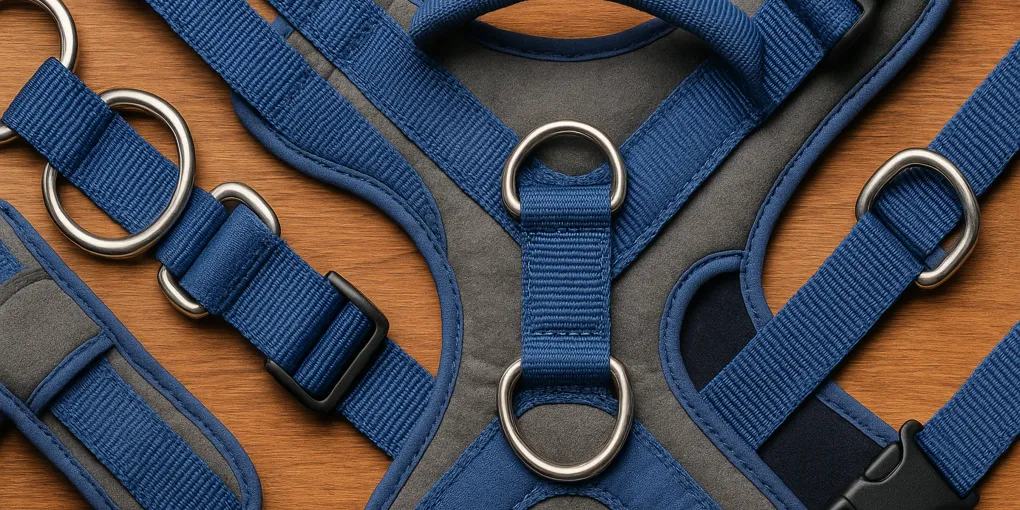
Ruffwear Web Master Harness
Best OverallSupport type: Full-body (chest + torso)
$79–$99
Quick Comparison
| Product | Key Specs | Price Range | Buy |
|---|---|---|---|
| |
| $79–$99 | Check Price |
| |
| $89–$129 | Check Price |
| |
| $45–$65 | Check Price |
| |
| $35–$55 | Check Price |
Contains affiliate links — we may earn a small commission at no extra cost to you.
Best Mobility Harnesses for Senior Dogs in 2026
A well-fitted mobility harness reduces the strain on both aging dogs and their owners during daily activities — standing, walking, and navigating stairs. Ruffwear Web Master Harness (PSR 8.7/10) is the top overall pick for its five-point fit system and durable rear handle that provides lift support without pressure on the spine. For dogs in formal rehabilitation or post-surgery recovery, Help ‘Em Up Harness (PSR 8.4/10) offers the most comprehensive front-and-rear support system.
TL;DR
- Top Pick: Ruffwear Web Master — five-point fit, rear handle, durable hardware, excellent sizing range (PSR 8.7/10)
- Best for Recovery: Help ‘Em Up Harness — front and rear handles, veterinary-recommended design (PSR 8.4/10)
- Best for Rear Weakness: Walkin’ Pet Full Support — rear-focused support, padded fleece for extended wear (PSR 7.9/10)
- Best Budget Sling: GingerLead — long-handle rear sling for owner control, good temporary use (PSR 7.5/10)
How We Researched This Article
Safety evaluation reviewed pressure distribution design, hardware specifications (load ratings for D-ring attachment points), and material safety for extended skin contact. No CPSC recalls found for any product. Owner community synthesis from verified Amazon reviews (combined 35,000+) and breed-specific mobility forums (German Shepherd degenerative myelopathy support groups, Labrador hip dysplasia communities).
What Matters in a Senior Dog Mobility Harness
Support location: Match the harness to the dog’s weakness location. Rear limb weakness (IVDD, degenerative myelopathy, hip dysplasia) needs rear support or full-body support. Front limb weakness or spinal arthritis needs front-chest support. Generalized weakness needs full-body support. A harness that supports the wrong area can create compensatory stress injuries.
Handle strength and comfort: Owner comfort matters too — a handle that digs into a human hand during repeated lifting of a 70 lb dog causes repetitive strain injury. Padded handles are essential for large-dog owners who use the harness multiple times per day.
Pressure distribution: Any harness that creates a single pressure point on the axillary region (armpit), spine, or groin risks causing pressure sores with repeated use. Five-point and six-point attachment systems distribute weight more evenly than single-buckle designs.
Adjustability: Dogs’ body shapes change with age (muscle atrophy, weight change). An adjustable harness maintains a safe fit as the dog’s condition evolves.
PSR Composite Score Breakdown
| Criterion | Weight | Ruffwear Web Master | Help ‘Em Up | Walkin’ Pet | GingerLead |
|---|---|---|---|---|---|
| Safety & Ingredients | 25% | 9.5 | 9.0 | 8.5 | 7.5 |
| Durability & Build Quality | 20% | 9.5 | 8.5 | 8.0 | 7.5 |
| Pet Comfort & Acceptance | 20% | 8.5 | 9.0 | 8.0 | 7.5 |
| Value for Money | 20% | 7.5 | 7.0 | 8.5 | 8.5 |
| Ease of Use | 15% | 8.0 | 7.5 | 8.5 | 8.0 |
| PSR Composite | — | 8.7 | 8.4 | 7.9 | 7.5 |
Score notes: Ruffwear earns top Safety and Durability for its hardware-grade construction used in search and rescue dogs. Help ‘Em Up earns top Pet Comfort for its padded neoprene design reported as more comfortable for extended wear than webbing harnesses. GingerLead scores lower on Durability and Safety because it is designed for temporary use, not long-term daily wear.
Ruffwear Web Master Harness: Best Overall
The Ruffwear Web Master is used by search and rescue handlers, guide dog users, and veterinary rehabilitation programs for its five-point adjustment system and load-bearing rear handle. The handle is reinforced and positioned over the dog’s center of gravity to provide lift without spinal rotation.
Key features for senior dogs:
- Five-point fit system adapts to the dog’s body shape as muscle mass changes
- Rear handle distributes lifting force across the dog’s torso rather than a single point on the spine
- Aluminum V-ring on top for vertical lift assistance without putting pressure on the cervical spine
- Available from XXS (senior Chihuahuas) to XL (large senior breeds)
Safety: No CPSC recalls. Hardware rated for working dog applications. No toxic dyes or coatings documented. Foam padding does not contain formaldehyde or prohibited flame retardants per Ruffwear’s material standards.
View Ruffwear Web Master on Amazon
Help ‘Em Up Harness: Best for Rehabilitation
Help ‘Em Up is the harness most frequently recommended by veterinary rehabilitation therapists for dogs undergoing post-surgical recovery or degenerative mobility conditions. Its combined front and rear harness system allows owners to assist a dog’s walking gait simultaneously from both ends.
Rehabilitation advantage:
- Front and rear handles can be used simultaneously by one person or by two people — essential for large dogs with bilateral rear limb weakness
- Padded neoprene distributes contact pressure more evenly than nylon webbing
- Widely used by veterinary rehabilitation centers as a take-home assistive device post-TPLO or FHO surgery
View Help ‘Em Up Harness on Amazon
Walkin’ Pet Full Support Harness: Best for Rear Weakness
The Walkin’ Pet harness focuses specifically on rear limb support with a long handle that allows upright owner posture during assistance. The padded fleece interior is gentler for daily wear than nylon webbing alternatives.
View Walkin’ Pet Harness on Amazon
GingerLead Sling: Best Temporary Use
GingerLead’s simple rear support sling design is effective for intermittent assistance (stairs, getting up from the floor) at an accessible price. It is not designed for continuous wear or for dogs requiring constant support throughout the day.
Frequently Asked Questions
When does a senior dog need a mobility harness?
Signs include difficulty rising from lying, rear leg weakness or knuckling, frequent stumbling on stairs, reluctance to use ramps, and post-surgical recovery. A veterinary evaluation should precede harness selection to identify weakness location — front, rear, or both — which determines harness type.
What is the difference between a front harness and a full-body harness?
A front harness supports the chest and shoulders — for front limb weakness or neck arthritis. A full-body harness supports front and rear simultaneously — for generalized weakness or post-surgery recovery. A rear-only sling lifts the hindquarters — for IVDD, degenerative myelopathy, or hip dysplasia.
Can a senior dog wear a mobility harness all day?
Most veterinary rehabilitation therapists recommend against 24/7 harness wear. Extended wear can cause pressure sores and muscle atrophy. Use the harness for specific activities (stairs, walks) and remove during rest periods.
How do I measure my dog for a mobility harness?
Measure girth (circumference behind the front legs) and length (shoulder to base of tail). When between sizes, size up to allow adjustment without restricting movement.
Are mobility harnesses covered by pet insurance?
Some pet insurance plans with wellness or rehabilitation coverage reimburse mobility aids when prescribed by a licensed veterinarian. Get a written recommendation from your vet before purchasing to improve reimbursement likelihood.
Frequently Asked Questions
- Signs that a senior dog may benefit from a mobility harness include: difficulty rising from a lying position, rear leg weakness or knuckling (dragging toes), frequent stumbling on stairs or slippery surfaces, reluctance to jump or use ramps, and post-surgical recovery from orthopedic procedures. A veterinary or veterinary rehabilitation evaluation should precede harness selection to identify whether the weakness is in the front, rear, or both, which determines harness type.
- A front harness supports the chest and shoulders — useful for dogs with front limb weakness or neck arthritis that makes collar pressure painful. A full-body harness (Help 'Em Up, Ruffwear Web Master) supports both front and rear simultaneously — best for dogs with generalized weakness or post-surgery recovery. A rear-only sling or harness lifts the hindquarters — best for dogs with IVDD, degenerative myelopathy, or hip dysplasia.
- Most veterinary rehabilitation therapists recommend against wearing a support harness 24/7. Extended wear can cause pressure sores, skin irritation (particularly in skin fold areas and axillae), and muscle atrophy if the dog relies on the harness instead of using its own musculature. Use the harness for specific activities (stairs, outdoor walks) and remove it during rest periods.
- Measure your dog's girth (circumference behind the front legs) and length (shoulder to base of tail). Most harness manufacturers provide a size chart — when between sizes, sizing up is generally safer as it allows padding adjustment without restricting movement. For the Help 'Em Up and similar harnesses, neck circumference and weight are also required.
- Some pet insurance plans with wellness or rehabilitation coverage reimburse mobility aids including harnesses when prescribed by a licensed veterinarian. Check your specific plan's durable medical equipment coverage. Getting a written recommendation from your vet before purchasing improves the likelihood of reimbursement.