Orijen Original
Best OverallAAFCO statement: Complete and balanced for all life stages
$90–$130 (25 lb)
Quick Comparison
| Product | Key Specs | Price Range | Buy |
|---|---|---|---|
| |
| $90–$130 (25 lb) | Check Price |
| |
| $55–$75 (40 lb) | Check Price |
| |
| $40–$60 (28 lb) | Check Price |
| |
| $60–$85 (22 lb) | Check Price |
Contains affiliate links — we may earn a small commission at no extra cost to you.
Best High-Protein Dog Food in 2026
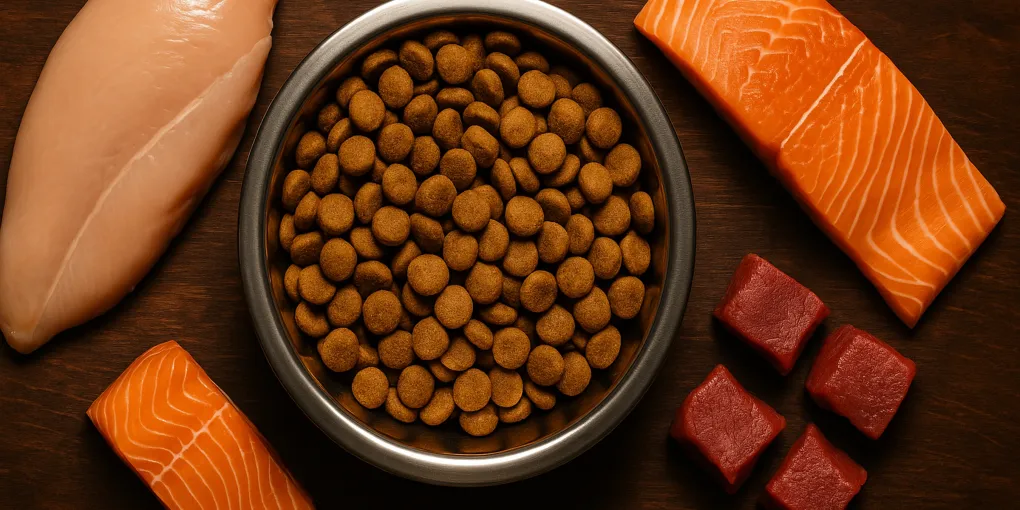
Protein is the cornerstone of canine nutrition — it supports muscle maintenance, immune function, enzyme production, and energy metabolism in active dogs. Orijen Original (PSR 8.6/10) earns the top overall ranking for its 85% animal ingredient formula and 38% crude protein — one of the highest in the commercial dry food market. For owners who need high-protein performance at a fraction of the cost, Victor Hi-Pro Plus (PSR 8.1/10) delivers 30% protein with a proven track record among working dog communities.
TL;DR
- Best Overall: Orijen Original — 85% animal ingredients, 38% protein, biologically appropriate philosophy, zero US recalls (PSR 8.6/10)
- Best Value: Victor Hi-Pro Plus — 30% protein, affordable large bag pricing, US-manufactured, strong working dog track record (PSR 8.1/10)
- Best for Small Dogs: Taste of the Wild Appalachian Valley Small Breed — 32% protein, novel venison/salmon proteins, small kibble size (PSR 7.9/10)
- Best Grain-Inclusive: Merrick Real Chicken & Sweet Potato — 30% protein, deboned chicken first, no legume-heavy DCM concern (PSR 7.6/10)
How We Researched This Article
AAFCO compliance statements and protein percentages verified from current product labels and manufacturer documentation. Recall history sourced from the FDA Center for Veterinary Medicine recall database and cross-referenced with PetFoodRecalls.net. Ingredient quality evaluated against WSAVA Global Nutrition Committee guidelines and NRC Nutrient Requirements of Dogs (2006). FDA CVM DCM investigation alerts reviewed for grain-free products. Owner community synthesis drawn from verified Amazon reviews (combined 80,000+), sporting dog forums, and working dog breeder communities.
What Matters Most in High-Protein Dog Food
Protein percentage and source quality: High-protein foods are typically defined as 30%+ crude protein on a dry matter basis. More important than the percentage is the protein source: animal-derived proteins (chicken, salmon, eggs) are complete proteins with highly digestible amino acid profiles. Plant-derived proteins (peas, lentils) contribute to crude protein totals but are less bioavailable and may lack taurine precursors.
AAFCO compliance statement: Every product should carry an AAFCO nutritional adequacy statement. “Complete and balanced for all life stages” is the most comprehensive statement and means the food meets AAFCO’s nutrient profiles without supplementation. Products for adult maintenance only carry a less stringent “adult maintenance” statement.
Recall history and manufacturer transparency: A clean FDA CVM recall record matters. Manufacturing facilities, quality control protocols, and whether the company employs board-certified veterinary nutritionists (DACVNs) affect the reliability and consistency of the formula.
DCM risk for grain-free formulas: The FDA has been investigating a possible link between grain-free, legume-heavy diets and dilated cardiomyopathy (DCM) since 2018. While the science remains under review, the WSAVA and veterinary cardiologists recommend caution with formulas where peas, lentils, or chickpeas appear in the first five ingredients. Grain-inclusive high-protein options carry lower apparent risk.
Caloric density and practical feeding: High-protein, high-fat formulas are calorie-dense. Active and working dogs metabolize these calories efficiently; sedentary dogs can gain weight. Always feed by caloric need and body condition score, not by cup volume alone.
PSR Composite Score Breakdown
| Criterion | Weight | Orijen Original | Victor Hi-Pro Plus | Taste of Wild AV | Merrick Chicken & SP |
|---|---|---|---|---|---|
| Safety & Ingredients | 25% | 9.2 | 8.5 | 7.8 | 8.0 |
| Durability & Build Quality | 20% | 8.5 | 8.5 | 8.0 | 8.0 |
| Pet Comfort & Acceptance | 20% | 9.0 | 8.5 | 8.0 | 8.0 |
| Value for Money | 20% | 7.0 | 9.0 | 8.5 | 7.5 |
| Ease of Use | 15% | 8.5 | 8.5 | 8.0 | 8.0 |
| PSR Composite | — | 8.6 | 8.1 | 7.9 | 7.6 |
Score notes: Orijen earns the highest Safety score for its named-protein, biologically appropriate formula and zero US recall history. Victor earns the highest Value score for large-bag affordability with solid nutrition. Taste of the Wild’s 2012 recall and ongoing DCM investigation relevance to its grain-free/legume formula reduce its Safety score. Merrick’s grain-inclusive formula avoids the DCM concern but carries a slightly lower Value score due to higher price-per-pound than Victor.
Orijen Original: Best Overall
Orijen Original is formulated by Champion Petfoods (based in Canada, with a US manufacturing facility in Kentucky) using a “biologically appropriate” philosophy: 85% of ingredients by weight come from animal sources — poultry, fish, and eggs — with the remaining 15% comprising botanicals and whole fruits and vegetables. The result is one of the highest animal-protein concentrations available in a commercial dry dog food.
Key features:
- 38% crude protein minimum — among the highest in the commercial kibble market
- 85% animal ingredients including chicken, turkey, flounder, whole eggs, and herring
- 15% plant ingredients include whole chickpeas, red lentils, pinto beans, and leafy greens; however, these are proportionally small compared to the animal ingredient fraction
- No artificial preservatives, colors, or flavors; preserved with mixed tocopherols
- Zero US recalls on record; manufactured in a human-grade-inspected USDA facility
Who it’s best for: Active adult dogs, performance dogs, sporting breeds, and owners who prioritize biologically appropriate nutrition with premium ingredient sourcing. Also suitable for multi-protein variety given the broad animal ingredient mix.
Practical consideration: Orijen is calorie-dense — approximately 448 kcal/cup. Active dogs handle this well; less active dogs will need smaller portions to avoid weight gain. Owners transitioning from low-protein kibble should do so over 10–14 days, as the protein and fat jump can cause GI adjustment symptoms.
View Orijen Original on Amazon
Owners who want the high-protein approach with senior dogs specifically should also review our best senior dog food for large breeds and best senior dog food for small breeds guides, which evaluate senior-specific high-protein formulas.
Victor Hi-Pro Plus: Best Value High-Protein
Victor Pet Foods is a Texas-based manufacturer that has built a loyal following among ranchers, hunters, and working dog owners who need high performance at a manageable price. Hi-Pro Plus delivers 30% protein and 20% fat — appropriate for active and working dogs — at a price per pound that’s roughly 50–60% lower than Orijen.
Key features:
- 30% crude protein from beef meal, pork meal, and chicken meal (all named, single-species)
- 20% crude fat — high-energy formula designed for working and performance dogs
- VPRO Blend: proprietary vitamin, mineral, selenium yeast, and probiotic supplement blend
- AAFCO complete and balanced for all life stages
- Manufactured exclusively in the USA (Eagle Lake, Texas facility)
- No recalls on record
Who it’s best for: High-energy adult dogs, working and sporting breeds, multi-dog households where cost-per-pound matters, and owners who need reliable nutrition without a premium brand price tag. The large kibble size is well-suited to medium-to-large breeds; small breed owners may need to consider the Taste of the Wild option below.
Practical consideration: Victor Hi-Pro Plus is a performance food — a 70 lb active hunting dog may thrive on it; a 70 lb sedentary house dog may gain weight at full-bag feeding guidelines. Adjust portions to the dog’s actual activity level and body condition score.
View Victor Hi-Pro Plus on Amazon
For owners of working dogs who also want to support joint health, pairing a high-protein food with a best glucosamine chondroitin dog supplement or best omega-3 fish oil for senior dogs can address joint maintenance that even high-protein foods may not fully cover at maintenance doses.
Taste of the Wild Appalachian Valley Small Breed: Best for Small Dogs
Taste of the Wild is manufactured by Diamond Pet Foods and uses novel proteins — venison and smoked salmon — as its primary protein sources in the Appalachian Valley formula. The small-breed variant uses smaller kibble sized appropriately for small-breed jaw mechanics and features 32% crude protein.
Key features:
- 32% crude protein from venison and smoked salmon — novel proteins that reduce risk of reactions in dogs sensitive to common proteins (chicken, beef)
- Smaller kibble size designed for small breed mouth and dental structure
- Fruits and vegetables (blueberries, raspberries, roasted chicory root) provide antioxidants
- Grain-free formula — note: FDA DCM investigation relevance for grain-free/legume formulas applies here
- AAFCO complete and balanced for adult maintenance
Safety note: Taste of the Wild experienced a significant 2012 recall (Salmonella contamination) linked to Diamond Pet Foods’ manufacturing facility. No recalls since 2012, and Diamond has implemented enhanced quality controls. The grain-free, legume-containing formula is relevant to the ongoing FDA DCM investigation — owners of small breeds with cardiac risk factors or Golden Retriever crosses should discuss diet choice with their veterinarian.
Who it’s best for: Small breed dogs with confirmed protein sensitivities to chicken or beef, owners who want novel proteins for elimination diet management, and small dogs whose owners prefer grain-free positioning despite DCM context.
View Taste of the Wild Appalachian Valley Small Breed on Amazon
Small breed dog owners may also benefit from reviewing our best senior dog food for small breeds guide as small breeds age into senior status earlier than large breeds and nutritional transitions become important.
Merrick Real Chicken & Sweet Potato: Best Grain-Inclusive High-Protein
Merrick (owned by Purina since 2015) takes a grain-inclusive approach to high-protein dog food — deboned chicken as the first ingredient, with sweet potato, peas, and whole grains rounding out the carbohydrate fraction. This is a meaningful differentiator for owners concerned about the FDA’s DCM investigation into grain-free legume-heavy formulas.
Key features:
- 30% crude protein with deboned chicken as first ingredient (real muscle meat, not meal)
- Grain-inclusive formula: includes whole grain sorghum and barley alongside sweet potato
- Added glucosamine and chondroitin for joint support
- No artificial colors, flavors, or preservatives
- Purina’s manufacturing oversight since 2015 brought ISO-certified quality control infrastructure
Safety note: Merrick had a 2015 voluntary recall for possible Salmonella contamination. Since Purina’s acquisition, no recalls have occurred. Purina’s manufacturing infrastructure is among the most rigorously documented in the industry.
Who it’s best for: Health-conscious owners who want high protein without grain-free DCM concerns; dogs with active lifestyles who also need joint support nutrients; owners who prefer deboned whole meat over meal-based proteins as the primary ingredient.
View Merrick Real Chicken & Sweet Potato on Amazon
Owners pairing high-protein food with joint health supplements can explore our best joint supplements for senior dogs and best dog arthritis supplement guides for complementary support.
How High-Protein Diets Affect Different Dogs
High-protein dog food is not a universal solution. Its benefits are clearest in dogs with genuine high-protein needs — working breeds, sporting dogs, dogs recovering from muscle loss, and highly active adult dogs. For sedentary companion dogs, high-protein, high-fat formulas can contribute to caloric overconsumption if owners don’t adjust portions downward.
Dogs with food sensitivities or allergies may benefit from the novel protein options in high-protein foods (venison, salmon, rabbit) that avoid common triggers. However, the sensitivity rationale should be distinguished from the performance rationale — these require different product choices.
For dogs that need weight management alongside protein maintenance, our best dog food for weight management guide covers formulas specifically designed to maintain lean muscle while reducing caloric density. And for dogs who benefit from protein-boosting meal toppers rather than a complete formula switch, the best dog food toppers guide provides science-backed options.
High-protein food pairs well with digestive enzyme support for dogs with sensitive stomachs, particularly when transitioning to a richer formula. Our best digestive enzyme supplement for senior dogs and best probiotic supplement for senior dogs guides cover complementary support options.
Frequently Asked Questions
How much protein does a dog actually need?
AAFCO minimums for adult dogs are 18% crude protein on a dry matter basis; for growth and reproduction, 22%. Most veterinary nutritionists consider 25–30% DM adequate for healthy adult dogs. Working and performance dogs benefit from 28–35%+ DM protein for muscle repair and energy metabolism. High-protein diets are appropriate for healthy, active dogs and current evidence does not show harm to healthy kidneys from high protein intake.
Does high-protein dog food damage the kidneys?
No — current veterinary evidence does not support the claim that high dietary protein causes kidney disease in healthy dogs. This concern arose from outdated studies on rats and early kidney disease research. Protein restriction is appropriate only for dogs with confirmed chronic kidney disease (CKD), and only under veterinary diagnosis. Healthy dogs with normal kidney function process high protein efficiently.
What is the difference between named and unnamed protein sources?
Named proteins (chicken, beef, salmon) identify a specific species, allowing for traceability and consistent amino acid profiles across batches. Unnamed sources like “meat meal” or “animal by-product meal” can vary batch-to-batch and often include lower-quality tissue. High-protein formulas using named, single-species proteins provide more consistent and verifiable nutrition.
Is grain-free always better for high-protein diets?
No. Grain-free diets that replace grains with heavy legume content (peas, lentils, chickpeas) are under FDA investigation for a possible link to dilated cardiomyopathy (DCM). WSAVA recommends choosing AAFCO-compliant foods from manufacturers with board-certified veterinary nutritionists. Grain-inclusive high-protein foods can deliver equivalent protein levels without the legume-load concern.
Which dogs benefit most from high-protein dog food?
Dogs that benefit most include sporting and working breeds (hunting, herding, sled), highly active adult dogs with significant daily exercise, dogs recovering from illness or surgery who need muscle rebuilding, and dogs with diagnosed muscle-wasting conditions. Sedentary companion dogs fed very high-protein, high-calorie formulas without adequate exercise may gain weight if overall caloric intake exceeds their expenditure.
Frequently Asked Questions
- AAFCO minimums for adult dogs are 18% crude protein on a dry matter basis; for growth and reproduction 22%. Most veterinary nutritionists consider 25–30% DM adequate for healthy adult dogs. Working and performance dogs benefit from 28–35%+ DM protein for muscle repair and energy metabolism. High-protein diets (30–40%) are appropriate for healthy, active dogs and are not harmful to healthy kidneys.
- No — current veterinary evidence does not support the claim that high dietary protein causes kidney disease in healthy dogs. This belief stems from outdated research. Protein restriction is appropriate for dogs with confirmed chronic kidney disease (CKD), but only under veterinary diagnosis. Healthy dogs process high protein efficiently without renal strain.
- Named proteins (chicken, beef, salmon) identify a specific species, allowing for traceability and consistent amino acid profiles. Unnamed sources like 'meat meal' or 'animal by-product meal' can vary batch-to-batch and often include lower-quality tissue. High-protein dog foods using named, single-species proteins provide more consistent and verifiable nutrition.
- No. Grain-free diets that replace grains with heavy legume content (peas, lentils, chickpeas) are under FDA investigation for a possible link to dilated cardiomyopathy (DCM) in dogs. Grain-inclusive high-protein foods (like Merrick's) can deliver equivalent protein levels without the legume-load DCM concern. Dogs without documented grain allergies have no reason to avoid grains.
- Dogs that benefit most include sporting and working breeds (hunting dogs, herding dogs, sled dogs), highly active adult dogs with significant daily exercise, dogs recovering from illness or surgery who need muscle rebuilding, and dogs with muscle-wasting conditions. Sedentary dogs fed very high-protein food without adequate exercise may be prone to weight gain if overall calorie intake is too high.