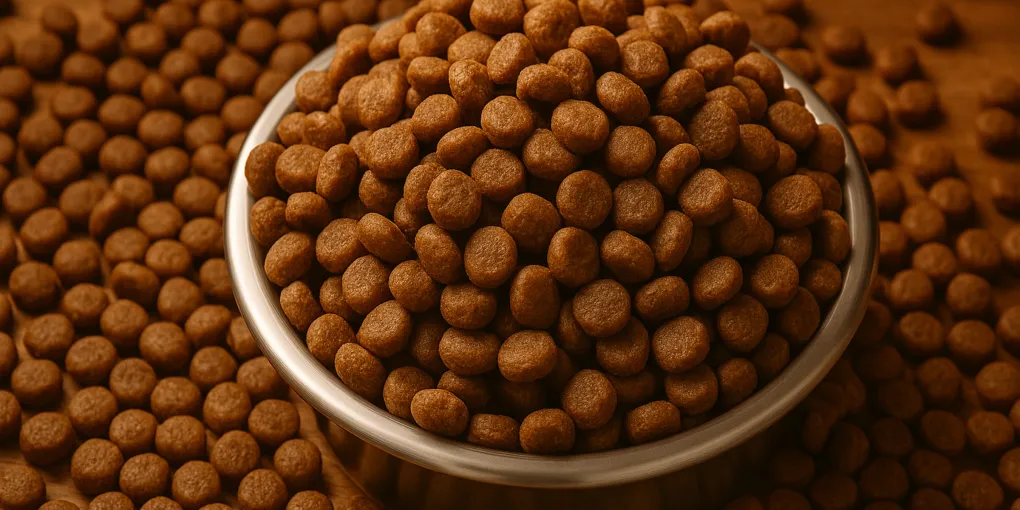
Hill's Science Diet Adult 7+ Large Breed
Best OverallAAFCO statement: All life stages (large breed)
$65–$95 (30 lb)
Quick Comparison
| Product | Key Specs | Price Range | Buy |
|---|---|---|---|
| |
| $65–$95 (30 lb) | Check Price |
| |
| $75–$105 (34 lb) | Check Price |
| |
| $85–$115 (30 lb) | Check Price |
| |
| $55–$80 (30 lb) | Check Price |
Contains affiliate links — we may earn a small commission at no extra cost to you.
Best Senior Dog Food for Large Breeds in 2026
Nutrition plays a critical role in how well large breed dogs age — the right senior food supports muscle maintenance, joint health, healthy weight, and kidney function as dogs enter their senior years. Hill’s Science Diet Adult 7+ Large Breed (PSR 8.4/10) leads our rankings for its combination of AAFCO compliance, strong recall history, and consistent palatability in large breeds. Purina Pro Plan Age 7+ Large Breed (PSR 8.1/10) is the top pick for picky eaters who respond to its more palatable chicken-based formula.
TL;DR
- Top Pick: Hill’s Science Diet Adult 7+ — AAFCO-compliant, zero recalls, strong veterinary familiarity (PSR 8.4/10)
- Best for Picky Eaters: Purina Pro Plan Age 7+ — highly palatable, live probiotics, broad owner-reported acceptance (PSR 8.1/10)
- Best Breed Science: Royal Canin Large Aging 8+ — breed-specific nutrient ratios, EPA/DHA for joints (PSR 7.9/10)
- Best Natural: Blue Buffalo Senior Large Breed — whole food ingredients, LifeSource Bits antioxidant blend (PSR 7.4/10)
How We Researched This Article
AAFCO compliance statements verified from current product labels. Recall history sourced from FDA CVM recall database and PetFoodRecalls.net. Ingredient quality evaluated against WSAVA Global Nutrition Committee guidelines. Owner community synthesis from verified Amazon reviews (combined 100,000+) and breed-specific large dog forums (Labrador Retriever Club of America, Golden Retriever Club of America, German Shepherd Dog Club of America).
What Matters Most in Senior Large Breed Dog Food
AAFCO compliance statement: Every senior dog food should carry an AAFCO nutritional adequacy statement. “Complete and balanced for all life stages (large breed)” is the strongest statement. “For maintenance” means it meets minimum adult requirements but may not be suitable for reproducing females or puppies. Senior dogs need at minimum a maintenance-level AAFCO statement.
Protein quality and source: The first ingredient should be a named animal protein (chicken, beef, salmon — not “meat” or “animal by-products” without species identification). Senior large breed dogs need adequate protein to maintain muscle mass — protein restriction is only warranted for dogs with confirmed renal disease.
Joint-support nutrients: Glucosamine and chondroitin added to kibble appear in lower doses than supplement products but contribute to daily intake. EPA and DHA from fish sources have the strongest clinical evidence for joint inflammation support (Roush et al., 2010, PMID: 20043801).
Caloric density: Large breed seniors are at high risk of obesity, which dramatically accelerates joint deterioration. Senior formulas reduce caloric density vs. adult maintenance food — this is an important practical benefit.
PSR Composite Score Breakdown
| Criterion | Weight | Hill’s SD 7+ | Purina PP Age 7+ | Royal Canin LA 8+ | Blue Buffalo Senior |
|---|---|---|---|---|---|
| Safety & Ingredients | 25% | 9.0 | 8.5 | 9.0 | 7.5 |
| Durability & Build Quality | 20% | 8.5 | 8.5 | 8.5 | 8.0 |
| Pet Comfort & Acceptance | 20% | 8.5 | 9.0 | 8.0 | 7.5 |
| Value for Money | 20% | 8.0 | 8.0 | 7.0 | 8.5 |
| Ease of Use | 15% | 8.5 | 8.5 | 8.0 | 8.0 |
| PSR Composite | — | 8.4 | 8.1 | 7.9 | 7.4 |
Score notes: Hill’s and Royal Canin earn high Safety scores for clean recall histories and board-certified veterinary nutritionist-formulated recipes. Blue Buffalo’s historical recalls (2010, 2017) reduce its Safety score vs. competitors. Purina Pro Plan earns the highest Pet Comfort score due to documented superior palatability across owner community reports.
Hill’s Science Diet Adult 7+ Large Breed: Best Overall
Hill’s Science Diet is the most widely recommended senior dog food by veterinarians in the United States. The Adult 7+ Large Breed formula is AAFCO-compliant for all life stages, includes glucosamine (300 mg/kg) and omega-3 fatty acids for joint support, and has maintained a clean recall history for more than five years.
Key features:
- First ingredient: chicken — named, single-species animal protein
- EPA and DHA from fish oil for joint and coat support
- Controlled phosphorus levels appropriate for aging kidneys
- Broad size availability (5 lb, 15 lb, 30 lb bags) for all large breed sizes
Safety: No CPSC recalls applicable. FDA CVM records: no active recalls. AAFCO compliant. Formulated with board-certified veterinary nutritionists on staff.
View Hill’s Science Diet Adult 7+ on Amazon
Purina Pro Plan Age 7+ Large Breed: Best for Picky Eaters
Purina Pro Plan is consistently ranked at the top of palatability surveys for large breed dogs. The Age 7+ Large Breed formula uses real chicken as the first ingredient with added live probiotic cultures (Bacillus coagulans) for digestive support — beneficial for senior dogs with sensitive stomachs.
Palatability advantage:
- Owner community reports (verified Amazon reviews, 30,000+) consistently describe high acceptance rates even in picky senior dogs
- Multiple texture options available (shredded blend, solid pieces, wet food complement) to accommodate senior dogs with dental issues
- Live probiotics are viable through the best-by date per Purina’s quality assurance documentation
View Purina Pro Plan Age 7+ on Amazon
Royal Canin Large Aging 8+: Best Breed-Specific Science
Royal Canin’s formulation is developed by a team of veterinary nutritionists with breed-size-specific nutritional data. The Large Aging 8+ formula includes glucosamine and chondroitin at higher concentrations than most competitor senior foods, plus EPA and DHA at clinically relevant joint-support doses.
Who it’s best for:
- Large breed dogs 8 years or older (stricter age criteria than most senior foods)
- Dogs with confirmed joint issues who benefit from higher dietary joint-nutrient delivery
- Owners whose dogs’ veterinarians specifically recommend Royal Canin for large breed senior management
View Royal Canin Large Aging 8+ on Amazon
Blue Buffalo Life Protection Senior Large Breed: Best Natural Ingredients
Blue Buffalo uses deboned chicken as the first ingredient, whole grains, and its proprietary LifeSource Bits — a blend of antioxidants, vitamins, and minerals cold-formed to preserve potency. The natural ingredient positioning appeals to owners who prioritize whole-food sourcing over veterinary-formulation credentials.
Trade-offs to note:
- Two historical recalls (2010 — melamine contamination recall unrelated to current formulation; 2017 — potential elevated moisture) reduce the safety score vs. Hill’s and Royal Canin
- Blue Buffalo does not publicly disclose whether a board-certified veterinary nutritionist (DACVN) is on staff for formulation
View Blue Buffalo Senior Large Breed on Amazon
Frequently Asked Questions
What is the best protein level for a senior large breed dog?
Current veterinary nutrition consensus recommends that senior dogs do NOT need lower protein than adult dogs. Healthy senior large breeds benefit from maintained or slightly increased protein (26–30% dry matter basis) to preserve muscle mass. Dogs with confirmed kidney disease may need protein restriction, but this requires veterinary diagnosis.
Should large breed senior dogs eat large breed specific food?
Yes — large breed senior formulas reduce caloric density, include controlled phosphorus for kidney health, and provide higher joint-support nutrient doses than standard adult food. These differences matter for large breeds’ specific health risks.
How do I transition my large senior dog to a new food?
Transition over 7–10 days: 25% new / 75% old (2–3 days), 50/50 (2–3 days), 75% new / 25% old (2–3 days), then 100% new. Senior dogs often have more sensitive digestion — slower transitions reduce GI upset risk.
Is grain-free food better for senior dogs?
No — the FDA investigated a potential link between legume-heavy grain-free diets and dilated cardiomyopathy (DCM) in dogs. WSAVA recommends AAFCO-compliant foods from manufacturers with board-certified veterinary nutritionists. Grain-free diets are not necessary for most senior dogs without documented grain allergies.
How much should I feed my large breed senior dog?
Follow the feeding guidelines on the bag, then adjust based on body condition score. Senior large breeds typically need 10–20% fewer calories than adult maintenance, but activity level and health status affect this. Aim for a 4–5 on the 9-point BCS scale, not a number on a calendar.
Frequently Asked Questions
- Current veterinary nutrition consensus (AAFCO, WSAVA guidelines) recommends that senior dogs do NOT need lower protein than adult dogs — the old guideline of 'reduce protein for seniors' was based on outdated research. Healthy senior dogs benefit from maintained or slightly increased protein levels (26–30% on a dry matter basis) to help preserve muscle mass. Dogs with confirmed kidney disease may need protein restriction, but this requires veterinary diagnosis before implementing.
- Yes — large breed senior formulas typically reduce caloric density to prevent obesity (a major health risk for senior large breeds), include controlled phosphorus levels for kidney health, and provide joint-support nutrients (glucosamine, chondroitin, EPA/DHA) at higher doses than standard adult food. The caloric and mineral differences matter for large breeds' specific health risks.
- Transition over 7–10 days: start with 25% new food / 75% old food for 2–3 days, then 50/50 for 2–3 days, then 75% new / 25% old for 2–3 days, then 100% new food. Senior dogs often have more sensitive digestive systems than young dogs — slower transitions reduce GI upset risk. If loose stools develop, slow the transition further.
- No — the FDA investigated a potential link between grain-free dog food (specifically legume-heavy formulas) and dilated cardiomyopathy (DCM) in dogs. As of 2025, the scientific picture is still evolving, but WSAVA and most veterinary cardiologists recommend using AAFCO-compliant foods from manufacturers with board-certified veterinary nutritionists on staff. Grain-free diets are not necessary for most senior dogs without documented grain allergies.
- Follow the feeding guidelines on the bag as a starting point, then adjust based on body condition score. Senior large breed dogs typically need 10–20% fewer calories than they did at adult maintenance, but this varies with activity level and health status. Body condition scoring — not age alone — should drive feeding amount. Aim for a 4–5 on the 9-point BCS scale.