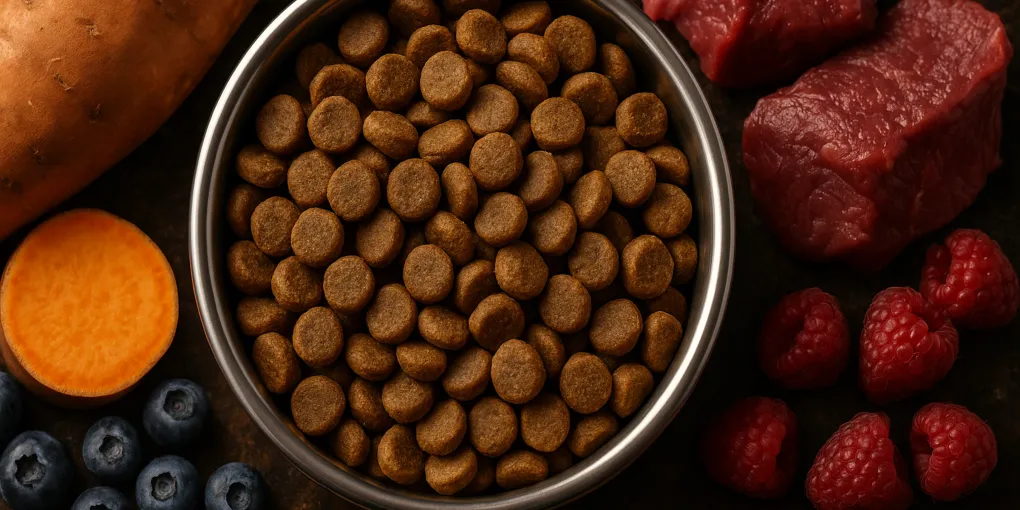
Taste of the Wild High Prairie
Best OverallAAFCO statement: Complete and balanced for all life stages
$50–$75 (28–30 lb)
Quick Comparison
| Product | Key Specs | Price Range | Buy |
|---|---|---|---|
| |
| $50–$75 (28–30 lb) | Check Price |
| |
| $55–$85 (24–28 lb) | Check Price |
| |
| $65–$95 (22–25 lb) | Check Price |
| |
| $75–$110 (13–25 lb) | Check Price |
Contains affiliate links — we may earn a small commission at no extra cost to you.
Best Grain-Free Dog Food in 2026: Science-Backed Options
A critical note before the picks: The FDA’s ongoing investigation into a potential link between legume-heavy grain-free diets and dilated cardiomyopathy (DCM) in dogs is not resolved. As of 2025, the FDA has not established definitive causation, but most veterinary cardiologists recommend caution — particularly for breeds predisposed to DCM. This guide covers the best grain-free options for dogs with legitimate grain sensitivities or allergies, but it begins with the science, not the marketing.
Taste of the Wild High Prairie (PSR 8.2/10) leads our rankings for combining novel protein sources, AAFCO all-life-stages compliance, and the strongest value proposition in the grain-free premium segment. Blue Buffalo Wilderness Adult Chicken (PSR 7.9/10) earns the palatability pick for dogs who need grain-free but resist many novel-protein formulas.
TL;DR
- Top Pick: Taste of the Wild High Prairie — novel proteins (bison/buffalo), AAFCO all life stages, strong value (PSR 8.2/10)
- Best Palatability: Blue Buffalo Wilderness — high acceptance rates, deboned chicken first ingredient (PSR 7.9/10)
- Best Ingredient Quality: Merrick Grain Free — US-sourced proteins, no by-product meals, clean label (PSR 7.7/10)
- Best for Allergy Dogs: ACANA Singles — true single-protein limited ingredient, ideal for elimination diets (PSR 7.5/10)
How We Researched This Article
AAFCO compliance statements verified from current product labels. Recall history sourced from FDA CVM recall database. DCM investigation context sourced from FDA CVM publications (2019, updated 2024) and ACVIM consensus statement (2023). Ingredient quality evaluated against WSAVA Global Nutrition Committee guidelines. Owner community synthesis from verified Amazon reviews (combined 120,000+ for the four products) and veterinary nutrition forums.
What Matters Most in Grain-Free Dog Food
Understand the DCM context first: The FDA CVM began investigating diet-associated DCM in 2018 after a cluster of cases in breeds not typically predisposed to the condition. While a definitive causal mechanism has not been established, peas and lentils appearing high in ingredient lists (suggesting high dietary inclusion) are a consistent pattern across affected diets. If your dog genuinely requires grain-free feeding due to a confirmed allergy, this does not necessarily mean grain-free food is unsafe — but it means the decision warrants veterinary input and potentially periodic cardiac monitoring for predisposed breeds.
Most dogs don’t need grain-free: True grain allergies in dogs are documented but uncommon. The most frequent dietary allergens in dogs are animal proteins — beef, dairy, and chicken top the list in veterinary dermatology research (Olivry & Mueller, 2017). If your dog shows digestive or skin symptoms that you attribute to grain, an elimination diet trial under veterinary supervision is the only way to confirm a grain allergy. Choosing grain-free without confirmed need provides no nutritional benefit and adds the legume exposure associated with DCM concerns.
AAFCO compliance is still required: Grain-free kibble must meet the same AAFCO nutrient profiles as grain-inclusive food. Verify the specific AAFCO statement — “complete and balanced for all life stages” is the strongest. “For adult maintenance” means the product is not appropriate for puppies or pregnant/nursing dogs.
Legume content: Most grain-free kibbles use peas, lentils, or chickpeas as primary starch replacements. Products with these legumes listed as the 3rd, 4th, or 5th ingredient in the ingredient list are using them in meaningful quantities. For DCM-conscious owners, products that use potato or sweet potato as the primary starch replacement (like some Merrick recipes) may reduce legume exposure.
Novel proteins: One of the genuine use cases for grain-free diets is novel protein introduction for allergy management. Grain-free formulas more often feature proteins like bison, venison, duck, or salmon — less common in dogs’ dietary history and thus less likely to trigger existing food sensitivities.
PSR Composite Score Breakdown
| Criterion | Weight | Taste of the Wild | Blue Buffalo Wilderness | Merrick Grain Free | ACANA Singles |
|---|---|---|---|---|---|
| Safety & Ingredients | 25% | 8.0 | 7.5 | 8.5 | 8.5 |
| Durability & Build Quality | 20% | 8.5 | 8.5 | 8.5 | 8.5 |
| Pet Comfort & Acceptance | 20% | 8.5 | 9.0 | 8.0 | 7.5 |
| Value for Money | 20% | 9.0 | 8.0 | 7.5 | 6.5 |
| Ease of Use | 15% | 8.5 | 8.5 | 8.5 | 8.5 |
| PSR Composite | — | 8.2 | 7.9 | 7.7 | 7.5 |
Score notes: Taste of the Wild leads on Value for Money — one of the most affordable premium grain-free options. Merrick and ACANA earn higher Safety scores due to cleaner recall histories and stronger sourcing transparency vs. Blue Buffalo’s brand-level recall history. Blue Buffalo Wilderness leads on Pet Comfort due to documented high palatability in owner reports. ACANA’s higher price point reduces Value for Money score.
Taste of the Wild High Prairie: Best Overall
Taste of the Wild is manufactured by Diamond Pet Foods and has been one of the most popular grain-free dry dog foods in the United States for over a decade. The High Prairie formula features roasted bison and venison as primary proteins — novel protein sources that are appropriate for dogs with common protein sensitivities to chicken or beef.
Key features:
- Primary proteins: buffalo, bison, roasted venison — genuinely novel proteins for most dogs’ dietary histories
- AAFCO “complete and balanced for all life stages” — the strongest compliance statement; appropriate for puppies, adults, and seniors
- Primary starch: sweet potatoes and peas — pea content present, worth noting relative to DCM investigation
- Added probiotics (proprietary K9 Strain) for digestive support
- One of the most affordable premium grain-free options — strong value per pound
Safety note: Taste of the Wild (Diamond Pet Foods) had a significant Salmonella-related recall in 2012 affecting multiple Diamond products. The grain-free High Prairie formula itself was not the source, and Diamond has made substantial quality improvements since. No recalls on this SKU in 10+ years. The brand appears in FDA’s DCM breed-associated diet list — relevant context for predisposed breeds.
Who it’s best for: Owners seeking grain-free food for a dog with confirmed sensitivities to common proteins, budget-conscious owners who want premium grain-free quality at competitive prices, and dogs who do well on novel proteins. For senior dogs on Taste of the Wild, also see our senior dog food for large breeds guide for age-specific context.
View Taste of the Wild High Prairie on Amazon
Blue Buffalo Wilderness Adult Chicken: Best Palatability
Blue Buffalo Wilderness is the grain-free line from one of the best-selling natural pet food brands in the United States. The Adult Chicken recipe uses deboned chicken as the first ingredient with a high overall protein content, and owner community reports consistently rank it among the highest-palatability grain-free options — even among picky dogs who have rejected other grain-free foods.
Palatability profile:
- Deboned chicken first ingredient — one of the highest-acceptance proteins for dogs
- Multiple texture options: standard kibble, shredded blend, and wet food Wilderness versions available for dogs with dental issues or texture preferences
- High protein content (34% crude protein) appeals to owners seeking a high-protein grain-free option
- LifeSource Bits: proprietary antioxidant/vitamin/mineral blend — visually distinct dark pieces in the kibble
Safety context: Blue Buffalo has had two brand-level recalls — one in 2010 (melamine-adjacent) and one in 2017 (elevated moisture in some products). The Wilderness grain-free line was not specifically implicated in these recalls. Blue Buffalo also appears in FDA’s DCM diet list. The brand’s historical recall record does reduce its PSR Safety score compared to competitors with cleaner histories.
Who it’s best for: Picky dogs who have rejected other grain-free options, owners who appreciate the LifeSource Bits antioxidant system, and owners of adult dogs without DCM predisposition who need grain-free for confirmed sensitivities. For additional digestive support alongside grain-free feeding, see our digestive enzyme supplement guide.
View Blue Buffalo Wilderness on Amazon
Merrick Grain Free Real Chicken & Sweet Potato: Best Ingredient Quality
Merrick (owned by Purina since 2015) produces grain-free food in its own Texas facility using a high proportion of US-sourced proteins. The Real Chicken & Sweet Potato recipe uses deboned chicken as the first ingredient with sweet potato and peas as starch sources — and notably, sweet potato appears before peas in the ingredient list, which may reduce relative legume content compared to pea-first competitors.
Ingredient quality highlights:
- All proteins US-sourced — Merrick maintains detailed sourcing documentation
- No by-product meals — all proteins are named whole meat sources
- Sweet potato listed before peas — potentially lower relative legume inclusion than pea-first grain-free formulas
- Omega-3 and omega-6 fatty acids from flaxseed and salmon oil for coat support
- Purina’s manufacturing quality assurance now applies — post-acquisition quality controls are robust
Who it’s best for: Owners who prioritize US-sourced proteins and clean-label ingredient lists, dogs with sensitivities who need grain-free with reduced (though not eliminated) legume content, and owners for whom ingredient sourcing transparency is a primary factor. For dogs with skin and coat concerns that prompted the move to grain-free, also see our omega-3 fish oil guide and skin and coat supplement guide.
View Merrick Grain Free on Amazon
ACANA Singles Limited Ingredient: Best for Allergy Dogs
ACANA Singles represents the gold standard of grain-free limited ingredient diets in the commercial dry food space. “Singles” means a single animal protein source — duck, lamb, or mackerel — with limited additional ingredients, making it genuinely useful for elimination diet protocols supervised by a veterinarian.
Why Singles stands out for allergy management:
- Truly single protein source — no multiple meats blended into one formula
- ACANA discloses exact ingredient percentages and sources by batch — exceptional transparency
- Champion Pet Foods (ACANA’s parent) conducts biologically appropriate formulation with DACVN review
- Supplemental taurine added — a proactive response to the FDA DCM investigation
- Freeze-dried ingredient coating on kibble increases palatability significantly for dogs who resist eating
Important limitation: ACANA Singles carries AAFCO compliance for “adult maintenance” — not all life stages. It is not appropriate as the sole diet for puppies or pregnant/nursing dogs. For adult dogs with food allergies, it is an excellent choice.
Who it’s best for: Dogs undergoing or completing a veterinarian-supervised elimination diet trial, dogs with confirmed food allergies who need a verified single-protein source, and owners willing to pay a premium for maximum ingredient transparency and single-protein integrity. For senior dogs with concurrent health issues managed by diet, see our related guides on best senior dog food for small breeds and best senior dog wet food.
Grain-Free and Senior Dogs: What to Know
Senior dogs have some specific considerations when it comes to grain-free feeding. Older dogs with cardiac history or breeds predisposed to DCM should be monitored more carefully on grain-free diets. If your senior dog is on grain-free food specifically for allergy management, periodic cardiac screening (echocardiogram) is reasonable for predisposed breeds.
For most senior dogs without confirmed grain allergies, grain-inclusive senior formulas are preferred by most veterinary nutritionists. See our guides on best senior dog food for large breeds, best senior dog food for medium breeds, and best senior dog food for small breeds for age-appropriate alternatives. If your senior dog is on grain-free food for weight management reasons, our senior dog weight management supplement guide has additional relevant context.
Frequently Asked Questions
What is the FDA DCM investigation and does it affect grain-free food?
In 2018, the FDA CVM began investigating a potential link between certain grain-free diets and dilated cardiomyopathy (DCM) in dogs, particularly diets high in legumes. As of 2025, causation has not been established, but most veterinary cardiologists advise caution — especially for predisposed breeds (Dobermans, Boxers, Golden Retrievers, Cocker Spaniels). If your dog requires grain-free for a confirmed allergy, discuss DCM monitoring with your veterinarian.
Do most dogs actually need grain-free food?
No. True grain allergies in dogs are uncommon — the most common dietary allergens for dogs are animal proteins (beef, dairy, chicken). Most dogs tolerate grains well. Grain-free is appropriate for dogs with a veterinarian-confirmed grain allergy, but choosing grain-free without a confirmed need provides no nutritional benefit and adds unnecessary legume exposure related to the DCM investigation.
Is grain-free dog food higher in protein than regular kibble?
Grain-free formulas often have higher crude protein (28–36% DM) than standard grain-inclusive food (22–28% DM). However, grain-free does not mean low-carbohydrate — most grain-free kibbles replace grains with peas, lentils, or potatoes, maintaining similar carbohydrate content. If high protein is the goal, grain-free achieves it; if low carbohydrate is the goal, grain-free kibble usually does not deliver.
What breeds should be most cautious about grain-free diets?
Breeds predisposed to DCM warrant the most caution: Doberman Pinschers, Boxers, Great Danes, Cocker Spaniels, Portuguese Water Dogs, Golden Retrievers, and Irish Wolfhounds. Owners of these breeds should consult a veterinary cardiologist before committing to long-term grain-free feeding.
What should I feed instead of grain-free if my dog has digestive issues?
Most digestive issues in dogs are caused by protein sensitivities, not grain sensitivities. A limited ingredient diet with a novel protein and highly digestible carbohydrate (rice, potato) is often more effective for GI issues than standard grain-free diets. See our best dog food for sensitive stomachs guide for targeted recommendations.
Frequently Asked Questions
- In 2018, the FDA Center for Veterinary Medicine began investigating a potential link between certain grain-free diets and dilated cardiomyopathy (DCM) in dogs — a serious heart condition. The investigation focused particularly on diets high in legumes (peas, lentils, chickpeas) and potatoes. As of 2025, the FDA has not established definitive causation, and the mechanism is still being studied. Most veterinary cardiologists advise caution with high-legume grain-free diets, particularly for breeds already predisposed to DCM (Dobermans, Boxers, Cocker Spaniels, Golden Retrievers). If your dog requires grain-free food for a diagnosed grain allergy, discuss DCM monitoring with your veterinarian.
- No. True grain allergies in dogs are relatively uncommon — the most common dietary allergens for dogs are animal proteins (beef, dairy, chicken) rather than grains. Most dogs tolerate grains (rice, barley, oats, corn) very well. Grain-free diets are appropriate for dogs with a veterinarian-confirmed grain allergy or intolerance, but choosing grain-free 'just in case' or because it sounds healthier is not supported by veterinary nutrition evidence. The grain-free market grew largely on marketing rather than clinical need.
- Grain-free formulas often have higher crude protein content (28–36% DM) than standard grain-inclusive adult formulas (22–28% DM). However, grain-free does not mean low-carbohydrate — most grain-free kibbles replace grains with peas, lentils, chickpeas, or potatoes, which have similar or higher carbohydrate content than grain-inclusive foods. If high protein is the goal, grain-free achieves that; if low carbohydrate is the goal, grain-free kibble typically does not deliver it.
- Breeds with known predispositions to dilated cardiomyopathy (DCM) should be monitored most carefully if fed grain-free diets: Doberman Pinschers, Boxers, Great Danes, Cocker Spaniels, Portuguese Water Dogs, Golden Retrievers, and Irish Wolfhounds. The FDA's DCM case reports were disproportionately represented by these breeds. Owners of these breeds should consult a veterinary cardiologist before committing to a grain-free diet long-term.
- Most digestive issues in dogs are caused by food protein sensitivities, not grain sensitivities. A limited ingredient diet (LID) with a novel protein source — such as fish, duck, or venison — paired with a highly digestible carbohydrate like rice or sweet potato is often more effective than grain-free diets for GI issues. Grain-inclusive sensitive stomach formulas (Hill's Science Diet Sensitive Stomach, Purina Pro Plan Sensitive) are also effective for most GI-sensitive dogs.