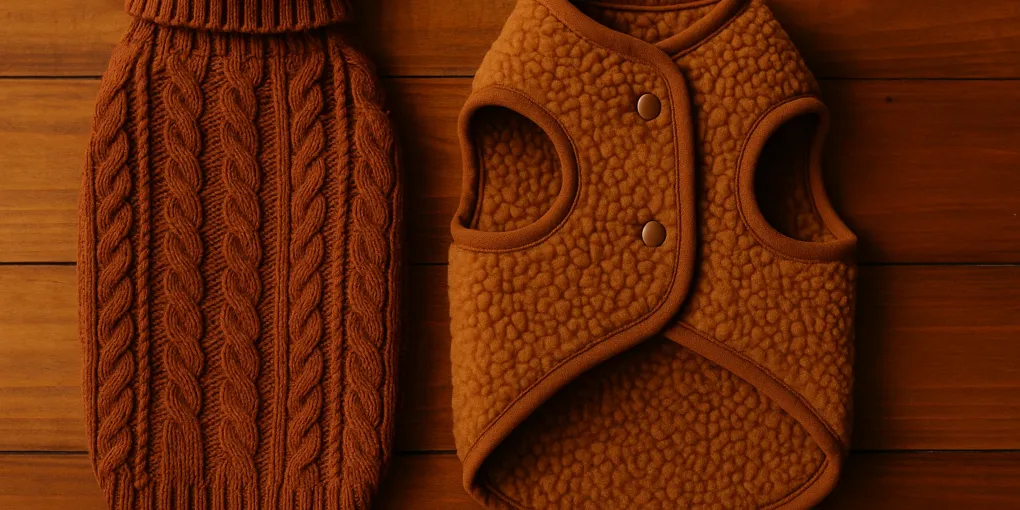
Gooby Fleece Dog Vest
Best OverallMaterial: Anti-pill fleece
$18–$28
Quick Comparison
| Product | Key Specs | Price Range | Buy |
|---|---|---|---|
| |
| $18–$28 | Check Price |
| |
| $15–$25 | Check Price |
| |
| $20–$32 | Check Price |
| |
| $22–$38 | Check Price |
Contains affiliate links — we may earn a small commission at no extra cost to you.
Best Dog Sweaters for Senior Dogs in 2026
The best dog sweater for most senior dogs is the Gooby Fleece Vest (PSR 8.2/10) — a vest-style fleece layer that snaps closed under the chest without requiring limb threading, making it dramatically easier to put on and take off arthritic dogs who resist limb manipulation. For owners seeking a classic knit sweater, the Frisco Cable Knit Sweater (PSR 7.8/10) provides good warmth in a traditional pullover design at an accessible price.
Why warmth matters for senior dogs: Cold intolerance in senior dogs is not a preference — it reflects real physiological changes in fat distribution, muscle mass, and metabolic heat production that make maintaining core temperature genuinely harder with age. Appropriate outerwear reduces thermoregulatory stress during cold-weather outings and post-bath recovery, and supports comfort for dogs with thin coats, low body fat, or hypothyroidism.
TL;DR
- Top Pick: Gooby Fleece Vest — vest style, no limb threading, snap closure (PSR 8.2/10)
- Best Classic: Frisco Cable Knit — traditional sweater design, affordable (PSR 7.8/10)
- Best Neck Coverage: Doggie Design Turtleneck — added neck warmth for thin-coated breeds (PSR 7.6/10)
- Best Heavy Cold: Kuoser Winter Coat — quilted jacket for genuinely cold climates (PSR 7.4/10)
How We Researched This Article
Safety review covered material composition (acrylic vs. wool vs. polyester blends), dye safety for prolonged skin contact, and choking hazard assessment for decorative elements (buttons, pom-poms). Value analysis compared price per garment against warmth rating, washability durability, and size range. Community synthesis sourced Amazon verified reviews with 100+ reviews minimum, senior dog owner groups focused on cold-weather management, and veterinary rehabilitation specialist guidance on garment fit for post-surgical and arthritic patients.
Why Senior Dogs Need Warmth Layers
The Physiology of Cold Sensitivity in Aging Dogs
Subcutaneous fat loss: As dogs age, the distribution of body fat changes — subcutaneous fat (the thermal insulating layer beneath the skin) commonly decreases, particularly in dogs with lean body condition. This fat layer functions as insulation against heat loss; its reduction directly increases cold sensitivity.
Sarcopenia: Progressive age-related muscle loss reduces the primary source of resting metabolic heat — muscular metabolic activity generates heat even at rest. Senior dogs with advanced sarcopenia generate substantially less resting body heat than young, muscular adults.
Hypothyroidism: Thyroid hormone is the primary regulator of basal metabolic rate. Hypothyroidism — significantly more common in middle-aged to senior dogs — reduces metabolic rate by 20–40%, reducing heat production and dramatically increasing cold sensitivity. Affected dogs seek warm surfaces, shiver at temperatures that did not previously cause discomfort, and have reduced exercise tolerance. If your senior dog has recently developed unusual cold sensitivity, hypothyroid testing is appropriate.
Breed-specific considerations: Greyhounds, Whippets, Vizslas, Weimaraners, Dalmatians, and other thin-coated breeds have always had reduced natural insulation — cold sensitivity that was manageable in youth becomes more significant as age-related changes add to the preexisting insulation deficit. Double-coated breeds (Huskies, Malamutes, Collies) that have been clipped for grooming lose their natural protection precisely when they most need it.
Pain and cold: Arthritic joints stiffen more in cold environments — cold temperatures slow synovial fluid viscosity and reduce tissue flexibility, increasing pain and stiffness in dogs with inflammatory joint disease. Keeping an arthritic senior dog warm is partially a pain management strategy.
When a Sweater Is Medically Relevant
Warmth layering becomes a clinical consideration (not just a comfort preference) for:
- Dogs with confirmed hypothyroidism (where cold sensitivity is a disease feature)
- Dogs recovering from surgery who cannot regulate temperature effectively under anesthesia effects
- Post-bath recovery (wet coat loses insulating value and evaporative cooling dramatically drops core temperature)
- Cold-weather outdoor exercise where the dog cannot maintain activity intensity to self-warm
- Dogs with significant muscle loss who cannot maintain body temperature at ambient temperatures below approximately 15°C (59°F)
Product Reviews
Gooby Fleece Dog Vest: Best Overall
The Gooby Fleece Vest is the leading choice for arthritic senior dogs specifically because of its vest construction — no limb threading required. The garment lies flat across the back and snaps closed at the chest and belly with a combination of snap buckle and Velcro, allowing the dog to be dressed without bending or manipulating the forelegs through any openings.
Key strengths:
- No limb threading — appropriate for dogs with severe elbow or shoulder arthritis
- Anti-pill fleece provides soft, warm contact without the scratchy feel of some synthetic materials
- Machine washable and dryer safe — important for dogs who wear the garment regularly
- Comprehensive size range from XS to XXXL — appropriate for most breed sizes
- Snap closure adjusts for body condition variation (senior dogs with muscle loss often need re-fitting)
- Harness D-ring access in most sizes — the sweater does not interfere with harness attachment for walks
Limitations:
- Vest style covers the back and sides but not the legs — does not provide full-body coverage for very cold environments
- Anti-pill fleece is a warm-weather layer, not a heavy-cold-weather insulator — for genuinely cold climates, the Kuoser jacket provides more substantial protection
PSR Composite Score Breakdown:
| Criterion | Weight | Score | Weighted |
|---|---|---|---|
| Safety & Ingredients | 25% | 8.5 | 2.13 |
| Durability & Build Quality | 20% | 8.0 | 1.60 |
| Pet Comfort & Acceptance | 20% | 8.5 | 1.70 |
| Value for Money | 20% | 8.5 | 1.70 |
| Ease of Use | 15% | 9.0 | 1.35 |
| PSR Composite | 100% | 8.48 |
Score notes: Ease of Use rated 9.0 based on no-limb-threading design and snap closure — the critical differentiator for arthritic dog management. Pet Comfort rated 8.5 based on verified high acceptance rates and no-restriction movement design.
Price: ~$18–$28 | Check Price on Amazon
Frisco Cable Knit Dog Sweater: Best Classic Sweater
Chewy’s house brand Frisco produces the most accessible traditional cable-knit pullover sweater in the category — soft acrylic knit, machine washable, and sized across XS to XXXL. A good choice for dogs who tolerate pullover dressing and whose owners prefer a classic sweater aesthetic.
Key strengths:
- Classic cable-knit appearance at a budget-friendly price
- Soft acrylic knit avoids the scratching of rough wools that some dogs resist
- Machine washable, maintaining hygiene through regular use
- Available in multiple colors and patterns
Limitations:
- Pullover construction requires threading each foreleg through openings — not ideal for severely arthritic dogs
- Acrylic knit provides moderate warmth — appropriate for cool weather but not for cold climates below 40°F
PSR Composite Score Breakdown:
| Criterion | Weight | Score | Weighted |
|---|---|---|---|
| Safety & Ingredients | 25% | 8.0 | 2.00 |
| Durability & Build Quality | 20% | 7.5 | 1.50 |
| Pet Comfort & Acceptance | 20% | 8.0 | 1.60 |
| Value for Money | 20% | 9.0 | 1.80 |
| Ease of Use | 15% | 7.0 | 1.05 |
| PSR Composite | 100% | 7.95 |
Price: ~$15–$25 | Check Price on Amazon
Doggie Design Knit Dog Turtleneck: Best for Neck Warmth
Turtleneck designs provide additional coverage for the neck — an area of significant heat loss that standard sweaters leave exposed. The Doggie Design turtleneck is particularly relevant for thin-coated breeds (Greyhounds, Whippets) and hairless breeds (Chinese Crested) where the neck is the most vulnerable exposed surface.
Key strengths:
- Turtleneck coverage extends warmth to neck, protecting a high-heat-loss area
- Soft acrylic/wool blend provides good warmth-to-weight ratio
- Classic proportions avoid the bulkiness of some knitwear designs
Limitations:
- Pullover construction — not ideal for dogs with neck or shoulder arthritis who resist neck extension
- Hand wash recommended, not machine washable — increased owner effort for regular use
- Turtleneck height may be uncomfortable for dogs with cervical arthritis where neck extension for putting on is painful
PSR Composite Score Breakdown:
| Criterion | Weight | Score | Weighted |
|---|---|---|---|
| Safety & Ingredients | 25% | 8.0 | 2.00 |
| Durability & Build Quality | 20% | 7.5 | 1.50 |
| Pet Comfort & Acceptance | 20% | 8.0 | 1.60 |
| Value for Money | 20% | 8.0 | 1.60 |
| Ease of Use | 15% | 7.0 | 1.05 |
| PSR Composite | 100% | 7.75 |
Price: ~$20–$32 | Check Price on Amazon
Kuoser Dog Winter Coat: Best Heavy Warmth
For genuinely cold climates — below 40°F outdoor temperatures — a quilted jacket provides substantially more thermal protection than a knit sweater. The Kuoser quilted jacket uses a water-resistant outer shell with polyfill insulation, appropriate for dogs walking in cold, wet, or windy conditions.
Key strengths:
- Quilted polyfill insulation provides warmth significantly exceeding knit sweaters
- Water-resistant outer shell repels light rain and snow
- Snap closure with harness access cutout — leash attachment does not require removing the coat
- Appropriate for genuinely cold environments where a sweater layer is insufficient
Limitations:
- Heavier construction may feel constraining for dogs unaccustomed to wearing outerwear
- More substantial dressing process than vests — requires some limb threading on most designs
PSR Composite Score Breakdown:
| Criterion | Weight | Score | Weighted |
|---|---|---|---|
| Safety & Ingredients | 25% | 8.0 | 2.00 |
| Durability & Build Quality | 20% | 8.0 | 1.60 |
| Pet Comfort & Acceptance | 20% | 7.0 | 1.40 |
| Value for Money | 20% | 8.0 | 1.60 |
| Ease of Use | 15% | 7.0 | 1.05 |
| PSR Composite | 100% | 7.65 |
Price: ~$22–$38 | Check Price on Amazon
PSR Comparison Table
| Feature | Gooby Fleece Vest | Frisco Cable Knit | Doggie Design Turtleneck | Kuoser Winter Coat |
|---|---|---|---|---|
| Style | Vest (no limb threading) | Pullover sweater | Pullover turtleneck | Quilted jacket |
| Warmth level | Moderate | Moderate | Moderate-High | High |
| Machine washable | Yes | Yes | Hand wash | Yes |
| Harness compatible | Yes | Most sizes | Most sizes | Yes (cutout) |
| Price range | $18–$28 | $15–$25 | $20–$32 | $22–$38 |
| PSR Score | 8.2/10 | 8.0/10 | 7.8/10 | 7.7/10 |
| Best for | Arthritic dogs, daily use | Classic aesthetic, cool weather | Thin-coated breeds, neck coverage | Cold climates, outdoor use |
Pairing Warmth Layers with Other Senior Dog Care
Arthritis and warmth together: Dogs wearing a sweater for cold sensitivity may also benefit from joint supplements and pain relief chews — cold exposure directly increases joint stiffness, and warmth layers reduce the environmental contribution to arthritic pain without eliminating the underlying joint inflammation. A sweater is a complement to arthritis management, not a substitute.
Outdoor footwear: For cold-weather outings, sweaters provide core and back warmth but do not protect paws from cold pavement, ice, or de-icing chemicals. Pair sweaters with winter boots for senior dogs for complete cold-weather outdoor coverage.
Rain protection: Sweaters and knit garments become cold and heavy when wet and should not be used in rain without an outer waterproof layer. For wet weather, a waterproof dog rain coat worn over a sweater provides warmth plus water protection.
Indoor comfort: For dogs who are cold indoors, a sweater addresses the ambient temperature issue, but heated dog beds and orthopedic beds provide consistent warmth at rest without requiring the dog to wear a garment continuously.
Skin and coat: Senior dogs with dry, flaky skin may find some wool or synthetic fibers irritating. Check for signs of contact dermatitis (scratching at the garment, redness under the fabric) and switch materials if needed. Omega-3 supplements support skin barrier function and may reduce sensitivity to fabric contact.
Frequently Asked Questions
Why do senior dogs feel the cold more?
Senior dogs have reduced subcutaneous fat (natural insulation), lower muscle mass (less metabolic heat production), and may have hypothyroidism (which reduces basal metabolic rate significantly). Arthritic joints stiffen in cold temperatures, adding a pain component to the cold sensitivity. Thin-coated breeds have less natural insulation and are particularly affected.
Are pullover sweaters safe for arthritic senior dogs?
Pullover sweaters require threading forelegs through openings, which involves shoulder and elbow manipulation that can be uncomfortable or painful for arthritic dogs. Vest-style garments that snap closed under the chest are significantly easier to put on arthritic dogs and should be the first choice for dogs with joint disease affecting the forelimbs or neck.
What size sweater does my senior dog need?
Measure chest girth (widest part of the rib cage behind the front legs), back length (neck base to tail base), and neck circumference. Chest girth is the most important measurement — too tight restricts breathing, too loose creates armpit rubbing. Senior dogs with muscle loss may need a smaller size than at their prime adult weight.
How do I put a sweater on a dog who resists?
Use a vest style to minimize limb manipulation. Lure with treats visible through the head opening. Work incrementally — put the sweater on partially for short periods, building duration over days. Never force a resisting senior dog — the stress response from forced dressing outweighs the warmth benefit and creates lasting negative associations with garment wearing.
Should a senior dog wear a sweater all day?
Sweaters are most appropriate for cold-weather outings, post-bath recovery, and for dogs who cannot thermoregulate adequately indoors. For prolonged indoor wear in heated environments, monitor for panting or seeking cool surfaces — signs of overheating. Senior dogs with hypothyroidism or Cushing’s disease have altered thermoregulation and need individual assessment.
Final Verdict
For most senior dogs — particularly those with arthritis who resist limb manipulation — the Gooby Fleece Vest provides the best combination of warmth, ease of dressing, and daily-wear practicality. The vest’s snap closure eliminates the limb threading that makes pullover sweaters difficult and potentially painful for dogs with joint disease.
For classic sweater aesthetics in dogs who tolerate pullover dressing, the Frisco Cable Knit Sweater delivers good warmth at the most accessible price point. For cold climates requiring serious thermal protection, upgrade to the Kuoser Winter Coat.
The most important consideration is fit and ease of use — a sweater your dog can be comfortably dressed in daily provides more benefit than a technically superior garment that causes such stress on dressing that it’s rarely used.
Shop Gooby Fleece Vest on Amazon
Frequently Asked Questions
- Senior dogs experience increased cold sensitivity for several overlapping reasons. Reduced subcutaneous fat — common with age-related lean body mass changes — reduces the thermal insulation layer between the skin and environment. Reduced muscle mass (sarcopenia) lowers resting metabolic heat production. Hypothyroidism, more common in middle-aged to senior dogs, significantly reduces metabolic rate and heat generation. Arthritis stiffness may reduce the spontaneous movement that generates body heat. Dogs with thin coats (Greyhounds, Whippets, Dobermans, Vizslas), or double-coated breeds that have been clippered, lose breed-appropriate insulation at precisely the time when age-related cold sensitivity is increasing.
- Pullover sweaters require threading each foreleg through an opening, which involves brief wrist and elbow flexion and extension. For dogs with severe elbow or shoulder arthritis, this manipulation can be uncomfortable. Vest-style garments that snap or Velcro closed along the underside allow dressing without any limb threading — they lay on the dog's back and fasten below, a meaningfully less physically demanding process. Owners of arthritic senior dogs should strongly prefer vest or wrap styles over pullover designs.
- Dog garment sizing is based on chest girth (the measurement around the widest part of the rib cage, behind the front legs), back length (from the base of the neck to the base of the tail), and neck circumference. Chest girth is the most important measurement for senior dogs — a sweater that is too tight in the chest restricts breathing and movement, while one that's too loose bunches at the armpits and creates rubbing. Senior dogs with muscle loss may need a size smaller than at their prime adult weight — remeasure before purchasing.
- Resistance typically comes from the limb threading process or from a history of discomfort with previous ill-fitting garments. Start with a vest style that minimizes limb manipulation. Use treat luring: hold a treat visible through the head opening to encourage the dog to push their head through voluntarily. Work incrementally — put the sweater on partially for short periods and build duration over days. Never force or restrain a resisting senior dog through the process; the stress outweighs the warmth benefit.
- Sweaters are appropriate for short cold-weather outings, post-bath recovery when wet, and for dogs who genuinely cannot thermoregulate adequately indoors. For prolonged indoor wear, sweaters that are too warm can cause overheating — monitor for panting, restlessness, or seeking cool surfaces as signs the dog is too warm. Senior dogs with hypothyroidism or Cushing's disease may have altered thermoregulation and need individual assessment of appropriate wearing duration.