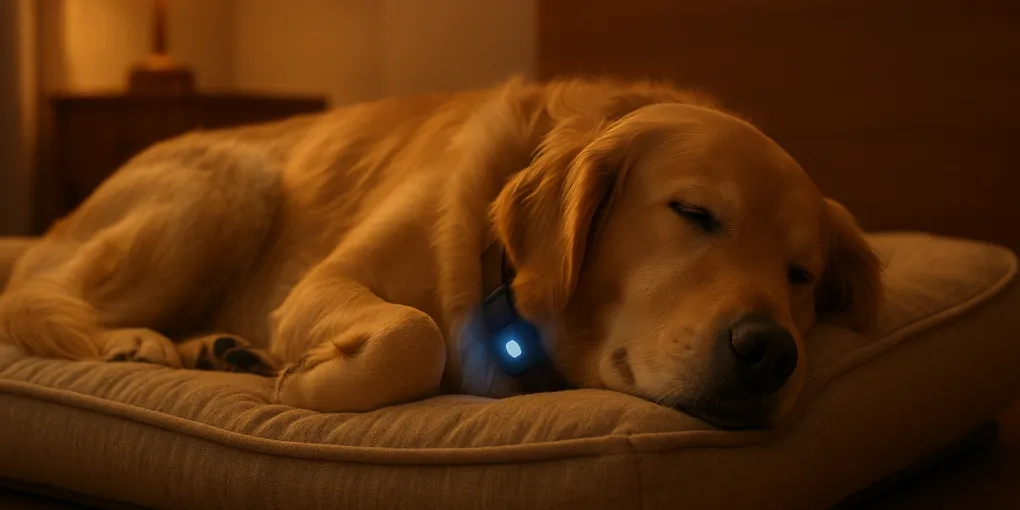
Best Dog Sleep Tracker in 2026
Buyer's GuideFitBark 2 Dog Sleep + Activity Monitor
Best OverallSleep stages tracked: Active sleep, restful sleep, awake
~$69 + optional subscription
Quick Comparison
| Product | Key Specs | Price Range | Buy |
|---|---|---|---|
| |
| ~$69 + optional subscription | Check Price |
| |
| $149–$199 + subscription | Check Price |
| |
| $79–$129 + subscription | Check Price |
| |
| $699–$799 (bundle) | Check Price |
Contains affiliate links — we may earn a small commission at no extra cost to you.
Best Dog Sleep Tracker in 2026
The best dog sleep tracker for most owners is the FitBark 2 (PSR 4.6/5) — a 6-gram clip-on that provides the most detailed overnight sleep breakdown of any non-clinical device, works on any collar, and offers a free basic tier that covers core sleep metrics without a mandatory subscription. For dogs with diagnosed chronic conditions where sleep data is medically relevant, the PetPace Smart Collar (PSR 4.2/5) adds physiological depth — heart rate, HRV, and respiratory rate — that grounds sleep quality assessment in more than motion alone.
TL;DR
- Best Overall: FitBark 2 — lightest device (6g), most detailed sleep breakdown, free basic app (PSR 4.6/5)
- Best Clinical-Grade: PetPace Smart Collar — HR + HRV + motion sleep quality index, veterinary dashboard (PSR 4.2/5)
- Best All-in-One: Whistle Health + GPS — sleep plus lick/scratch detection plus GPS in one device (PSR 4.3/5)
- Best for Working Dogs: Garmin Alpha 200i — rugged multi-band GPS with passive sleep trend monitoring (PSR 4.1/5)
- Key Distinction: Sleep trackers monitor overnight rest architecture; activity trackers count daytime steps; GPS trackers track location — these are overlapping but distinct use cases
Dogs sleep 12–14 hours per day on average. Disruptions to normal sleep architecture — frequent awakenings, restlessness, or shortened deep sleep bouts — can be early indicators of pain, anxiety, cognitive dysfunction, or respiratory conditions. A dog showing declining sleep quality over weeks warrants veterinary attention even before other clinical signs appear.
How We Evaluated Dog Sleep Trackers
PSR’s composite scoring formula:
Composite = (Safety × 0.30) + (Efficacy & Performance × 0.25) + (Real-World Acceptance × 0.20) + (Value × 0.15) + (Transparency & Brand Trust × 0.10)
In this category, Real-World Acceptance is weighted heavily because a device that a dog refuses to wear overnight — or that disrupts sleep through discomfort — provides no value regardless of sensor quality. Safety evaluates overnight wear safety for the sensor device specifically (weight, contact points, waterproofing for drool). Efficacy & Performance is dominated by battery life, since a sleep tracker that needs nightly charging is a compliance liability.
FitBark 2 Dog Sleep + Activity Monitor Review: Best Overall
FitBark 2 is designed from the ground up as a sleep-first monitoring device. At 6 grams, it is the lightest collar-mounted pet tracker on the market — light enough that most dogs over 5 lbs wear it without behavioral change. The FitBark app classifies overnight rest into active sleep, restful sleep, and awake periods, displaying the breakdown as a per-night sleep graph with hourly resolution. The free tier delivers core sleep metrics; FitBark Gold adds rolling trend analysis, breed benchmarks, and CSV export for veterinary consultations.
Key specifications:
- Form: Clip-on (6g), attaches to any collar
- Sleep stages: Active sleep, restful sleep, awake periods — per-night breakdown with hourly resolution
- Activity: BarkPoints activity score, daily active minutes, owner-vs-dog activity comparison
- Battery: ~20 days
- Subscription: Free basic; FitBark Gold (~$9.99/month) for trend analysis and veterinary export
- Waterproof: IPX7 (splash, rain, drool safe)
- Minimum dog weight: 5 lbs (lightest tracker in category)
- Price: ~$69 device + optional subscription
PSR Composite Score Breakdown:
| Criterion | Score | Weight | Weighted Score |
|---|---|---|---|
| Safety | 9.2 | 30% | 2.76 |
| Efficacy & Performance | 9.0 | 25% | 2.25 |
| Real-World Acceptance | 9.3 | 20% | 1.86 |
| Value | 9.0 | 15% | 1.35 |
| Transparency & Brand Trust | 9.3 | 10% | 0.93 |
| Composite | 9.15 → PSR 4.6/5 |
Safety (9.2): At 6g, overnight wear poses minimal risk for dogs 5 lbs and up. IPX7 waterproofing is appropriate for drool and humidity during sleep. No sharp contact points. Clip-on attachment does not create collar tightness issues.
Efficacy & Performance (9.0): 20-day battery means monthly charging rather than weekly or nightly. For an overnight monitoring device this is functionally good — the device will rarely be off the dog at night due to dead battery. IPX7 is sufficient for light water exposure; not rated for submersion.
Real-World Acceptance (9.3): The 6g weight is the standout. Most dogs — including small breeds, puppies, and anxious dogs who are sensitive to collar additions — adapt quickly. No reported rattling or noise during sleep. Full credit for the industry’s lightest form factor.
Value (9.0): Hardware at ~$69 is the most affordable in this category. Free basic app covers core sleep metrics. Gold subscription at ~$9.99/month adds trend analysis and veterinary CSV export. 12-month TCO (with Gold): ~$189. For sleep-focused monitoring, this is the best value proposition.
Transparency & Brand Trust (9.3): App setup is straightforward. Sleep reports are displayed as per-night bar charts that are intuitive to interpret. CSV export for veterinary consultation is a standout feature for owners managing health conditions.
Pros:
- Lightest device in category (6g) — suitable for small breeds 5 lbs+
- Detailed per-night sleep stage breakdown
- Free basic app covers core sleep metrics
- 20-day battery minimizes charging burden for overnight use
- CSV export for veterinary sharing on Gold tier
Cons:
- Sleep classification is accelerometry-only (no physiological grounding)
- Gold subscription required for trend analysis and veterinary export
- Not fully submersion-proof (IPX7 vs. IP67/IP68)
PetPace Smart Collar Review: Best Clinical-Grade Sleep Monitor
PetPace occupies a different tier from consumer activity trackers. Where FitBark uses accelerometry alone, PetPace continuously measures heart rate, heart rate variability (HRV), respiratory rate, temperature, and pulse oximetry alongside motion — enabling sleep quality scoring that is physiologically grounded. During genuine deep sleep, dogs show lower HR and elevated HRV; PetPace can distinguish this from a dog lying still while anxious (elevated HR, suppressed HRV). This distinction matters clinically. PetPace is designed for dogs with diagnosed chronic conditions (cardiac disease, chronic pain, cognitive dysfunction, post-surgical recovery) where overnight physiological data is medically relevant.
Key specifications:
- Form: Full collar replacement with integrated biometric sensors
- Sleep metrics: Sleep quality index derived from HR, HRV, motion, and respiratory rate; sleep time, restlessness score
- Physiological: Continuous HR, respiratory rate, temperature, pulse oximetry, HRV
- Battery: ~5 days
- Subscription: ~$14.99/month (includes veterinary dashboard access)
- Price: $149–$199 + subscription
- Minimum dog weight: 8 lbs
PSR Composite Score Breakdown:
| Criterion | Score | Weight | Weighted Score |
|---|---|---|---|
| Safety | 9.0 | 30% | 2.70 |
| Efficacy & Performance | 8.0 | 25% | 2.00 |
| Real-World Acceptance | 8.5 | 20% | 1.70 |
| Value | 8.3 | 15% | 1.25 |
| Transparency & Brand Trust | 8.2 | 10% | 0.82 |
| Composite | 8.47 → PSR 4.2/5 |
Safety (9.0): Veterinary-grade sensor contacts are designed for continuous skin contact. Full collar integration means no add-on clip that could loosen during sleep. Appropriate for overnight wear.
Efficacy & Performance (8.0): 5-day battery requires weekly charging — the primary practical limitation. For an overnight monitoring device, weekly charging is manageable but not ideal. Sensor hardware is clinical-grade quality.
Real-World Acceptance (8.5): Full collar replacement is heavier than a clip-on. Dogs accustomed to lightweight collars may require a break-in period of several days. For chronically ill or pain-affected dogs — the target population — the clinical value justifies the adjustment period.
Value (8.3): Hardware at $149–$199, subscription at ~$14.99/month. 12-month TCO: ~$329–$379. For healthy dogs, the cost-benefit ratio is unfavorable. For a dog with cardiac disease, cognitive dysfunction, or chronic pain under active veterinary management, the physiologically grounded sleep quality data and veterinary dashboard access provide meaningful clinical value that no other consumer device matches.
Transparency & Brand Trust (8.2): The PetPace app is designed around health monitoring rather than consumer simplicity. The veterinary dashboard requires setup but provides the most structured data-sharing tool in this category.
Pros:
- HR + HRV + respiratory rate physiologically grounded sleep quality scoring
- Veterinary dashboard for direct clinical team data sharing
- Continuous physiological monitoring beyond sleep (HR, temp, pulse oximetry)
- Meaningful for chronic disease management and post-surgical monitoring
Cons:
- 5-day battery requires weekly charging
- Full collar replacement requires break-in period
- Cost ($329–$379 12-month TCO) unsuitable for healthy dogs
- No GPS
Whistle Health + GPS Review: Best All-in-One
Whistle Health + GPS is the best option for owners who want sleep monitoring as part of a broader health and safety package — not as a standalone investment. Sleep hours, a sleep quality score, and overnight movement frequency are included alongside the device’s distinguishing features: licking and scratching behavior detection (an early indicator of dermatological conditions) and cellular GPS location tracking. Following Whistle’s integration with the Tractive network, GPS coverage and reliability have improved. No other device in this roundup combines sleep data, behavioral health monitoring, and GPS in a single collar clip-on.
Key specifications:
- Form: Clip-on module (~30g), attaches to existing collar
- Sleep metrics: Sleep hours, sleep quality score, overnight movement count
- Activity: Step count, active minutes, lick/scratch behavior detection
- GPS: Cellular GPS (Tractive-enhanced network)
- Battery: ~20 days
- Subscription: ~$9.95–$14.95/month
- Price: $79–$129 + subscription
PSR Composite Score Breakdown:
| Criterion | Score | Weight | Weighted Score |
|---|---|---|---|
| Safety | 8.8 | 30% | 2.64 |
| Efficacy & Performance | 8.5 | 25% | 2.13 |
| Real-World Acceptance | 8.3 | 20% | 1.66 |
| Value | 8.5 | 15% | 1.28 |
| Transparency & Brand Trust | 8.5 | 10% | 0.85 |
| Composite | 8.56 → PSR 4.3/5 |
Safety (8.8): IPX7 waterproofing; clip-on form with secure attachment. No overnight wear concerns for dogs over 15 lbs. Lighter dogs (10–15 lbs) should verify comfort with the ~30g module before committing to overnight use.
Efficacy & Performance (8.5): 20-day battery is comparable to FitBark and adequate for overnight monitoring. GPS feature does increase battery drain at higher update intervals.
Real-World Acceptance (8.3): At ~30g, Whistle is heavier than FitBark (6g) and may require owner attention for smaller dogs. Most medium and large dogs tolerate the module without behavioral change during sleep.
Value (8.5): Hardware at $79–$129, subscription at $9.95–$14.95/month. 12-month TCO: ~$199–$308. The combination of sleep, behavioral health, and GPS in one subscription represents good value for owners who would otherwise pay for GPS and health monitoring separately.
Transparency & Brand Trust (8.5): Whistle’s app is well designed. Monthly health reports are presented in plain language with breed comparisons. Sleep data is integrated into the broader health dashboard rather than presented as a standalone module.
Pros:
- Combines sleep monitoring, lick/scratch detection, and GPS in one device
- 20-day battery adequate for overnight use
- Post-Tractive integration improves GPS coverage
- Well-designed health trend dashboard
Cons:
- Sleep monitoring is secondary to activity and GPS features; less granular than FitBark
- ~30g module is heavier than FitBark for small dogs
- Subscription required for all meaningful data
Garmin Alpha 200i Review: Best for Working Dogs
The Garmin Alpha 200i is a professional-grade working and hunting dog tracking system — not a consumer sleep tracker. Sleep and rest period data appear in the Garmin Connect app as a secondary output of the continuous activity monitoring, providing passive sleep trend data for handlers who are already invested in the Garmin ecosystem. For a sporting dog handler or search-and-rescue team that needs military-grade GPS, Iridium satellite communication for off-grid coverage, and multi-dog tracking on a rugged handheld, adding passive sleep trend monitoring at no extra subscription cost is a meaningful ancillary benefit. For owners whose primary need is sleep monitoring, the entry cost ($699–$799 for the handheld + collar bundle) is not justified.
Key specifications:
- Form: Dedicated GPS collar attachment (working dog system)
- Sleep/rest: Rest period detection, daily activity score; sleep data is supplementary
- GPS: Multi-band GPS + GLONASS + Iridium satellite (remote, off-grid coverage)
- Battery: ~36 hours (GPS active); 4+ days (activity tracking mode)
- Subscription: None required for basic data; optional Garmin Explore premium
- Price: $699–$799 (handheld + collar bundle)
PSR Composite Score Breakdown:
| Criterion | Score | Weight | Weighted Score |
|---|---|---|---|
| Safety | 9.0 | 30% | 2.70 |
| Efficacy & Performance | 8.5 | 25% | 2.13 |
| Real-World Acceptance | 7.8 | 20% | 1.56 |
| Value | 7.5 | 15% | 1.13 |
| Transparency & Brand Trust | 7.5 | 10% | 0.75 |
| Composite | 8.27 → PSR 4.1/5 |
Safety (9.0): Garmin Alpha collar attachments are designed for rugged field use; no sharp protrusions, waterproof construction.
Efficacy & Performance (8.5): Build quality is exceptional — designed to survive hunting and working dog conditions (brush, water, impact). Battery in activity tracking mode extends to 4+ days. In live GPS tracking mode battery drains significantly faster.
Real-World Acceptance (7.8): The collar module is heavier than consumer options, appropriate for medium to large working breeds (Labrador, Vizsla, German Shepherd, Beagle) rather than small companion dogs. Sleep tracking in this context is a passive feature; the collar was not designed with overnight sleep comfort as a priority.
Value (7.5): At $699–$799, this is a professional working dog investment. The sleep monitoring component has no incremental cost for existing Garmin Alpha owners — but as a justification for the purchase, sleep tracking alone does not warrant the price.
Transparency & Brand Trust (7.5): Garmin’s working dog interface is designed for field handlers, not general pet owners. Setup and data interpretation require more technical familiarity than consumer apps.
Pros:
- No sleep monitoring subscription required
- Industry-leading GPS reliability including Iridium satellite for off-grid coverage
- Excellent build durability for working dog use
- Passive sleep trend data at no additional cost for existing Garmin Alpha owners
Cons:
- $699–$799 entry cost is not justified for sleep monitoring alone
- Sleep data is secondary; less granular than dedicated sleep trackers
- Heavier collar module; not designed for small or companion breeds
- Complex interface relative to consumer pet apps
Dog Sleep Tracker Comparison Table
| Product | Sleep Stages Tracked | Monthly Subscription | Battery Life | PSR Score |
|---|---|---|---|---|
| FitBark 2 | Active, restful, awake | Free / ~$9.99 Gold | ~20 days | 4.6/5 |
| PetPace Smart Collar | HR + HRV + motion quality index | ~$14.99 | ~5 days | 4.2/5 |
| Whistle Health + GPS | Sleep hours, quality score, movement | ~$9.95–$14.95 | ~20 days | 4.3/5 |
| Garmin Alpha 200i | Rest/activity detection (supplementary) | None required | 4+ days (activity mode) | 4.1/5 |
Which Dog Sleep Tracker Is Right for Your Dog?
FitBark 2 is the right choice for most dog owners who want detailed sleep monitoring at a reasonable cost. Its 6g weight is safe and comfortable for small breeds; its free basic tier removes the subscription barrier; and its per-night sleep breakdown is the most detailed of any non-clinical device in this category.
PetPace Smart Collar is for dogs with diagnosed conditions where overnight physiological data is medically relevant — chronic pain, cardiac disease, cognitive dysfunction, post-surgical recovery. The HR and HRV grounding provides sleep quality data that meaningfully exceeds accelerometry alone, and the veterinary dashboard facilitates clinical collaboration.
Whistle Health + GPS is for owners who want sleep data as part of a broader health and safety package — and who need GPS location tracking alongside health monitoring. It is the most functionally versatile device in this roundup.
Garmin Alpha 200i is for working dog handlers already invested in the Garmin ecosystem who want passive sleep trend data without an additional device or subscription.
For comprehensive pet health monitoring, consider pairing a sleep tracker with a broader dog activity tracker for daytime exercise data, or a smart pet health monitor for continuous physiological monitoring.
Frequently Asked Questions
What does a dog sleep tracker actually measure?
Most consumer dog sleep trackers use a 3-axis accelerometer to classify movement during rest periods. Stillness is classified as quiet (deep) sleep; low-level movement as active (REM-equivalent) sleep; and larger movements as awake periods. Premium devices like PetPace layer in heart rate and HRV data — lower HR and higher HRV during stillness corroborates genuine deep sleep rather than quiet wakefulness. No consumer device replicates clinical polysomnography (EEG-based sleep staging), but accelerometry-based classification is sufficient to establish individual baselines and detect meaningful behavioral changes over time.
Can a dog sleep tracker help identify pain or anxiety?
Potentially. Musculoskeletal pain commonly causes frequent positional changes, difficulty settling, and reduced deep sleep duration. Anxiety and noise phobias tend to produce elevated overnight restlessness scores. Sleep trackers quantify these patterns objectively over time, which can support veterinary conversations about pain management or behavioral treatment. A single night of poor sleep is not clinically meaningful; a multi-week trend of declining sleep efficiency is worth discussing with a veterinarian.
How is a sleep tracker different from a dog activity tracker or GPS collar?
Activity trackers primarily quantify daytime movement — step counts, active minutes, and caloric expenditure. GPS collars track geographic location for safety and escape detection. Sleep trackers focus on nighttime rest architecture: sleep stages, awake episodes, restlessness, and sleep efficiency. Some devices combine functions (Whistle Health + GPS), but dedicated sleep-first devices like FitBark 2 provide more granular overnight analysis than activity or GPS devices where sleep monitoring is a secondary feature.
Are dog sleep trackers safe to wear overnight?
The lightest devices (FitBark 2 at 6g) are generally well tolerated overnight by dogs accustomed to wearing a collar. For very small breeds (under 10 lbs), verify device weight and collar fit before purchasing. PetPace as a full collar replacement requires a break-in period given its added collar weight. All devices reviewed carry IPX7 or better waterproofing, appropriate for overnight wear including dogs that drool during sleep.
How do I share sleep tracker data with my veterinarian?
FitBark Gold supports CSV export of sleep history from the app. PetPace includes a veterinary portal where your dog’s sleep, HR, and activity data can be accessed by your vet in real time. Whistle provides in-app health reports that can be shared as PDF exports or screenshots. For veterinary consultations about sleep disruption, two to four weeks of baseline sleep data provides the most actionable context for pattern assessment.
Related PSR Guides
- Best Dog Activity Tracker — daytime exercise and GPS tracking roundup
- Best Smart Pet Health Monitor — continuous physiological monitoring for health-focused owners
- Best Pet Activity Monitor — broader pet activity monitoring including cats
- Best Dog Heart Rate Monitor — dedicated cardiac and HRV monitoring options
- Best Smart GPS Dog Collar — GPS location collars for escape prevention
Final Verdict
FitBark 2 (PSR 4.6/5) is Best Overall for its lightweight form factor, detailed per-night sleep breakdown, and free basic tier. PetPace (PSR 4.2/5) is the clear choice for medically complex dogs where physiologically grounded sleep quality data is clinically relevant. Whistle Health + GPS (PSR 4.3/5) offers the best all-in-one package for owners who want sleep, behavioral health, and GPS in a single device. Garmin Alpha 200i (PSR 4.1/5) provides passive sleep trend monitoring as a no-cost addition for working dog handlers already in the Garmin ecosystem.
Research Citations
-
(2018). A Combined Approach to Predicting Rest in Dogs Using Accelerometers: A Comparison of Methodologies. PLOS ONE, 13(8):e0201201. DOI: 10.1371/journal.pone.0201201. PMID: 30104486
-
(2018). Rapid eye movement density during REM sleep in dogs (Canis familiaris). Behavioural Brain Research, 352:30–38. PMID: 30264371
Frequently Asked Questions
- Most consumer dog sleep trackers use a 3-axis accelerometer to classify movement during rest periods. Stillness is classified as quiet (deep) sleep; low-level movement as active (REM-equivalent) sleep; and larger movements as awake periods. Premium devices like PetPace layer in heart rate and HRV data — lower HR and higher HRV during stillness corroborates genuine deep sleep rather than quiet wakefulness. No consumer device replicates clinical polysomnography (EEG-based sleep staging), but accelerometry-based classification is sufficient to establish individual baselines and detect meaningful behavioral changes.
- Potentially. Musculoskeletal pain (arthritis, post-surgical recovery) commonly causes frequent positional changes, difficulty settling, and reduced deep sleep duration. Anxiety and noise phobias produce elevated overnight restlessness scores. Sleep trackers quantify these patterns objectively over time, which can support veterinary conversations about pain management or behavioral treatment. A single night of poor sleep is not clinically meaningful; a two-week trend of declining sleep efficiency warrants discussion with a veterinarian.
- Activity trackers primarily quantify daytime movement — step counts, active minutes, and caloric expenditure. GPS collars track geographic location for safety and escape detection. Sleep trackers focus on nighttime rest architecture: sleep stages, awake episodes, restlessness, and sleep efficiency. Some devices combine all three functions (Whistle Health + GPS), but dedicated sleep-first devices like FitBark 2 provide more granular overnight analysis than activity or GPS devices where sleep monitoring is a secondary feature.
- The lightest devices (FitBark 2 at 6g) are generally well tolerated overnight by dogs accustomed to wearing a collar. For very small breeds (under 10 lbs), verify device weight and collar fit before purchasing — heavier modules may cause postural discomfort during sleep. PetPace as a full collar replacement is heavier (~50–60g additional collar weight) and requires a break-in period. All devices reviewed carry IPX7 or better waterproofing, appropriate for overnight wear including dogs that drool during sleep.
- FitBark Gold and PetPace both offer exportable reports or dedicated veterinary dashboard access. FitBark allows CSV export of sleep history from the app. PetPace includes a veterinary portal where your dog's full sleep, HR, and activity data can be accessed by your vet in real time. Whistle provides in-app health reports with trend history that can be shared as screenshots or PDF exports. For veterinary consultations about sleep disruption, two to four weeks of baseline sleep data provides the most actionable context.