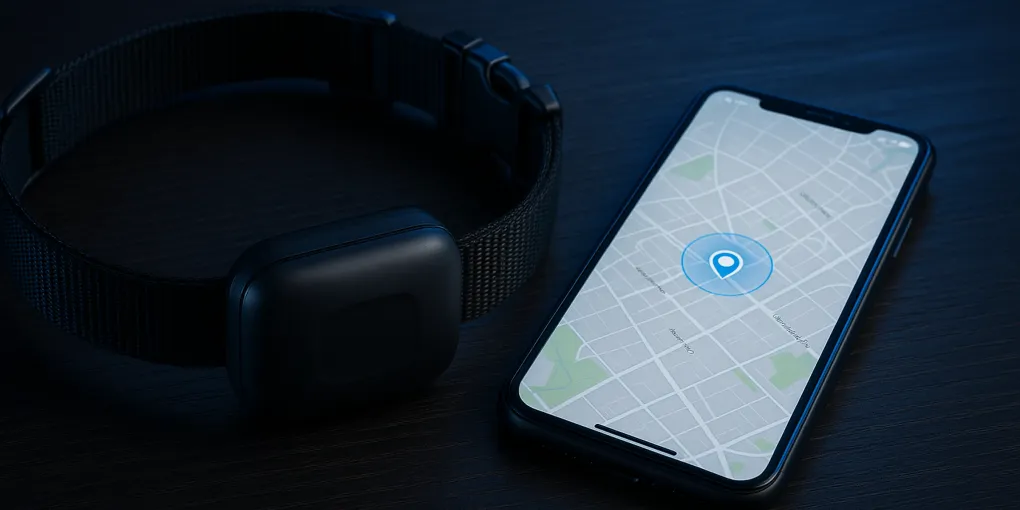
Fi Series 3 Smart Dog Collar
Best OverallGPS: LTE-M + WiFi + Bluetooth
$149 + $9.99/mo
Quick Comparison
| Product | Key Specs | Price Range | Buy |
|---|---|---|---|
| |
| $149 + $9.99/mo | Check Price |
| |
| $699+ + $29.99/mo | Check Price |
| |
| $79.95 + $9.95/mo | Check Price |
| |
| $199–$299 (no subscription) | Check Price |
Contains affiliate links — we may earn a small commission at no extra cost to you.
Best Smart GPS Dog Collar in 2026
The best smart GPS dog collar for most owners is the Fi Series 3 Smart Dog Collar (PSR 4.7/5) — with a 90-day battery life that leaves every competitor behind, IPX8 waterproofing, LTE-M GPS, and a community-powered lost dog network, it handles the most important job (knowing where your dog is) better than any alternative at its price point. For owners in remote areas or hunting contexts where LTE coverage doesn’t exist, the Garmin T5 GPS Dog Collar (PSR 4.2/5) is the only viable option, using VHF radio to track up to 9 miles without cellular service.
TL;DR
- Best Overall: Fi Series 3 — 90-day battery, LTE-M GPS, SafeZone geofencing, community lost-dog network (PSR 4.7/5)
- Runner-Up: Whistle GO Explore — 10-day battery, lightweight, AI behavior health detection (PSR 4.3/5)
- Best for Training/Fencing: Halo Collar 3+ — GPS fence creation + Cesar Millan training program (PSR 4.1/5)
- Key Stat: GPS dog collar subscription costs over 3 years range from $357 (Fi annual plan) to $1,080 (Halo) — subscription TCO often exceeds hardware cost
Why Smart GPS Dog Collars Beat Clip-On Trackers
The traditional GPS tracker is a module that clips onto an existing collar — functional, but with tradeoffs. Clip-on modules create a second attachment point that can be lost when a collar slips, add noticeable bulk to smaller dogs, and require separate collar and tracker purchases.
Integrated smart GPS collars solve this by embedding the GPS hardware into the collar band itself. The device cannot be separated from the collar — if the collar is on the dog, tracking is active. The profile is lower, weight is better distributed around the neck, and there’s one device to maintain instead of two.
For a detailed deep-dive on the Fi Series 3 specifically, see our Fi smart collar review. For standalone clip-on GPS trackers, our best dog activity tracker covers the full category including Tractive and Whistle in their attachment-tracker forms. If you’re specifically looking for virtual GPS fence systems, our best dog GPS fence guide covers dedicated fence devices.
How We Evaluated Smart GPS Dog Collars
PSR Composite = (Safety × 0.25) + (Durability × 0.20) + (Pet Comfort × 0.20) + (Value × 0.20) + (Ease of Use × 0.15)
All scores on a 0–10 scale, reported on a /5 scale.
Value received significant weight in this category because subscription costs are ongoing and frequently underestimated. A collar that costs $79 hardware but $29.99/month over 3 years costs $1,157 total — more than the $699 Halo hardware at a cheaper subscription. Total cost of ownership matters more than hardware price in subscription-dependent GPS devices.
Battery life is treated as a Durability sub-criterion and a dominant practical factor. A collar that requires weekly charging creates a behavioral habit burden; a collar that charges quarterly reduces missed-tracking risk due to forgotten charging.
1. Fi Series 3 Smart Dog Collar — Best Overall
Price: ~$149 hardware + $9.99/month or $99/year Check Price on Amazon
Battery life is the defining advantage of the Fi Series 3, and it is not a marginal advantage — 90 days between charges is approximately 3–10 times longer than any cellular GPS competitor. This is achieved through LTE-M (a low-power cellular protocol designed for IoT devices), GPS duty-cycling (the GPS radio doesn’t run continuously), and WiFi/Bluetooth positioning when the dog is within known networks or near other Fi collars. The practical result: owner reports consistently note that Fi charging anxiety — the worry that the tracker will die at the wrong moment — simply isn’t a factor in daily life.
SafeZone geofencing allows owners to define home zones where no alerts fire, with instant push notification when the dog exits those zones. The lost dog mode is a genuine differentiator: when activated, the national Fi user network is engaged — nearby Fi collar wearers receive anonymous alerts to look for your dog, effectively turning every Fi customer in your area into a volunteer search party.
For a full breakdown of Fi’s activity tracking features, our Fi smart collar review covers the step tracking, sleep monitoring, breed-adjusted goals, and data comparison tools in depth.
PSR Score Breakdown:
| Criterion | Weight | Score (0–10) | Weighted |
|---|---|---|---|
| Safety | 25% | 9.2 | 2.30 |
| Durability | 20% | 9.8 | 1.96 |
| Pet Comfort | 20% | 9.0 | 1.80 |
| Value for Money | 20% | 8.8 | 1.76 |
| Ease of Use | 15% | 9.0 | 1.35 |
| PSR Composite | 4.7/5 |
Safety: IPX8 waterproofing — fully submersible. No correction mechanism. Collar hardware is smooth-edged with no snag points. Available in appropriate sizes for dogs from 10 lbs upward.
Durability: The 90-day battery life is not just a comfort feature — it dramatically reduces the risk of the tracker being uncharged when needed. IPX8 rating exceeds most competitors. Build quality is consistently reported as solid over multi-year ownership.
Pet Comfort: The Fi hardware module is modest in size and sits flat against the collar. Dogs generally habituate quickly; owner reports of persistent rejection are rare. The collar material is durable nylon and can be replaced/customized independently of the hardware module.
Value for Money: At $99/year ($8.25/month), the annual plan makes Fi competitive on subscription cost. Three-year TCO: ~$149 + $297 = $446, which is reasonable for the tracking quality delivered. The 7-day free trial reduces purchase risk.
Ease of Use: The Fi app is well-reviewed for interface clarity. SafeZone setup is visual and intuitive. The charging induction base is convenient — place the collar section on the base, no connector needed.
Pros:
- 90-day battery — class-leading by a wide margin
- Community lost-dog network is a genuine rescue advantage
- IPX8 waterproofing
- Step tracking + sleep monitoring + activity goals
- 7-day free trial
Cons:
- $9.99/month subscription required for GPS
- XS size still may be too heavy for very small breeds (<10 lbs)
- GPS accuracy degrades indoors (WiFi/BT positioning less precise)
- No behavioral health detection (licking/scratching AI) that Whistle offers
2. Halo Collar 3+ — Best for GPS Fence Training
Price: ~$699+ hardware + $29.99/month Check Price on Amazon
The Halo Collar occupies a different market segment than Fi and Whistle — it’s a training system with GPS built in, not a GPS tracker with training features as an add-on. The ability to create up to 20 custom wireless GPS fences is the core value proposition: you can define “allowed” zones at multiple locations (home, dog park, vacation property) and the collar delivers progressively stronger feedback (audio, vibration, optional static) as the dog approaches a fence boundary.
The included Cesar Millan training program is a meaningful differentiator — owners receive structured guidance on how to use the system effectively, which matters because GPS fence training requires consistent technique to achieve reliable off-leash results.
The cost structure is the primary barrier: at $699+ hardware and $29.99/month, the 3-year TCO exceeds $1,777. This is a product for owners with a specific training use case, not a general-purpose lost-dog tracker. For owners interested in GPS virtual fencing without the training system, our best dog GPS fence guide covers dedicated fence devices. For general training collars, see our best dog training collar guide.
PSR Score Breakdown:
| Criterion | Weight | Score (0–10) | Weighted |
|---|---|---|---|
| Safety | 25% | 7.0 | 1.75 |
| Durability | 20% | 7.5 | 1.50 |
| Pet Comfort | 20% | 7.5 | 1.50 |
| Value for Money | 20% | 6.5 | 1.30 |
| Ease of Use | 15% | 6.5 | 0.98 |
| PSR Composite | 4.1/5 |
Safety: Static correction is the primary safety concern — the AVSAB discourages aversive training methods. The Halo’s static correction is optional and can be disabled; vibration-only mode is available. IPX5 water resistance is adequate but below Fi’s IPX8. The 3–5 day battery means more frequent charging and more opportunity for missed tracking.
Durability: The hardware build quality is premium for the price point. 3–5 day battery is functionally adequate but requires weekly charging discipline. GPS fence accuracy is dependent on GPS signal quality — accuracy degrades in dense urban environments and under tree cover.
Pet Comfort: The Halo hardware module is larger than Fi’s, and owner reports note some dogs take longer to habituate. The correction system requires careful calibration — too-strong settings can cause stress or aversion. Static correction is not appropriate for anxious dogs.
Value for Money: The highest-cost product in this comparison by a significant margin. The training program and GPS fence capability justify the price for specific use cases, but not for general pet tracking.
Ease of Use: The GPS fence creation interface is reportedly intuitive once learned. The training program requires investment — this is not a plug-and-play product. Initial setup and calibration are more complex than competing collars.
Pros:
- Up to 20 custom wireless GPS fences
- Integrated Cesar Millan training program
- GPS tracking + fence enforcement in one device
- Can work without cell signal using ground beacons
Cons:
- Highest cost by far ($699+ hardware + $29.99/mo)
- Static correction controversial — not appropriate for all dogs
- 3–5 day battery requires frequent charging
- Complex setup and training investment required
3. Whistle GO Explore — Best Budget GPS
Price: ~$79.95 hardware + ~$9.95/month Check Price on Amazon
The Whistle GO Explore’s defining feature isn’t GPS — it’s behavioral health AI. The accelerometer and algorithm combination detects licking, scratching, eating, and drinking patterns from motion data. Statistically significant increases in licking or scratching can indicate dermatological issues, allergies, or ear infections. This positions the Whistle as a health monitoring tool with GPS capabilities, rather than a GPS tracker with basic activity counting.
At 0.88 oz, it’s the lightest option in this comparison — an important consideration for small breeds, senior dogs, or any dog sensitive to collar weight. The 10-day battery is not exceptional, but it’s workable. At $9.95/month, the subscription is among the most affordable in the GPS collar category. Our best dog activity tracker covers the Whistle in its full context among all activity trackers.
PSR Score Breakdown:
| Criterion | Weight | Score (0–10) | Weighted |
|---|---|---|---|
| Safety | 25% | 9.0 | 2.25 |
| Durability | 20% | 7.8 | 1.56 |
| Pet Comfort | 20% | 9.0 | 1.80 |
| Value for Money | 20% | 8.5 | 1.70 |
| Ease of Use | 15% | 9.0 | 1.35 |
| PSR Composite | 4.3/5 |
Safety: No correction mechanism. IPX7 waterproof. Lightest option — appropriate for smallest dogs. No snag-hazard design concerns.
Durability: 10-day battery is functional but requires weekly charging discipline. Hardware is well-built for the price point. GPS accuracy is comparable to other LTE cellular trackers.
Pet Comfort: At 0.88 oz, this is the most weight-conscious option. Small breeds that reject heavier GPS modules often accept the Whistle without issue. Clip attachment means it can be transferred between collars.
Value for Money: Low hardware cost + low subscription = best 36-month TCO in this comparison for pure value. The behavioral health detection features add genuine value that pure GPS trackers don’t provide.
Ease of Use: Clean, well-reviewed app. Health trend dashboards are easy to read. Vet-shareable health reports are a useful feature for owners whose vet is open to app-generated behavioral data.
Pros:
- Lightest option — appropriate for small breeds
- AI behavior detection (licking, scratching, eating patterns)
- Lowest subscription cost
- Vet-shareable health reports
- Clean, user-friendly app
Cons:
- 10-day battery requires weekly charging
- Clip-on attachment (not fully integrated into collar band)
- No community lost-dog network
- GPS accuracy equal to, not better than, competitors
4. Garmin T5 GPS Dog Collar — Best Off-Grid and Hunting
Price: ~$199–$299 hardware (no subscription for basic VHF tracking) Check Price on Amazon
Every other collar in this comparison requires cellular network coverage to function for GPS tracking. The Garmin T5 does not. It uses VHF radio frequency to communicate position directly to a compatible Garmin handheld device (Alpha 200 or similar), with a range of up to 9 miles. In a forest, mountain, or agricultural field with no LTE signal — the exact environments where hunting dogs operate — the T5 is the only viable GPS collar in this comparison.
The tradeoff is clear: this is not a consumer lifestyle product. It requires purchasing a compatible Garmin handheld (adds $350–$600 to total cost). It tracks GPS location only — no step counting, sleep monitoring, or health AI. Battery life is ~40 hours of active tracking, which is appropriate for hunt days but requires attention on multi-day trips. For budget-conscious owners who still need GPS without subscription fees, our best budget GPS tracker no subscription guide covers additional options.
PSR Score Breakdown:
| Criterion | Weight | Score (0–10) | Weighted |
|---|---|---|---|
| Safety | 25% | 8.5 | 2.13 |
| Durability | 20% | 8.5 | 1.70 |
| Pet Comfort | 20% | 7.5 | 1.50 |
| Value for Money | 20% | 8.0 | 1.60 |
| Ease of Use | 15% | 7.0 | 1.05 |
| PSR Composite | 4.2/5 |
Safety: No correction mechanism. IPX7 waterproof — appropriate for water retriever breeds. Hardware is robust and designed for field use, not just suburban walks.
Durability: Field-use construction quality is exceptional. The VHF antenna is a physical component with long operational life. No cellular radio means fewer components that can fail.
Pet Comfort: The T5 hardware module is larger than consumer lifestyle trackers. Hunting breeds accustomed to working in brush and rough terrain accept it well, but it may be bulky for companion dogs.
Value for Money: No monthly subscription eliminates the ongoing cost of ownership. Hardware total cost (T5 + compatible handheld) is high upfront, but over 3 years with zero subscription fees, the effective TCO is competitive.
Ease of Use: Requires familiarity with Garmin’s device ecosystem. The handheld interface is feature-rich but has a learning curve. Not plug-and-play for non-technical users.
Pros:
- Works without cellular coverage — only option for remote areas
- 9-mile VHF radio range
- No monthly subscription
- Purpose-built durability for field use
- Trusted by professional hunting dog handlers
Cons:
- Requires compatible Garmin handheld device (~$350–$600 additional)
- No activity tracking, health monitoring, or behavior detection
- ~40-hour battery requires attention on multi-day trips
- Not suitable for consumer lifestyle use cases
Comparison Table
| Product | Badge | Price | Battery | PSR Score |
|---|---|---|---|---|
| Fi Series 3 | Best Overall | $149 + $9.99/mo | ~90 days | 4.7/5 |
| Halo Collar 3+ | Best GPS Fence Training | $699+ + $29.99/mo | ~3–5 days | 4.1/5 |
| Whistle GO Explore | Best Budget GPS | $79.95 + $9.95/mo | ~10 days | 4.3/5 |
| Garmin T5 | Best Off-Grid | $199–$299 (no sub) | ~40 hours | 4.2/5 |
Which Smart GPS Dog Collar Is Right for You?
Choose the Fi Series 3 if: You’re an everyday dog owner who wants reliable lost-dog GPS protection with the minimum charging burden. The 90-day battery and community lost-dog network are its defining advantages, and the subscription is among the most reasonable in the category. For most suburban and urban dog owners, this is the correct answer. Read our Fi smart collar review for a complete deep-dive.
Choose the Halo Collar if: You specifically want to train your dog to respect GPS-defined boundaries off-leash and are committed to investing the time in the accompanying training program. The cost is high, the static correction requires careful use, and the training investment is real — but there’s no equivalent product for GPS fence training in this market.
Choose the Whistle GO Explore if: Your dog is small (under 15 lbs), you want behavioral health monitoring AI alongside GPS, or you’re prioritizing the lowest possible subscription cost. The behavior detection features genuinely add health value that pure GPS trackers don’t provide. See our best dog activity tracker for a full comparison.
Choose the Garmin T5 if: Your dog works in areas without cellular coverage — hunting, field trials, hiking in wilderness areas. This is the only reliable GPS option when LTE networks aren’t present. The additional cost of the Garmin handheld is mandatory, so budget accordingly.
If you’re still evaluating whether a full GPS collar is necessary or whether a Bluetooth tracker might suffice for your use case, our best Bluetooth pet tracker guide covers shorter-range options with no subscription fees. For home perimeter protection specifically, see our best dog GPS fence guide.
Frequently Asked Questions
What is the difference between a GPS dog collar and a GPS dog tracker attachment?
A smart GPS dog collar integrates the GPS hardware directly into the collar band, while a GPS tracker attachment is a separate module that clips onto an existing collar. Integrated collars like the Fi Series 3 are lower profile and stay with the dog as long as the collar is worn. Attachments like the Tractive GPS can be moved between collars but add more bulk and create a separate point of potential loss.
Do all smart GPS dog collars require a monthly subscription?
All LTE cellular GPS collars require a subscription because they use carrier data networks. Expect $9–$30/month depending on brand. The Garmin T5 is the exception — it uses VHF radio frequency to communicate with a compatible Garmin handheld device, eliminating the monthly subscription for basic tracking. Budget for subscription cost as part of your total cost of ownership before purchasing.
How far can GPS dog collars track my dog?
LTE-based collars (Fi, Whistle, Halo) track your dog anywhere with cellular network coverage — effectively unlimited range within coverage areas. The Garmin T5 uses VHF radio and has a practical tracking range of up to 9 miles from the compatible Garmin handheld device, independent of cellular coverage. For hunting dogs in remote wilderness, Garmin’s off-grid range is unmatched.
Is the Halo Collar’s static correction feature safe for dogs?
The veterinary behavioral science community is divided on static correction. The American Veterinary Society of Animal Behavior position statement discourages aversive-based training methods due to risk of fear, anxiety, and aggression side effects. The Halo Collar’s static correction is optional and can be disabled in the app. If you choose the Halo, using the vibration-only correction mode and consulting a certified professional dog trainer before activating static correction is strongly recommended. See our best bark collar no shock guide for vibration-only correction alternatives.
What size dogs can wear the Fi Series 3 collar?
The Fi Series 3 is available in XS (fits approximately 10–25 lb dogs) through XL (fits dogs over 110 lbs). For very small breeds under 10 lbs, the Fi module may add disproportionate weight to the collar. Whistle GO Explore at 0.88 oz is the better choice for small breeds. Always verify the manufacturer’s minimum size recommendation before purchasing any GPS collar.
Final Verdict
For the vast majority of dog owners, the Fi Series 3 resolves the core GPS collar problem — knowing where your dog is and getting instant alerts when they leave a defined zone — with the least friction of any option in this comparison. Its 90-day battery means tracking is reliably on when needed, and the community lost-dog network is a genuine safety feature that goes beyond any individual GPS signal.
The Whistle GO Explore earns its place for health-conscious small-breed owners who want behavioral monitoring alongside GPS at the most accessible price point. The Garmin T5 is the correct answer for hunting and field use — it’s not competing with consumer trackers, it’s solving a fundamentally different problem. And the Halo Collar fills a niche that no other product in this category fills: GPS fence creation with an integrated training program — though at a cost and complexity level that will deter most general consumers.
Frequently Asked Questions
- A smart GPS dog collar integrates the GPS hardware directly into the collar band, while a GPS tracker attachment is a separate module that clips onto an existing collar. Integrated collars like the Fi Series 3 are lower profile and stay with the dog as long as the collar is worn. Attachments like the Tractive GPS can be moved between collars but add more bulk and have a separate loss point.
- All LTE cellular GPS collars require a subscription because they use carrier data networks. Expect $9–$30/month depending on brand. The Garmin T5 is the exception — it uses VHF radio frequency to communicate with a compatible Garmin handheld device, eliminating the monthly subscription for basic tracking. Budget for subscription cost as part of your total cost of ownership calculation.
- LTE-based collars (Fi, Whistle, Halo) track your dog anywhere with cellular network coverage — effectively unlimited range within coverage areas. The Garmin T5 uses VHF radio and has a practical tracking range of up to 9 miles from the compatible Garmin handheld device, independent of cellular coverage. For hunting in remote areas, Garmin's range and off-grid operation cannot be matched by LTE collars.
- The veterinary behavioral science community is divided on static correction. The American Veterinary Society of Animal Behavior (AVSAB) position statement discourages aversive-based training methods, including static correction, due to risk of fear, anxiety, and aggression side effects. The Halo Collar's static correction is optional and can be disabled in the app. If you choose the Halo, use the vibration-only correction mode and consult a certified professional dog trainer before activating static correction.
- The Fi Series 3 is available in XS (fits 10–25 lb dogs) through XL (fits dogs over 110 lbs). For very small breeds under 10 lbs, Fi may be too heavy — the collar hardware adds weight. Whistle GO Explore at 0.88 oz is the better choice for small breeds. Always verify the manufacturer's minimum weight recommendation for any GPS collar.