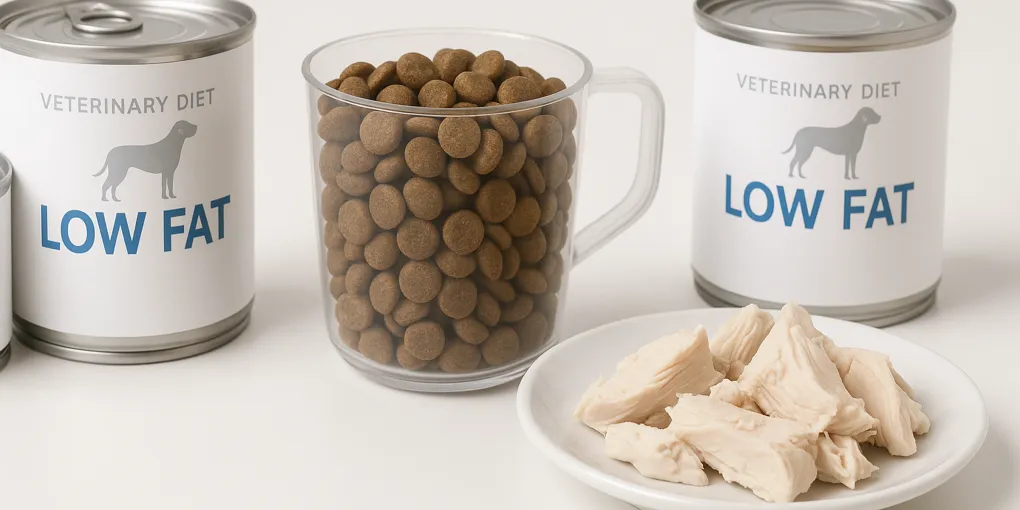
Hill's Prescription Diet i/d Low Fat GI Restore
Best OverallFat content (DM): <7% fat dry matter
$65–$105 (8.5–27.5 lb bags)
Quick Comparison
| Product | Key Specs | Price Range | Buy |
|---|---|---|---|
| |
| $65–$105 (8.5–27.5 lb bags) | Check Price |
| |
| $70–$115 (8.8–28.6 lb bags) | Check Price |
| |
| $58–$95 (8–32 lb bags) | Check Price |
| |
| $20–$45 (5–26 lb bags) | Check Price |
Contains affiliate links — we may earn a small commission at no extra cost to you.
Best Dog Food for Pancreatitis in 2026
Pancreatitis in dogs is a serious and potentially life-threatening condition — and diet is one of the most critical management factors for both recovery and prevention of recurrence. Dietary fat is the primary trigger for pancreatic enzyme secretion: reducing fat intake directly reduces the workload placed on an inflamed pancreas. Hill’s Prescription Diet i/d Low Fat GI Restore (PSR 8.8/10) leads our rankings for its clinically validated <7% dry matter fat content, exceptional digestibility, and the strongest evidence base in the GI therapeutic diet category. Royal Canin Gastrointestinal Low Fat (PSR 8.3/10) earns the top spot for palatability — a critical concern for dogs whose appetite is compromised by illness.
Important note: Acute pancreatitis is a veterinary emergency requiring immediate professional care. The dietary information in this guide is intended to support long-term management and recovery planning in consultation with your veterinarian — it is not a substitute for veterinary diagnosis and treatment.
TL;DR
- Top Pick: Hill’s Prescription Diet i/d Low Fat — <7% DM fat, clinically tested, highest digestibility (PSR 8.8/10) [Rx required]
- Best Palatability: Royal Canin Gastrointestinal Low Fat — enhanced palatability for sick dogs, dry and wet formats (PSR 8.3/10) [Rx required]
- Best Value Rx: Purina Pro Plan EN Gastroenteric — highly digestible, prebiotic fiber, competitive prescription pricing (PSR 7.9/10) [Rx required]
- Best Non-Rx: Natural Balance Fat Dog Low-Calorie — available without prescription, <8% DM fat, for stable chronic management (PSR 7.4/10)
How We Researched This Article
Fat content on dry matter basis calculated from guaranteed analysis panels on current product labels. Recall history sourced from FDA CVM recall database. Clinical evidence for therapeutic diets referenced from peer-reviewed veterinary nutrition literature and veterinary internal medicine guidelines. Prescription diet availability and Rx requirements verified from manufacturer and retailer information. Palatability data synthesized from veterinary practice reports and verified owner community reviews for dogs recovering from GI illness. ASPCA Animal Poison Control reviewed for relevant additive concerns.
The Science of Pancreatitis and Dietary Fat
Why fat triggers pancreatitis: The pancreas serves two functions — endocrine (producing insulin and glucagon) and exocrine (producing digestive enzymes). Dietary fat is the most potent stimulator of pancreatic exocrine secretion. When fat enters the duodenum, cholecystokinin (CCK) is released, which triggers the pancreas to secrete lipase, phospholipase, and other enzymes. In a healthy pancreas, these enzymes are released in inactive forms and activated in the small intestine. In pancreatitis, premature enzyme activation occurs within the pancreatic tissue itself, causing autodigestion and severe inflammation.
Fat thresholds for management:
- Chronic pancreatitis (maintenance): Less than 10% fat on dry matter (DM) basis is the general guideline in veterinary nutrition literature
- Acute or recurrent pancreatitis (active management): Less than 8% DM, with some cases requiring less than 6% DM
- Severe hypertriglyceridemia concurrent with pancreatitis: May require less than 5% DM fat under close veterinary supervision
Digestibility matters as much as fat content: Highly digestible ingredients reduce the total enzymatic workload placed on the GI system and pancreas. Easily digestible proteins (egg, chicken, hydrolyzed proteins) and carbohydrates (rice, corn starch) generate less pancreatic stimulation per gram than poorly digestible ingredients that remain in the GI tract longer and require more enzymatic processing.
Fiber’s role: Moderate soluble fiber (psyllium, guar gum, pectin) slows gastric emptying and modulates CCK release, potentially reducing post-meal pancreatic stimulation. Several therapeutic GI diets incorporate prebiotic fiber for this reason. However, very high fiber diets can also impair nutrient absorption in already-compromised GI tracts — the goal is moderate, not maximum, fiber.
PSR Composite Score Breakdown
| Criterion | Weight | Hill’s i/d Low Fat | RC GI Low Fat | Purina EN Gastroenteric | Natural Balance Fat Dog |
|---|---|---|---|---|---|
| Safety & Ingredients | 25% | 9.5 | 9.0 | 8.8 | 7.8 |
| Durability & Build Quality | 20% | 8.5 | 8.5 | 8.5 | 8.0 |
| Pet Comfort & Acceptance | 20% | 8.0 | 9.0 | 8.0 | 7.5 |
| Value for Money | 20% | 7.5 | 7.0 | 8.0 | 8.5 |
| Ease of Use | 15% | 8.0 | 8.5 | 8.0 | 9.0 |
| PSR Composite | — | 8.8 | 8.3 | 7.9 | 7.4 |
Score notes: Hill’s i/d Low Fat earns the top Safety score for its documented <7% DM fat content, the most clinically validated fat level for pancreatitis management, and strong research backing from peer-reviewed veterinary gastroenterology literature. Royal Canin earns the highest Pet Comfort score due to enhanced palatability design for anorexic/recovering dogs and availability in wet format — critical when sick dogs refuse dry food. Natural Balance earns the top Ease of Use score for its over-the-counter availability without prescription, though it scores lower on Safety due to less clinical validation compared to the Rx options.
Hill’s Prescription Diet i/d Low Fat GI Restore: Best Overall
Hill’s Prescription Diet i/d Low Fat is the clinical gold standard for canine pancreatitis dietary management. With fat content consistently below 7% on a dry matter basis — substantially below the 10–12% DM fat found in most adult maintenance foods — this formula reduces pancreatic stimulation to the minimum achievable while still providing complete and balanced nutrition.
Key features:
- Fat content <7% DM — the lowest reliably achievable in a complete and balanced prescription diet
- Highly digestible protein and carbohydrate sources minimize pancreatic enzyme demand
- AAFCO complete and balanced for adult maintenance
- ActivBiome+ prebiotic technology to support gut microbiome recovery during illness
- Clinically tested in dogs with GI conditions — Hill’s has conducted feeding trials and clinical studies supporting i/d’s use in pancreatitis management
- Available in dry and wet/canned formats for flexibility during recovery phases
Prescription requirement: Hill’s i/d Low Fat requires veterinary authorization to purchase. This is not merely a regulatory formality — dogs with pancreatitis should be under active veterinary care, and the prescription requirement ensures a veterinarian has assessed the dog’s condition and determined this dietary approach is appropriate.
Who it’s best for: Dogs with confirmed acute or chronic pancreatitis under active veterinary management, dogs with concurrent hyperlipidemia (elevated triglycerides) that need the strictest fat restriction, and as the primary recovery diet immediately following a pancreatitis episode. For dogs that also have kidney disease complicating their condition, see our best dog food for kidney disease guide for the relevant protein and phosphorus considerations.
View Hill’s Prescription Diet i/d Low Fat on Amazon
Royal Canin Gastrointestinal Low Fat: Best Palatability for Sick Dogs
When a dog with pancreatitis refuses to eat, the dietary management plan becomes irrelevant — an inappetent dog eating nothing receives less nutrition than a dog eating a moderate-fat maintenance food. Royal Canin Gastrointestinal Low Fat addresses this critical gap through enhanced palatability design specifically targeting recovering GI-compromised dogs.
Palatability-focused design:
- Highly palatable formulation specifically developed for dogs with reduced appetite due to GI illness
- Available in both dry kibble and wet/canned formats — wet format is frequently accepted by dogs who refuse dry food during recovery
- Fat content approximately <8% DM — therapeutically appropriate for most pancreatitis cases
- EPA and DHA omega-3 fatty acids to support the intestinal mucosal barrier repair that occurs during GI recovery
- Easily digestible protein and carbohydrate combination for low pancreatic enzymatic demand
Multi-format advantage: Royal Canin’s wet/canned Gastrointestinal Low Fat has saved feeding situations where dogs recovering from pancreatitis refused all dry food. The wet format allows for further enhancement with water addition (increasing hydration) and warming (increasing aroma for appetite-suppressed dogs). This flexibility is clinically meaningful and earns Royal Canin the palatability award in this category.
Who it’s best for: Dogs with pancreatitis who are showing reduced appetite or anorexia, dogs that prefer wet or mixed feeding, multi-dog households where one dog needs pancreatitis management and the palatability is critical for compliance, and veterinary practices managing post-hospitalization GI recovery. For dogs with stomach sensitivity beyond pancreatitis, also see best dog food for sensitive stomach.
View Royal Canin Gastrointestinal Low Fat on Amazon
Purina Pro Plan Veterinary Diets EN Gastroenteric: Best Value Rx Option
Purina Pro Plan EN Gastroenteric offers a strong balance of clinical utility and cost accessibility within the prescription GI diet category. While its fat content is slightly higher than Hill’s i/d Low Fat (~10–12% DM, formula-dependent), it remains well within the therapeutic range for most chronic pancreatitis cases, and its prebiotic fiber system and high digestibility make it an effective long-term maintenance option at a lower price point than Hill’s or Royal Canin therapeutic lines.
Key features:
- High digestibility — corn starch and egg as primary carbohydrate and protein sources provide exceptional digestibility coefficients
- Prebiotic fiber (guar gum) to modulate gastric emptying and support gut microbiome
- Available in multiple formats: dry kibble, canned wet, and low-fat canned variants
- Purina’s extensive quality infrastructure (400+ daily QC checks per production run) provides manufacturing safety confidence
- Generally priced lower per pound than Hill’s or Royal Canin prescription diet equivalents
Fat content note: The standard EN Gastroenteric formula runs approximately 10–12% DM fat, which is appropriate for mild to moderate chronic pancreatitis but may not be sufficiently low for severe or recurrent cases. Purina also offers a Low Fat EN variant for dogs requiring stricter restriction. Confirm with your veterinarian which EN formulation is appropriate for your dog’s specific fat tolerance.
Who it’s best for: Dogs with stable chronic pancreatitis under veterinary supervision where strict <8% DM fat is not required, pet owners managing prescription diet costs over the long term, and veterinary practices that maintain Purina-based formularies. For dogs that also have weight management needs alongside GI management, see best dog food for weight management.
View Purina Pro Plan EN Gastroenteric on Amazon
Natural Balance Fat Dog Low-Calorie Formula: Best Non-Rx Low-Fat Option
For dogs with chronic, stable pancreatitis who require long-term low-fat dietary management but whose owners cannot access or afford prescription diets, Natural Balance Fat Dog Low-Calorie Formula provides the lowest fat content available in a commercially sold, over-the-counter dog food. At less than 8% DM fat, it falls within the therapeutic range for mild to moderate chronic cases — though it lacks the clinical validation infrastructure of the prescription options.
What it offers without a prescription:
- Less than 8% fat on dry matter basis — confirmed from current guaranteed analysis
- Reduced calorie design (relevant for dogs where excess weight is a concurrent concern — obesity is a pancreatitis risk factor)
- Available on Amazon and major pet retailers without veterinary authorization
- AAFCO complete and balanced for adult maintenance
- No high-fat additives or fat-dense ingredients
Important limitation: Natural Balance Fat Dog is designed as a weight management food, not a medical pancreatitis diet. It lacks the clinical evidence base, digestibility optimization, and prebiotic fiber systems present in the prescription options. For dogs with severe pancreatitis, active episodes, or concurrent conditions (diabetes, hyperlipidemia), the prescription options are clearly superior. Natural Balance Fat Dog is appropriate for stable chronic cases managed under veterinary oversight where prescription diet access is a barrier.
Dogs with pancreatitis who are also managing weight should review our best dog food for weight management guide in conjunction with their veterinarian’s pancreatitis dietary guidance. For dogs with diabetes alongside pancreatitis (a common concurrent condition), see best dog food for diabetes.
View Natural Balance Fat Dog on Amazon
When Diet Alone Is Not Enough
Acute pancreatitis is a veterinary emergency. Clinical signs — vomiting, abdominal pain, lethargy, loss of appetite — require immediate veterinary evaluation including serum pancreatic lipase immunoreactivity (PLI) testing, imaging, and often hospitalization with IV fluid support. Attempting to manage acute pancreatitis with dietary change alone without veterinary care risks progression to hemorrhagic pancreatitis, systemic inflammatory response syndrome, and life-threatening organ failure.
Diet is a critical component of long-term management and recurrence prevention — not a replacement for acute veterinary care. Once a dog has stabilized under veterinary care, the dietary choices covered in this guide become highly relevant for minimizing recurrence risk.
Frequently Asked Questions
What fat percentage is safe for a dog with pancreatitis?
Veterinary guidelines recommend less than 10% fat on a dry matter (DM) basis for chronic pancreatitis maintenance, and less than 8% DM for acute or recurrent cases. Dry matter basis is the relevant measure — not the “as fed” percentage, which includes water content. Your veterinarian can calculate the DM fat content from the guaranteed analysis panel and advise on the appropriate threshold for your dog’s specific history.
Can I feed my dog regular food after a pancreatitis attack?
Following an acute episode, veterinarians typically recommend a period of restricted feeding while the pancreas recovers, followed by gradual reintroduction of a very low-fat, highly digestible diet. Returning to a regular adult maintenance diet (typically 12–18% DM fat) before full recovery risks re-triggering pancreatic inflammation. Your veterinarian will guide the timeline based on your dog’s clinical recovery and pancreatic lipase levels.
Do dogs with pancreatitis need prescription food forever?
Not necessarily. Dogs with a single acute episode may be able to transition back to a low-fat commercial diet after full recovery. Dogs with chronic or recurrent pancreatitis, or concurrent conditions like hyperlipidemia or diabetes, typically benefit from long-term low-fat dietary management. Your veterinarian will assess clinical signs and PLI levels to guide long-term decisions.
What foods should dogs with pancreatitis avoid?
High-fat foods are the primary concern: fatty meats, cheese, butter, oils, fatty table scraps, and high-fat treats. Even single high-fat meals can trigger acute flares in susceptible dogs. Low-fat treats such as plain cooked chicken breast, carrots, or plain rice are safer alternatives for dogs with chronic pancreatitis.
Can wet food be beneficial for dogs with pancreatitis?
Yes — wet food increases moisture intake (important during recovery) and typically has higher palatability for dogs with reduced appetite. Royal Canin Gastrointestinal Low Fat is available in wet format specifically for this reason. Always verify fat content on a dry matter basis for canned foods, as the high water content can make the as-fed fat percentage appear lower than the relevant DM figure.
Frequently Asked Questions
- Veterinary guidelines generally recommend less than 10% fat on a dry matter (DM) basis for dogs with chronic pancreatitis, and less than 8% DM for dogs with acute or recurrent pancreatitis. Some severe cases benefit from even lower fat (<6% DM). Dry matter basis is the relevant measure — not the 'as fed' percentage on the label, which includes water content. To convert: divide the as-fed fat % by (100% minus the moisture %) and multiply by 100. Your veterinarian can calculate this for your dog's specific dietary needs.
- Following an acute pancreatitis episode, your veterinarian will typically recommend a period of restricted feeding or IV nutrition while the pancreas recovers. When oral feeding resumes, a very low-fat, highly digestible diet is standard of care. Returning to a regular adult maintenance diet (typically 12–18% DM fat) before full recovery risks re-triggering pancreatic inflammation. Your veterinarian will guide when and how to transition back to a maintenance diet — or recommend maintaining a low-fat diet long-term if your dog has chronic or recurrent pancreatitis.
- Not necessarily. Dogs with a single acute episode may be able to transition back to a low-fat commercial diet (non-prescription) after full recovery, under veterinary guidance. Dogs with chronic or recurrent pancreatitis, or those with concurrent conditions like hyperlipidemia or diabetes, typically benefit from long-term dietary management with a prescription or veterinary-formulated low-fat diet. Your veterinarian will assess pancreatic lipase immunoreactivity (PLI) and clinical signs to guide long-term diet decisions.
- High-fat foods are the primary concern: fatty meats, cheese, butter, oils, fatty table scraps, and high-fat treats. Treats marketed as 'healthy' can still be high in fat — always check the fat percentage on the label. High-fat bones (marrow bones), rawhide, and fatty chews should also be avoided. Even a single high-fat meal can trigger an acute pancreatitis flare in susceptible dogs. Low-fat treats (carrots, plain cooked chicken breast, plain rice cakes) are safer options for dogs with chronic pancreatitis.
- Wet food can be beneficial for two reasons: it generally has higher moisture content (supporting hydration, which is important during recovery) and the canned format often has higher palatability for dogs with reduced appetite. Royal Canin Gastrointestinal Low Fat is available in both dry and wet/canned formulations, which can be useful for transitioning anorexic dogs back to eating. Verify fat content on dry matter basis for canned foods, as the high water content can make the 'as fed' fat percentage appear lower than the DM basis figure.