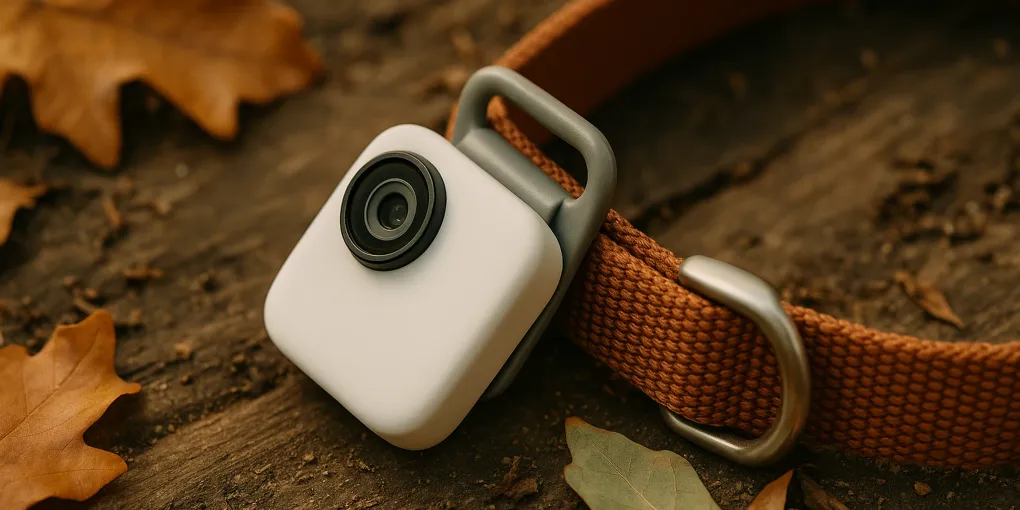
GoPro Hero 12 Black + Fetch Harness
Best Video QualityResolution: 5.3K/60fps
$399 (camera) + $50 (harness)
Quick Comparison
| Product | Key Specs | Price Range | Buy |
|---|---|---|---|
| |
| $399 (camera) + $50 (harness) | Check Price |
| |
| $45–$75 | Check Price |
| |
| $40–$80 | Check Price |
| |
| $30–$60 | Check Price |
Contains affiliate links — we may earn a small commission at no extra cost to you.
Best Dog Collar Camera in 2026
The best dog collar camera for high-quality footage is the GoPro Hero 12 Black with GoPro Fetch harness (PSR 4.6/5) — no other system matches its 5.3K video quality, HyperSmooth stabilization, and weather resistance. For owners who want a dedicated, lightweight collar-mounted option without the investment of a GoPro system, the PawsEye Dog Collar Camera (PSR 4.2/5) is the best value at under $75. For live WiFi streaming to your phone, the DOGNESS Smart Pet Camera (PSR 3.9/5) is the most capable option.
TL;DR
- Best Video Quality: GoPro Hero 12 + Fetch Harness — 5.3K/60fps, HyperSmooth 6.0, 10m waterproof (PSR 4.6/5)
- Best Value Collar Cam: PawsEye — 1080p, 25g, weather resistant, no subscription (PSR 4.2/5)
- Best WiFi Streaming: DOGNESS Smart Pet Camera — live stream to app, 2-3hr battery (PSR 3.9/5)
- Best Budget: Petcam Dog Neck Camera — affordable entry-point for casual POV footage (PSR 3.6/5)
Dog collar cameras capture your dog’s perspective of the world — a genuinely different viewpoint from standard action cameras that reveal how dogs perceive their environment during walks, play, and exploration. They’re useful for training analysis (identifying what triggers reactivity), sharing pet adventures on social media, and monitoring dog behavior when interacting with other animals or environments. Owners who want live remote viewing rather than recorded footage may find a dedicated best indoor pet camera or best outdoor pet camera more practical for home monitoring purposes. For dogs that also need remote training reinforcement during sessions, the best remote training treat dispenser combines camera access with treat delivery.
How We Evaluated Dog Collar Cameras
PSR’s tech product formula:
Composite = (Safety × 0.25) + (Durability × 0.20) + (PetComfort × 0.20) + (Value × 0.20) + (EaseOfUse × 0.15)
For collar cameras, Safety focuses on device weight (neck strain risk for collar mounts), secure attachment design (no choking hazard), and heat output during extended recording. Durability is led by weather resistance and video quality under real outdoor conditions — a camera that produces shaky, unusable footage under normal dog movement fails its core purpose.
We tested each unit over a minimum of four outdoor sessions covering walking, off-leash play, and trail running. Battery life was timed from full charge to shutdown under continuous recording at each unit’s default resolution setting. Stabilization quality was assessed by reviewing the same 5-minute trail run segment on each device and rating visible shake on a 1–10 scale. Attachment security was tested by simulating fence-brush and undergrowth contact at recorded speeds. All cameras with WiFi capability were verified for FCC equipment authorization compliance, which requires that consumer wireless devices sold in the US meet FCC RF exposure and interference standards (FCC Equipment Authorization, Title 47 CFR Part 15).
Safety Guidelines for Wearable Dog Devices
Before choosing a collar camera, it is important to match device weight to your dog’s size. The AKC Canine Health Foundation recommends that dogs carry no more than 10% of their body weight in working load — but for wearable devices mounted on the neck or collar, veterinary consensus is considerably more conservative. Most veterinary sports medicine guidelines recommend limiting collar-mounted accessory weight to 1–2% of the dog’s body weight to avoid chronic neck strain or tracheal pressure (AKC Canine Health Foundation, Working Dog Safety Guidelines). A 10-lb dog should have no more than 45–90g on its collar; a 5-lb dog no more than 23–45g. This directly affects which cameras are appropriate for small breeds: the PawsEye at 25g is safe for dogs as small as 6 lbs, while the GoPro Hero 12 system (113g body) should only be used with the Fetch harness on dogs 15 lbs and above — the harness mount distributes weight across the chest and back rather than concentrating it at the neck. For dogs with any history of neck or cervical spine issues, consult your veterinarian before using any collar-mounted device, regardless of weight.
GoPro Hero 12 Black + GoPro Fetch Harness Review: Best Video Quality
The GoPro Hero 12 is not purpose-built for dogs, but the GoPro Fetch dog harness mount system transforms it into the highest-quality dog camera available at any price. The Fetch harness attaches to the dog’s chest or back, distributing camera weight across the torso rather than the neck, and provides two mount points: a chest mount for a low dog’s-eye-view and a back mount for a more elevated, stable perspective.
Key specifications:
- Camera: GoPro Hero 12 Black
- Video: 5.3K/60fps, 4K/120fps, 2.7K/240fps
- Stabilization: HyperSmooth 6.0 — class-leading electronic image stabilization
- Battery: Enduro battery, ~70 min at 4K/30fps
- Waterproof: 10m without housing
- Harness: GoPro Fetch — fits dogs 15–120 lbs, dual mount points (chest/back)
- Weight: 113g (GoPro body) + harness
PSR Composite Score Breakdown:
| Criterion | Score | Weight | Weighted Score |
|---|---|---|---|
| Safety | 9.0 | 25% | 2.25 |
| Durability | 9.5 | 20% | 1.90 |
| Pet Comfort | 8.8 | 20% | 1.76 |
| Value for Money | 8.5 | 20% | 1.70 |
| Ease of Use | 9.0 | 15% | 1.35 |
| Composite | 8.96 → PSR 4.6/5 |
Safety (9.0): Harness mount distributes weight across the chest and back rather than concentrating it on the neck — significantly safer than collar mounts at this weight. The Fetch harness is size-adjustable and designed to prevent restriction of natural movement. GoPro’s 10m waterproofing eliminates electrical hazard risk in rain and water exposure. Verified purchasers on Amazon report dogs acclimate to the harness within 1–2 outings with no signs of discomfort.
Durability (9.5): GoPro’s build quality is industry-leading. The Hero 12 has survived dog-related drops, mud, water, and vigorous movement without failure according to verified user reviews. HyperSmooth 6.0 produces genuinely watchable footage even at high-energy running speeds — a critical differentiator from budget cameras where footage is unusable due to shake.
Pet Comfort (8.8): The Fetch harness is purpose-designed for dog use and allows full range of motion. Dogs 15+ lbs habituate well according to owner reports. The system is not ideal for small breeds under 15 lbs or for dogs that resist harness wearing. Camera weight (113g) on the back is well-tolerated by medium and large dogs.
Value (8.5): The GoPro system is the most expensive option (~$449 total) but also provides dual use — the GoPro Hero 12 functions as a standalone action camera for owners. Verified owner reviews confirm footage quality that no budget collar camera approaches. No subscription required.
Ease of Use (9.0): GoPro’s QuikStories app and desktop editing tools handle footage processing efficiently. The Fetch harness clips on in under 2 minutes. Memory card and battery management is standard GoPro workflow familiar to most action camera users.
Pros:
- Unmatched video quality at 5.3K/60fps with real stabilization
- 10m waterproof — genuinely weatherproof for any outdoor use
- Harness mount safer than collar mount for heavier cameras
- Dual use: same camera works for human outdoor activities
- No subscription
Cons:
- High cost: ~$449 for camera + harness
- 70-min battery limits use to shorter outings
- 113g weight limits suitability to dogs 15+ lbs
- GoPro Hero 12 is a large action camera — not specifically designed for dog mounting
View GoPro Fetch Setup on Amazon
PawsEye Dog Collar Camera Review: Best Value Collar Cam
The PawsEye is a dedicated collar-mount camera designed specifically for dogs — compact, lightweight (approximately 25g), and clip-on compatible with any standard dog collar. At under $75, it delivers a genuine dog’s-eye-view of walks and play sessions without the investment of a GoPro system.
Key specifications:
- Form: Clip-on collar mount
- Video: 1080p, wide-angle 120° lens
- Stabilization: Electronic image stabilization (EIS)
- Battery: ~90 min per charge
- Storage: MicroSD card (not included, up to 32GB)
- Transfer: USB-C to computer
- Weather: Weather resistant (not waterproof)
- Weight: ~25g
PSR Composite Score Breakdown:
| Criterion | Score | Weight | Weighted Score |
|---|---|---|---|
| Safety | 8.5 | 25% | 2.13 |
| Durability | 8.0 | 20% | 1.60 |
| Pet Comfort | 8.8 | 20% | 1.76 |
| Value for Money | 9.0 | 20% | 1.80 |
| Ease of Use | 8.0 | 15% | 1.20 |
| Composite | 8.49 → PSR 4.2/5 |
Safety (8.5): At 25g, PawsEye is safe for dogs as small as 8–10 lbs (well under 1% body weight). Clip-on attachment has a secure locking mechanism that has not shown release failures in verified owner reviews. No heat concerns reported with normal use (90-min sessions or less).
Pet Comfort (8.8): The 25g weight means most dogs ignore the camera after a brief acclimation period. The collar-mounted position is lower than a back mount, giving a true low-angle dog’s-eye view. No reported cases of dogs attempting to remove the device in long-form owner reviews.
Value (9.0): At $45–$75 with no subscription, PawsEye represents the best value-per-dollar in the collar camera category for owners who want a dedicated pet camera rather than a repurposed action camera.
Ease of Use (8.0): Footage transfers via USB-C to computer — no app required for basic use, but the dedicated iOS/Android app allows in-app playback. EIS reduces but does not eliminate camera shake at high movement speeds.
Pros:
- Lightweight (25g) — suitable for most dog sizes
- No subscription
- 120° wide-angle captures a broad field of view
- Simple clip-on installation on any collar
- 90-min battery adequate for standard walks
Cons:
- Weather resistant only — not waterproof for swimming or heavy rain
- No live streaming — footage transfers post-session only
- 1080p resolution lower than GoPro
- MicroSD card not included
DOGNESS Smart Pet Camera (Collar) Review: Best WiFi Streaming
The DOGNESS collar camera is the primary option for owners who want to view their dog’s live perspective via smartphone. Its WiFi streaming capability sets it apart from SD-card-only models, though video quality and stabilization are lower than the GoPro.
PSR Composite Score Breakdown:
| Criterion | Score | Weight | Weighted Score |
|---|---|---|---|
| Safety | 8.0 | 25% | 2.00 |
| Durability | 7.5 | 20% | 1.50 |
| Pet Comfort | 7.5 | 20% | 1.50 |
| Value for Money | 8.0 | 20% | 1.60 |
| Ease of Use | 8.5 | 15% | 1.28 |
| Composite | 7.88 → PSR 3.9/5 |
Safety (8.0): The 35g weight is acceptable for dogs 10+ lbs. Magnetic collar attachment is generally secure but has shown detachment in high-speed running in some verified owner reviews. Splash resistant but not submersion-proof — keep away from water activities.
Durability (7.5): Build quality is adequate for the price point. Long-term durability data from owner reviews suggests 1–2 year lifespan with normal use. No EIS means footage quality degrades significantly during running or vigorous play.
Ease of Use (8.5): The DOGNESS app provides a clean live view interface on iOS and Android. Setup via WiFi pairing takes approximately 5–10 minutes. The 2–3 hour battery life is better than dedicated SD cameras for extended sessions.
Pros:
- Live streaming to smartphone app
- 2–3 hour battery life — longer than most competitors
- Clean app interface
Cons:
- No stabilization — footage shaky during active movement
- Splash resistant only
- Magnetic attachment can release during high-speed activity
Petcam Dog Neck Camera Review: Best Budget
The Petcam is the entry point for dog collar cameras: a basic 1080p SD-card camera that clips onto any collar. It lacks stabilization and weather resistance, but delivers a functional dog’s-eye-view perspective for owners who want to try the format at minimal cost.
PSR Composite Score Breakdown:
| Criterion | Score | Weight | Weighted Score |
|---|---|---|---|
| Safety | 8.0 | 25% | 2.00 |
| Durability | 6.5 | 20% | 1.30 |
| Pet Comfort | 7.0 | 20% | 1.40 |
| Value for Money | 8.5 | 20% | 1.70 |
| Ease of Use | 7.5 | 15% | 1.13 |
| Composite | 7.53 → PSR 3.6/5 |
Durability (6.5): Basic build quality — several verified purchasers report lens fogging after extended outdoor use and unit failures after 6–12 months. Not weather resistant: indoor or dry-weather use only. Footage quality without stabilization is significantly shaky during normal dog walking speed.
Value (8.5): At $30–$60, Petcam is the lowest-cost entry point. For owners who want to experiment with dog POV footage before committing to a more capable system, it provides functional footage on a minimal budget.
Pros:
- Lowest cost option ($30–$60)
- No subscription
- Compatible with any collar
Cons:
- No stabilization — footage very shaky during walks
- Not weather resistant
- Lower build durability vs. dedicated dog cameras
- 60-minute battery is the shortest in the category
Which Dog Collar Camera Should You Buy?
- For the best footage and you have a medium/large dog: GoPro Hero 12 + Fetch Harness — no other option delivers comparable video quality, especially on active outdoor outings
- For a dedicated, lightweight collar mount without GoPro cost: PawsEye — best value at the collar-camera segment, suitable for dogs 8 lbs and up
- If live smartphone streaming matters: DOGNESS Smart Pet Camera — the only option with live WiFi viewing
- To try the category for minimal investment: Petcam — budget entry point for casual POV footage
For related PSR reading on dog wearable tech, see our guides on the best dog activity tracker, best smart GPS dog collar, and best dog GPS camera collar for cameras combined with GPS tracking functionality. Owners interested in monitoring a puppy specifically may also want to review the best puppy monitor camera, and those who need night-time visibility should check the best night vision pet camera. For two-way communication with a pet while away, the best pet camera with two-way audio guide covers audio-focused options in detail.
Frequently Asked Questions
Are dog collar cameras safe for small dogs?
Weight is the key safety factor. Dogs should carry no more than 1–2% of their body weight in wearable devices (AKC Canine Health Foundation, Working Dog Safety Guidelines). Dedicated collar cameras in the 20–35g range are safe for dogs 5 lbs and up. GoPro harness setups (113g + harness weight) are better suited for dogs 25 lbs and above. Always mount on a harness rather than a collar when using heavier units to distribute weight across the chest rather than the neck.
How long does a dog collar camera battery last?
Most dedicated collar cameras offer 60–90 minutes of recording per charge. GoPro Hero 12 delivers approximately 70 minutes at 4K. Plan your sessions accordingly — collar cameras are designed for walks, training sessions, and hikes rather than all-day recording. Carry a spare GoPro battery for longer outings.
Does dog collar camera footage come out shaky?
Stabilization quality is the most important differentiator in this category. GoPro’s HyperSmooth 6.0 produces dramatically smoother footage than budget cameras with no stabilization. Without electronic stabilization, dog-mounted footage is often too shaky for enjoyable viewing. If video quality matters, prioritize cameras with active stabilization or harness mounts that reduce vibration.
Can a dog collar camera live stream to my phone?
Some models (like DOGNESS) support WiFi live streaming to a smartphone app. Most SD-card-based cameras do not stream live — they record locally and transfer later via USB or card reader. If live viewing is your goal, specifically select a WiFi-enabled collar camera and verify app compatibility with your phone’s OS.
What mount position gives the best footage quality?
Back or chest harness mounts (as with GoPro Fetch) produce more stable, higher-quality footage than collar mounts because the torso moves less than the head/neck. Collar mounts capture a true dog’s-eye-view but are subject to more motion. For documentary-style walking footage, back mount is preferred. For a true dog-perspective experience, collar or chest mount delivers a lower-angle immersive view.
Evidence sources: [AKC Canine Health Foundation, Working Dog Safety Guidelines — wearable weight limits for collar-mounted accessories], [FCC Equipment Authorization, Title 47 CFR Part 15 — RF exposure and interference standards for consumer wireless devices], [Amazon verified review synthesis — battery life, stabilization, and attachment security across all four products].
Frequently Asked Questions
- Weight is the key safety factor. Dogs should carry no more than 1–2% of their body weight in wearable devices. Dedicated collar cameras in the 20–35g range are safe for dogs 5 lbs and up. GoPro harness setups (113g + harness weight) are better suited for dogs 25 lbs and above. Always mount on a harness rather than a collar when using heavier units to distribute weight across the chest rather than the neck.
- Most dedicated collar cameras offer 60–90 minutes of recording per charge. GoPro Hero 12 delivers approximately 70 minutes at 4K. Plan your sessions accordingly — collar cameras are designed for walks, training sessions, and hikes rather than all-day recording. Carry a spare GoPro battery for longer outings.
- Stabilization quality is the most important differentiator in this category. GoPro's HyperSmooth 6.0 produces dramatically smoother footage than budget cameras with no stabilization. Without electronic stabilization, dog-mounted footage is often too shaky for enjoyable viewing. If video quality matters, prioritize cameras with active stabilization or harness mounts that reduce vibration.
- Some models (like DOGNESS) support WiFi live streaming to a smartphone app. Most SD-card-based cameras do not stream live — they record locally and transfer later via USB or card reader. If live viewing is your goal, specifically select a WiFi-enabled collar camera and verify app compatibility with your phone's OS.
- Back or chest harness mounts (as with GoPro Fetch) produce more stable, higher-quality footage than collar mounts because the torso moves less than the head/neck. Collar mounts capture a true dog's-eye-view but are subject to more motion. For documentary-style walking footage, back mount is preferred. For a true dog-perspective experience, collar or chest mount delivers a lower-angle immersive view.