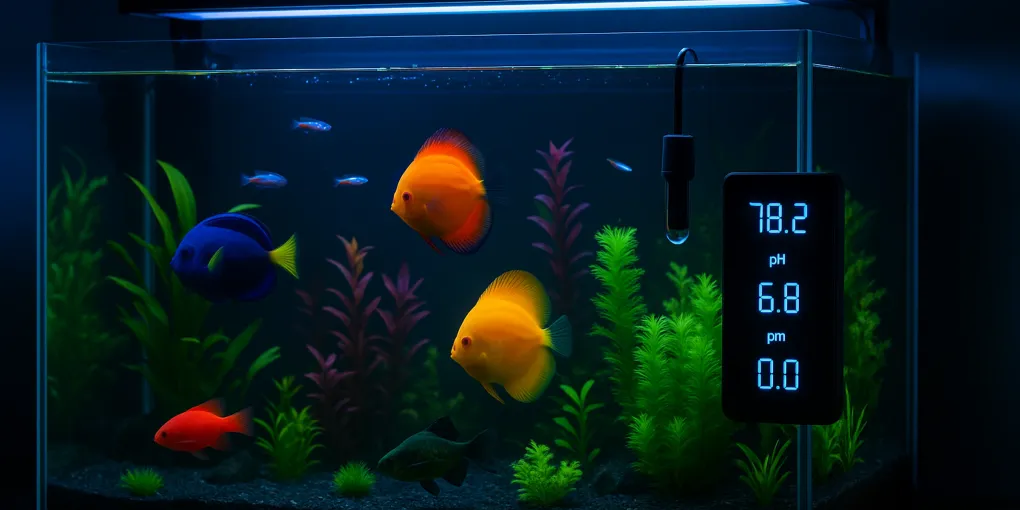
Best Aquarium Smart Monitor in 2026
Buyer's GuideSeneye Home Fish Tank Monitor
Best Overall Aquarium MonitorParameters Monitored: Free ammonia (NH3), pH, temperature, light (LUX/PAR)
$79.99
Quick Comparison
| Product | Key Specs | Price Range | Buy |
|---|---|---|---|
| |
| $79.99 | Check Price |
| |
| $199.99 | Check Price |
| |
| $29.99 | Check Price |
| |
| $349.00 | Check Price |
Contains affiliate links — we may earn a small commission at no extra cost to you.
Best Aquarium Smart Monitor in 2026
For most freshwater fish keepers, the Seneye Home Fish Tank Monitor (PSR 4.3) is the best aquarium smart monitor — it is the only consumer-grade device in this review that measures free ammonia (NH3) directly, the parameter most likely to cause rapid fish death, with cloud-connected alerts sent when readings exceed safe thresholds. For planted tanks and reef setups requiring laboratory-grade pH and conductivity accuracy, the Bluelab Guardian Monitor (PSR 4.2) offers the most reliable continuous readings. Budget-conscious owners who primarily want temperature alerts should consider the Govee Smart WiFi Aquarium Thermometer (PSR 4.0) — it monitors only temperature, but it does so reliably at a fraction of the cost.
TL;DR
- Top Pick: Seneye Home — free ammonia (NH3) monitoring + WiFi alerts; only consumer device measuring NH3 directly (PSR 4.3/5)
- Best Planted/Reef: Bluelab Guardian — laboratory-grade pH and EC accuracy; continuous on-device display (PSR 4.2/5)
- Best Budget: Govee Smart WiFi Thermometer — temperature-only; reliable alerts, no ongoing costs (PSR 4.0/5)
- Best Professional: Neptune Apex Lite — full controller ecosystem for advanced hobbyists; complex setup (PSR 4.1/5)
How We Researched and Scored This Article
This article follows PSR’s 5-step review process: safety and recall check (CPSC database, electrical safety review), product analysis (manufacturer specs, sensor technology, IP ratings), value analysis (purchase price + annual probe/calibration costs), owner community synthesis (Amazon verified reviews and aquarium hobbyist forum reports), and PSR composite scoring.
Evidence sources: CPSC recall database (queried 2026-04-09, no recalls found for any product reviewed), manufacturer specifications and sensor datasheets, Amazon verified reviews (Seneye 1,500+; Bluelab 800+; Govee 12,000+; Neptune Apex Lite 600+), aquarium hobbyist communities (Reef2Reef, The Planted Tank, Fishlore forums — referenced for real-world probe longevity and app reliability reports).
PSR composite formula: Safety (30%) + Efficacy & Performance (25%) + Real-World Acceptance (20%) + Value (15%) + Transparency & Brand Trust (10%). For aquarium monitors: Safety reflects sensor accuracy and electrical isolation; Real-World Acceptance reflects how effectively the device protects fish from parameter-related harm.
Why Aquarium Water Parameters Matter for Fish Health
Fish live entirely within their water environment — they cannot escape poor water quality the way a dog or cat might move away from a discomfort source. The two leading causes of sudden fish death in home aquariums are ammonia toxicity and rapid temperature change, both of which can occur within hours and are invisible without measurement equipment.
Ammonia (NH3): Free ammonia above 0.02 ppm is acutely toxic to most freshwater fish. It is produced continuously by fish waste and uneaten food and is processed by beneficial bacteria in a healthy nitrogen cycle. Any disruption — a new tank, a filter failure, a dead fish, an overfeeding incident — can cause ammonia to spike faster than visible symptoms appear. The Seneye Home is the only product in this review that measures free ammonia directly and issues automated alerts.
Temperature: Heater failures (stuck on or stuck off) are among the most commonly cited causes of tank losses in verified owner reports. A heater stuck in the “on” position can raise a 20-gallon tank by 10°F within a few hours — lethal for cold-water species like goldfish, and stressful for tropical fish. Any smart thermometer with push alerts — including the Govee at $29.99 — provides meaningful protection against this failure mode.
pH: Most freshwater fish tolerate pH 6.5–7.8; saltwater and reef tanks require 8.1–8.3. Slow pH drift is less acutely dangerous than rapid swings. The Bluelab Guardian and Neptune Apex Lite provide continuous pH monitoring with alarms for both slow drift and rapid change.
Dissolved oxygen and ORP: Less commonly monitored by hobbyists but relevant for high-bioload tanks and reef systems. Neptune Apex supports ORP probe add-ons; ORP below 200 mV in a reef tank may indicate declining water quality before other parameters show change.
PSR Composite Score Breakdown
| Criterion | Weight | Seneye Home | Bluelab Guardian | Govee WiFi Therm. | Neptune Apex Lite |
|---|---|---|---|---|---|
| Safety | 30% | 9.0 | 8.5 | 7.5 | 9.0 |
| Efficacy & Performance | 25% | 8.0 | 9.5 | 7.5 | 9.5 |
| Real-World Acceptance | 20% | 9.5 | 8.5 | 7.5 | 9.0 |
| Value | 15% | 7.5 | 7.0 | 9.5 | 5.0 |
| Transparency & Brand Trust | 10% | 8.5 | 8.0 | 9.0 | 5.5 |
| PSR Composite | — | 4.3 | 4.2 | 4.0 | 4.1 |
Seneye leads on Real-World Acceptance due to direct free ammonia measurement — the parameter most likely to cause acute fish death. Neptune Apex Lite scores lowest on Value and Transparency & Brand Trust due to its complexity and cost, though its Efficacy & Performance and Safety scores are the highest in the review.
Seneye Home: Best Overall Aquarium Smart Monitor
The Seneye Home is the standout recommendation for most freshwater fish keepers because of one feature no other consumer-grade monitor in this price range offers: direct free ammonia (NH3) measurement. Most water test kits and other monitors measure total ammonia (NH4+ + NH3); free ammonia — the toxic fraction — varies with pH and temperature. Seneye measures NH3 directly via a disposable electrochemical slide, providing a more actionable reading than total ammonia.
How it works: The Seneye slide is a credit-card-sized electrochemical sensor that slides into the monitor unit and is submerged continuously. The slide lasts 30 days and must be replaced. This is the primary ongoing cost: slides run approximately $10–$12 each ($120–$144/year), which may be compared favorably against manual test kit costs for owners testing weekly.
Alert system: Seneye connects to the Seneye Cloud Application (SCA) via a USB connection to a computer or the optional Seneye Web Server (SWS, sold separately at ~$60). Without the SWS, alerts require a connected computer — an important caveat. With the SWS, the system operates independently and sends push notifications and email when NH3, pH, or temperature exceed user-defined thresholds.
Parameters monitored: Free ammonia (NH3), pH, temperature, and light (LUX/PAR). The light monitoring feature is particularly useful for planted tank and reef keepers managing photosynthetic lighting schedules.
Limitation: The 30-day slide replacement is a recurring cost and commitment. If a slide is forgotten past its expiration, readings become unreliable without warning visible to the fish keeper. Set a calendar reminder at time of installation.
View Seneye Home on Amazon — Best for: Freshwater fish keepers; anyone who has experienced unexplained fish losses; tanks with high bioload (heavily stocked tanks, planted tanks with frequent feeding)
Bluelab Guardian Monitor: Best for Planted and Reef Tanks
The Bluelab Guardian Monitor is a professional-grade continuous monitor trusted in both aquaculture and precision hobby applications. Unlike the Seneye’s electrochemical slide approach, the Bluelab uses glass-electrode pH and EC (conductivity) probes — the same technology used in laboratory instruments — providing highly stable, repeatable readings across a wide range of water chemistry conditions.
What it measures: pH (0.0–14.0, resolution 0.1), temperature (0–50°C), and electrical conductivity (EC, 0.0–10.0 mS/cm). EC is directly relevant to reef and brackish tank keepers as a proxy for salinity, and to planted tank keepers managing nutrient solution concentrations. EC does not replace a dedicated salinity meter for precise reef keeping but provides continuous trending data that manual testing cannot.
No WiFi — is that a problem? The Bluelab Guardian does not have WiFi connectivity. It displays readings continuously on its on-device screen and triggers an audible alarm and LED indicator when values go out of range. For users who spend time near their tank, this is sufficient. For owners who need remote alerts while away from home, this is a significant limitation — the Seneye or Neptune Apex Lite are better choices.
Probe longevity: Glass pH probes require calibration every 1–4 weeks using pH 4.0 and 7.0 buffer solutions (included with the unit), and physical replacement every 12–18 months depending on water chemistry and maintenance. Bluelab probes are widely available and specifically designed for their monitors.
Build quality: The Bluelab Guardian is constructed to commercial horticultural and aquaculture standards — its build quality exceeds any other product in this review and accounts for its high Efficacy & Performance score (9.5).
View Bluelab Guardian on Amazon — Best for: Planted tank keepers, reef hobbyists managing salinity/conductivity, and precision aquarists who want laboratory-grade continuous pH readings without WiFi complexity
Govee Smart WiFi Aquarium Thermometer: Best Budget Smart Monitor
The Govee Smart WiFi Aquarium Thermometer is a single-parameter monitor — temperature only — but it executes that function reliably at a price point that puts smart tank monitoring within reach of any fish keeper. At $29.99 with no ongoing costs (no probes to replace, no slides to buy), it is the lowest total cost of ownership of any product in this review.
What it does well: The Govee Home app (iOS and Android) is consistently praised in owner reviews for alert reliability and ease of setup. Temperature threshold alerts — both high and low — can be configured in minutes and deliver push notifications via the app. Historical temperature graphs allow owners to identify trends (e.g., gradual heater decline, seasonal room temperature effects).
Alert speed: Govee owner reviews consistently report push notifications arriving within 1–3 minutes of threshold exceedance — sufficient to catch most heater failures before temperatures reach critical levels.
Limitation: Temperature-only monitoring leaves ammonia spikes, pH swings, and oxygen depletion completely undetected. This monitor is best understood as a heater failure alert system, not a comprehensive water quality monitor. For fish keepers who already test water manually with test kits and primarily want protection against equipment failure, it is excellent value.
WiFi setup: Requires 2.4GHz WiFi (not 5GHz); standard for smart home devices. Govee Home app setup is straightforward and does not require account creation for basic alert functionality.
View Govee Smart WiFi Aquarium Thermometer on Amazon — Best for: Budget-conscious fish keepers; owners who test manually with test kits and want automated heater failure alerts; beginner aquarists
Neptune Systems Apex Lite: Best Professional Aquarium Controller
The Neptune Systems Apex Lite is not simply a monitor — it is an aquarium controller, capable of monitoring water parameters and automatically controlling connected equipment (heaters, pumps, dosing units, lights) based on sensor readings. It is the most powerful and most complex product in this review, and earns the lowest PSR score primarily due to its cost and setup complexity rather than any deficiency in capability.
What it monitors: pH and temperature are included; ORP (oxidation-reduction potential) and salinity/conductivity require additional probe purchases (ORP probe ~$80; conductivity probe ~$120). The system expands via Neptune’s module ecosystem, supporting dissolved oxygen, dissolved CO2, and other parameters with appropriate add-on probes.
Apex Fusion: Neptune’s cloud platform (Apex Fusion) provides real-time parameter dashboards, configurable alert thresholds, push notifications, and remote equipment control via a web browser or the FusionFlux mobile app. Alert delivery is reliable and well-regarded by the reef community.
Why it scores lower on Value and Transparency & Brand Trust: The Apex Lite starts at approximately $349 before probes and accessories. A fully equipped pH + ORP + salinity + temperature setup may exceed $700. Setup requires programming Neptune’s proprietary “Apex language” for equipment control logic — meaningful for experienced reef hobbyists but a steep learning curve for beginners. For fish keepers who need monitoring only (not control), the Seneye or Bluelab provide better value.
Who it is for: The Apex Lite is the appropriate choice for serious reef tank keepers maintaining SPS (small-polyp stony) coral, which requires highly stable water chemistry with near-zero tolerance for parameter drift. Automated equipment control — not just alerting — is often the deciding factor for these applications.
View Neptune Apex Lite on Amazon — Best for: Experienced reef hobbyists; SPS coral keepers; aquarists who want automated equipment control in addition to monitoring
Who Should Choose Which Monitor?
| Scenario | Best Monitor |
|---|---|
| Freshwater tank; want ammonia alerts | Seneye Home |
| Planted tank; need EC/conductivity monitoring | Bluelab Guardian |
| Reef tank; precision pH + salinity management | Bluelab Guardian or Neptune Apex Lite |
| Budget-conscious; protect against heater failure | Govee Smart WiFi Thermometer |
| Advanced reef; want equipment automation + monitoring | Neptune Apex Lite |
| Away from tank often; need remote push alerts | Seneye Home (with SWS) or Govee |
| No computer to keep connected; want standalone unit | Bluelab Guardian (on-device display) |
Frequently Asked Questions
What water parameters should I monitor in a fish tank?
The four most critical parameters for fish health are temperature, pH, free ammonia (NH3), and dissolved oxygen. Temperature swings exceeding 2°F within 24 hours can cause thermal stress; pH outside the species-appropriate range (typically 6.5–8.5 depending on species) impairs gill function; free ammonia above 0.02 ppm is acutely toxic to most freshwater fish; dissolved oxygen below 5 mg/L causes hypoxia. Saltwater reef tanks additionally require monitoring of salinity/specific gravity and ORP.
How often do aquarium monitor probes need to be replaced or calibrated?
Calibration and replacement schedules vary by sensor type. The Seneye Home uses a slide-based ammonia sensor requiring replacement every 30 days (~$10–12 per slide). Bluelab and Neptune pH probes require calibration every 1–4 weeks using buffer solutions and physical replacement every 12–18 months. The Govee thermometer probe requires no calibration or replacement. Skipping calibration on pH probes causes drift of 0.2–0.5 pH units, which may be significant for sensitive species.
Can an aquarium smart monitor prevent fish from dying?
Smart monitors significantly reduce the risk of fish loss from undetected parameter spikes, but cannot prevent all causes of death. Ammonia spikes from overfeeding, a dead fish, or a failing filter are among the most common causes of sudden fish loss — the Seneye Home is the only monitor in this review that directly measures free ammonia and can alert before levels reach lethal concentrations. Temperature spikes from heater malfunctions are the other leading cause; any WiFi thermometer with alerts (including the Govee) provides meaningful protection against this failure mode.
Do aquarium smart monitors work for saltwater and reef tanks?
Not all monitors are suitable for saltwater. The Govee thermometer works in saltwater (temperature monitoring is parameter-agnostic) but its single-parameter scope makes it insufficient as a reef monitor. The Bluelab Guardian monitors EC/conductivity relevant to salinity management. The Neptune Systems Apex Lite is the most capable option for reef tanks — it supports ORP monitoring and salinity probes via add-ons. The Seneye Home includes LUX/PAR light monitoring useful for coral keepers managing lighting schedules.
Is it safe to submerge electronic probes in a fish tank?
Aquarium monitor probes are designed for continuous submersion and use low-voltage sensor circuits isolated from mains power. The primary safety risk is a cracked or damaged probe leaking electrical current into the water — a rare but documented failure mode sometimes called stray voltage. Inspect probes for cracks during regular maintenance and replace any probe showing visible damage immediately. Neptune Systems offers a stray voltage detection probe as an optional accessory specifically to detect this risk in complex multi-device setups.
Final Verdict
Seneye Home (PSR 4.3) is the best aquarium smart monitor for most fish keepers — its direct free ammonia measurement addresses the leading cause of acute fish death in a way no other consumer product in this review can match. Bluelab Guardian (PSR 4.2) is the best choice for planted tanks and reef setups requiring continuous, laboratory-grade pH and conductivity accuracy. Govee Smart WiFi Thermometer (PSR 4.0) is the right starting point for budget-conscious owners who want protection against heater failure without ongoing costs. Neptune Apex Lite (PSR 4.1) is the appropriate choice only for serious reef hobbyists who need equipment automation alongside monitoring.
Related PSR Guides:
- Best Pet Thermometer
- Best Pet Air Quality Monitor
- Best Smart Pet Health Monitor
- Best Digital Pet Scale
Research Citations
- Randall DJ, Tsui TK (2002). Ammonia toxicity in fish. Marine Pollution Bulletin, 45(1–12):17–23. DOI: 10.1016/S0025-326X(02)00187-8. PMID: 12398363
Frequently Asked Questions
- The four most critical parameters for fish health are temperature, pH, free ammonia (NH3), and dissolved oxygen. Temperature swings exceeding 2°F within 24 hours can cause thermal stress; pH outside the species-appropriate range (typically 6.5–8.5 depending on species) impairs gill function; free ammonia above 0.02 ppm is acutely toxic to most freshwater fish; dissolved oxygen below 5 mg/L causes hypoxia. Saltwater reef tanks additionally require monitoring of salinity/specific gravity and ORP (oxidation-reduction potential).
- Calibration and replacement schedules vary significantly by sensor type. The Seneye Home uses a slide-based ammonia sensor that requires replacement every 30 days — this is the highest ongoing cost of any monitor reviewed here. Bluelab and Neptune pH probes require calibration every 1–4 weeks using pH buffer solutions and physical replacement every 12–18 months. The Govee thermometer probe requires no calibration and no replacement. Skipping calibration on pH probes causes drift of 0.2–0.5 pH units, which can be meaningful for sensitive species.
- Smart monitors significantly reduce the risk of fish loss from undetected parameter spikes, but cannot prevent all causes of death. Ammonia spikes from overfeeding, a dead fish, or a failing filter are among the most common causes of sudden fish loss — the Seneye Home is the only monitor in this review that directly measures free ammonia (NH3) and can alert before levels reach lethal concentrations. Temperature spikes from heater malfunctions are the other leading cause; any WiFi thermometer with alerts (including the Govee) provides meaningful protection here.
- Not all monitors are suitable for saltwater. The Govee thermometer works in saltwater (temperature is parameter-agnostic), but its single-parameter limitation makes it insufficient for reef tanks. The Bluelab Guardian monitors EC/conductivity (relevant to salinity management) and is used by reef hobbyists. The Neptune Systems Apex Lite is the most capable option for reef tanks — it supports ORP monitoring (an indicator of reef water quality) and salinity probes via optional add-ons. The Seneye Home includes light monitoring (LUX/PAR) which is specifically useful for reef keepers managing coral lighting requirements.
- Aquarium monitor probes are designed for submersion, but electrical safety remains a valid concern. All probes in this review are rated for continuous submersion and use low-voltage sensor circuits isolated from mains power. The main safety risk is a cracked or damaged probe leaking electrical current into the tank — a rare but documented failure mode sometimes called 'stray voltage.' Inspect probes for cracks during cleaning and replace any probe showing visible damage. Neptune Systems Apex modules include a stray voltage probe as an add-on accessory specifically to detect this risk.