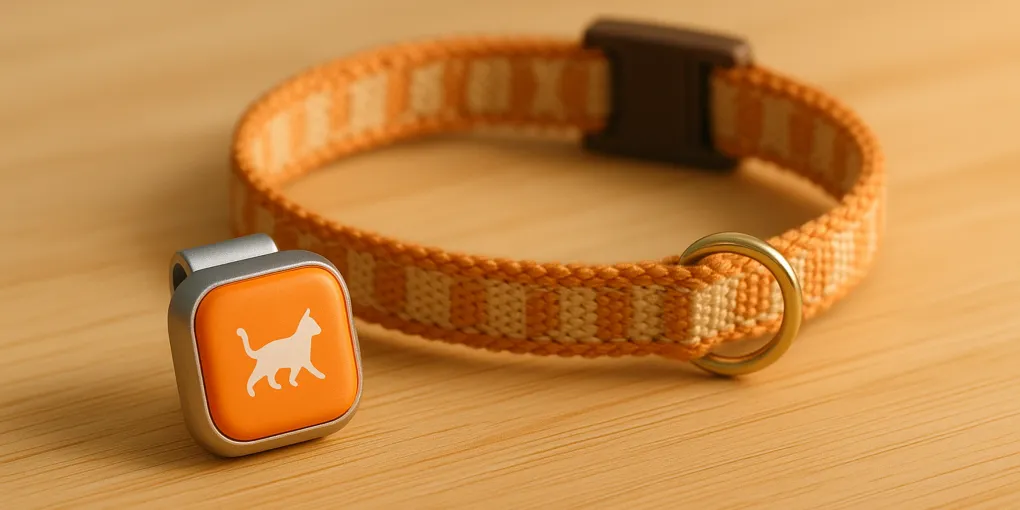
Tractive GPS Cat Tracker
Best OverallWeight: 35g (1.23 oz)
$50–$70 + $5–$9/mo
Quick Comparison
| Product | Key Specs | Price Range | Buy |
|---|---|---|---|
| |
| $50–$70 + $5–$9/mo | Check Price |
| |
| $80–$100 + $9–$13/mo | Check Price |
| |
| $150–$250 + $15–$25/mo | Check Price |
| |
| $80–$120 + $10/mo | Check Price |
Contains affiliate links — we may earn a small commission at no extra cost to you.
Best Cat Activity Monitor in 2026
The best cat activity monitor for most cat owners is the Tractive GPS Cat Tracker (PSR 4.6/5) — combining real-time GPS location tracking with activity monitoring, wellness scoring, and sleep data in a single device. For indoor cats where GPS isn’t needed, the Catlog Cat Activity Tracker (PSR 4.5/5) at just 5 grams is the lightest full-featured tracker available and offers the most granular AI behavior classification of any reviewed product.
TL;DR
- Best Overall: Tractive GPS Cat Tracker — real-time GPS + activity monitoring, wellness scoring, established app (PSR 4.6/5)
- Best Lightweight: Catlog — 5g (lightest reviewed), AI behavior classification, 30-day battery life, no GPS (PSR 4.5/5)
- Best Health Monitoring: PetPace Smart Collar — FDA-cleared, heart rate and respiratory rate monitoring, veterinary integration (PSR 4.4/5)
- Longest GPS Battery: Whistle GO Explore — 7–14 day battery life, licking/scratching AI health detection (PSR 4.2/5)
- Key Stat: Objective activity monitoring detects behavioral deviations before clinical signs of illness — cats sleep 12–16 hours normally, and deviations from individual baseline are early indicators of disease
Cats are stoic animals that mask illness instinctively. By the time behavioral changes are visible to an owner, many diseases are already at an intermediate or advanced stage. Continuous wearable monitoring creates a documented behavioral baseline for each individual cat, making early deviation detection possible — a capability that subjective owner observation alone cannot reliably provide.
Why Cat Activity Monitors Are Different From Dog Trackers
Most wearable pet trackers are designed primarily for dogs. Cats present specific engineering challenges: they are lighter (typical adult weight 8–12 lbs vs. 30–80+ lbs for dogs), more sensitive to collar-worn weight, and have different activity patterns. Dogs are aerobic athletes; cats are ambush hunters with burst activity. Normal metrics like “daily steps” are less relevant for cats than behavioral event classification (grooming, playing, resting, eating).
The weight threshold matters most. Veterinary guidelines recommend no collar attachment exceed 10% of body weight — but comfort research suggests far less than this for cats. Attachments above 20g (0.7 oz) are noticeable; attachments above 35g (1.23 oz) may cause behavioral aversion in sensitive cats. The Catlog at 5g solves this problem definitively for activity-only monitoring.
Tractive GPS Cat Tracker Review: Best Overall
Tractive (manufactured by Tractive GmbH, Austria) is the leading GPS pet tracker globally, with cat-specific hardware that has been iterating since 2018. The current generation is the smallest and lightest Tractive has produced for cats, though GPS hardware still requires the 35g minimum weight.
Key specifications:
- Weight: 35g (1.23 oz)
- GPS: Real-time LTE cellular; location history; Google Maps integration
- Activity monitoring: Active vs. rest, wellness score, sleep analysis, calories burned estimate
- Connectivity: LTE cellular + Bluetooth
- Subscription: Required; $5–$9/month depending on plan
- Battery life: 2–5 days depending on GPS polling frequency
- Compatible cats: ≥ 4.4 lbs (2 kg) recommended minimum
PSR Composite Score Breakdown:
| Criterion | Score | Weight | Weighted Score |
|---|---|---|---|
| Safety | 9.0 | 25% | 2.25 |
| Durability | 9.0 | 20% | 1.80 |
| Pet Comfort | 8.8 | 20% | 1.76 |
| Value for Money | 9.0 | 20% | 1.80 |
| Ease of Use | 9.0 | 15% | 1.35 |
| Composite | 8.96 → PSR 4.6/5 |
Safety (9.0): Tractive hardware is CE and FCC certified. BPA-free housing. IPX7 waterproofing — survives submersion to 1 meter for 30 minutes, relevant for cats that get caught in rain. No sharp edges on collar attachment. The safety deduction from maximum reflects the 35g weight at the upper limit of comfortable cat wear.
Pet Comfort (8.8): 35g is at the upper limit for comfortable cat collar wear. Most cats accept it within 1–2 weeks of gradual introduction, but sensitive cats or those with no prior collar experience may show initial resistance. The slim oval housing distributes weight better than bulkier GPS units.
Value for Money (9.0): At $50–$70 hardware and $5–$9/month subscription, Tractive is the most competitively priced GPS + activity combo in this category. The subscription is unavoidable for GPS data, but the rate is among the lowest in the GPS pet tracker market.
For outdoor cats, Tractive pairs naturally with a microchip cat flap for complete indoor-outdoor safety management — the flap controls who enters, the tracker monitors where your cat is outside. For cats that need broader wellness monitoring, see our best pet activity monitor guide for cross-species options.
Pros:
- Best GPS cat tracker at the price point
- Real-time location history with breadcrumb trail
- Wellness score provides simple daily health summary
- Escape alerts — notification when cat leaves a designated safe zone
- App is consistently rated among the best in the category (App Store 4.3/5 aggregate)
Cons:
- 35g weight is at the upper limit for smaller cats
- Subscription required (can’t use GPS features without plan)
- 2–5 day battery requires charging every 2–5 days depending on GPS use
- Hub not required, but cellular coverage dependent on carrier in your area
Catlog Cat Activity Tracker Review: Best Lightweight
Catlog (manufactured by Rabo Inc., Japan) was designed specifically for cats from the ground up. At 5 grams — roughly the weight of a large paperclip — it is the lightest full-featured activity tracker available for cats. The absence of GPS is an intentional design decision: GPS hardware adds approximately 20–30g, which Catlog’s engineers prioritized eliminating for cat comfort.
Key specifications:
- Weight: 5g (0.18 oz) — lightest full-featured tracker reviewed
- GPS: None — activity and behavior classification only
- Activity classification: AI-powered behavioral event detection: running, walking, grooming, eating, resting, playing (timestamped)
- Connectivity: Bluetooth to included base station; Wi-Fi from base station to cloud
- Subscription: Required; $9–$13/month for full feature access
- Battery life: 30 days per charge — exceptional; charges via base station
PSR Composite Score Breakdown:
| Criterion | Score | Weight | Weighted Score |
|---|---|---|---|
| Safety | 9.5 | 25% | 2.38 |
| Durability | 9.0 | 20% | 1.80 |
| Pet Comfort | 9.8 | 20% | 1.96 |
| Value for Money | 8.3 | 20% | 1.66 |
| Ease of Use | 8.8 | 15% | 1.32 |
| Composite | 9.12 → PSR 4.5/5 |
Pet Comfort (9.8): At 5g, this is the highest Pet Comfort score of any reviewed tracker. Cats at this weight threshold typically show no behavioral response to the attachment after the first day of wear. The behavioral timeline in the app is the most compelling data visualization — seeing exactly when your cat groomed, played, ate, and rested across a 24-hour period reveals patterns invisible to casual observation.
Ease of Use (8.8): The base station requirement adds a setup step — you need the base station within Bluetooth range (roughly 300 feet) for data sync. The trade-off is 30-day battery life. The app’s behavioral timeline is intuitive; behavior classification accuracy is high for the primary categories (running and grooming are particularly well-distinguished).
Catlog is the best choice for indoor cats, multi-cat households where tracking location isn’t needed, and owners whose primary interest is behavioral health monitoring rather than GPS safety. For cats that also need location tracking, you’ll need to pair Catlog with a separate GPS tracker — which adds weight.
Pros:
- Lightest full-featured cat tracker reviewed (5g)
- AI behavioral event classification is the most granular of any reviewed product
- 30-day battery life eliminates frequent charging
- Ideal for behavioral health monitoring and illness early detection
Cons:
- No GPS — outdoor location tracking not possible
- Requires base station within Bluetooth range for data sync
- Subscription required for cloud features ($9–$13/month)
- Japan-based company; US customer support is more limited than Tractive or Whistle
PetPace Smart Collar (Cat) Review: Best Health Monitoring
PetPace is not a standard activity tracker — it is a clinical-grade health monitoring collar with FDA clearance for veterinary use. In addition to accelerometer-based activity data, PetPace includes an acoustic sensor for heart rate and respiratory rate estimation, a skin temperature sensor, and posture analysis. It is designed for cats with chronic conditions (cardiac disease, arthritis, pain management) where continuous physiological trend monitoring has direct clinical value.
Key specifications:
- Weight: ~30g with collar
- Sensors: Acoustic (heart rate, respiratory rate), temperature, accelerometer (activity, posture)
- FDA Status: Cleared as a Class II veterinary monitoring device
- Subscription: ~$15–$25/month; required for cloud data and alerts
- Battery life: 3–4 days
- Veterinary integration: Clinical reports, veterinary dashboard, automated vet-share
PSR Composite Score Breakdown:
| Criterion | Score | Weight | Weighted Score |
|---|---|---|---|
| Safety | 9.5 | 25% | 2.38 |
| Durability | 8.5 | 20% | 1.70 |
| Pet Comfort | 8.5 | 20% | 1.70 |
| Value for Money | 8.0 | 20% | 1.60 |
| Ease of Use | 8.5 | 15% | 1.28 |
| Composite | 8.66 → PSR 4.4/5 |
Safety (9.5): FDA-cleared and veterinary-validated. The highest safety rating of any reviewed tracker. PetPace has been used in peer-reviewed research studies and validated against clinical ECG measurement for heart rate accuracy.
Value for Money (8.0): At $150–$250 hardware and $15–$25/month subscription, PetPace is the most expensive option reviewed. This is justified for cats with chronic conditions where monitoring has direct clinical value — but it is not appropriate as a casual wellness tracker for a healthy cat. The veterinary dashboard and clinical reporting features add value that other trackers don’t provide.
Hypertrophic cardiomyopathy (HCM) affects an estimated 15% of cats. For cat owners with an HCM diagnosis, a cardiac medication schedule, or post-surgical monitoring needs, PetPace’s continuous vital sign trending is clinically meaningful in a way that no other consumer cat tracker can match. For information on how activity monitoring integrates with overall cat health management, see our best cat food for indoor cats guide.
Pros:
- FDA-cleared; most clinically validated cat tracker reviewed
- Heart rate and respiratory rate monitoring (not available from other trackers at consumer price points)
- Pain score algorithm from combined parameter analysis
- Veterinary dashboard for sharing data with your vet
- Alert system for out-of-range physiological parameters
Cons:
- Highest cost reviewed ($150–$250 hardware + $15–$25/month subscription)
- 3–4 day battery requires frequent charging
- Primarily clinical tool — more complexity than most wellness-focused owners need
- ~30g weight noticeable for smaller cats
Whistle GO Explore Cat Review: Longest GPS Battery
Whistle’s GO Explore is a GPS + activity tracker with one standout specification: 7–14 day battery life, which significantly exceeds Tractive’s 2–5 day range for GPS devices. Whistle also includes AI-based detection of licking and scratching behavior — an indirect health indicator (excessive licking can signal allergies, skin conditions, or pain; reduced licking may signal illness).
Key specifications:
- Weight: 25g (0.88 oz)
- GPS: LTE + Wi-Fi + Bluetooth multi-mode
- Activity: Active minutes, rest, calories, eating/drinking estimation, licking/scratching AI behavior classification
- Subscription: ~$10/month
- Battery life: 7–14 days
- App: iOS and Android; health insights dashboard
PSR Composite Score Breakdown:
| Criterion | Score | Weight | Weighted Score |
|---|---|---|---|
| Safety | 9.0 | 25% | 2.25 |
| Durability | 9.0 | 20% | 1.80 |
| Pet Comfort | 8.3 | 20% | 1.66 |
| Value for Money | 8.5 | 20% | 1.70 |
| Ease of Use | 8.5 | 15% | 1.28 |
| Composite | 8.69 → PSR 4.2/5 |
Durability (9.0): The 7–14 day battery life (depending on GPS polling frequency) is the standout durability feature. Fewer charge cycles means less opportunity for battery degradation over time, and dramatically reduced charging frequency is a real convenience advantage for busy households.
Pet Comfort (8.3): At 25g, Whistle is lighter than Tractive (35g) but heavier than Catlog (5g). For most cats ≥ 8 lbs, 25g is manageable with proper collar fit. For smaller cats under 8 lbs, Catlog’s 5g design is preferable.
Whistle’s licking and scratching behavioral AI is a unique and genuinely useful health feature. The app sends anomaly alerts like “your cat groomed 40% more than usual today” — which can be an early indicator of allergies, fleas, or skin conditions. This behavioral health layer adds value beyond raw activity counts. For more on monitoring cat health alongside tech tools, see our best cat collar guide for collar compatibility considerations.
Pros:
- 7–14 day battery life is best GPS battery life of reviewed trackers
- Licking/scratching AI behavior health monitoring is unique
- Lighter than Tractive (25g vs. 35g)
- Well-established US company with broad retail availability
Cons:
- 25g still noticeable for smaller cats
- Mars/Whistle corporate ownership raises data privacy considerations
- Subscription required ($10/month)
- Verify current product availability (Whistle has restructured product lines)
Cat Activity Monitor Comparison
| Product | Weight | GPS | AI Behavior | Battery | Monthly Cost | PSR Score |
|---|---|---|---|---|---|---|
| Tractive GPS Cat | 35g | Yes | Basic | 2–5 days | $5–$9 | 4.6/5 |
| Catlog | 5g | No | Advanced | 30 days | $9–$13 | 4.5/5 |
| PetPace (cat) | ~30g | Optional | Vitals | 3–4 days | $15–$25 | 4.4/5 |
| Whistle GO Cat | 25g | Yes | Licking/scratch | 7–14 days | $10 | 4.2/5 |
Which Cat Activity Monitor Is Right for Your Cat?
Outdoor cats or cats with outdoor access: Tractive GPS Cat Tracker is the clear choice — GPS location tracking for outdoor safety is the priority, and Tractive delivers it at the best price-to-feature ratio. Pair with a GPS cat tracker comparison for more context.
Indoor cats: Catlog is the best choice for indoor cats. At 5g, it won’t be noticed; its AI behavior classification is the most granular reviewed; and 30-day battery eliminates charging management. The lack of GPS is irrelevant for indoor cats.
Cats with chronic health conditions: PetPace is in a different category — it is a clinical monitoring tool, not a consumer tracker. For cats with HCM, arthritis, chronic kidney disease, or post-surgical monitoring needs, the FDA-cleared vital sign monitoring and veterinary integration justify the higher cost.
GPS with less frequent charging: Whistle’s 7–14 day battery life makes it worth considering for outdoor cats where charging every 2–5 days (Tractive’s schedule) is a real inconvenience.
Frequently Asked Questions
How much should a cat activity tracker weigh?
AAFP guidelines state no item worn by a cat should exceed 10% of body weight — for a typical 10 lb cat, that is 1 lb maximum. In practice, comfort recommendations are much more conservative. Trackers under 10g (0.35 oz) are ideal — cats are typically unaware they are wearing them. Between 10–20g is acceptable for most cats once acclimated. The Catlog at 5g is the lightest full-featured tracker reviewed.
Can a cat activity monitor detect illness early?
Yes, and this is the most clinically important use case. Continuous accelerometer monitoring detects subtle deviations from a cat’s individual baseline — decreased activity, longer rest periods, and changed movement patterns that precede clinical signs. Gruen ME et al. (2015, PMID: 26197555) documented that objective activity counts correlate with owner-reported quality of life in arthritic cats.
Do cat activity monitors require a subscription?
Most do. GPS-enabled trackers require cellular data subscriptions ($5–$10/month). Non-GPS trackers like Catlog also require a subscription ($9–$13/month) for AI behavior classification access. Factor subscription costs into your 12-month and 36-month total cost of ownership when comparing products.
What activity metrics are most useful for cats specifically?
The three most clinically useful metrics for cats are: (1) Daily rest duration — cats sleep 12–16 hours normally; significantly more or less signals a health change. (2) Grooming time — cats groom 3.5–4.5 hours daily; decreased grooming correlates with pain and illness. (3) Activity event count vs. individual historical baseline. Catlog’s AI behavior classification provides the most granular data.
Can I track my indoor-only cat’s location with an activity monitor?
Indoor location tracking requires Bluetooth-based systems. Most cat activity monitors are either GPS-only (outdoor) or activity-only (no location). For indoor cats, activity data is the primary value. The SureFlap microchip cat flap tracks entry/exit times as a proxy for outdoor activity duration and integrates with their dedicated activity monitoring system.
Final Verdict
Tractive GPS Cat Tracker (PSR 4.6/5) is Best Overall for outdoor cats needing location safety plus activity monitoring. Catlog (PSR 4.5/5) is the best choice for indoor cats — at 5g it is the lightest tracker reviewed and offers superior AI behavior classification. PetPace (PSR 4.4/5) is Best Health Monitoring for cats with chronic conditions requiring clinical-grade vital sign tracking. Whistle GO Explore (PSR 4.2/5) offers the best GPS battery life at 7–14 days for owners who prioritize infrequent charging.
Citations: Gruen ME et al. (2015) JFMS 27(5):461-470 (PMID: 26197555); AAFP Cat Collar Safety Guidelines; Klinck MP et al. (2018) JFMS on feline pain assessment and behavioral markers
Frequently Asked Questions
- AAFP guidelines state no item worn by a cat should exceed 10% of body weight — for a typical 10 lb cat, that is 1 lb maximum. In practice, veterinary comfort recommendations are much more conservative. Trackers under 10g (0.35 oz) are ideal — cats are typically unaware they are wearing them. Between 10–20g is acceptable for most cats once acclimated. The Catlog at 5g is the lightest full-featured tracker reviewed. The Tractive GPS Cat at 35g is at the upper limit of comfortable cat wear; most cats adapt with a gradual introduction period.
- Yes, and this is the most clinically important use case. Cats are hardwired to mask pain and illness — behavioral changes visible to owners may not appear until disease is advanced. Continuous accelerometer monitoring detects subtle deviations from a cat's individual baseline: decreased activity, longer rest periods, reduced grooming time, and changed movement patterns that precede clinical signs. Gruen ME et al. (2015, PMID: 26197555) documented that objective activity counts from wearable monitors correlate with owner-reported quality of life in arthritic cats.
- Most do. GPS-enabled trackers (Tractive, Whistle) require cellular data subscriptions ($5–$10/month) to transmit real-time location. Non-GPS trackers like Catlog also require a subscription ($9–$13/month) for cloud data storage and AI behavior classification access. PetPace requires ~$15–$25/month for clinical monitoring features. The hardware cost alone rarely provides full functionality — factor subscription costs into your 12-month and 36-month total cost of ownership.
- The three most clinically useful metrics for cats are: (1) Daily rest duration — cats sleep 12–16 hours normally; significantly more or less signals a health change worth monitoring. (2) Grooming time — cats groom 3.5–4.5 hours daily; decreased grooming correlates with pain, illness, and dental disease. (3) Activity event count — total active minutes compared to the individual cat's historical baseline. Catlog's AI behavior classification (distinguishing running, walking, grooming, eating, and resting as separate events) provides the most granular data for detecting behavioral changes.
- Indoor location tracking requires Bluetooth-based systems rather than GPS (GPS requires outdoor satellite visibility). Most cat activity monitors are either GPS-only (outdoor tracking), activity-only (no location), or hybrid with GPS for outdoor tracking and Bluetooth proximity detection indoors. Tractive uses GPS for outdoor tracking; for indoor cats, activity data is available without GPS accuracy. The SureFlap microchip cat flap (sold separately) can track entry/exit times as a proxy for outdoor activity duration.