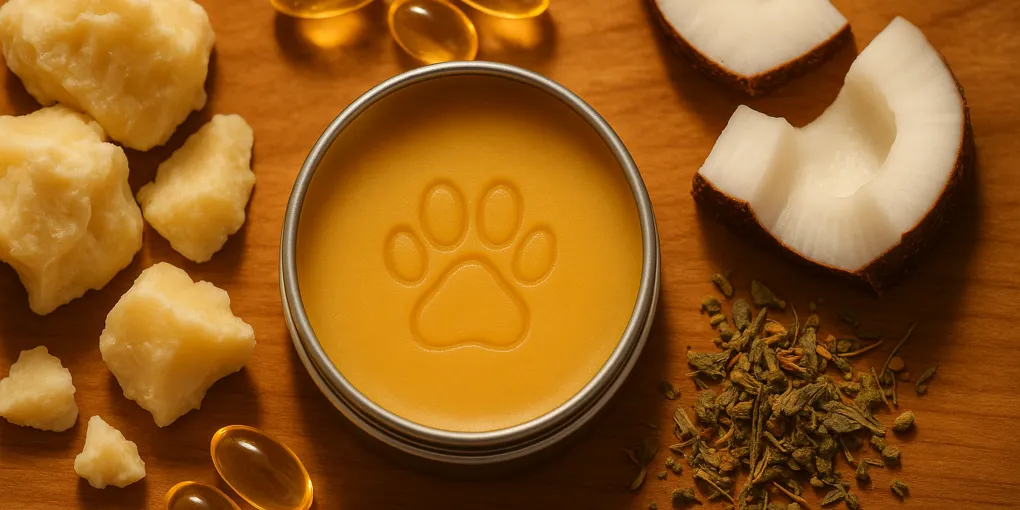
Musher's Secret Paw Protection Wax
Best OverallForm: Wax/balm
$20–$30
Quick Comparison
| Product | Key Specs | Price Range | Buy |
|---|---|---|---|
| |
| $20–$30 | Check Price |
| |
| $15–$25 | Check Price |
| |
| $8–$14 | Check Price |
| |
| $18–$25 | Check Price |
Contains affiliate links — we may earn a small commission at no extra cost to you.
Best Paw Balm for Senior Dogs in 2026
For senior dogs with dry, cracked, or hyperkeratotic paw pads, Musher’s Secret Paw Protection Wax (PSR 8.7/10) is the top-rated option — a blend of white and carnauba waxes with vegetable oil and vitamin E that forms a durable protective coating while moisturizing, with a non-greasy finish that doesn’t create slip hazards for older dogs. Natural Dog Company Paw Soother (PSR 8.3/10) is the best choice for active healing of significantly cracked or damaged pads, with an organic plant-butter base designed for intensive daily treatment.
TL;DR
- Top Pick: Musher’s Secret — wax-based protection, durable barrier, widely trusted (PSR 8.7/10)
- Cracked Pads: Natural Dog Company Paw Soother — intensive healing formula for damaged pads (PSR 8.3/10)
- Best Value: Burt’s Bees Paw & Nose Balm — accessible price, gentle formula (PSR 7.9/10)
- Veterinary Formula: Vets Preferred Paw Rescue — veterinarian-formulated healing cream (PSR 7.6/10)
How We Researched This Article
This article follows PSR’s 5-step evidence-synthesis process. Safety assessment covered ingredient toxicity (ASPCA Animal Poison Control database for all active ingredients, particularly essential oils), CPSC and FDA recall records, and contact dermatitis risk. Evidence for paw pad health reviewed from veterinary dermatology literature. User community synthesis sourced from verified Amazon purchase reviews (combined 20,000+ reviews) and senior dog breed group discussions.
Why Senior Dogs Need Paw Care
Paw pads are complex structures — thick epidermis overlying fat pads and connective tissue that cushion impact, regulate temperature, and provide traction. Senior dogs experience several changes that compromise pad health:
Reduced skin oil production: Sebaceous gland activity declines with age, reducing natural pad moisturization. This produces the dry, rough texture common in senior dogs.
Altered gait mechanics: Dogs with joint pain or rear weakness change how they distribute weight across their pads. Asymmetrical loading causes uneven wear, with overstressed areas developing calluses and cracking.
Hormonal changes: Hypothyroidism — common in dogs 6–10 years old — reduces metabolic support for skin and pad quality. The classic skin changes of hypothyroidism include thickening and roughening of pads.
Environmental cumulative damage: Years of pavement walking, exposure to road salt in winter, and hot surface contact in summer accumulate. Senior dogs have less resilient tissue repair capacity to offset this cumulative damage.
Reduced activity: Less walking means less natural abrasion of hyperkeratotic tissue, allowing it to accumulate and crack.
What Matters in a Senior Dog Paw Balm?
Lick-safe ingredients — non-negotiable: Dogs lick their paws. Any product applied to paws will be partially ingested. All ingredients must be safe for ingestion in the amounts associated with pad-licking. Natural plant butters (shea, cocoa), vegetable waxes, and carrier oils (coconut, olive) are safe. Avoid products with tea tree oil — even small ingested amounts can cause neurological toxicity in dogs.
Wax-based vs. oil-based formulas: Wax-based balms (like Musher’s Secret) form a durable surface coating that provides physical protection against abrasion and environmental exposure — ideal for dogs who walk outdoors frequently. Oil/butter-based balms penetrate the pad more deeply — better for intensive healing of cracked or hyperkeratotic pads.
Non-slip consideration: Greasy paw balms applied before walking on smooth floors create fall risk for senior dogs who already have reduced traction. Wax-based products dry to a non-greasy coating. Oil-based products should be applied before bedtime or after evening walks, allowing absorption overnight before the dog walks again.
Application frequency: Maintenance balms (1–2x/week) versus healing protocols (1–2x/day) require different product formulations. Match the product to the need.
PSR Composite Score Breakdown
| Criterion | Weight | Musher’s Secret | Natural Dog Company | Burt’s Bees | Vets Preferred |
|---|---|---|---|---|---|
| Safety & Ingredients | 25% | 9.0 | 9.0 | 8.5 | 8.5 |
| Durability & Build Quality | 20% | 9.0 | 8.0 | 7.5 | 8.0 |
| Pet Comfort & Acceptance | 20% | 8.5 | 8.5 | 8.0 | 7.5 |
| Value for Money | 20% | 8.5 | 8.0 | 9.5 | 8.0 |
| Ease of Use | 15% | 8.5 | 8.5 | 8.5 | 7.0 |
| PSR Composite | — | 8.7 | 8.3 | 7.9 | 7.6 |
Score notes: Musher’s Secret earns the highest Durability — the wax barrier lasts longer between applications than oil-based formulas. Natural Dog Company scores equally on Safety and slightly better on healing efficacy for damaged pads. Burt’s Bees earns the highest Value score — significantly lower price with good safety profile. Vets Preferred scores lower on Ease of Use due to cream consistency requiring more rubbing time for absorption.
Musher’s Secret Paw Protection Wax: Best Overall
Musher’s Secret was originally developed for sled dog racing teams working in extreme cold and rough terrain — a context where paw protection failure has immediate and serious consequences. The wax blend (primarily white petroleum jelly-free wax and carnauba wax, with refined vegetable oils and vitamin E) forms a semi-permeable barrier that protects against abrasion and moisture extremes while allowing natural perspiration from pads.
What makes it the top pick:
- Wax-based formula dries to a non-greasy coating — does not create slip hazards on indoor floors
- Durable coating lasts 3–5 days under moderate outdoor activity — weekly application typical for most senior dogs
- Simple application: rub between fingertips to warm, apply to pads, massage in — dries in 45 seconds
- Non-toxic wax and oil ingredients are safe for incidental licking
- Over 30 years of use in working dog contexts — extensive real-world track record
Safety: No CPSC recalls. ASPCA reviews confirm ingredient safety for incidental ingestion. No essential oils.
Best for: Senior dogs who walk outdoors regularly (pavement, trails); dogs needing protective coating more than intensive healing; owners wanting a low-maintenance weekly application routine.
View Musher’s Secret on Amazon
Natural Dog Company Paw Soother: Best for Cracked Pads
Natural Dog Company Paw Soother is formulated as a therapeutic healing balm for dogs with significantly cracked, rough, or hyperkeratotic pads. The organic base of shea butter, cocoa butter, rosehip oil, and calendula provides intensive moisture penetration and botanical anti-inflammatory support. Designed for daily healing protocols rather than weekly maintenance.
Why intensive healing formulas are needed for damaged pads:
- Severely cracked pads have compromised barrier function — deeper moisture penetration is needed compared to intact pads
- Calendula extract has documented anti-inflammatory and wound-healing properties in topical applications
- Rosehip oil contains linoleic acid and vitamin A — documented roles in skin barrier repair
- Organic certification means ingredient standards are verified
Application protocol for healing:
- Apply twice daily: once after morning walk, once before bedtime
- Bedtime application allows absorption overnight without floor contact
- After 7–14 days of healing, transition to Musher’s Secret or weekly maintenance
Safety: All certified organic ingredients. Verified non-toxic for incidental ingestion. No essential oils.
Best for: Senior dogs with notably cracked, dry, rough, or hyperkeratotic pads requiring active healing; post-winter recovery for dogs exposed to road salt; dogs with diagnosed pad hyperkeratosis.
View Natural Dog Company Paw Soother on Amazon
Burt’s Bees Paw and Nose Balm: Best Value
Burt’s Bees has leveraged its natural cosmetics heritage for its dog product line, using rosemary oil, olive oil, and lavender oil in a balm formulated for both paw and nose dryness. The price point is significantly lower than other reviewed options — approximately $10–$14 per container — making it accessible for owners on a budget who want a natural ingredient profile.
Where it delivers:
- Natural oil base with reasonable moisturizing properties for mild-to-moderate pad dryness
- Double-function (paw + nose) increases value in one product
- Burt’s Bees brand has consumer quality standards — consistent formulation
Limitations:
- Contains lavender and rosemary essential oils — safe in the concentrations used for most dogs, but owners with dogs known to be essential-oil sensitive should choose Musher’s Secret (no essential oils) instead
- Less durability than wax-based formulas — requires more frequent reapplication
- Less therapeutic for severely damaged pads than Natural Dog Company
Safety: Lavender and rosemary at concentrations used are within safe limits per ASPCA. Monitor for contact sensitivity in dogs with reactive skin. Avoid in dogs known to be essential oil sensitive.
Best for: Budget-conscious owners managing mild pad dryness in senior dogs; owners wanting a dual nose/paw product; dogs without essential oil sensitivities.
View Burt’s Bees Paw and Nose Balm on Amazon
Vets Preferred Advanced Paw Rescue: Best Veterinary Formula
Vets Preferred Advanced Paw Rescue is formulated by veterinarians with aloe vera, vitamin E, olive oil, and coconut oil — targeting healing of cracked and sore pads with a cream consistency that penetrates faster than wax-based products.
Why veterinary formulation adds value:
- Aloe vera has documented soothing and wound-healing properties for skin with compromised barrier function
- Vitamin E serves as both antioxidant and skin repair support
- Veterinarian formulated means the active ingredient combination is reviewed for both safety and efficacy
Trade-offs:
- Cream consistency requires more rubbing into the pad than balm or wax formulas — takes longer to apply to a resistant dog
- No wax component means less durable surface protection than Musher’s Secret
- Higher price than Burt’s Bees without clearly superior results for mild pad dryness
Best for: Senior dogs whose owners prefer a veterinarian-formulated product; dogs with mildly-to-moderately cracked pads needing daily healing support.
View Vets Preferred Paw Rescue on Amazon
Paw Care Routine for Senior Dogs
A complete paw care approach for senior dogs:
- Weekly inspection: Check all pads for cracking, cuts, embedded debris, discoloration, or growths between toes
- Post-walk wipe-down: Remove road salt, chemical deicers, and debris with a damp cloth — these cause chemical irritation if left on pads
- Balm application: Apply protective balm weekly for maintenance; daily for active healing
- Nail trimming: Overgrown nails alter foot placement and increase pad stress — regular grooming includes nail maintenance
- Indoor traction support: Paw balm does not replace non-slip mats on smooth floors for dogs with balance issues
Frequently Asked Questions
Why do senior dogs develop dry, cracked paw pads?
Senior dogs develop paw pad issues from reduced skin oil production, altered gait patterns from arthritis, hormonal changes (hypothyroidism), cumulative environmental damage from pavement and road salt, and reduced activity that allows hyperkeratotic tissue to accumulate. Regular paw balm application addresses the dryness component while veterinary workup addresses underlying causes.
Is paw balm safe if my dog licks it off?
The paw balms reviewed here use food-grade or cosmetic-grade ingredients safe in amounts ingested from pad licking. Musher’s Secret (wax and vegetable oil) and Natural Dog Company (plant butters and oils) are safe for incidental licking. Avoid paw balms with tea tree oil — toxic to dogs even in small ingested amounts.
How often should I apply paw balm to my senior dog?
For maintenance of dry pads: once or twice weekly. For active healing of cracked or hyperkeratotic pads: 1–2 times daily, ideally after walks and before bedtime, allowing absorption overnight before walking on hard surfaces.
What is hyperkeratosis in dog paw pads?
Hyperkeratosis is abnormal thickening and hardening of the keratin layer of paw pads, creating a rough, crusty, or feathered texture. Common in senior dogs, it can be age-related or secondary to hypothyroidism or other diseases. Mild to moderate hyperkeratosis responds to regular paw balm application. Severe or painful cases warrant veterinary assessment.
Can I use petroleum jelly on my senior dog’s paw pads?
Plain petroleum jelly is non-toxic in small amounts and provides short-term moisture barrier function. However, it makes pads slippery — a fall risk for senior dogs — and lacks the nourishing ingredients in purpose-formulated dog paw balms. Purpose-formulated products outperform petroleum jelly for therapeutic use.
Frequently Asked Questions
- Senior dogs develop paw pad issues from multiple age-related changes: reduced skin oil production causes dryness and cracking; circulatory changes reduce paw pad moisture and elasticity; altered gait patterns from arthritis or rear limb weakness cause uneven pad wear; hormonal changes (hypothyroidism is common in senior dogs) affect skin and pad quality; and prolonged contact with hard indoor surfaces causes hyperkeratosis (thickening/cracking). Environmental factors — winter salt, hot pavement, rough terrain — compound these age-related vulnerabilities.
- The paw balms reviewed here use food-grade or cosmetic-grade ingredients that are safe in the small amounts a dog would ingest from licking treated paws. Musher's Secret (primarily wax and vegetable oil) and Natural Dog Company Paw Soother (plant butters and oils) are safe for incidental licking. Avoid any paw balm containing essential oils at therapeutic concentrations — particularly tea tree oil, which is toxic to dogs. Burt's Bees contains lavender and rosemary oils in small concentrations — safe for most dogs in the amounts used, but monitor for sensitivity in dogs with known essential oil reactivity.
- For maintenance/prevention of dry pads: once or twice weekly is typically sufficient. For active healing of cracked or hyperkeratotic pads: apply 1–2 times daily, ideally after walks when the pads are warm and slightly open, allowing absorption before the dog walks on hard surfaces. Natural Dog Company Paw Soother is formulated for this more intensive healing protocol. Once healed, transition to weekly maintenance application.
- Hyperkeratosis is abnormal thickening and hardening of the keratin layer of paw pads, creating a rough, crusty, or 'feathered' texture. It is common in senior dogs and can be primary (idiopathic, age-related) or secondary to diseases like hypothyroidism, zinc deficiency, leishmaniasis, or certain viral infections. Mild to moderate hyperkeratosis responds to regular paw balm application. Severe hyperkeratosis, particularly with painful fissuring, warrants veterinary assessment to rule out underlying disease.
- Plain petroleum jelly is technically non-toxic if licked in small amounts and can provide short-term moisture barrier function. However, it does not absorb well, makes pads slippery (increasing fall risk for senior dogs), and lacks the nourishing ingredients (vitamin E, plant oils) that support long-term pad health. Purpose-formulated dog paw balms outperform petroleum jelly for therapeutic use in senior dogs with chronic pad issues.