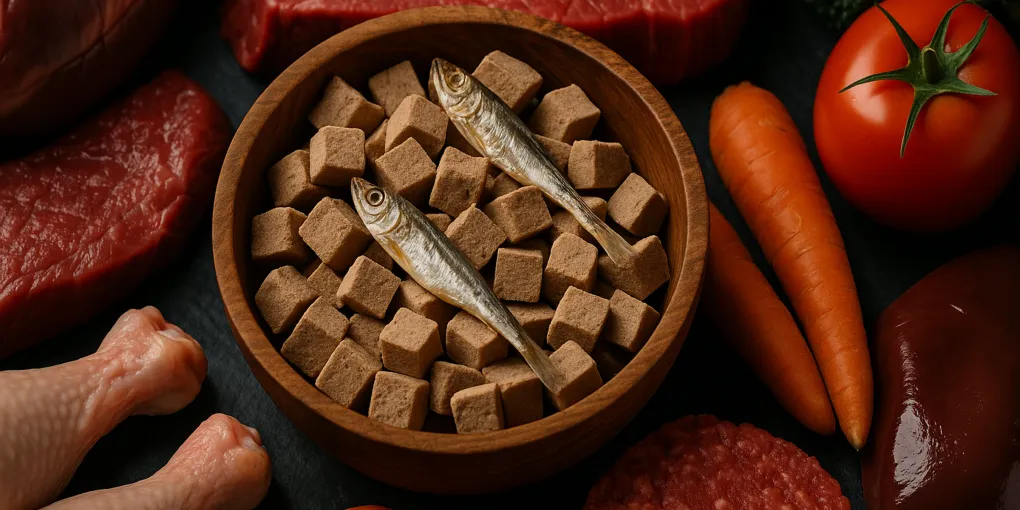
Best Freeze-Dried Dog Treats in 2026: Raw Nutrition Without the Hassle
Buyer's GuideStella & Chewy's Freeze-Dried Raw Tummy Ticklers
Best OverallMain ingredient: Cage-free chicken, chicken liver, chicken heart
$12–$22 (3–8 oz bags)
Quick Comparison
| Product | Key Specs | Price Range | Buy |
|---|---|---|---|
| |
| $12–$22 (3–8 oz bags) | Check Price |
| |
| $14–$24 (4–8 oz bags) | Check Price |
| |
| $10–$18 (1–2 oz bags) | Check Price |
| |
| $11–$19 (4–8 oz bags) | Check Price |
Contains affiliate links — we may earn a small commission at no extra cost to you.
Best Freeze-Dried Dog Treats in 2026
Freeze-dried treats occupy a unique position in the dog treat market: the nutritional density of raw food, the convenience of a shelf-stable snack, and ingredient transparency that rivals the cleanest treats on the market. Stella & Chewy’s Freeze-Dried Raw Tummy Ticklers (PSR 8.7/10) leads our rankings for its 97%+ meat and organ composition, minimal ingredient philosophy, and the widest verified palatability across breeds in the freeze-dried category. Primal Pet Foods Freeze-Dried Duck & Salmon Treats (PSR 8.3/10) earns the protein variety prize for its dual-protein formula rich in omega-3 fatty acids.
TL;DR
- Top Pick: Stella & Chewy’s Tummy Ticklers — 97%+ meat/organs, minimal ingredients, exceptional palatability (PSR 8.7/10)
- Best Protein Variety: Primal Pet Foods Duck & Salmon — dual protein, omega-3 rich, excellent for dogs needing novel protein rotation (PSR 8.3/10)
- Best Single-Ingredient: Vital Essentials Minnows — one ingredient, whole fish, ideal for allergy-prone dogs (PSR 8.0/10)
- Best for Training: Steve’s Real Food Turkey Treats — small pieces, rehydrates soft for dental-sensitive dogs, single protein (PSR 7.5/10)
How We Researched This Article
Ingredient composition and protein sourcing verified from current product labels and manufacturer websites. Recall history sourced from FDA CVM recall database and ASPCA records. Freeze-drying process science referenced from published food science literature. Owner community synthesis from verified Amazon reviews, Chewy verified buyers, and raw-feeding community forums including r/rawpetfood (combined 28,000+ owner reports reviewed). Pathogen testing protocols referenced from manufacturer published quality standards where available. Allergen content cross-referenced against ASPCA Animal Poison Control toxic substance database.
The Science of Freeze-Drying vs. Dehydrating
Understanding what makes freeze-dried treats distinct from their dehydrated counterparts helps clarify why they command a higher price point and why that premium may be warranted.
Freeze-drying (lyophilization): Raw food is first frozen, then placed in a vacuum chamber at very low temperature. In this environment, ice converts directly to water vapor (sublimation) without passing through a liquid phase. The result: approximately 97%+ of moisture is removed while the cellular structure, protein conformation, native enzymes, and heat-sensitive nutrients remain largely intact. The treat retains its raw nutritional profile in a shelf-stable, lightweight form.
Dehydrating: Uses heat (typically 130–165°F) to evaporate moisture from food. More accessible and less expensive to produce, but the heat denatures proteins and destroys heat-sensitive enzymes and B vitamins. Dehydrated treats still offer concentrated protein and are a solid option — see our best dehydrated dog food guide — but they are nutritionally distinct from freeze-dried products.
Why does this matter for treats? For healthy dogs, both formats are nutritionally acceptable as supplemental treats. The distinction matters most for dogs on raw diets (consistency of raw protein structure), dogs with enzyme deficiencies (preserved native enzymes), and allergy-management scenarios (guaranteed single-ingredient transparency without heat-introduced cross-contamination risk).
Raw pathogen risk: Freeze-drying removes moisture but does not sterilize. The raw food retains whatever microbial profile it had at the time of processing. Reputable freeze-dried treat manufacturers (including all four reviewed here) conduct Salmonella and E. coli testing before release. However, the CDC notes that raw pet food carries higher Salmonella contamination risk than cooked pet food — relevant for immunocompromised household members or vulnerable dogs. For dogs that cannot tolerate any raw food risk, lightly cooked or baked treats are safer alternatives.
PSR Composite Score Breakdown
| Criterion | Weight | Stella & Chewy’s Tummy Ticklers | Primal Duck & Salmon | Vital Essentials Minnows | Steve’s Real Food Turkey |
|---|---|---|---|---|---|
| Safety & Ingredients | 25% | 9.2 | 8.8 | 8.8 | 8.0 |
| Durability & Build Quality | 20% | 8.8 | 8.5 | 8.0 | 7.8 |
| Pet Comfort & Acceptance | 20% | 9.5 | 8.5 | 8.0 | 7.5 |
| Value for Money | 20% | 7.5 | 7.5 | 8.5 | 8.0 |
| Ease of Use | 15% | 8.5 | 8.0 | 8.5 | 8.0 |
| PSR Composite | — | 8.7 | 8.3 | 8.0 | 7.5 |
Score notes: Stella & Chewy’s earns the top Pet Comfort score due to the highest owner-reported palatability across breeds in verified reviews — even finicky eaters consistently accept these treats. Vital Essentials scores high on Value due to concentrated nutrition at a reasonable price per calorie, and top marks on Ease of Use for its pure single-ingredient simplicity. Steve’s Real Food scores lower on Pet Comfort due to more variable owner reports on palatability compared to the other three, though it remains a solid training option.
Stella & Chewy’s Freeze-Dried Raw Tummy Ticklers: Best Overall
Stella & Chewy’s has established itself as the benchmark brand in freeze-dried raw pet food — and the Tummy Ticklers treats represent the most concentrated expression of their minimal-ingredient philosophy. With 97%+ meat and organ content from cage-free chicken, these treats offer raw-quality nutrition in a form that requires no refrigeration, no preparation, and no compromise on ingredient transparency.
Key features:
- 97%+ cage-free chicken, chicken liver, and chicken heart — meat and organ only, no fillers
- Freeze-dried raw process preserves protein structure and native enzymes
- No artificial preservatives, colors, or flavors — nothing added to extend shelf life beyond the freeze-drying itself
- Single protein source (chicken) — appropriate for dogs without poultry sensitivity; identifiable allergen profile
- Appropriate piece size for use as training rewards or casual treats; can be broken into smaller pieces for high-frequency training sessions
- Available in multiple protein varieties (chicken, beef, lamb, turkey) for rotation
Safety: Stella & Chewy’s conducts pathogen testing (Salmonella, E. coli) on finished product before release. No active FDA CVM recalls on the Tummy Ticklers line as of 2026. Ingredient sourcing from cage-free poultry operations documented. ASPCA toxic ingredient review shows no red-flag additives.
Who it’s best for: Dogs across all breed sizes who benefit from high-value training rewards, raw diet supplementers looking for treat consistency, and owners who want the simplest possible ingredient list. Also excellent as a food topper crumbled over kibble for dogs that need palatability enhancement. Pairs well with dogs also eating best fresh dog food brands or best raw dog food for a fully raw-aligned routine.
View Stella & Chewy’s Tummy Ticklers on Amazon
Primal Pet Foods Freeze-Dried Duck & Salmon Treats: Best Protein Variety
Primal Pet Foods has long been respected in the raw and freeze-dried pet food community for its commitment to high-quality sourcing and novel protein options. The Duck & Salmon treats offer a dual-protein combination uncommon in the freeze-dried treat category — providing both a novel mammal-adjacent protein (duck) and a cold-water fish protein rich in EPA and DHA omega-3 fatty acids.
What makes it stand out:
- Dual protein: duck and salmon — both are relatively novel proteins, less common in conventional pet food
- Salmon brings EPA and DHA omega-3 fatty acids — relevant for dogs with inflammatory conditions or coat quality concerns
- Minimal ingredient philosophy: duck, salmon, and minimal functional additions
- Novel protein combination is appropriate for dogs on elimination diet rotation for allergy management who have not previously been exposed to duck or salmon
- Primal conducts HACCP-compliant production with pathogen testing protocols
Omega-3 benefit context: EPA and DHA from salmon are the bioavailable forms of omega-3 that support skin barrier function, reduce inflammatory cascade activity, and support joint health. Unlike plant-sourced ALA (flaxseed), EPA and DHA from salmon do not require conversion and are immediately usable by canine physiology. For dogs with skin allergies or joint inflammation, a treat that simultaneously delivers high-value reward and omega-3s is a meaningful bonus.
Who it’s best for: Dogs in protein rotation programs, dogs with mammal protein sensitivities who can tolerate poultry and fish, owners seeking omega-3 enrichment beyond their base diet, and multi-dog households where variety keeps engagement high. Works well alongside best natural dog treats for treat variety.
View Primal Pet Foods Duck & Salmon Treats on Amazon
Vital Essentials Freeze-Dried Minnows: Best Single-Ingredient
Vital Essentials Freeze-Dried Minnows set the gold standard for ingredient simplicity: one ingredient, whole minnows. Nothing else. This purity makes them the definitive choice for dogs on strict elimination diets, owners managing complex food allergy cases, or anyone who wants absolute certainty about what they are feeding.
Why single-ingredient matters:
- Zero cross-contamination risk from other proteins (within the bag — verify facility practices)
- Omega-3 rich: whole minnows are an excellent source of EPA and DHA
- High in naturally occurring minerals: calcium (from bones), phosphorus, and iodine (from whole fish)
- Novel protein for most dogs — few pets have been previously sensitized to minnow protein specifically
- Distinct crunchy texture that many dogs find highly engaging
Allergy management context: For dogs undergoing a strict elimination diet trial, single-ingredient treats are non-negotiable. Any multi-ingredient treat — even one with “simple” ingredients — can introduce variables that confound allergy identification. Minnows represent an ideal treat for dogs on novel-protein elimination diets because minnow protein is rarely a primary ingredient in commercial dog food, meaning most dogs have not previously been exposed to it. Our best dog food for allergies guide covers the full elimination diet protocol context.
Sizing note: Minnow treats are small whole fish — appropriate piece size for medium to large dogs as-is; may be broken or crumbled for small and toy breeds or high-frequency training use. For training-specific treat priorities, also see our best dog treats for training guide.
Who it’s best for: Dogs with documented or suspected food allergies or sensitivities, dogs on elimination diet trials, owners who want maximum ingredient transparency, and dogs that enjoy fish-textured treats.
View Vital Essentials Freeze-Dried Minnows on Amazon
Steve’s Real Food Freeze-Dried Turkey Treats: Best for Training
Steve’s Real Food Freeze-Dried Turkey Treats earn their training designation through a combination of features that matter in high-repetition reward scenarios: appropriate piece size, a single novel protein source (turkey), and the unique characteristic of softening when rehydrated — making them accessible for dogs with dental sensitivities or senior dogs who struggle with hard treats.
Training-specific advantages:
- Small, breakable pieces appropriate for rapid-fire reward sequences in positive reinforcement training
- Turkey as a single protein — a novel protein for many dogs not on poultry-inclusive diets, increasing perceived value as a high-reward treat
- Rehydrates soft when briefly moistened — ideal for dogs with dental disease, missing teeth, or gum sensitivity
- Freeze-dried raw protein provides high-value smell and taste that outcompetes many baked training treats for motivation
- Moderate price point relative to other freeze-dried options makes high-volume training sessions feasible
Rehydration option: Unlike Stella & Chewy’s or Vital Essentials products (which are typically used dry), Steve’s turkey treats can be briefly soaked in a small amount of warm water to create a soft, moist treat. This significantly expands the eligible population — older dogs, dogs recovering from dental procedures, and very small breeds that struggle with firm freeze-dried products.
Who it’s best for: Active training households, dogs with dental sensitivities who need soft treat options, owners who want a single-protein novel treat for high-value reward scenarios, and dogs transitioning from traditional baked training treats to raw-adjacent options. Pairs with our best dog treats for training guide for additional training treat options.
View Steve’s Real Food Turkey Treats on Amazon
Using Freeze-Dried Treats Responsibly
Freeze-dried treats are calorie-dense — the moisture removal that makes them shelf-stable and lightweight concentrates calories significantly. A treat that appears small may contain 10–20 calories, versus 2–5 calories for a comparable-sized baked treat. The 10% rule remains the standard: treats should account for no more than 10% of a dog’s total daily caloric intake. For a 10-pound dog requiring 300 calories per day, that means no more than 30 treat calories — roughly 2–3 whole Tummy Tickler pieces, or a small handful of crumbled minnows.
For dogs with weight management concerns, calorie accounting for treats is especially important. See our best dog food for weight management guide for context on balancing treat calories within a weight management plan.
Frequently Asked Questions
What is the difference between freeze-dried and dehydrated dog treats?
Freeze-drying uses a vacuum chamber at very low temperatures to remove approximately 97%+ of moisture via sublimation, preserving raw protein structure, native enzymes, and heat-sensitive nutrients. Dehydrating uses heat (130–165°F) to evaporate moisture — simpler and less expensive but destroys heat-sensitive nutrients. Freeze-dried treats retain more of the nutritional profile of raw food. See our best dehydrated dog food guide for the heat-dried alternative.
Are freeze-dried dog treats safe?
Freeze-dried raw treats are generally safe for healthy adult dogs when sourced from reputable manufacturers. The freeze-drying process removes moisture but does not sterilize — products carry a theoretical Salmonella or E. coli risk that cooked treats do not. Reputable brands test for pathogens before release. For immunocompromised dogs, puppies, or households with immunocompromised humans, consult your veterinarian before feeding raw or freeze-dried raw products.
Can I use freeze-dried treats as a meal topper?
Yes — freeze-dried raw treats can be crumbled over kibble to enhance palatability and add protein density. When used as a meal topper rather than an occasional treat, monitor caloric intake carefully: freeze-dried products are very calorie-dense (often 3–5x the caloric density of fresh food by weight due to moisture removal).
How should I store freeze-dried dog treats after opening?
Once opened, store in a sealed container in a cool, dry location away from direct sunlight. Most manufacturers recommend consuming within 4–8 weeks of opening. Do not refrigerate opened freeze-dried treats — moisture re-absorption degrades the product. Before opening, most freeze-dried treats have shelf lives of 12–24 months at room temperature.
Are freeze-dried treats good for dogs with food allergies?
Single-ingredient freeze-dried treats are among the best options for dogs with food allergies, because they contain exactly one protein source with no hidden ingredients. Vital Essentials Minnows (one ingredient: minnows) is ideal for dogs with mammal protein allergies. Always verify the treat’s ingredient list and manufacturing facility allergen protocols — some facilities process multiple proteins. See our best dog food for allergies guide for full allergy management context.
Frequently Asked Questions
- Freeze-drying uses a vacuum chamber at very low temperatures (sublimation) to remove approximately 97%+ of moisture from raw food, preserving the protein structure, enzymes, and many heat-sensitive nutrients. Dehydrating uses heat (130–165°F) to evaporate moisture — it is simpler and less expensive but destroys more heat-sensitive enzymes and nutrients. Freeze-dried treats retain more of the nutritional profile of raw food; dehydrated treats are more shelf-stable and typically less expensive. See our guide to best dehydrated dog treats for the heat-dried alternative.
- Freeze-dried raw treats are generally safe for healthy adult dogs when sourced from reputable manufacturers. The freeze-drying process does not sterilize treats — it only removes moisture. Freeze-dried raw products carry a theoretical Salmonella or E. coli risk that cooked treats do not. Reputable brands test for pathogens before release. For immunocompromised dogs, elderly dogs, puppies, or households with immunocompromised humans, consult your veterinarian before feeding raw or freeze-dried raw products.
- Yes — freeze-dried raw treats and food toppers are designed to be crumbled over kibble to enhance palatability and add protein density. When used as a meal topper rather than an occasional treat, monitor caloric intake carefully: freeze-dried products are very calorie-dense (often 3–5x the caloric density of fresh food by weight due to moisture removal). Excessive treat feeding can displace balanced nutrition from the primary diet.
- Once opened, freeze-dried treats should be stored in a sealed container in a cool, dry location away from direct sunlight. Most manufacturers recommend consuming within 4–8 weeks of opening. Do not refrigerate opened freeze-dried treats — moisture re-absorption is the enemy of freeze-dried products. Before opening, most freeze-dried treats have shelf lives of 12–24 months when stored at room temperature.
- Single-ingredient freeze-dried treats are among the best options for dogs with food allergies or sensitivities, because they contain exactly one protein source with no hidden ingredients. Vital Essentials Minnows (one ingredient: minnows) is an excellent choice for dogs with mammal protein allergies. Always verify the treat's ingredient list and manufacturing facility allergen protocols — some facilities process multiple proteins. See our best dog food for allergies guide for full allergy management context.