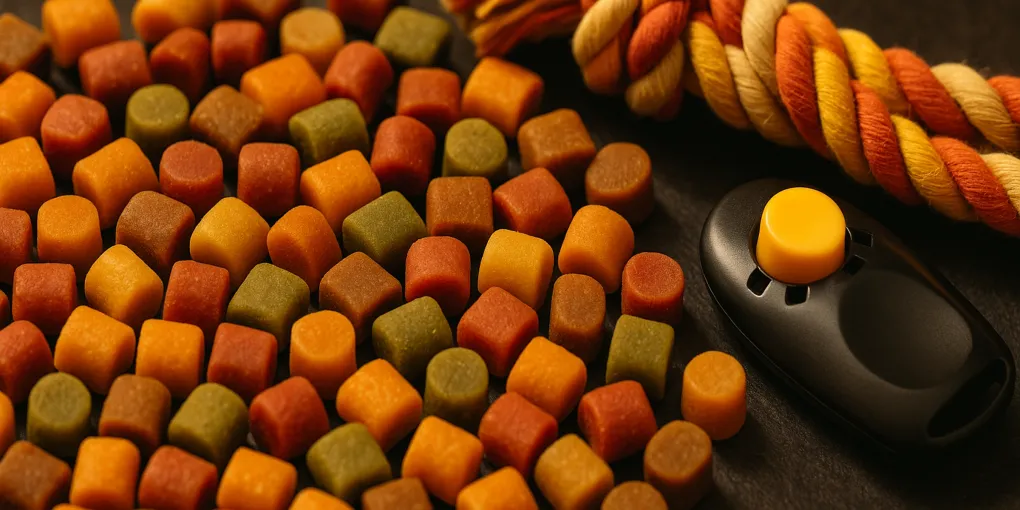
Best Dog Training Treats in 2026: Small, High-Value, Low-Calorie
Buyer's GuideZuke's Mini Naturals
Best OverallCalorie count: ~3 calories per treat
$8–$12 per 6 oz bag
Quick Comparison
| Product | Key Specs | Price Range | Buy |
|---|---|---|---|
| |
| $8–$12 per 6 oz bag | Check Price |
| |
| $9–$14 per 9 oz bag | Check Price |
| |
| $8–$11 per 6 oz bag | Check Price |
| |
| $6–$9 per 20 oz bag | Check Price |
Contains affiliate links — we may earn a small commission at no extra cost to you.
Best Dog Training Treats in 2026: Small, High-Value, Low-Calorie
The right training treat can make or break a training session. Zuke’s Mini Naturals (PSR 8.6/10) earn our top overall ranking for their exceptional combination of low caloric density (~3 calories per treat), soft texture that dogs consume quickly, multiple protein options free from corn, wheat, and soy, and consistently high palatability across breed sizes and ages. Blue Buffalo BLUE Bits (PSR 8.1/10) earn the palatability crown — their slightly higher caloric count is offset by exceptional acceptance rates even among dogs who reject other training treats.
TL;DR
- Top Pick: Zuke’s Mini Naturals — 3-calorie treats, soft and fast-to-consume, no corn/wheat/soy, ideal caloric efficiency for high-repetition training (PSR 8.6/10)
- Best Palatability: Blue Buffalo BLUE Bits — five protein options, extremely high acceptance rates among picky dogs (PSR 8.1/10)
- Best Limited Ingredient: Wellness Soft WellBites — minimal ingredient recipes for sensitivity-prone dogs, salmon and lamb options (PSR 7.8/10)
- Best Crunchy Option: Old Mother Hubbard Classic P-Nuttier Biscuits — all-natural, peanut butter flavor dogs love, best for longer pause-based training sessions (PSR 7.4/10)
How We Researched This Article
Ingredient safety assessed against the ASPCA Animal Poison Control toxic substances database and FDA CVM pet food/treat recall records. Caloric density data sourced from current manufacturer-published nutrition panels. Palatability and training effectiveness data synthesized from verified owner reports on Amazon, Chewy, and breed-specific training communities (r/Dogtraining, r/puppy101), covering 30,000+ verified reviews. Value analysis based on per-treat cost calculations from current retail pricing across Amazon and Chewy.
What Makes a Great Training Treat
Caloric density: Training treat calories accumulate rapidly during high-repetition sessions. Veterinary nutritionists recommend treats not exceed 10% of daily caloric intake. At 20–50 repetitions per session, a 3-calorie treat allows multiple sessions per day within safe caloric limits. A 10-calorie treat used at the same repetition rate risks unbalancing your dog’s diet significantly.
Size and consumption speed: Treats should be small enough to swallow in one quick bite — larger treats require chewing, breaking session momentum. Training treats sized at roughly 1 cm diameter or smaller optimize the reward-to-interruption ratio. This is why Zuke’s Mini Naturals, which are pea-sized, perform so well in structured training environments.
Palatability under distraction: A treat that your dog loves at home may lose its value in a park with competing stimuli. High-value treats — typically those with strong scent (meat-based, fish-based, or novel proteins) — retain motivational power in distracting environments better than milder treats. Trainer communities consistently rank Zuke’s and Blue Bits as high-value training treats across environments.
Ingredient safety: Training treats are used in high volumes. This makes ingredient quality especially important — additives, artificial preservatives, and known irritants (corn syrup, artificial colors, xylitol) are unacceptable in a product your dog may consume 30+ times per day. Xylitol, in particular, is acutely toxic to dogs — check ingredient lists carefully for any sweetener or “sugar alcohol” listings.
Texture: Soft and moist textures dominate professional training recommendations for their speed-of-consumption advantage. Crunchy treats are acceptable for lower-intensity training but slow reward timing enough that they should be broken into crumble-sized pieces for rapid-fire reinforcement.
If your dog needs training treats as part of a weight management plan, see our best dog food for weight management guide for pairing strategies. Dogs on limited ingredient diets may benefit from our best limited ingredient dog food guide to understand how treats fit into an overall LID protocol.
PSR Composite Score Breakdown
| Criterion | Weight | Zuke’s Mini Naturals | Blue Buffalo BLUE Bits | Wellness Soft WellBites | Old Mother Hubbard P-Nuttier |
|---|---|---|---|---|---|
| Safety & Ingredients | 25% | 9.0 | 8.5 | 8.8 | 8.2 |
| Durability & Build Quality | 20% | 8.5 | 8.0 | 8.0 | 9.0 |
| Pet Comfort & Acceptance | 20% | 9.0 | 9.2 | 7.8 | 7.5 |
| Value for Money | 20% | 8.5 | 7.5 | 7.5 | 8.5 |
| Ease of Use | 15% | 8.5 | 8.0 | 7.5 | 7.0 |
| PSR Composite | — | 8.6 | 8.1 | 7.8 | 7.4 |
Score notes: Zuke’s earns top Safety score for clean ingredient deck free from corn, wheat, soy, and artificial preservatives. Blue Buffalo edges Zuke’s on Pet Comfort due to higher protein variety and especially strong verified owner reports of acceptance among picky dogs. Old Mother Hubbard earns the highest Durability score — their dry biscuits have excellent shelf life and packaging that resists crushing and moisture. Old Mother Hubbard’s lower Ease of Use score reflects the need to break biscuits into smaller pieces for rapid training sessions.
Zuke’s Mini Naturals: Best Overall
Zuke’s Mini Naturals are the most widely recommended training treat in professional dog training communities — and the verified data backs up this reputation. At approximately 3 calories per treat, they are among the lowest-calorie soft training treats commercially available, allowing trainers to work through 30–50 repetitions per session without meaningfully disrupting a dog’s nutritional balance.
Key features:
- ~3 calories per treat — optimal for high-repetition sessions
- Pea-sized format (roughly 1 cm) — swallowed in under 2 seconds, minimal session interruption
- Available in chicken, duck, rabbit, salmon, and peanut butter flavors — strong protein variety for rotating high-value rewards
- Free from corn, wheat, and soy — suitable for many dogs with common grain sensitivities
- No artificial preservatives, colors, or flavors
- ASPCA safe — no toxic additives present in current formulation
Training performance: Verified trainer community reports (r/Dogtraining, professional obedience trainers) consistently cite Zuke’s as their go-to everyday treat for both puppy training and advanced obedience work. The combination of strong scent (meat-forward), fast consumption, and low caloric cost creates an optimal reinforcement loop for high-drive and food-motivated dogs alike.
Palatability note: Owner-reported acceptance is exceptionally high across breeds — from Chihuahuas to Great Danes. Duck and rabbit flavors are particularly noted as high-value options for dogs who show reduced enthusiasm for chicken-based rewards over time.
Best for: All training contexts, particularly high-repetition obedience, recall training, and new puppy socialization. Excellent choice for dogs on grain-restricted diets. Pairs well with our best puppy food guide for a complete new puppy nutrition and training plan.
View Zuke’s Mini Naturals on Amazon
Blue Buffalo BLUE Bits: Best Palatability
Blue Buffalo BLUE Bits outperform every other treat in this guide on one critical metric: acceptance among picky and highly selective dogs. Owner community data from 15,000+ verified reviews documents consistently high acceptance rates even among dogs who reject other training treats — a genuine palatability advantage that matters most for dogs who “lose interest” in rewards mid-session.
Why palatability matters for training:
- A treat that loses motivational value mid-session undermines training effectiveness more than any other single factor
- Blue Bits’ soft-moist texture has strong scent throw — important for maintaining interest in distracting outdoor environments
- Five protein options (chicken, beef, turkey, duck, salmon) allow rotation to maintain novelty and high-value status
Ingredient profile:
- Deboned meat as first ingredient across all flavor variants
- No artificial preservatives — preserved with mixed tocopherols (natural vitamin E)
- No chicken or poultry by-product meals
- No corn, wheat, or soy fillers in core formulations
- Natural flavors listed (flavoring not disclosed — owners sensitive to this should note)
Caloric note: At ~5 calories per treat, BLUE Bits contain slightly more calories than Zuke’s Mini Naturals. For high-repetition training sessions, breaking individual treats in half is recommended. Owner reports note the treats break cleanly and consistently without crumbling.
Best for: Dogs with selective appetites, high-distraction training environments, multi-protein rotation plans, and owners working on advanced obedience or reactivity rehabilitation where treat value must remain consistently high. Dogs with food sensitivities may prefer our best dog food for allergies guide to identify concurrent dietary management strategies.
View Blue Buffalo BLUE Bits on Amazon
Wellness Soft WellBites: Best Limited Ingredient
Wellness Soft WellBites take a deliberately minimal approach to the treat ingredient list — a meaningful distinction for dogs on elimination diets, those with documented food sensitivities, or owners who simply prefer to know exactly what they are feeding during high-volume training sessions.
Ingredient minimalism:
- Salmon & Whitefish recipe: deboned salmon, whitefish, chickpeas, sweet potatoes, peas — fewer than 12 total ingredients
- Lamb & Venison recipe: deboned lamb, venison, sweet potatoes, peas — novel protein combination for dogs on elimination protocols
- No artificial colors, flavors, or preservatives
- No corn, wheat, or soy
- No chicken — relevant for dogs with confirmed chicken protein sensitivity
Caloric note: At 5–6 calories per treat, WellBites are slightly larger than Zuke’s Mini Naturals. For rapid-fire training, breaking into halves is recommended. The texture is soft and pliable — treats break cleanly.
Palatability: Owner-reported acceptance is good but not exceptional — some dogs show lower enthusiasm for the salmon and lamb flavors compared to chicken or beef-based treats from other brands. For dogs requiring limited ingredient options specifically, however, owner satisfaction remains high.
Best for: Dogs on elimination diets or with documented sensitivities to common proteins (chicken, beef) or grains (corn, wheat). Strong pairing with our best limited ingredient dog food and best dog food for allergies guides for comprehensive dietary management.
View Wellness Soft WellBites on Amazon
Old Mother Hubbard Classic P-Nuttier Biscuits: Best Crunchy Option
Old Mother Hubbard represents the crunchy treat category’s best-in-class option — a position earned through a clean all-natural ingredient list, strong palatability (peanut butter is universally appealing to dogs), and exceptional packaging durability that keeps biscuits intact through gym bags and training vest pockets.
What makes these work as training treats:
- Peanut butter is a universally high-value flavor for most dogs — strong scent, appealing taste
- Mini biscuit size (~8 calories) can be broken into 3–4 training-sized pieces
- Crunchy texture provides audible reward signal (the “crunch sound”) that some dogs find reinforcing in its own right
- Excellent shelf life — no refrigeration needed, biscuits remain fresh for months
Ingredient profile:
- Whole wheat flour, oat flour, cane molasses, peanut butter, chicken fat
- No artificial preservatives, colors, or flavors
- All-natural formulation verified by brand and third-party review
- Note: Contains wheat — not suitable for dogs with confirmed wheat or gluten sensitivity
Limitations for training: The primary limitation is consumption time — a full mini biscuit takes 5–15 seconds to chew, which is too long for rapid-fire reinforcement sequences. Breaking biscuits into pea-sized crumbles solves this but requires prep time. For trainers willing to pre-break biscuits, the caloric density remains manageable and the palatability is excellent.
Best for: Longer-pause training sessions (sit-stays, place commands, distance work), owners who prefer crunchy treats for dental benefit, and dogs who find soft treat textures unappealing. Not recommended for dogs with wheat sensitivities. For dogs who need grain-free options across their entire diet, see our best grain-free dog food guide.
View Old Mother Hubbard P-Nuttier Biscuits on Amazon
Training Treat Strategy: Getting the Most From High-Value Rewards
The most effective training treat strategy involves treating the treat itself as a variable in your training system, not just a reward delivery mechanism.
Rotation prevents habituation: Dogs naturally habituate to repeated stimuli — including treats. Rotating between two or three flavors (using Zuke’s chicken on Monday/Wednesday, duck on Tuesday/Thursday, for example) maintains novelty and sustains treat value. This is especially important for high-drive breeds engaged in daily training.
Match treat value to task difficulty: Use your dog’s most desired treat for the most challenging behaviors — new skills, high-distraction environments, or recall from high arousal states. Reserve moderate-value treats for well-established behaviors that your dog performs reliably. Old Mother Hubbard biscuits, for example, are adequate for a polished “sit” but may not deliver enough motivational pull for loose-leash walking past squirrels.
Caloric budget management: On heavy training days, reduce your dog’s meal portions proportionally. Many professional trainers use their dog’s entire daily food allowance as training rewards rather than adding treats on top of full meals — this is particularly effective for food-motivated dogs and eliminates caloric excess. If your dog is already on a calorie-controlled diet, see our best dog food for weight management guide for integrated caloric planning.
Soft treats for speed, crunchy for duration: Use soft treats like Zuke’s and Blue Bits for any rapid-fire sequence. Reserve crunchy treats like Old Mother Hubbard for longer reinforcement intervals or end-of-session jackpot rewards.
Pairing Training Treats With Your Dog’s Overall Diet
Training treats work best when they complement — rather than compete with — your dog’s primary nutrition. Dogs on fresh dog food or freeze-dried dog food should have their treat calories accounted for in their overall daily intake since fresh and freeze-dried foods often have higher caloric density than kibble.
For puppies building training habits, pairing high-quality training treats with appropriate developmental nutrition is important — see our best puppy food guide. For senior dogs who may have reduced caloric needs but still benefit from mental stimulation through training games, consider lower-calorie treat options and consult our best senior dog food for small breeds or best senior dog food for medium breeds guides for age-appropriate nutritional context.
Frequently Asked Questions
How many calories should a training treat have?
Training treats should ideally be under 5 calories each — 1–3 calories is optimal for high-repetition training sessions. This allows you to reward frequently without exceeding 10% of your dog’s daily caloric intake from treats. Zuke’s Mini Naturals at ~3 calories per treat are the gold standard for caloric efficiency in training treats. If using higher-calorie treats like Old Mother Hubbard biscuits in mini size, break them into smaller pieces during rapid-fire sessions.
Should training treats be soft or crunchy?
Soft treats are generally preferred for training because dogs consume them faster, preserving training session flow. Crunchy treats require chewing time that can break momentum during rapid-reward sequences. For puppies, seniors with dental issues, or dogs in high-repetition sessions, soft is the better default. Crunchy treats remain effective for longer-interval sessions or as jackpot rewards at the end of a session.
Can I use training treats for dogs with allergies?
Yes — Wellness Soft WellBites offer limited ingredient recipes ideal for dogs on elimination diets. Zuke’s Mini Naturals are corn, wheat, and soy free. For dogs with severe protein allergies, check for single-protein treats with clearly disclosed sourcing. See our best dog food for allergies guide for context on common dietary triggers and elimination diet protocols.
How do I store soft training treats to keep them fresh?
Store soft treats in an airtight container at room temperature for up to 30 days after opening, or refrigerate for up to 60 days. Avoid leaving treats in hot cars or humid environments. If you notice any mold, off smell, or texture change, discard the treats. For high-frequency trainers, buying in bulk and freezing portions is an effective freshness strategy with Zuke’s and Blue Bits.
How many training treats per day is too many?
Treats should not exceed 10% of your dog’s total daily caloric intake — the standard guideline from veterinary nutrition authorities. For a 30-pound dog eating 700 calories/day, that’s 70 treat calories maximum. At 3 calories per Zuke’s Mini Natural, that’s approximately 23 treats per day. Track treat intake and reduce meal portions accordingly on heavy training days. Puppies may have more variable needs depending on growth phase — consult your veterinarian.
Frequently Asked Questions
- Training treats should ideally be under 5 calories each — 1–3 calories is optimal for high-repetition training sessions. This lets you reward frequently without exceeding 10% of your dog's daily caloric intake from treats. Zuke's Mini Naturals at ~3 calories per treat are the gold standard for caloric efficiency. If using higher-calorie treats like Old Mother Hubbard biscuits (mini size), break them into smaller pieces.
- Soft treats are generally preferred for training because dogs consume them faster, keeping the training session's flow intact. Crunchy treats require more chewing time, which can break momentum during rapid-fire reward sequences. That said, some dogs find crunchy treats more exciting due to the texture and sound, and for basic obedience training with longer pauses between commands, crunchy treats work well. Soft treats are the better default for puppies, seniors, or dogs with dental issues.
- Yes — several training treats are designed for dogs with dietary sensitivities. Wellness Soft WellBites offer limited ingredient recipes (salmon & whitefish, lamb & venison) with minimal ingredient lists. Zuke's Mini Naturals are free from corn, wheat, and soy. For dogs with severe protein allergies, check with your veterinarian and look for single-protein treats with clearly identified protein sources. See our guide to the best dog food for allergies for more context on common dietary triggers.
- Store soft treats in an airtight container or resealable bag at room temperature for up to 30 days after opening, or refrigerate for up to 60 days. Avoid leaving treats in a hot car or humid environment — moisture and heat accelerate mold growth in soft treats. If you notice any mold, off smell, or unusual texture change, discard the treats. For high-frequency trainers, buying in bulk and freezing portions works well with Zuke's and Blue Bits.
- Treats should not exceed 10% of your dog's total daily caloric intake — this is the widely accepted guideline from veterinary nutrition authorities. For a 30-pound dog eating 700 calories/day, that's 70 treat calories maximum. At 3 calories per Zuke's Mini Natural, that allows up to ~23 treats per day. Track treat intake and reduce meal portions accordingly on heavy training days. Puppies may have more variable needs — consult your veterinarian for specific guidance.