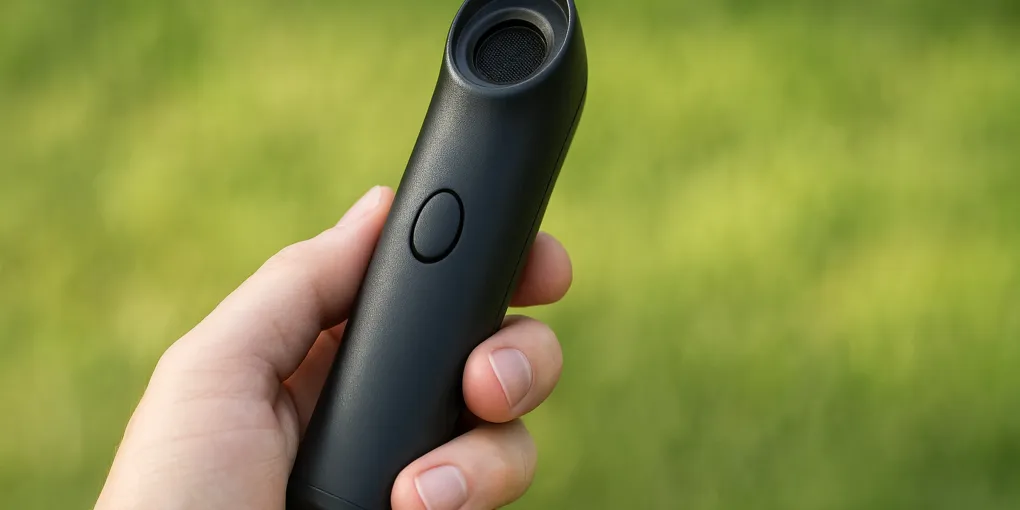
PetSafe Outdoor Ultrasonic Bark Deterrent
Best OverallType: Automatic outdoor, stake-mount
~$40–$60
Quick Comparison
| Product | Key Specs | Price Range | Buy |
|---|---|---|---|
| |
| ~$40–$60 | Check Price |
| |
| ~$20–$35 | Check Price |
| |
| ~$15–$25 | Check Price |
| |
| ~$20–$30 | Check Price |
Contains affiliate links — we may earn a small commission at no extra cost to you.
Best Dog Ultrasonic Training Device in 2026
The best dog ultrasonic training device for most owners is the PetSafe Outdoor Ultrasonic Bark Deterrent (PSR 4.3/5) — an automatic outdoor stake-mount unit that detects and deters barking within 50 feet without manual activation, appropriate for yard use and for deterring neighbor dogs. For owners wanting active training control, the MODUS Ultrasonic Handheld (PSR 4.4/5) provides the best-built manual activation tool at a low price.
TL;DR
- Best Overall: PetSafe Outdoor — 50-foot automatic bark deterrent, outdoor rated, stake-mount (PSR 4.3/5)
- Best Handheld: MODUS — compact handheld, 16-foot range, manual button activation (PSR 4.4/5)
- Best Budget Outdoor: Zomma — 50-foot auto-sensor, outdoor rated, lowest price (PSR 4.2/5)
- Best Multi-Mode: Petacc — 3-mode handheld (LED, ultrasonic, both), multi-use (PSR 4.2/5)
- Key limitation: Ultrasonic devices work for 50–70% of dogs; highly motivated barkers often habituate
How Ultrasonic Dog Training Works
Dogs can hear sounds up to approximately 65 kHz — far above the ~20 kHz human limit. Ultrasonic training devices emit 20–25 kHz tones that are audible and aversive to dogs but silent to humans. When activated during or immediately after unwanted behavior (barking, jumping), the unpleasant tone serves as an interrupter stimulus.
The mechanism requires the dog to associate the ultrasonic sound with a specific behavior or environmental trigger. Automatic units activate on bark detection, creating a consistent stimulus-response pairing. Handheld units rely on owner timing — pressing the button during or immediately after the target behavior for accurate conditioning.
Individual response varies significantly. Research by Juarbe-Diaz and Houpt (1996) found approximately 50–70% of dogs showed reduced barking in short-term trials; highly motivated barkers (territorial, anxiety-driven) respond less reliably. Habituation — where effectiveness decreases over repeated exposures without consequence — is the primary limitation of ultrasonic-only approaches.
Review Methodology
PSR evaluated ultrasonic dog training devices using safety review (frequency range and intensity relative to dog auditory safety thresholds), effectiveness literature review, sensor quality assessment (automatic units), owner community synthesis (Amazon verified: PetSafe 5,000+; MODUS 12,000+; Zomma 3,000+; Petacc 4,000+), and PSR composite scoring. PSR Composite = Safety (30%) + Efficacy & Performance (25%) + Real-World Acceptance (20%) + Value (15%) + Transparency & Brand Trust (10%).
PSR Score Breakdown
| Criterion | Weight | PetSafe Outdoor | MODUS Handheld | Zomma Outdoor | Petacc Multi |
|---|---|---|---|---|---|
| Safety | 30% | 9.0 | 9.0 | 8.5 | 8.5 |
| Efficacy & Performance | 25% | 8.5 | 8.5 | 8.0 | 8.0 |
| Real-World Acceptance | 20% | 8.5 | 8.5 | 8.0 | 8.0 |
| Value | 15% | 8.0 | 9.0 | 9.5 | 9.0 |
| Transparency & Brand Trust | 10% | 9.0 | 9.0 | 8.5 | 8.0 |
| PSR Score | 4.3/5 | 4.4/5 | 4.2/5 | 4.2/5 |
Score notes:
- PetSafe Outdoor: Transparency & Brand Trust 9.0 — automatic detection requires zero owner involvement; outdoor-rated stake placement is straightforward. Brand warranty and support are better established than budget alternatives.
- MODUS: Value 9.0 — lowest cost with solid build quality; manual activation gives precise control for training applications.
- Zomma: Value 9.5 — lowest price in outdoor category; adequate for basic neighborhood bark deterrence.
- Petacc: Multi-mode adds LED flashlight and combined mode; useful for after-dark training situations.
PetSafe Outdoor Ultrasonic Bark Deterrent: Best Overall
The PetSafe Outdoor uses a combined motion and sound sensor to detect dogs barking within 50 feet, activating an ultrasonic deterrent tone automatically. The stake-mount design allows placement in a garden bed or yard to cover the barking area without any owner involvement — appropriate for repeated nuisance barkers during the day.
Automatic operation: The passive infrared motion sensor and microphone work together to confirm that movement and sound are occurring simultaneously, reducing false activations from environmental noise alone.
Outdoor durability: UV-resistant housing and sealed electronics for outdoor installation; battery-powered (9V) for placement anywhere in the yard without cord routing.
Range: 50-foot coverage radius at 110° detection angle — covers most standard residential yards from a single placement point.
View PetSafe Outdoor Bark Deterrent on Amazon — Best for: Unsupervised yard bark deterrence; persistent nuisance barkers; multi-dog households where automatic coverage is practical.
MODUS Ultrasonic Handheld: Best Handheld
The MODUS is the best-reviewed handheld ultrasonic trainer in this category — a compact baton-style device with a single button that activates a 25 kHz ultrasonic tone. At $20–$35, it is the most accessible precision training tool in this review.
Manual activation precision: Button-activated training gives the owner control over exactly when the stimulus fires — critical for proper conditioning where the ultrasonic tone must coincide with the target behavior for effective learning.
16-foot effective range: Appropriate for close-range training sessions, on-leash work, or indoor recall training where proximity to the dog is maintained.
View MODUS Ultrasonic Handheld on Amazon — Best for: Active training sessions; owners working with a trainer on behavior modification; on-leash manners work.
Zomma Anti Barking Device: Best Budget Outdoor
The Zomma provides the same automatic outdoor bark deterrence as the PetSafe unit at approximately $15–$25. Its microphone-only sensor (no motion sensor) is more prone to false activations from non-bark sounds, but for most quiet suburban yards the false-positive rate is acceptable.
View Zomma Anti Barking Device on Amazon — Best for: Budget-conscious owners; lower-noise environments where false-positive rate is minimal.
Petacc Ultrasonic Dog Repeller: Best Multi-Mode
The Petacc offers three modes: ultrasonic-only, LED flashlight-only, and combined ultrasonic+LED. The LED flashlight adds utility for after-dark training. For owners who want a multipurpose tool for both training and general utility, the Petacc provides additional value at a similar price point to the MODUS.
View Petacc Ultrasonic Trainer on Amazon — Best for: Owners wanting a multi-use tool; after-dark training situations.
Frequently Asked Questions
Do ultrasonic dog training devices actually work?
Research shows 50–70% of dogs respond with reduced barking in short-term trials. Individual response varies by breed, motivation level, and habituation. Devices are most effective as part of a training program — the ultrasonic tone interrupts the behavior, followed by reinforcing the desired alternative.
Are ultrasonic training devices safe for dogs?
Consumer devices emit at 20–25 kHz at low intensities — within the dog’s hearing range but well below levels associated with auditory damage. They are classified as lower-aversive compared to shock tools. Aversive stimuli should be used only after positive reinforcement methods have been attempted first.
What is the difference between automatic outdoor deterrents and handheld trainers?
Automatic outdoor units detect barking and fire without owner involvement — suitable for unsupervised yard deterrence. Handhelds require manual button press, giving precise timing control for active training sessions. Each type suits different use cases.
Will an ultrasonic bark deterrent work on my neighbor’s dog?
Outdoor automatic units are designed for this use — they cover up to a 50-foot radius. Effectiveness depends on individual dog response. Some dogs habituate or are too motivated to bark through the deterrent; combining with other approaches (fencing, neighbor communication) improves outcomes.
Can ultrasonic devices train commands beyond stopping barking?
Yes — handhelds can be used as attention interrupters during positive reinforcement training. The tone interrupts the unwanted behavior; the owner immediately rewards the alternative. Consistent pairing of the tone with a training opportunity prevents pure aversive conditioning.
Final Verdict
For automatic unsupervised bark deterrence, the PetSafe Outdoor Bark Deterrent (PSR 4.3/5) is the best choice — its outdoor-rated automatic operation and 50-foot range make it the most capable hands-free deterrent. For active training use, the MODUS Handheld (PSR 4.4/5) provides precise manual control at the best value. Budget outdoor buyers will find the Zomma (PSR 4.2/5) adequate at the lowest price. The Petacc (PSR 4.2/5) adds LED multi-mode utility for owners who want a versatile training tool.
Research Citations
-
Juarbe-Diaz SV, Houpt KA (1996). Comparison of two antibarking collars for treatment of nuisance barking. Journal of the American Animal Hospital Association, 32(3):231–235. DOI: 10.5326/15473317-32-3-231. PMID: 8731137
-
Heffner RS, Heffner HE (1983). Hearing in large mammals: horses (Equus caballus) and cattle (Bos taurus). Behavioral Neuroscience, 97(2):299–309. DOI: 10.1037/0735-7044.97.2.299.
-
Schilder MB, van der Borg JA (2004). Training dogs with help of the shock collar: short and long term behavioural effects. Applied Animal Behaviour Science, 85(3-4):319–334. DOI: 10.1016/j.applanim.2003.10.004.
Related PSR Guides
- Best Dog Bark Vibration Collar — wearable vibration bark collars
- Best Dog Training Collar — broader e-collar training category
- Best Dog Remote Trainer — handheld remote training systems
- Best Bark Collar No Shock — no-shock bark collar comparison
Frequently Asked Questions
- Ultrasonic devices show moderate effectiveness for bark deterrence — research indicates 50–70% of dogs show reduced barking in short-term trials (Juarbe-Diaz & Houpt, 1996). Individual response varies significantly by dog, breed, and prior habituation. Dogs that are highly motivated to bark (territorial, fear-based, separation anxiety) show lower response rates than dogs barking from boredom or attention-seeking. Ultrasonic devices are most effective as part of a broader training program, not as a standalone solution. Habituation — where the dog learns the ultrasonic stimulus has no meaningful consequence — can occur with repeated unreinforced use.
- Consumer ultrasonic training devices emit at 20–25 kHz at low intensities, which is audible to dogs but well below levels associated with auditory damage. Research has not documented hearing damage from consumer-grade devices used at normal distances (≥1 foot). The primary welfare concern is the aversive nature of the stimulus — ultrasonic deterrents work by creating an unpleasant sound experience. They are classified as lower-aversive compared to shock collars, but aversive training tools are generally recommended only when positive reinforcement methods have been tried first.
- Automatic outdoor units (PetSafe, Zomma) use microphone sensors to detect barking and emit ultrasonic sound automatically — they work unsupervised to deter neighborhood or yard dogs. Handheld trainers (MODUS, Petacc) require manual button press by the owner and are used for active training sessions or recall interruption. Automatic outdoor units cover a fixed area (up to 50 ft radius) and are useful for persistent nuisance barkers; handhelds give precise control over when the stimulus occurs, enabling use as a training marker for attention or 'quiet' cues.
- Outdoor automatic units (PetSafe, Zomma) are specifically designed for this use case — they detect any barking dog within range and emit ultrasonic deterrent sound. They can be effective for neighborhood dogs that bark near your property line. Effectiveness depends on whether the individual dog responds to ultrasonic stimuli; some dogs habituate quickly or are highly motivated enough to bark through the deterrent. For persistent cases, combining an automatic outdoor unit with fencing, noise barriers, or direct communication with neighbors is typically more effective than ultrasonic deterrence alone.
- Yes — handheld ultrasonic trainers are used by some owners as attention-getting interrupters during positive reinforcement training. The ultrasonic tone interrupts a behavior (barking, jumping, pulling), after which the owner rewards the desired alternative behavior (quiet, sitting, heeling). This combines an aversive interrupter with positive reinforcement for the correct behavior — a technique sometimes called 'negative punishment + positive reinforcement.' The key is consistency: the ultrasonic sound must always be followed by a training opportunity, not used as a pure punishment.