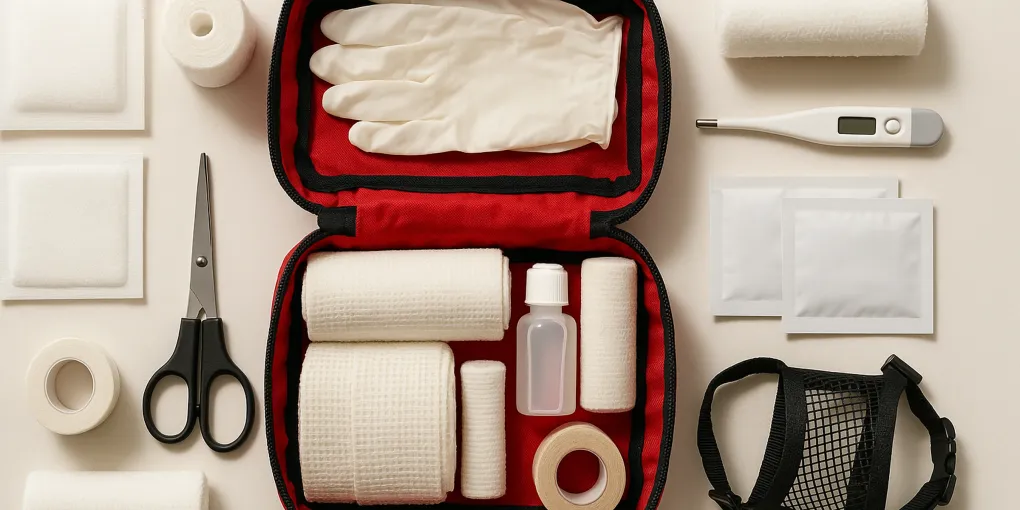
Adventure Medical Kits Workin' Dog Pet First Aid Kit
Best OverallItems included: 45 items
$35–$50
Quick Comparison
| Product | Key Specs | Price Range | Buy |
|---|---|---|---|
| |
| $35–$50 | Check Price |
| |
| $28–$40 | Check Price |
| |
| $18–$28 | Check Price |
| |
| $25–$38 | Check Price |
Contains affiliate links — we may earn a small commission at no extra cost to you.
Best Dog First Aid Kits for Senior Dogs in 2026
For senior dog owners who want emergency preparedness for age-related health events, Adventure Medical Kits Workin’ Dog (PSR 8.6/10) is the top-rated first aid kit — an organized, 45-item kit designed specifically for dogs with an illustrated first aid guide, comprehensive wound care supplies, and a durable carry bag. RC Pet Products First Aid Kit (PSR 8.2/10) is the most complete option at 50 items with a laminated emergency reference card ideal for high-stress situations.
TL;DR
- Top Pick: Adventure Medical Kits Workin’ Dog — 45 items, illustrated guide, dog-specific design (PSR 8.6/10)
- Most Complete: RC Pet Products — 50 items, laminated emergency card, comprehensive supplies (PSR 8.2/10)
- Travel: Kurgo Dog First Aid Kit — attaches to pack/leash, waterproof guide, compact (PSR 8.0/10)
- Budget: Rayco International — 30 essential items, accessible price (PSR 7.6/10)
How We Researched This Article
This article follows PSR’s 5-step evidence-synthesis process. Safety assessment covered completeness versus AVMA and ASPCA recommended pet first aid kit guidelines, material quality (including expiration-sensitive items), and CPSC records. Emergency preparedness guidance sourced from American Red Cross Pet First Aid (2nd Ed.), AVMA emergency pet care resources, and veterinary emergency medicine literature. User community synthesis sourced from verified Amazon purchase reviews (combined 12,000+ reviews) and senior dog owner emergency preparedness forums.
Why Senior Dog Owners Need a Dedicated First Aid Kit
Senior dogs face more emergency scenarios than younger dogs due to:
Reduced thermoregulation: Senior dogs cannot manage body temperature as efficiently. Heatstroke at lower ambient temperatures and hypothermia from shorter cold-weather exposure both become more likely.
Cardiovascular events: Dogs with known or undiagnosed heart disease may experience collapse, syncope, or respiratory distress. A first aid kit cannot treat these events — but having emergency veterinary contact information and knowing how to safely transport a collapsed dog makes critical seconds count.
CDS-related accidents: Senior dogs with cognitive dysfunction may misjudge distances, fall from furniture or stairs, or ingest inappropriate items. Wound care supplies and toxin emergency contacts are relevant.
Mobility-related injuries: Dogs with arthritis or rear weakness fall more frequently — especially on slippery surfaces. Wound care and temporary joint support materials matter.
Medication emergencies: Senior dogs on multiple medications risk accidental double-dosing, missed doses, or adverse reactions that require immediate veterinary guidance.
What a Senior Dog First Aid Kit Should Include
Beyond standard supplies, tailor a senior dog kit with:
Core wound care:
- Sterile gauze pads and rolled gauze
- Self-adhesive bandage wrap (VetWrap)
- Antiseptic wipes (chlorhexidine based)
- Saline wound flush
- Medical tape (non-adhesive to fur where possible)
Assessment tools:
- Digital rectal thermometer (normal range 101–102.5°F; seniors below 99°F or above 104°F warrant emergency veterinary care)
- Penlight for oral and wound examination
- Stethoscope (if owner is trained to use)
- Latex-free exam gloves
Transport and restraint:
- Soft fabric muzzle in the dog’s size
- Emergency blanket (mylar) for hypothermia prevention
- Dog-specific syringe for oral medication administration
Documentation (irreplaceable for senior dogs):
- Laminated card: current medication list, doses, prescribing veterinarian
- Laminated card: known health conditions, allergies, vaccine status
- Local emergency veterinary clinic address and phone
- ASPCA Animal Poison Control Center: (888) 426-4435
- Pet Poison Helpline: (855) 764-7661
PSR Composite Score Breakdown
| Criterion | Weight | Adventure Medical Workin’ Dog | RC Pet Products | Kurgo Dog Kit | Rayco International |
|---|---|---|---|---|---|
| Safety & Ingredients | 25% | 9.0 | 8.5 | 8.5 | 7.5 |
| Durability & Build Quality | 20% | 9.0 | 8.5 | 9.0 | 7.5 |
| Pet Comfort & Acceptance | 20% | 8.5 | 8.5 | 8.0 | 7.5 |
| Value for Money | 20% | 8.0 | 8.5 | 8.0 | 9.0 |
| Ease of Use | 15% | 9.0 | 8.5 | 8.5 | 7.5 |
| PSR Composite | — | 8.6 | 8.2 | 8.0 | 7.6 |
Score notes: Adventure Medical earns the highest Ease of Use for the illustrated first aid guide and organized compartment system. RC Pet Products earns top Value for 50 items at competitive price. Kurgo earns the highest Durability for heavy-duty construction and waterproof guide — ideal for outdoor use. Rayco International earns the highest Value score but lower scores across other criteria for fewer items and basic packaging.
Adventure Medical Kits Workin’ Dog: Best Overall
Adventure Medical Kits brings its outdoor emergency medicine expertise to dog first aid with the Workin’ Dog kit. The 45-item kit is organized into labeled compartments within a durable ripstop nylon bag, with a detailed illustrated first aid guide that covers wound treatment, bleeding control, hypothermia, heatstroke, and basic life support. Designed for outdoor and working dog contexts — comprehensive coverage for events far from veterinary care.
What makes it the top pick:
- Illustrated guide with step-by-step emergency instructions — critically important when owners are panicking and have no time to search for guidance
- Organized compartment system allows fast retrieval of specific items
- Dog-specific contents — sized and designed for canine patients, not adapted from human kits
- Durable ripstop nylon bag withstands outdoor and travel use
Safety: All included medical supplies meet standard quality requirements. Expiration-sensitive items (tape, dressings) clearly labeled.
Best for: Senior dog owners who want a comprehensive, well-organized kit for both home emergency preparedness and outdoor activities; owners of senior dogs with known cardiac or mobility conditions where emergency preparedness is especially important.
View Adventure Medical Kits Workin’ Dog on Amazon
RC Pet Products First Aid Kit: Most Complete
RC Pet Products’ kit includes 50 items with a laminated emergency reference card — a particularly important feature for senior dog owners who need fast information access in a stressful moment. The laminated card is more durable and usable under field conditions than a paper guide, and the 50-item count provides a buffer for emergencies requiring multiple supply types.
Why laminated reference matters:
- In an emergency, owners are under stress and cannot retain detailed instructions from memory
- A laminated card is readable with blood or water on it — paper guides deteriorate rapidly
- 50 items allows multiple wound care episodes without restocking
Best for: Owners who prioritize reference material quality and maximum supply count; owners of senior dogs with multiple health conditions who may face complex emergency scenarios.
View RC Pet Products First Aid Kit on Amazon
Kurgo Dog First Aid Kit: Best for Travel
Kurgo’s kit attaches to a backpack, leash, or harness via integrated clip system — keeping first aid supplies accessible during hiking, travel, or dog park visits. The 35-item kit uses a waterproof guide booklet, appropriate for outdoor conditions. Durable construction handles repeated outdoor use cycles.
Why attachment matters for active senior dogs:
- Senior dogs who still hike or travel need accessible emergency supplies — supplies in a car or at home are useless on a trail
- The waterproof guide is readable in rain — a significant advantage over paper guides in outdoor contexts
- Clip system allows attachment to owner gear without adding a separate bag
Best for: Active senior dog owners who take their dogs hiking, camping, or traveling regularly; owners who want first aid access during outdoor excursions.
View Kurgo Dog First Aid Kit on Amazon
Rayco International Pet First Aid Kit: Best Budget
Rayco International provides 30 essential first aid items in a compact zippered pouch at an entry-level price. Covers the core wound care and assessment functions without the advanced organizational systems or comprehensive guides of the premium kits.
Where it delivers:
- Essential wound care supplies at an accessible price
- Compact and lightweight — easy to include in car, travel bag, or home medical station
- Basic guide provides foundational instructions for common first aid scenarios
Limitations:
- 30 items — may require supplementation for households with multiple dogs or where prolonged first aid may be needed
- Less durable pouch construction than Kurgo or Adventure Medical
- Basic (non-laminated, non-illustrated) guide
Best for: Budget-constrained owners wanting essential first aid coverage; owners supplementing an existing human first aid kit with dog-specific supplies.
View Rayco International Pet First Aid Kit on Amazon
Essential Contacts for Senior Dog Emergencies
Regardless of which kit you choose, save these contacts in your phone and include them in your kit:
- ASPCA Animal Poison Control Center: (888) 426-4435 (24/7, consultation fee applies)
- Pet Poison Helpline: (855) 764-7661 (24/7)
- Your primary veterinarian: Keep their after-hours number
- Nearest 24-hour emergency veterinary clinic: Find and save before you need it
Related Senior Dog Care Articles
- Best Dog Mobility Harness for Senior Dogs
- Best Non-Slip Mats for Senior Dogs
- Best Dog Ramps and Stairs for Senior Dogs
- Best Orthopedic Dog Beds for Senior Dogs
- Best Cognitive Supplements for Senior Dogs
Frequently Asked Questions
What should a first aid kit for senior dogs include beyond standard kits?
Senior dogs need additional emergency items: a copy of their current medication list, their veterinarian’s emergency contact, a lightweight muzzle, a list of known health conditions for emergency responders, and blankets for hypothermia prevention. Senior dogs lose body heat rapidly and take multiple medications that emergency veterinarians need to know about.
What are the most common emergencies in senior dogs that require first aid?
Common senior dog emergencies include: lacerations from falls, heatstroke (reduced thermoregulation), hypothermia, seizures, suspected toxin ingestion (CDS reduces appetite discrimination), acute pain crises, and collapse from cardiac disease. For all suspected medical emergencies, stabilize and transport to a veterinarian immediately.
Can I give my senior dog any human pain medication in an emergency?
No — virtually all common human pain medications are dangerous for dogs. Ibuprofen and naproxen cause GI hemorrhage and acute kidney failure; acetaminophen causes liver failure. The only acceptable first aid action for pain is to keep the dog calm and transport to a veterinarian immediately.
Should I include my senior dog’s regular medications in their first aid kit?
Keep a laminated current medication list in the kit rather than the actual medications. If your senior dog has a prescribed emergency medication (diazepam for seizures, emergency cardiac medications), store those in a designated accessible location and include them in any evacuation kit.
How do I perform basic first aid on a senior dog who may bite from pain?
Approach calmly, avoid direct eye contact, speak softly. Apply a soft muzzle before handling if the dog is in significant pain — even gentle dogs bite reflexively when acutely painful. Support the body when moving — never lift by limbs. For suspected spinal injuries, keep the dog still on a flat surface and transport on a rigid board if available.
Frequently Asked Questions
- Senior dogs have additional emergency needs beyond the standard pet first aid kit: (1) A copy of their current medication list and doses — senior dogs often take multiple medications, and any emergency veterinary visit requires this information. (2) Their veterinarian's emergency contact number and nearest 24-hour emergency veterinary clinic address. (3) A lightweight muzzle sized for their face — injured senior dogs, even gentle ones, may bite from pain. (4) A list of their known health conditions (heart disease, diabetes, arthritis) for emergency responders. (5) Towels or blankets for hypothermia prevention — senior dogs lose body heat rapidly.
- Common senior dog emergencies include: laceration or wound from reduced spatial awareness or fall; heatstroke (senior dogs thermoregulate less efficiently); hypothermia (similarly poor thermoregulation); seizure from cognitive dysfunction or metabolic disease; suspected toxin ingestion (reduced appetite discrimination in CDS dogs can lead to eating inappropriate items); apparent pain crisis (sudden yelping, inability to rise); and collapse or syncope (common with cardiac disease). For all suspected medical emergencies, stabilize and transport to a veterinarian immediately — first aid manages the situation until professional care is reached.
- No — virtually all common human pain medications are dangerous for dogs. Ibuprofen and naproxen (NSAIDs) cause GI hemorrhage and acute kidney failure in dogs — even one tablet can be fatal. Acetaminophen (Tylenol) causes liver failure and methemoglobinemia. Aspirin in repeated doses causes GI ulceration. The only acceptable first aid action for pain in a senior dog is to keep the dog calm, prevent further injury, and transport to a veterinarian. Do not administer any human medication without explicit veterinary instruction.
- Keep a current list of all medications (name, dose, frequency, prescribing veterinarian) in the kit rather than storing the actual medications there. A laminated medication card is ideal. If your senior dog has an emergency medication prescribed by their veterinarian (e.g., diazepam for seizures, emergency cardiac medications), keep those in a designated accessible location and include them in any evacuation kit. Routine medications should remain in their normal dispensing location, not stored in a first aid bag where temperature fluctuations may affect stability.
- Approach calmly and avoid direct eye contact — this reduces perceived threat. Speak softly and continuously. Move slowly. If the dog is in significant pain, apply a soft muzzle before handling — even the gentlest dogs will bite reflexively when in acute pain. Support the body when moving — never lift a senior dog by their limbs. For suspected spinal injuries (sudden paralysis of hind limbs), keep the dog as still as possible on a flat surface and transport on a rigid board if available.