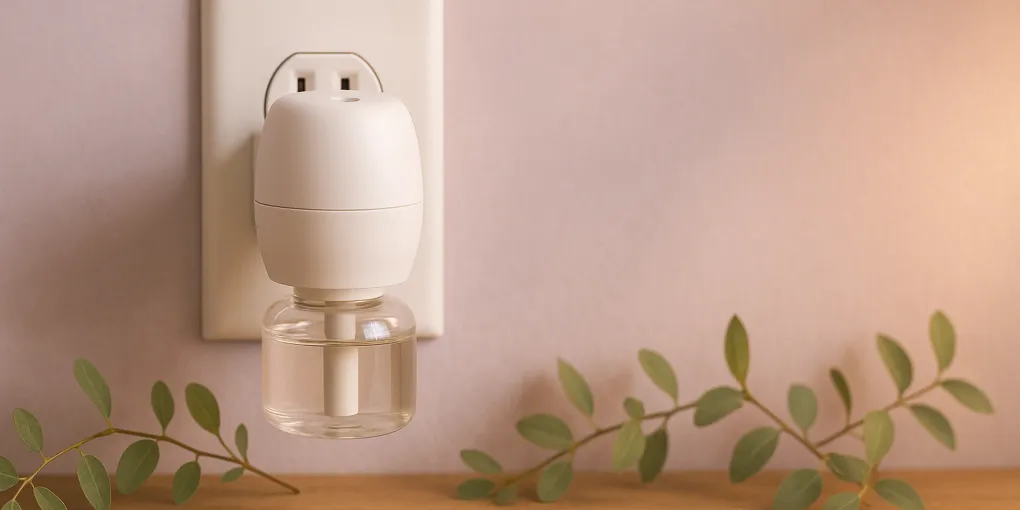
Adaptil Calm Home Diffuser
Best OverallPheromone: Synthetic DAP analogue
$25–$35 starter
Quick Comparison
| Product | Key Specs | Price Range | Buy |
|---|---|---|---|
| |
| $25–$35 starter | Check Price |
| |
| $20–$25 starter | Check Price |
| |
| $25–$30 (2 refills) | Check Price |
| |
| $15–$25 | Check Price |
Contains affiliate links — we may earn a small commission at no extra cost to you.
Best Dog Calming Diffuser in 2026
The best dog calming diffuser for most households is the Adaptil Calm Home Diffuser (PSR 4.6/5) — it’s the most extensively clinically studied Dog Appeasing Pheromone (DAP) product on the market, with direct clinical trial evidence supporting efficacy for separation anxiety reduction and veterinary visit stress. CEVA Animal Health’s Adaptil is also the brand most commonly recommended by board-certified veterinary behaviorists, which reflects both the research backing and the observed outcomes in clinical practice. For owners prioritizing annual cost savings over brand-specific research pedigree, the ThunderEase Diffuser (PSR 4.3/5) delivers DAP at a significantly lower annual cost through its claimed 90-day refill format.
TL;DR
- Best Overall: Adaptil Calm Home Diffuser — most clinical research support, veterinary behaviorist-recommended (PSR 4.6/5)
- Best Value: ThunderEase — same DAP pheromone class, claimed 90-day refills reduce annual cost (PSR 4.3/5)
- Budget Pick: SENTRY Calming Diffuser — lowest entry cost, spray + diffuser combination available (PSR 3.8/5)
- Key Stat: Gaultier E et al. (2008, JVEB 3:274–282) demonstrated statistically significant reduction in separation anxiety behaviors in dogs using DAP vs. placebo — the strongest clinical evidence in the pheromone diffuser category
The Science of Dog Appeasing Pheromone
Dog calming diffusers in this category all rely on the same underlying biological mechanism: Dog Appeasing Pheromone (DAP). DAP is a synthetic analogue of the pheromone naturally secreted by lactating female dogs from the mammary region during the nursing period. Nursing puppies exposed to this pheromone during early development learn to associate it with security and comfort.
The foundational research on DAP was published by Pageat P & Gaultier E in 2003 (Journal of Veterinary Pharmacology and Therapeutics, doi:10.1046/j.1365-2885.2003.00442.x), establishing the biochemical characterization of the pheromone and early efficacy data. Subsequent studies built the clinical case:
- Gaultier E et al. (2008, JVEB 3:274–282): DAP diffusers produced significant reduction in separation anxiety behaviors (vocalization, house soiling, destructive behavior) compared to placebo in a controlled study.
- Kim YM et al. (2010, JAVMA 237:1107–1114): Dogs in veterinary clinics with DAP diffusers showed measurably reduced fear responses compared to clinics without DAP.
- Tod E et al. (2005, AVTA): Shelter dogs exposed to DAP showed reduced fear responses and improved behavioral welfare indicators.
DAP is not a sedative. It does not cause drowsiness, impair coordination, or interact with medications. Owner reports and clinical staff consistently note that DAP-exposed animals appear calmer without appearing drugged — a behavioral modulation, not pharmacological sedation.
Estimated efficacy: aggregated study data suggests approximately 60–75% of anxious dogs show measurable behavioral improvement with DAP. Non-responders exist — the pheromone signal doesn’t override severe anxiety, and dogs with deep-set fear or trauma may require veterinary-prescribed anxiolytic medication.
For dogs showing anxiety-related vocalization specifically, our best bark collar no shock guide covers vibration-based approaches to excessive barking that can complement pheromone interventions.
How We Evaluated Dog Calming Diffusers
PSR Composite = (Safety × 0.25) + (Durability × 0.20) + (Pet Comfort × 0.20) + (Value × 0.20) + (Ease of Use × 0.15)
All scores on a 0–10 scale, reported on a /5 scale.
Safety is the primary criterion — these products operate continuously in a home environment with pets and humans present. The non-toxicity of DAP at labeled use concentrations is well-established, but electrical diffuser safety (outlet compatibility, overheating risk) is also evaluated. Pet Comfort in this category reflects pheromone delivery consistency and the quality of the behavioral evidence base — a product with strong clinical evidence earns a higher pet comfort score because the evidence supports that it actually produces the intended comfort effect.
1. Adaptil Calm Home Diffuser — Best Overall
Price: ~$25–$35 starter kit (diffuser + 30-day refill); refills ~$20/30 days Check Price on Amazon
Adaptil, previously marketed as D.A.P. (Dog Appeasing Pheromone) and produced by CEVA Animal Health, is the clinical research reference brand in this category. The landmark efficacy studies — including Gaultier 2008 and Kim 2010 — used Adaptil specifically, meaning the evidence base for this product is direct rather than inferred. Veterinary behaviorists who recommend DAP diffusers most commonly name Adaptil by brand.
The 30-day refill format means the pheromone concentration is consistent and controlled — each refill is a sealed, calibrated dose rather than a reservoir that depletes unpredictably. The diffuser unit is a standard plug-in design with a low-profile head, compatible with standard household outlets. Coverage is rated at approximately 700 square feet — adequate for a living room or primary living area.
For owners managing a dog’s anxiety in context of health monitoring, our best smart pet health monitor guide covers wearable and home-based devices that can track physiological changes (heart rate, respiratory rate) that correlate with anxiety levels, providing objective data to complement behavioral observation.
PSR Score Breakdown:
| Criterion | Weight | Score (0–10) | Weighted |
|---|---|---|---|
| Safety | 25% | 9.5 | 2.38 |
| Durability | 20% | 9.0 | 1.80 |
| Pet Comfort | 20% | 9.2 | 1.84 |
| Value for Money | 20% | 8.0 | 1.60 |
| Ease of Use | 15% | 9.5 | 1.43 |
| PSR Composite | 4.6/5 |
Safety: DAP is non-toxic to dogs, cats, and humans at labeled concentrations. CEVA Animal Health’s manufacturing standards are pharmaceutical-grade. Electrical diffuser has standard safety certification. No reported adverse effects in peer-reviewed literature.
Durability: The diffuser unit itself is rated for multi-year use — only the refill vials require replacement. The 30-day refill format provides consistent pheromone concentration throughout the month without the gradual depletion that longer-duration refills may experience.
Pet Comfort: The strongest clinical evidence of behavioral benefit in this comparison. The 700 sq ft coverage is adequate for typical living room or open-plan areas. Pheromone is odorless to humans — no household scent impact.
Value for Money: Annual cost at $270 (initial kit + 11 refills) is the highest in this comparison. The premium is for the most clinically documented brand with the strongest veterinary professional recommendation rate.
Ease of Use: Plug in, insert refill, replace monthly. No programming, no charging, no app. The simplest possible user interface for a calming intervention.
Pros:
- Most extensively studied DAP brand — direct clinical trial evidence
- Veterinary behaviorist-recommended brand
- 700 sq ft coverage
- Non-toxic, odorless to humans
- No programming required — passive continuous delivery
- Broad ecosystem: Adaptil also offers collars, sprays, and travel formats
Cons:
- Highest annual cost in comparison (~$270/year)
- 30-day refills mean monthly replacement habit required
- Not effective for all dogs — 60–75% response rate
- Does not address severe anxiety without behavioral modification
2. ThunderEase Dog Calming Pheromone Diffuser — Best Value
Price: ~$20–$25 starter kit Check Price on Amazon
ThunderEase is manufactured by Thunderworks — the same company behind the ThunderShirt pressure wrap, which has its own evidence base for anxiety reduction through deep-touch pressure. The ThunderEase diffuser uses the same DAP pheromone class as Adaptil, but the primary differentiation is refill duration: ThunderEase claims 90-day coverage per refill versus Adaptil’s 30-day format. If the 90-day claim is accurate, the annual cost drops to approximately $100–$140 — a significant saving versus Adaptil.
The brand-specific clinical research on ThunderEase is less extensive than Adaptil’s — the pivotal DAP studies were conducted with CEVA’s product. This doesn’t mean ThunderEase is ineffective; the active pheromone compound is the same class. But for owners who want the strongest research warrant for their anxiety management choice, Adaptil’s research provenance is superior.
ThunderEase pairs naturally with the ThunderShirt for owners using a layered anxiety management approach — combining pheromone continuous delivery with pressure wrap for acute stress events (thunderstorms, travel). For monitoring whether your dog’s anxiety behaviors change over time, our best dog activity tracker covers collars that track behavioral patterns including activity reduction and altered sleep that correlate with anxiety.
PSR Score Breakdown:
| Criterion | Weight | Score (0–10) | Weighted |
|---|---|---|---|
| Safety | 25% | 9.5 | 2.38 |
| Durability | 20% | 8.5 | 1.70 |
| Pet Comfort | 20% | 8.5 | 1.70 |
| Value for Money | 20% | 9.5 | 1.90 |
| Ease of Use | 15% | 9.5 | 1.43 |
| PSR Composite | 4.3/5 |
Safety: Same DAP pheromone class — same non-toxicity profile. Standard electrical diffuser safety certification. No documented adverse effects.
Durability: 90-day refill (if accurate) means fewer refill changes. Owner reports on refill duration consistency are mixed — some note the refill depletes before 90 days in warmer environments where diffuser heat accelerates evaporation.
Pet Comfort: Behavioral benefit is expected to parallel Adaptil (same pheromone class), but brand-specific research evidence is weaker. Owner reports suggest comparable efficacy for mild to moderate anxiety.
Value for Money: Lowest annual cost in this comparison if the 90-day refill claim holds. Even at 60-day actual duration, the cost advantage over Adaptil is meaningful.
Ease of Use: Same plug-in design as Adaptil. Same low-maintenance continuous delivery. ThunderShirt compatibility adds a complementary tool in the same ecosystem.
Pros:
- Lowest annual cost (if 90-day refill claim holds)
- Same DAP pheromone class as Adaptil
- ThunderShirt ecosystem compatibility for layered anxiety management
- Standard 700 sq ft coverage
Cons:
- Less brand-specific clinical research than Adaptil
- 90-day refill duration may be temperature-dependent (warmer rooms deplete faster)
- No Adaptil-equivalent collar or travel spray in the same line
3. Comfort Zone Calming Diffuser for Dogs — Best for Multi-Dog Households
Price: ~$25–$30 (includes 2 refills) Check Price on Amazon
The Comfort Zone diffuser’s primary advantage is the two-refill starter pack — 60 days of coverage in the initial purchase, which reduces the per-day cost of the starter kit relative to single-refill competitors. For households with two or more anxious dogs, purchasing multiple Comfort Zone units for different rooms is the most cost-effective approach to whole-home coverage.
The lower brand recognition in the veterinary community compared to Adaptil is a legitimate consideration for owners who want to discuss their choices with their veterinarian — a vet familiar with Adaptil by name may not have an opinion on Comfort Zone. The active compound is the same pheromone class, but peer-reviewed studies naming Comfort Zone specifically are limited.
For households managing both dog and cat anxiety, our best cat calming diffuser guide covers Feliway for the feline side of a mixed-species household — running both products simultaneously is safe and species-specific.
PSR Score Breakdown:
| Criterion | Weight | Score (0–10) | Weighted |
|---|---|---|---|
| Safety | 25% | 9.5 | 2.38 |
| Durability | 20% | 8.0 | 1.60 |
| Pet Comfort | 20% | 8.0 | 1.60 |
| Value for Money | 20% | 8.5 | 1.70 |
| Ease of Use | 15% | 9.5 | 1.43 |
| PSR Composite | 4.1/5 |
Safety: Same DAP safety profile. Standard electrical certification. No documented adverse effects.
Durability: 30-day refill format. Two refills in starter pack is practical for 60-day continuous coverage evaluation.
Pet Comfort: Same pheromone class as Adaptil; behavioral benefit expected but less directly studied under the Comfort Zone brand name.
Value for Money: Two-refill starter pack represents good value for initial setup cost. Annual refill cost is competitive with Adaptil.
Ease of Use: Standard plug-in design, same ease of use as all products in this comparison.
Pros:
- Two refills in starter pack — 60 days of initial coverage
- Available in multi-room packs for whole-home coverage
- Competitive annual cost
- Same DAP pheromone class
Cons:
- Lower veterinary community brand recognition than Adaptil
- Limited brand-specific clinical research
- No complementary collar or spray in same product line
4. SENTRY Calming Diffuser for Dogs — Best Spray/Diffuser Combination
Price: ~$15–$25 (diffuser or spray) Check Price on Amazon
SENTRY’s primary differentiator is the availability of a spray format alongside the diffuser — the spray allows targeted application to specific anxiety trigger locations: the crate interior before travel, the car for road anxiety, a specific room during renovation noise, or a veterinary visit carrier. No other product in this comparison offers a targeted spray analog to the diffuser, which fills a meaningful gap for situational anxiety management that continuous diffusers can’t address.
At the lowest price point in this comparison, SENTRY is the appropriate entry-level choice for owners who want to try DAP before committing to Adaptil’s higher annual cost. The clinical research directly supporting SENTRY as a brand is limited, and the lower price reflects this — but as a DAP analogue, the pheromone class is consistent with the studied products.
For remote monitoring of dog anxiety behaviors when you’re away from home, our best pet camera two-way audio guide covers cameras with two-way audio that let you both observe and verbally reassure an anxious dog through a speaker system.
PSR Score Breakdown:
| Criterion | Weight | Score (0–10) | Weighted |
|---|---|---|---|
| Safety | 25% | 9.0 | 2.25 |
| Durability | 20% | 7.5 | 1.50 |
| Pet Comfort | 20% | 7.5 | 1.50 |
| Value for Money | 20% | 9.0 | 1.80 |
| Ease of Use | 15% | 9.5 | 1.43 |
| PSR Composite | 3.8/5 |
Safety: DAP safety profile consistent with other products. Standard electrical certification. No documented adverse effects.
Durability: Owner reports suggest variable refill duration consistency. Lowest-tier build quality at the lowest price point.
Pet Comfort: Limited brand-specific efficacy research. Spray format adds utility for targeted use but is not equivalent to continuous room-level diffuser coverage.
Value for Money: Lowest entry cost in comparison. Appropriate for cost-sensitive trial of DAP before committing to Adaptil’s premium pricing.
Ease of Use: Standard plug-in. Spray format adds use-case flexibility — applicable in situations where a plugged diffuser isn’t possible (car, travel crate, vet office carrier).
Pros:
- Spray format available — targeted application for situational anxiety
- Lowest entry cost
- Good for car travel and crate pre-treatment
- Same DAP pheromone class
Cons:
- Least clinical research support of all options
- Build quality reflects lowest price point
- No complementary collar product
- Spray + diffuser require separate purchases for complete coverage
Comparison Table
| Product | Badge | Annual Cost | Refill Duration | PSR Score |
|---|---|---|---|---|
| Adaptil Calm Home Diffuser | Best Overall | ~$270 | 30 days | 4.6/5 |
| ThunderEase Diffuser | Best Value | ~$100–$140 | 90 days (claimed) | 4.3/5 |
| Comfort Zone Diffuser | Best Multi-Dog | ~$220–$260 | 30 days | 4.1/5 |
| SENTRY Calming Diffuser | Best Spray Combo | ~$180–$240 | 30 days | 3.8/5 |
Which Dog Calming Diffuser Is Right for You?
Choose Adaptil if: You want the most clinically documented option and/or your veterinarian recommends a specific DAP brand. The research provenance is the strongest in this category, and the product ecosystem (Adaptil collar for travel and vet visits, Adaptil spray for targeted use) is the most complete. The annual cost is higher, but for owners managing genuine separation anxiety or chronic fear-based behaviors, the clinical confidence is worth the premium.
Choose ThunderEase if: You already use or plan to use a ThunderShirt pressure wrap and want a compatible diffuser from the same behavioral health ecosystem. The 90-day refill claim — if it holds for your environment — represents meaningful annual savings versus Adaptil. If cost is the primary constraint and you don’t have a strong veterinary-recommendation reason to choose Adaptil specifically, ThunderEase is a credible alternative.
Choose Comfort Zone if: You have multiple anxious dogs and need whole-home coverage across several rooms. The multi-pack pricing makes it the most cost-efficient approach to multi-room deployment.
Choose SENTRY if: You need the spray format for situational anxiety — car travel, crates, vet carrier preparation, or specific room trigger locations — and want the most affordable DAP entry point. Use the spray specifically for pre-trip crate treatment or car anxiety, where a plug-in diffuser isn’t applicable.
For monitoring behavioral changes during a diffuser trial, our best indoor pet camera guide covers cameras you can use to observe your dog’s behavior while you’re away — useful for objectively assessing whether the diffuser is reducing separation anxiety behaviors. For dogs whose anxiety manifests as problem behaviors during interactive enrichment, our best dog puzzle feeder guide covers enrichment tools that can address under-stimulation as an anxiety contributor.
Frequently Asked Questions
How long does it take for a dog calming diffuser to work?
Most clinical studies report measurable behavioral changes within 7–14 days of continuous use. DAP is not a fast-acting anxiolytic — it works by providing a persistent low-level calming signal that accumulates over time. Owner reports suggest some dogs respond within 3–5 days while others require 2–3 weeks. If no behavioral change is observed after 30 days of continuous use, the dog may be a non-responder, or the anxiety severity may require veterinary behavioral consultation.
Will a dog calming diffuser work for thunderstorm phobia?
DAP diffusers are best supported by clinical evidence for separation anxiety and general household anxiety. Thunderstorm phobia is more complex — it involves barometric pressure changes, static electricity, and sound, which pheromones alone cannot address. For thunder phobia specifically, a combination approach (DAP diffuser + ThunderShirt pressure wrap + sound desensitization protocol) has better evidence than any single intervention. Severe thunder phobia often requires veterinary-prescribed anxiolytic medication during storm season.
Are dog calming diffusers safe for cats and other pets in the same household?
DAP pheromones are species-specific — dogs respond to Dog Appeasing Pheromone; cats do not have receptors for this compound and are not affected by it. DAP diffusers are non-toxic to cats, humans, and dogs at labeled use concentrations. Running both a DAP diffuser and a Feliway (feline pheromone) diffuser in a mixed-species household is safe — the two products address each species’ anxiety needs independently and do not interfere with each other. See our best cat calming diffuser guide for feline pheromone options.
Can I use a calming diffuser along with anti-anxiety medication from my vet?
Yes. DAP is not a medication and does not pharmacologically interact with anxiolytic drugs. It can be used safely alongside trazodone, fluoxetine, clonidine, alprazolam, or other commonly prescribed dog anxiety medications. Combining behavioral modification, pheromone support, and medication where indicated is the current standard of veterinary behavioral medicine practice. A veterinarian can confirm the appropriate combination for dogs on active anxiety medication.
What is the difference between Adaptil and ThunderEase diffusers?
Both products deliver synthetic Dog Appeasing Pheromone (DAP). The key differences are research support and refill duration. Adaptil (CEVA Animal Health) is the most extensively clinically studied brand — the landmark Gaultier (2008) and Kim (2010) studies used Adaptil specifically, giving it direct evidence of efficacy. ThunderEase (Thunderworks) claims 90-day refill coverage versus Adaptil’s 30-day format, which significantly reduces annual cost if the claim holds under real-world conditions. ThunderEase has less brand-specific clinical research but uses the same pheromone class.
Final Verdict
For owners who want the most clinically supported dog calming diffuser and whose veterinarian is likely to recognize and validate the choice, Adaptil is the correct answer. The research base is direct, the veterinary behavioral community recommends it by name, and the product ecosystem (diffuser, collar, spray) covers anxiety management across home, travel, and veterinary contexts.
For cost-conscious owners who are comfortable with the DAP pheromone class but not specifically attached to the Adaptil brand, ThunderEase offers meaningful annual savings — particularly compelling for owners already using the ThunderShirt. The behavioral outcome difference between Adaptil and ThunderEase is likely small in practice; the research gap is a documentation issue more than an efficacy gap.
All four products are preferable to no intervention for mild to moderate dog anxiety. For severe separation anxiety, thunder phobia, or anxiety that has not responded to 30 days of diffuser use, a veterinary behavioral consultation is the appropriate next step.
Frequently Asked Questions
- Most clinical studies report measurable behavioral changes within 7–14 days of continuous use. DAP is not a fast-acting anxiolytic — it works by providing a persistent low-level calming signal that accumulates over time. Owner reports suggest some dogs respond within 3–5 days while others require 2–3 weeks. If no behavioral change is observed after 30 days of continuous use, the dog may be a non-responder or the anxiety may have a severity level requiring veterinary behavioral consultation.
- DAP diffusers are best supported by clinical evidence for separation anxiety and general household anxiety. Thunderstorm phobia is more complex — it involves barometric pressure changes, static electricity, and sound, which are not addressed by pheromones alone. For thunder phobia specifically, a combination approach (DAP diffuser + pressure wrap like ThunderShirt + sound desensitization protocol) has better evidence than any single intervention. Severe thunder phobia may require veterinary-prescribed anxiolytic medication during storm season.
- DAP pheromones are species-specific — dogs respond to Dog Appeasing Pheromone; cats do not have receptors for this compound and are not affected. Similarly, Feliway (feline pheromone diffuser) does not affect dogs. DAP diffusers are non-toxic to cats, humans, and dogs at labeled use concentrations. Running both a DAP diffuser and a Feliway diffuser in a mixed cat-and-dog household is safe and addresses both species' anxiety needs independently.
- Yes. DAP is not a medication and does not interact with pharmaceutical anxiolytics. It can be used safely alongside trazodone, fluoxetine, clonidine, alprazolam, or other commonly prescribed dog anxiety medications. Combining behavioral modification, pheromone support, and medication where indicated is the current standard of veterinary behavioral medicine practice. A veterinarian can confirm the right combination for a specific dog's anxiety profile.
- Both products deliver synthetic Dog Appeasing Pheromone (DAP). The key differences are research support and refill duration. Adaptil (CEVA Animal Health) is the most extensively clinically studied DAP brand — the landmark Gaultier (2008) and Kim (2010) studies used Adaptil specifically. ThunderEase (Thunderworks) claims 90-day refill coverage versus Adaptil's 30-day refills, which significantly reduces annual cost if the claim holds. ThunderEase has less brand-specific clinical research but uses the same pheromone class.