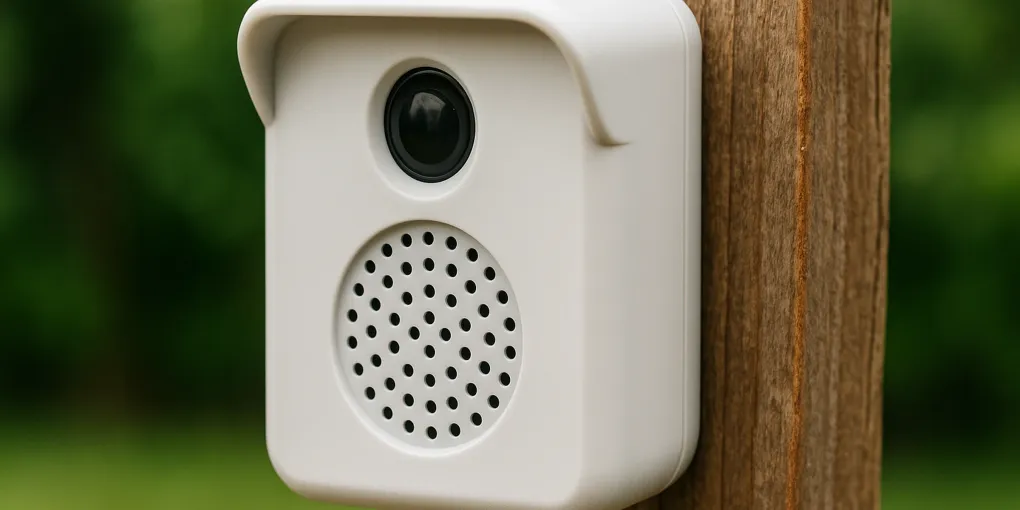
PetSafe Outdoor Ultrasonic Bark Deterrent
Best OutdoorRange: Up to 50 feet
~$35–$55
Quick Comparison
| Product | Key Specs | Price Range | Buy |
|---|---|---|---|
| |
| ~$35–$55 | Check Price |
| |
| ~$25–$40 | Check Price |
| |
| ~$20–$35 | Check Price |
| |
| ~$30–$45 | Check Price |
Contains affiliate links — we may earn a small commission at no extra cost to you.
Best Dog Bark Deterrent Device in 2026
The best outdoor dog bark deterrent device is the PetSafe Outdoor Ultrasonic Bark Deterrent (PSR 4.6/5) — a weatherproof bark-activated ultrasonic device with a 50-foot detection range, adjustable sensitivity, and a birdhouse-style housing designed for fence post or tree mounting. It remains the gold standard for yard and fence-line bark control because it works on both the owner’s dog and neighboring dogs within range, making it uniquely effective for noise that originates outside the owner’s direct control. For indoor use, the Modus Auto-Detecting Anti-Bark Device (PSR 4.4/5) is the best choice — a compact USB-powered unit that sits on any shelf and addresses apartment-specific barking without any installation.
TL;DR
- Best Outdoor: PetSafe Outdoor Ultrasonic — 50-foot range, weatherproof, adjustable sensitivity (PSR 4.6/5)
- Best Indoor: Modus Anti-Bark Device — USB power, shelf-ready, 5 sensitivity levels (PSR 4.4/5)
- Best Value: Zomma Anti-Bark Device — handheld + stationary modes, USB rechargeable, lowest price (PSR 4.3/5)
- Best Range: STOPWOOF Anti-Barking Device — 50-foot outdoor-capable range at mid-range price (PSR 4.2/5)
What Separates an Effective Bark Deterrent from a Noise Box
Bark deterrent devices look simple — a microphone detects barking, a speaker emits ultrasound — but the quality differences between products matter significantly for real-world effectiveness.
Detection accuracy prevents false triggers. A bark deterrent that fires at every sound — a car alarm, a doorbell, a dropped pan — teaches the dog nothing and may cause unnecessary stress. Quality detectors use voice-frequency filtering to target dog bark sound profiles specifically. The PetSafe and Modus units earn consistent praise in owner reports for accurate bark-specific triggering; STOPWOOF reports occasional false triggers from non-bark sounds.
Sensitivity range determines appropriate deterrence level. No two dogs are equally sensitive to ultrasonic sound. A dog that is easily startled needs a lower sensitivity setting; a dog with partial high-frequency hearing loss needs a stronger output. Products with multiple sensitivity levels — particularly the Modus (5 levels) and PetSafe (3 levels) — allow owners to calibrate the minimum effective deterrence rather than applying maximum output to every dog.
Weatherproof rating determines placement options. Indoor-only devices (Modus, Zomma) will fail or become a fire hazard if placed outdoors. Outdoor-rated devices (PetSafe, STOPWOOF) can be used indoors but have no advantage there beyond weatherproofing. Match the device’s rating to its intended use.
Detection range determines coverage area. A 15-foot indoor device covers a single room effectively. A 50-foot outdoor device covers a typical backyard. For owners with larger properties or multiple barking zones, range is the primary filter. The PetSafe and STOPWOOF both advertise 50-foot ranges; owner reports confirm PetSafe’s consistency at range, while STOPWOOF shows more variability.
The ultrasonic deterrent category is entirely humane — no shocks, no pain. For owners who have researched no-shock bark collars and want a deterrent that requires zero contact with the dog, ultrasonic devices are the natural alternative. They work passively — no collar attachment, no owner intervention at the moment of barking.
1. PetSafe Outdoor Ultrasonic Bark Deterrent — Best Outdoor
Key Specs
- Detection range: Up to 50 feet
- Housing: Weatherproof birdhouse-style, outdoor-rated
- Power: 9V battery or AC adapter (adapter sold separately)
- Sensitivity: Adjustable (3 settings)
- Detection: Bark-activated microphone
- Ultrasonic frequency: 15–25 kHz
- Mounting: Post or tree mounting via included hardware
| Criterion | Weight | Score | Weighted |
|---|---|---|---|
| Safety | 25% | 9.5 | 2.375 |
| Durability | 20% | 9.5 | 1.900 |
| Pet Comfort | 20% | 9.0 | 1.800 |
| Value for Money | 20% | 8.5 | 1.700 |
| Ease of Use | 15% | 9.0 | 1.350 |
| Composite | 9.125 | ||
| PSR Score | 4.6/5 |
Safety (9.5/10): The PetSafe outdoor unit is the best-documented bark deterrent device in the humane deterrence category. PetSafe is a long-established pet safety brand, and this device carries no shock, no spray, and no physical contact components. The weatherproof housing eliminates electrical hazard in rain exposure. Adjustable sensitivity allows owners to ensure the deterrence level is proportionate — particularly important for noise-sensitive dogs that might find maximum output excessive. The 50-foot detection range means the device can be positioned away from the dog’s primary resting area, limiting unnecessary activation during non-barking periods.
Durability (9.5/10): The PetSafe outdoor unit has one of the longest track records in this category, with owner reports spanning multiple years of year-round outdoor deployment across varying climates. The birdhouse-style housing resists UV degradation, rain, and temperature extremes that would destroy indoor-rated alternatives. Battery life on 9V averages several months of normal use; the AC adapter option eliminates battery management for permanently mounted installations. Speaker component longevity is consistently rated positively in long-term owner reports.
Pet Comfort (9.0/10): The 1–3 second ultrasonic burst triggered by barking is the minimum necessary deterrence dose — brief, targeted, and ending as soon as the barking stops. Owner reports describe dogs responding with cessation of barking and a brief orientation toward the device, without signs of ongoing distress. The 3-level sensitivity allows owners to start at the lowest effective setting and increase only if needed. For owners who also use a dog training collar as part of a broader training program, the PetSafe outdoor unit provides a passive yard-environment reinforcement layer that requires no owner presence.
Value for Money (8.5/10): At $35–$55, the PetSafe is the second-most-expensive device in this review but earns its price through outdoor weatherproofing, brand reliability, and 50-foot coverage. The device’s effectiveness against neighboring dogs that bark through a fence line adds value beyond the owner’s dog alone — neighbor noise complaints and fence-line excitement are common suburban dog-ownership problems that the PetSafe addresses without requiring any cooperation from the neighbor.
Ease of Use (9.0/10): Mount on a fence post or tree at approximately dog head height, face the detection microphone toward the primary barking area, set sensitivity, and insert 9V battery. No pairing, no app, no programming. The physical sensitivity switch on the back of the unit allows in-field adjustment without tools. The birdhouse aesthetic integrates unobtrusively into most outdoor environments.
Pros:
- Best outdoor weatherproof rating in the category
- 50-foot range covers standard backyard
- Works on neighbor dogs as well as owner’s dog
- Long, documented reliability track record
- AC adapter option for permanent installation
Cons:
- Does not work effectively indoors where sound reflection reduces effectiveness
- No audible feedback mode for training reinforcement
- AC adapter sold separately
2. Modus Auto-Detecting Anti-Bark Device — Best Indoor
Key Specs
- Detection range: ~15–20 feet (indoor)
- Housing: Compact plastic, indoor rated
- Power: USB (included cable)
- Sensitivity: 5 adjustable levels
- Detection: Bark-activated microphone with LED indicator
- Ultrasonic frequency: 15–25 kHz
- Placement: Shelf, table, or flat surface
| Criterion | Weight | Score | Weighted |
|---|---|---|---|
| Safety | 25% | 9.0 | 2.250 |
| Durability | 20% | 8.5 | 1.700 |
| Pet Comfort | 20% | 9.0 | 1.800 |
| Value for Money | 20% | 8.5 | 1.700 |
| Ease of Use | 15% | 9.5 | 1.425 |
| Composite | 8.875 | ||
| PSR Score | 4.4/5 |
Safety (9.0/10): The Modus uses ultrasonic deterrence only — no shock, no citronella spray, no physical components. The 5-level sensitivity range is the widest adjustment span in this review, allowing precise calibration for noise-sensitive dogs that might react adversely to higher ultrasonic output levels. The LED indicator that illuminates when the device detects barking provides owners with confirmation that the device is triggering appropriately and not generating false activations from household sounds.
Durability (8.5/10): Owner reports from 12–24 months of indoor daily use describe consistent detection and deterrence performance. USB power eliminates battery replacement as a maintenance task. The plastic housing is rated for indoor use and performs well in normal household humidity. The LED indicator component is occasionally noted in long-term reports as the first component to show wear — dim LED output — though this does not affect ultrasonic performance.
Pet Comfort (9.0/10): The Modus’s 5-level sensitivity provides the most flexible deterrence calibration in the indoor category. Starting at Level 1 (lowest sensitivity, briefest ultrasonic burst) and adjusting upward only if necessary is the recommended approach for introducing the device to sensitive dogs. Owner reports consistently note that most apartment dogs respond to Level 2–3 settings, making the Level 4–5 range available as a reserve for dogs that habituate to lower levels. For owners who also use an indoor pet camera to monitor their dog while away, the Modus provides active deterrence during unsupervised periods when camera monitoring alone would only record rather than address barking.
Value for Money (8.5/10): At $25–$40, the Modus is well-priced for the indoor apartment market. USB power eliminates battery costs entirely. Five sensitivity levels provide enough range to avoid needing a different product as the dog adjusts to the device. For apartment renters who cannot mount outdoor devices, the Modus is the best indoor-only option at a reasonable price.
Ease of Use (9.5/10): Plug in via USB, select a sensitivity level via the selector dial, and position on a shelf facing the primary barking area. No app, no setup procedure, no mounting hardware required. The LED indicator confirms bark detection in real time, making it easy to verify the device is positioned and calibrated correctly within the first day of use. The compact footprint fits on a bookshelf, end table, or window sill without being conspicuous.
Pros:
- 5-level sensitivity for precise calibration
- USB powered — no battery replacements
- LED indicator confirms active detection
- Compact shelf/table placement, no installation required
- Best for apartment and single-room use
Cons:
- Indoor use only — not weatherproof
- 15–20 foot range limits coverage to one room
- Some reports of false triggers from TV/music at high sensitivity settings
3. Zomma Anti-Bark Device — Best Value
Key Specs
- Detection range: ~15–25 feet
- Housing: Compact, indoor rated
- Power: USB rechargeable (built-in battery)
- Detection modes: Auto (bark-activated) and manual/handheld
- Frequencies: 3 ultrasonic levels + audible training tone mode
- Best use: Indoor stationary + supervised training walks
| Criterion | Weight | Score | Weighted |
|---|---|---|---|
| Safety | 25% | 9.0 | 2.250 |
| Durability | 20% | 8.0 | 1.600 |
| Pet Comfort | 20% | 8.5 | 1.700 |
| Value for Money | 20% | 9.5 | 1.900 |
| Ease of Use | 15% | 8.5 | 1.275 |
| Composite | 8.725 | ||
| PSR Score | 4.3/5 |
Safety (9.0/10): The Zomma uses ultrasonic deterrence with no shock, spray, or contact components. The audible training tone mode (which emits a sound humans can also hear) provides an additional training tool for supervised sessions, separating it from the pure ultrasonic-only approach of the PetSafe and Modus. Owner use of the audible tone mode during leash training is a practical safety feature — it allows owners to mark unwanted barking during walks where a stationary device cannot be deployed. All output levels are within safe parameters for canine hearing at normal operating distances.
Durability (8.0/10): The Zomma’s built-in rechargeable battery is a convenience advantage for handheld use but introduces a durability variable: battery capacity decreases with repeated charge cycles, and after 18–24 months the device may require longer charging for shorter runtime. The plastic housing is suitable for indoor use but less robust than the PetSafe outdoor unit. Owner reports describe consistent performance for the first 12–18 months with moderate decline noted by some users approaching the 2-year mark.
Pet Comfort (8.5/10): The 3-frequency ultrasonic range provides tiered deterrence levels, and the audible tone mode is a novel option for owners working through formal bark training programs. Owner reports note that using the audible tone as a marker signal (paired with treats when the dog stops barking) converts the Zomma from a simple deterrent into a positive reinforcement training aid — a use case none of the other products in this review support. For owners already using a smart pet health monitor to track behavior baselines, the Zomma’s training mode can help reduce anxiety-based barking documented in health data trends.
Value for Money (9.5/10): At $20–$35, the Zomma is the most affordable product in this review and delivers both stationary deterrence and handheld training functionality at that price. The USB rechargeable design means no battery purchase costs. For owners exploring the bark deterrent category for the first time, the Zomma’s low price makes it a low-risk entry point.
Ease of Use (8.5/10): Auto mode works like the Modus — place on shelf, device detects barking and activates automatically. Handheld mode requires switching to manual and pressing the activation button during supervised training. The mode switch is straightforward but adds a layer of complexity versus single-function units. The built-in battery charge level is indicated by LED; monitoring charge state is required to avoid the device dying during auto-mode use.
Pros:
- Lowest price in the review
- Dual-mode: auto stationary + handheld training
- Audible tone mode enables positive reinforcement pairing
- USB rechargeable (no battery replacement)
Cons:
- Built-in battery degrades over charge cycles
- Indoor use only (not weatherproof)
- Mode-switching adds complexity versus single-function units
4. STOPWOOF Anti-Barking Device — Best Range
Key Specs
- Detection range: Up to 50 feet
- Housing: Birdhouse-style, outdoor-capable
- Power: Wall plug or battery
- Sensitivity: Adjustable
- Detection: Bark-activated microphone
- Ultrasonic frequency: 15–25 kHz
| Criterion | Weight | Score | Weighted |
|---|---|---|---|
| Safety | 25% | 8.5 | 2.125 |
| Durability | 20% | 8.5 | 1.700 |
| Pet Comfort | 20% | 8.5 | 1.700 |
| Value for Money | 20% | 8.5 | 1.700 |
| Ease of Use | 15% | 8.0 | 1.200 |
| Composite | 8.425 | ||
| PSR Score | 4.2/5 |
Safety (8.5/10): The STOPWOOF uses ultrasonic deterrence only, with no shock or spray components, and is outdoor-capable with appropriate weatherproofing. The safety score is slightly below PetSafe due to owner reports of detection inconsistency — occasional false triggers from non-bark sounds suggest the microphone sensitivity calibration is less precise than the PetSafe unit. At the minimum sensitivity setting, these false triggers are reduced. No documented safety incidents specific to the STOPWOOF have been reported.
Durability (8.5/10): Owner reports from 12–18 months of outdoor deployment describe consistent performance, and the birdhouse housing holds up to normal weather exposure. The STOPWOOF lacks the multi-year track record of the PetSafe, as it is a newer product from a smaller brand. Wall-plug power mode eliminates battery management for permanent installation; battery mode provides placement flexibility without nearby outlets. No widespread hardware failure reports in verified owner reviews.
Pet Comfort (8.5/10): The 50-foot range and birdhouse design allow placement at a greater distance from the dog’s primary resting area — a comfort advantage over devices that must be placed closer to the dog to detect barking. At greater distance, the ultrasonic output reaching the dog is at a lower effective level, which can be appropriate for sensitive dogs. For owners also using a dog activity tracker to monitor whether bark deterrence correlates with changes in rest or activity patterns, the STOPWOOF provides a cost-effective outdoor deterrence layer.
Value for Money (8.5/10): At $30–$45, the STOPWOOF is priced below the PetSafe while offering a comparable 50-foot range claim. For budget-conscious owners who need outdoor coverage but find the PetSafe’s price a stretch, the STOPWOOF provides similar functionality with some trade-offs in detection consistency. The dual power option (wall plug or battery) adds placement flexibility not available on the PetSafe without purchasing an AC adapter separately.
Ease of Use (8.0/10): Installation and sensitivity adjustment are similar to the PetSafe — mount, face microphone toward barking area, set sensitivity. The lower Ease of Use score reflects owner reports of sensitivity calibration requiring more experimentation to avoid false triggers. Owners report needing to test multiple sensitivity settings before finding the optimal level, whereas PetSafe’s settings are more accurately labeled for their actual detection range.
Pros:
- 50-foot range at a lower price than PetSafe
- Outdoor-capable birdhouse housing
- Dual power option (wall plug or battery included)
- Good option for budget outdoor bark control
Cons:
- Detection consistency less reliable than PetSafe at higher sensitivity settings
- Shorter brand track record than PetSafe
- Sensitivity calibration requires more user experimentation
Full Comparison Table
| Product | Badge | Price | Range | Power | Indoor/Outdoor | PSR Score |
|---|---|---|---|---|---|---|
| PetSafe Outdoor | Best Outdoor | ~$35–$55 | 50 ft | 9V or AC | Outdoor weatherproof | 4.6/5 |
| Modus | Best Indoor | ~$25–$40 | 15–20 ft | USB | Indoor only | 4.4/5 |
| Zomma | Best Value | ~$20–$35 | 15–25 ft | USB rechargeable | Indoor only | 4.3/5 |
| STOPWOOF | Best Range | ~$30–$45 | 50 ft | Wall or battery | Outdoor-capable | 4.2/5 |
Which Dog Bark Deterrent Is Right for You?
Your dog barks at the fence line, at the gate, or at dogs walking past the yard: The PetSafe Outdoor is the right tool. Its 50-foot range, weatherproof housing, and effectiveness on neighboring dogs passing within range make it the only product in this review purpose-built for outdoor boundary barking.
Your dog barks when you’re out of the apartment or in response to street noise indoors: The Modus is purpose-built for your use case. USB power, shelf placement, 5 sensitivity levels, and an LED trigger indicator make it the best indoor-only option.
You want to address barking both at home and during walks, at the lowest price: The Zomma’s dual-mode design is the right fit. Use it in auto mode on the shelf at home and carry it handheld for walk training. The audible tone mode allows positive reinforcement pairing that the ultrasonic-only devices don’t support.
You need outdoor coverage but the PetSafe is over budget: The STOPWOOF delivers comparable 50-foot outdoor range at a lower price. Accept that sensitivity calibration will require more experimentation, and the detection consistency will occasionally produce false triggers.
Frequently Asked Questions
Are ultrasonic bark deterrents safe for dogs?
Ultrasonic bark deterrents emit brief sound bursts at 15–25 kHz, above most human hearing range but audible to dogs. These devices are considered humane by the ASPCA when used within manufacturer guidelines — they produce no physical pain, no shock, and no spray. The deterrence works through an unpleasant but harmless sound cue that dogs associate with barking. Sensitivity-adjustable models allow owners to find the minimum effective level for their specific dog.
Do ultrasonic bark deterrents work on all dogs?
Effectiveness varies by individual dog. Owner reports suggest most dogs reduce barking frequency within 1–2 weeks of consistent ultrasonic feedback. Some dogs — particularly older animals with age-related hearing loss above 15 kHz — may not respond. Dogs with deeply-rooted fear-based barking may require behavioral training alongside deterrent use.
Can an ultrasonic device affect cats or other pets?
Cats and smaller pets can hear in the ultrasonic range and may react to sound bursts. Owner reports from multi-pet households describe cats occasionally orienting toward the device during activation but not showing distress. Positioning the device to target primarily the dog’s primary space minimizes unintended exposure for other pets.
How should I position an outdoor bark deterrent?
Position the PetSafe outdoor unit facing the primary barking area — typically a fence line, yard entrance, or neighbor boundary. Mount at approximately dog head height for optimal microphone pickup. Ensure the microphone sensor is not obstructed by vegetation. For neighbor-dog barking through a fence, position close to the fence with the microphone directed toward the sound source.
How long does it take for a bark deterrent to work?
Most owner reports describe noticeable reduction in barking frequency within 1–2 weeks of consistent device deployment. The learning mechanism requires the dog to associate the ultrasonic sound with the barking behavior — this requires the device to be consistently active when barking occurs. Inconsistent deployment during the initial conditioning period slows behavioral association.
Final Verdict
For outdoor bark control — yard barking, fence-line reactivity, and neighbor-dog noise — the PetSafe Outdoor Ultrasonic Bark Deterrent (PSR 4.6/5) remains the definitive Best Outdoor choice with its weatherproof housing, 50-foot detection range, and multi-year track record. For apartment and indoor-specific use, the Modus (PSR 4.4/5) is the most precisely adjustable indoor deterrent, with 5 sensitivity levels and an LED trigger indicator that the PetSafe doesn’t offer. Budget-focused owners who want both stationary and handheld training capability should look at the Zomma (PSR 4.3/5) — its dual-mode design and audible training tone make it the most versatile product at the lowest price. And for owners who need outdoor coverage at a lower price than PetSafe, the STOPWOOF (PSR 4.2/5) delivers comparable 50-foot range with a dual power option, accepting some trade-off in detection consistency.
Frequently Asked Questions
- Ultrasonic bark deterrents emit brief sound bursts at 15–25 kHz, above most human hearing range but audible to dogs. These devices are considered humane by the ASPCA when used within manufacturer guidelines — they produce no physical pain, no shock, and no spray. The deterrence works through an unpleasant but harmless sound cue that dogs associate with barking. Sensitivity-adjustable models allow owners to find the minimum effective level for their specific dog.
- Effectiveness varies by individual dog. Owner reports suggest most dogs reduce barking frequency within 1–2 weeks of consistent ultrasonic feedback. Some dogs — particularly older animals with age-related hearing loss above 15 kHz — may not respond to ultrasonic deterrents. Dogs with deeply-rooted fear-based barking may require behavioral training alongside deterrent use. Based on owner reports, breed or size do not reliably predict response — individual temperament matters more.
- Cats and smaller pets (rabbits, birds) can hear in the ultrasonic range and may react to the sound bursts. Owner reports from multi-pet households describe cats occasionally orienting toward the device during activation but not showing distress. Placing the device where only the target dog can reliably trigger and receive the sound burst minimizes unintended exposure for other pets. No documented long-term hearing effects on pets have been reported at normal consumer device output levels.
- Position the PetSafe outdoor unit facing the area where barking most commonly occurs — typically toward a fence line, yard entrance gate, or neighbor's property boundary. Mount at approximately dog head height for optimal microphone pickup. Ensure the microphone sensor faces the primary barking area and is not obstructed by vegetation. For neighbor-dog barking through a fence, position close to the fence with the microphone directed toward the sound source.
- Most owner reports describe noticeable reduction in barking frequency within 1–2 weeks of consistent device deployment. The learning mechanism requires the dog to associate the ultrasonic sound with the barking behavior — this requires the device to be consistently in place and active when barking occurs. Devices should not be used intermittently during the initial conditioning period, as inconsistent feedback slows behavioral association.