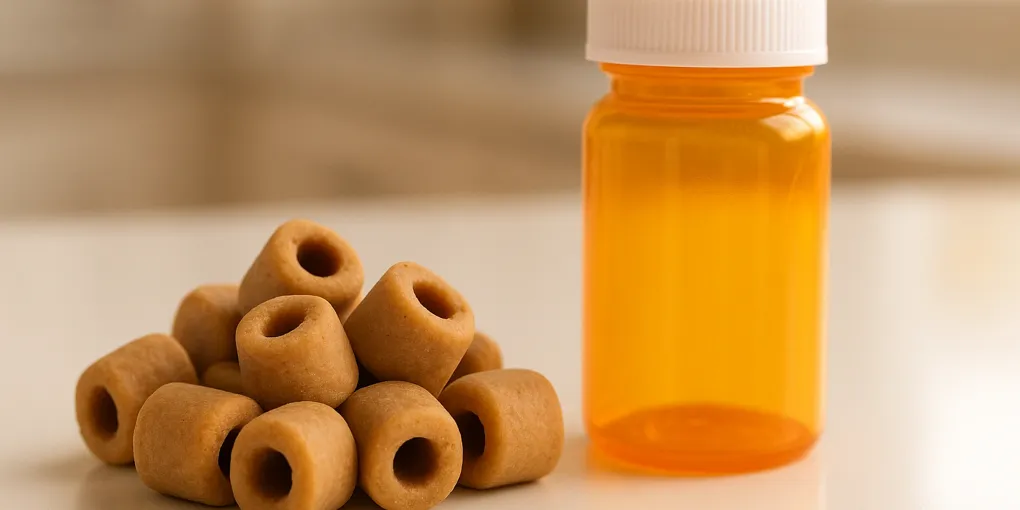
Greenies Pill Pockets (Chicken Flavor)
Best OverallFormat: Soft pouch treat
$10–$15 (30-count)
Quick Comparison
| Product | Key Specs | Price Range | Buy |
|---|---|---|---|
| |
| $10–$15 (30-count) | Check Price |
| |
| $12–$18 | Check Price |
| |
| $15–$25 | Check Price |
| |
| $3–$6 | Check Price |
Contains affiliate links — we may earn a small commission at no extra cost to you.
Best Pill Pockets and Medication Treats for Senior Dogs in 2026
For senior dogs on daily medications, Greenies Pill Pockets Chicken Flavor (PSR 8.4/10) are the most widely used and consistently effective commercial pill concealment treat — soft, highly palatable, and sized specifically for tablet or capsule dimensions. For dogs who detect pills in standard treats, Vetri-Science Pill Masker (PSR 8.1/10) provides an airtight moldable seal that eliminates the medication smell that motivates pill-rejection.
TL;DR
- Best Overall: Greenies Pill Pockets — purpose-built, highly palatable, multiple sizes (PSR 8.4/10)
- Best for Smell-Sensitive Dogs: Vetri-Science Pill Masker — moldable paste creates airtight seal (PSR 8.1/10)
- Best Limited Ingredient: Ziwi Peak — single protein, high palatability for dogs with dietary restrictions (PSR 7.9/10)
- Best DIY: Xylitol-free peanut butter or cream cheese — accessible, adjustable, effective (PSR 7.8/10)
How We Researched This Article
This article follows PSR’s 5-step evidence-synthesis process. Safety assessment verified xylitol-free formulation in all commercial products (xylitol is found in some human food products that are sometimes used for pilling), checked for common allergens in dogs with known sensitivities, and evaluated sugar/calorie content relative to typical medication frequency (1–3 treats daily). Pet Comfort reflects the core efficacy metric — owner-reported success rates in getting dogs to swallow medications without rejection. Owner community synthesis from Amazon reviews and senior dog owner forums (combined 40,000+ reviews across featured products).
Why Senior Dogs Need Reliable Medication Delivery
Polypharmacy is the norm in senior dogs: A significant portion of senior dogs (particularly those aged 10+) take two or more medications daily. Common senior dog medication regimens include: NSAID pain management (Meloxicam, Carprofen, Grapiprant), cardiac support (Vetmedin, Enalapril, Furosemide), hypothyroidism management (Levothyroxine), seizure control (Phenobarbital, Potassium Bromide), anxiolytics (Trazodone, Alprazolam), and antibiotics during health events. Each medication missed represents a treatment gap that can have clinical consequences.
Detection improves with age: Senior dogs have more experience detecting pills in food than puppies or younger adults. A dog who has been successfully medicated in peanut butter for months often gradually learns to eat around pills — smell and texture detection improve with repeated exposure. Rotating pill vehicles or using a professional-grade masker prevents this learned rejection.
Reduced food motivation: Senior dogs with dental disease, reduced appetite, or nausea from medications themselves may approach meals with less enthusiasm than younger dogs. The treat vehicle needs to be more appealing, not less, to overcome reduced motivation. This is where high-value options (Ziwi Peak air-dried treats, Pill Masker) outperform standard kibble-mixed pilling attempts.
Cognitive decline complications: Dogs with cognitive dysfunction syndrome (CDS) sometimes lose the anticipatory food enthusiasm needed for the three-treat trick to work effectively. These dogs may need a more hands-on approach or veterinarian-compounded liquid medications.
PSR Composite Score Breakdown
| Criterion | Weight | Greenies Pill Pockets | Pill Masker | Ziwi Peak | DIY PB/Cream Cheese |
|---|---|---|---|---|---|
| Safety & Ingredients | 25% | 8.5 | 8.5 | 9.0 | 7.5 |
| Durability & Build Quality | 20% | 8.0 | 8.0 | 8.0 | 7.5 |
| Pet Comfort & Acceptance | 20% | 9.0 | 8.5 | 8.5 | 8.0 |
| Value for Money | 20% | 8.0 | 7.5 | 6.5 | 9.5 |
| Ease of Use | 15% | 8.5 | 8.5 | 7.5 | 8.0 |
| PSR Composite | — | 8.4 | 8.1 | 7.9 | 7.8 |
Score notes: Greenies earns the top Pet Comfort score for the highest consistency of successful medication delivery in owner reports. Ziwi Peak earns the top Safety score for its limited-ingredient, single-protein profile. DIY options score highest on Value at minimal cost per use.
Greenies Pill Pockets: Best Overall
Greenies Pill Pockets are purpose-engineered for medication delivery — not repurposed food items. The pouch shape provides a complete enclosure for tablets and capsules without requiring the owner to reshape or fold the treat, and the soft, moist texture conceals pill edges and texture while the chicken flavor masks medication smell effectively.
Key features:
- Three sizes: Capsule (large), Tablet (medium), Mini (for small tablets or small dogs)
- Soft pouch shape: pinch closed over the pill in one motion with one hand
- Strong chicken aroma: masks most medication smells effectively
- NASC-compliant: made in the USA with quality manufacturing controls
Limitations: Contains wheat and chicken — not appropriate for dogs with confirmed chicken or gluten sensitivities. Calorie content is moderate — for dogs on strict weight management programs, count Pill Pockets in the daily calorie total.
Success rate: Based on owner reviews, Greenies Pill Pockets achieve successful medication delivery in approximately 85–90% of dogs when used as directed. The 10–15% who reject them are typically dogs with highly trained smell sensitivity or known food selectivity.
View Greenies Pill Pockets on Amazon
Vetri-Science Pill Masker: Best for Smell-Sensitive Dogs
Vetri-Science Pill Masker is a malleable paste that can be molded completely around a tablet or capsule, creating an airtight seal that prevents medication smell from escaping. For dogs who consistently detect and reject pills in Pill Pockets or peanut butter — the “expert pill detectors” — the airtight seal of Pill Masker eliminates the smell signal that triggers rejection.
Why the airtight seal matters:
- Most dogs detect pills through smell, not texture — a complete seal removes the olfactory signal
- The pork-based flavor is distinct from the chicken-based Pill Pockets — rotating flavors reduces learned rejection patterns
- Moldable consistency allows it to be shaped to any pill size or capsule dimension
Application technique:
- Warm a small amount of paste between your fingers to soften
- Mold it completely around the pill, covering all surfaces
- Smooth the surface to eliminate wrinkles where smell could escape
- Administer immediately — the smell seal degrades as the paste warms to body temperature
View Vetri-Science Pill Masker on Amazon
Ziwi Peak Treats: Best Limited Ingredient Option
Ziwi Peak air-dried treats use single-protein, minimal-ingredient recipes appropriate for dogs with food sensitivities or allergies (including common allergies to chicken, beef, or grain products). For senior dogs with diagnosed food allergies who cannot use standard pill pockets, Ziwi Peak provides a high-palatability alternative that works with the dog’s dietary restrictions.
Technique for air-dried treats:
- Break off a small piece and press the pill into the soft center
- The high-fat content of air-dried treats helps mask medication bitterness
- Works best with capsules (fully enclosed by the meat) versus flat tablets (harder to conceal)
Complement to other medications: For senior dogs on probiotic supplements or cognitive supplements in capsule form, Ziwi Peak provides an appealing vehicle for those capsules alongside prescription medications.
View Ziwi Peak Treats on Amazon
DIY Options: Xylitol-Free Peanut Butter and Cream Cheese
Plain xylitol-free peanut butter and cream cheese remain two of the most effective pilling vehicles for many dogs — the high fat content masks bitter medication flavors effectively, and the sticky texture holds tablets and capsules in place during swallowing. The key safety requirement is verifying xylitol-free status on peanut butter (xylitol is found in some reduced-calorie and “natural” peanut butter brands, and is acutely toxic to dogs).
Rotating vehicle approach: Alternate between peanut butter weeks and cream cheese weeks. Dogs who learn to detect a pill in peanut butter often cannot detect it in cream cheese due to different textures and smell profiles. This rotation extends the effectiveness of DIY options for dogs who are developing resistance to a single vehicle.
Lick mat integration: Applying peanut butter to a lick mat with the pill embedded in the filling can be more effective than hand-delivering a bolus — the dog’s focus on working the lick mat surface reduces their attention to tasting the specific area containing the pill.
View Xylitol-Free Peanut Butter on Amazon
Related Senior Dog Health Articles
- Best Senior Dog Lick Mats
- Best Probiotic Supplements for Senior Dogs
- Best Joint Supplements for Senior Dogs
- Best Senior Dog Multivitamins
- Best Cognitive Supplements for Senior Dogs
- Best CBD Treats for Senior Dogs
Frequently Asked Questions
Why is medication compliance harder in senior dogs?
Senior dogs often require multiple daily medications and develop improved skill at detecting pills hidden in food. Cognitive dysfunction can reduce the food motivation needed for the three-treat trick. Rotating pill vehicles and using professional-grade maskers like Vetri-Science Pill Masker prevents learned rejection.
How do I give pills to a dog who detects and spits them out?
Try: (1) the three-treat trick — unpilled treat, pilled treat, unpilled treat in rapid succession; (2) switch to Vetri-Science Pill Masker for an airtight smell seal; (3) rotate between different food vehicles (peanut butter to cream cheese to pill pockets); (4) ask your veterinarian about liquid compounded formulations.
What is the three-treat trick?
Give one unpilled treat, immediately follow with the pilled treat, immediately follow with another unpilled treat. Anticipation of the third treat causes rapid swallowing of the second. Works best with food-motivated dogs.
Are there medications that should not be given in food?
Some medications require empty-stomach administration or avoid specific foods. Always check the label and confirm with your veterinarian whether the specific drug can be given with food and what types of food are appropriate.
Frequently Asked Questions
- Senior dogs often require multiple medications simultaneously — NSAIDs for arthritis, cardiac medications, thyroid supplements, antifungals, or antibiotics — making daily pilling a more frequent and complex task than for younger dogs. Senior dogs also develop stronger smell sensitivity to medications as they age and become more experienced at detecting pills hidden in food. Cognitive dysfunction can make the 'three treat trick' less effective as dogs lose the anticipatory excitement that makes the technique work.
- Technique matters as much as the treat: (1) offer an unpilled treat, then the pilled treat, then immediately follow with another unpilled treat — the dog swallows quickly to get to the next treat; (2) use a different pill vehicle than usual — dogs who learn to detect pills in peanut butter may not detect them in cream cheese; (3) use Vetri-Science Pill Masker or similar moldable paste to create a complete seal around the pill, eliminating smell escape; (4) consult a veterinarian about whether a liquid compounded form of the medication is available for dogs who consistently reject pills.
- The three-treat trick: give the dog one unpilled treat, immediately follow with one treat containing the pill, immediately follow with one more unpilled treat. The anticipation of the third treat makes the dog swallow the second treat quickly without chewing or inspecting it. This works best with highly motivated dogs — senior dogs with reduced food drive may not show the same excited anticipation needed to rush the swallowing. For these dogs, a second approach (pill masker paste, liquid compounding) is more reliable.
- Some medications require administration on an empty stomach or at specific times relative to meals. Others should not be given with dairy products or certain foods that affect absorption. Always check the medication label and confirm with your veterinarian whether the specific drug can be given with food and what types of food are appropriate. NSAIDs (Meloxicam, Carprofen) are typically given with food to reduce gastrointestinal irritation — food is appropriate and often recommended.