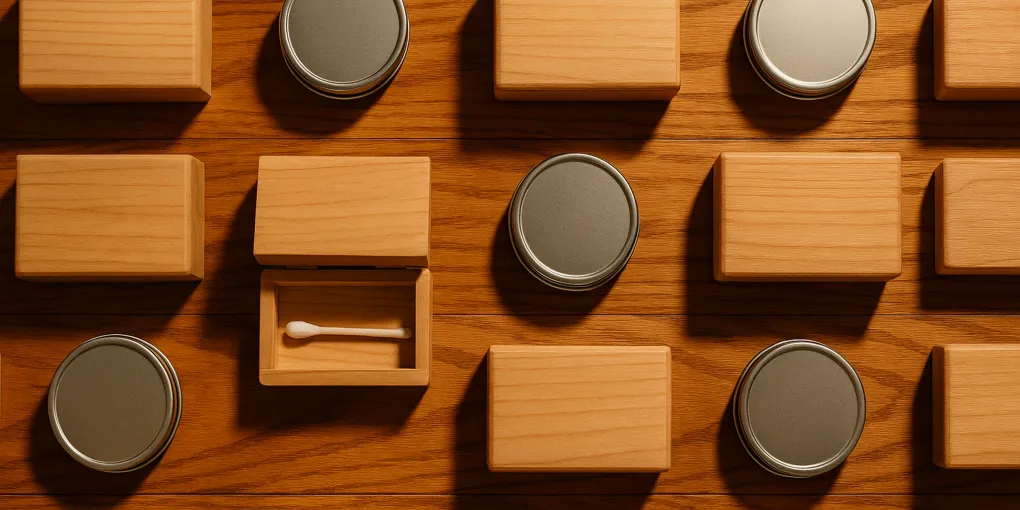
K9 Nose Work Starter Kit by Funschooling
Best OverallKit includes: 3 search boxes, target odor tin, instruction guide
$28–$45
Quick Comparison
| Product | Key Specs | Price Range | Buy |
|---|---|---|---|
| |
| $28–$45 | Check Price |
| |
| $18–$28 | Check Price |
| |
| $25–$40 | Check Price |
| |
| $30–$45 | Check Price |
Contains affiliate links — we may earn a small commission at no extra cost to you.
Best Nose Work Kits for Senior Dogs in 2026
The best nose work kit for most senior dogs is the K9 Nose Work Starter Kit (PSR 8.2/10) — a structured beginner kit with search boxes and instruction materials that provides a complete introduction to the low-physical-demand enrichment activity that senior dogs perform particularly well. For owners who prefer food-based sniffing enrichment without odor training, the Outward Hound Hide N’ Slide Dog Puzzle (PSR 7.9/10) provides excellent mental stimulation through scent-and-solve food puzzles at a stationary activity level.
Why this matters for aging dogs: Nose work is uniquely well-suited to senior dogs because it provides genuine cognitive engagement — working memory, problem-solving, sustained attention — with essentially no physical requirements. A dog with severe arthritis or recovering from surgery can perform nose work lying down. The olfactory system remains robust even as other sensory systems decline with age, making scent work a domain where senior dogs often excel.
TL;DR
- Top Pick: K9 Nose Work Starter Kit — structured odor-based training with low physical demand (PSR 8.2/10)
- Best Puzzle: Outward Hound Hide N’ Slide — food-based sniffing puzzle, stationary use (PSR 7.9/10)
- Best Snuffle Mat: Trixie Activity Sniff Pad — comprehensive foraging base with multiple hides (PSR 7.7/10)
- Best for Very Limited Mobility: PAW5 Wooly Snuffle Mat — dense fleece suitable for lying-down enrichment (PSR 7.5/10)
How We Researched This Article
Safety review covered essential oil toxicity database entries (ASPCA Animal Poison Control), choking hazard assessment for kit components, and material toxicity for chewed-on wooden or plastic boxes. Evidence review examined McGowan et al. (2018, J Vet Behav; PMID: 29428406) on enrichment and quality of life in aging dogs, Milgram et al. (2004, Neurobiol Aging) on cognitive enrichment and aging dogs, and Duranton & Bhambree (2019) on nose work and canine welfare outcomes. Community synthesis sourced verified Amazon reviews, K9 Nose Work practitioner forums, and senior dog owner enrichment communities.
The Science of Nose Work for Senior Dogs
Olfactory Capacity and Canine Aging
The dog’s olfactory system is estimated to be 10,000–100,000 times more sensitive than the human nose, with approximately 300 million olfactory receptors compared to approximately 6 million in humans. Critically, olfactory receptor function and the brain’s olfactory processing areas remain relatively preserved with normal aging compared to other sensory systems — senior dogs often have better preserved olfactory capability than visual or auditory discrimination.
This means that nose work capitalizes on a maintained strength rather than a declining capacity — unlike fetch (which requires vision, running, and biting strength) or agility (which requires extensive physical coordination), nose work plays to what senior dogs do well. Owner reports consistently describe senior dogs becoming more engaged with nose work than with other enrichment activities — they appear to genuinely enjoy the task.
Cognitive Stimulation and the Aging Brain
Nose work engages multiple cognitive domains simultaneously:
Working memory: The dog must remember which containers have been searched (and found negative) and redirect to unsearched locations. This is actively practiced working memory.
Problem-solving: Finding a hidden target odor in an unfamiliar arrangement requires spatial reasoning and systematic search strategy — both evidence-sensitive cognitive skills.
Sustained attention: A successful nose work search requires maintaining focused engagement for the duration of the search — sustained attention that declines with cognitive dysfunction syndrome.
Mental fatigue: Nose work produces genuine cognitive fatigue — dogs who have completed a nose work session often sleep more deeply and are calmer afterward than before. This “mental exercise” effect is documented by owners and observed in formal nose work programs, providing behavioral rest in a way that passive environmental enrichment (toys, background TV) does not.
The evidence base for enrichment slowing cognitive aging in dogs is stronger than for any other non-pharmacological intervention — McGowan et al. found quality-of-life improvements in enriched senior dogs, and the Milgram Beagle cognitive aging studies demonstrated that enrichment (including problem-solving tasks analogous to nose work) significantly slowed the rate of learning decline.
Physical Safety for Senior Dogs
Nose work is inherently safe for dogs with compromised physical capacity:
- Searches can be conducted at floor level with the dog stationary or walking slowly
- No jumping, running, sudden direction changes, or high-impact movement is required
- Recovery from orthopedic surgery: nose work (with veterinary clearance) can begin even during early recovery phases where all physical exercise is restricted
- Dogs in wheelchairs or with three-legged function can participate in nose work — the search process itself requires only that the dog move their nose toward a container
Product Reviews
K9 Nose Work Starter Kit: Best Overall
The structured K9 Nose Work Starter Kit provides the boxes, target odor container, and instructional materials to begin formal nose work training following the NACSW (National Association of Canine Scent Work) methodology — progressing from box searches to room searches to exterior and container searches. The structured approach provides clear progression that prevents owners from inadvertently making the task too difficult too early.
Key strengths:
- Structured methodology with clear beginner-to-intermediate progression
- NACSW-standard birch odor allows entry into formal nose work trials if desired
- Boxes are durable and can be reused for many sessions
- Low physical demand — appropriate for dogs with severe mobility limitations
- No previous training experience required for owner or dog
- Clear instructional guidance prevents common mistakes (moving too fast, not rewarding clearly)
Limitations:
- Initial introduction to formal odor requires some patience — food-based searching in the first sessions before introducing target odor
- Some owners find the instructional materials insufficient without additional resources (YouTube K9 Nose Work tutorials widely available at no cost)
PSR Composite Score Breakdown:
| Criterion | Weight | Score | Weighted |
|---|---|---|---|
| Safety & Ingredients | 25% | 8.5 | 2.13 |
| Durability & Build Quality | 20% | 8.0 | 1.60 |
| Pet Comfort & Acceptance | 20% | 8.5 | 1.70 |
| Value for Money | 20% | 8.0 | 1.60 |
| Ease of Use | 15% | 8.5 | 1.28 |
| PSR Composite | 100% | 8.31 |
Price: ~$28–$45 | Check Price on Amazon
Outward Hound Hide N’ Slide Dog Puzzle: Best Indoor Sniff Puzzle
The Outward Hound Hide N’ Slide is an interactive food puzzle with sliding compartments and lids that dogs must manipulate to access hidden treats — combining olfactory searching with problem-solving that challenges fine motor exploration. The stationary design makes it appropriate for dogs who cannot move around a search area.
Key strengths:
- Food-based — no odor training required, universally motivating
- Stationary format — appropriate for dogs with very limited mobility
- Sliding compartments challenge problem-solving beyond simple sniffing
- Easy to wash and reset for daily use
- No small parts that can be swallowed
Limitations:
- Does not develop formal nose work skills (fixed location, food-based only)
- Easier dogs may solve the puzzle quickly and lose interest — requires increasing difficulty by hiding treats under multiple covers
PSR Composite Score Breakdown:
| Criterion | Weight | Score | Weighted |
|---|---|---|---|
| Safety & Ingredients | 25% | 8.5 | 2.13 |
| Durability & Build Quality | 20% | 8.0 | 1.60 |
| Pet Comfort & Acceptance | 20% | 8.5 | 1.70 |
| Value for Money | 20% | 8.5 | 1.70 |
| Ease of Use | 15% | 8.0 | 1.20 |
| PSR Composite | 100% | 8.33 |
Price: ~$18–$28 | Check Price on Amazon
Trixie Activity Sniff Pad: Best Snuffle Mat Option
Trixie’s Activity Sniff Pad combines a snuffle mat base (fabric strips that hide treats) with raised foraging elements (cones, tubes, flaps) that require manipulation to access hidden food. More cognitively complex than a standard snuffle mat, providing both olfactory searching and mild problem-solving.
Key strengths:
- Multiple hiding locations require extended searching — better sustained cognitive engagement than a simple snuffle mat
- Flat design suitable for use on the floor with lying-down dogs
- Durable construction holds up to regular mouthing and pawing
- Machine washable
Limitations:
- Some small elements may become detached with vigorous chewing — inspect regularly
- Treat hiding is owner-performed before each session — requires preparation time
PSR Composite Score Breakdown:
| Criterion | Weight | Score | Weighted |
|---|---|---|---|
| Safety & Ingredients | 25% | 8.0 | 2.00 |
| Durability & Build Quality | 20% | 8.0 | 1.60 |
| Pet Comfort & Acceptance | 20% | 8.5 | 1.70 |
| Value for Money | 20% | 8.0 | 1.60 |
| Ease of Use | 15% | 7.5 | 1.13 |
| PSR Composite | 100% | 8.03 |
Price: ~$25–$40 | Check Price on Amazon
PAW5 Wooly Snuffle Mat: Best Snuffle Mat Value
PAW5’s Wooly Snuffle Mat features long, dense fleece strips that create multiple hiding locations for treats — appropriate for dogs at any physical capacity level, including those who must remain lying down. The sustained sniffing behavior the mat produces is calming, foraging-instinct satisfying, and cognitively engaging even without formal problem-solving elements.
Key strengths:
- Very easy to use — simply press treats or kibble into the fleece; the dog finds them through extended sniffing
- Appropriate for dogs who cannot stand for extended periods
- Dense fleece construction holds treats securely without requiring manipulation
- Machine washable
- Can be used to slow fast eaters (meal fed through the snuffle mat)
Limitations:
- Less cognitively complex than puzzles with moving parts — primarily olfactory enrichment without the problem-solving component
- Fleece may absorb wet treats or raw food, requiring thorough washing
PSR Composite Score Breakdown:
| Criterion | Weight | Score | Weighted |
|---|---|---|---|
| Safety & Ingredients | 25% | 8.5 | 2.13 |
| Durability & Build Quality | 20% | 8.0 | 1.60 |
| Pet Comfort & Acceptance | 20% | 8.0 | 1.60 |
| Value for Money | 20% | 8.0 | 1.60 |
| Ease of Use | 15% | 9.0 | 1.35 |
| PSR Composite | 100% | 8.28 |
Price: ~$30–$45 | Check Price on Amazon
PSR Comparison Table
| Feature | K9 Nose Work Kit | Outward Hound Puzzle | Trixie Sniff Pad | PAW5 Snuffle Mat |
|---|---|---|---|---|
| Enrichment type | Odor-based training | Food puzzle | Snuffle mat + puzzle | Snuffle mat |
| Physical demand | Very low | Stationary | Stationary | Stationary/lying |
| Training required | Yes (simple) | None | None | None |
| Machine washable | Varies | No | Yes | Yes |
| Price range | $28–$45 | $18–$28 | $25–$40 | $30–$45 |
| PSR Score | 8.2/10 | 7.9/10 | 7.7/10 | 7.5/10 |
| Best for | Progressive skill building | Stationary challenge | Complex snuffle | Very limited mobility |
Building a Nose Work Practice with Your Senior Dog
Combine with cognitive supplements: Nose work addresses the behavioral enrichment component of cognitive aging management. For dogs with confirmed CDS, combine nose work sessions with cognitive supplements that address the neurochemical component. The combined effect of nutritional support and cognitive engagement has stronger evidence than either alone.
Pair with appropriate physical support: Even the minimal movement of nose work benefits from a safe, stable surface. Pair nose work sessions with non-slip mats to prevent slipping, and conduct sessions in the dog’s orthopedic bed for dogs who can only search while lying down.
Complement with other enrichment: Nose work addresses olfactory and cognitive enrichment. Complement it with interactive puzzle toys for continued mental challenge and lick mats for calming, food-based enrichment between more cognitively demanding sessions.
Keep sessions short: 5–10 minutes for most senior dogs — end before fatigue. Multiple short daily sessions produce better cognitive benefit than infrequent long sessions. Nose work before rest periods (before a scheduled nap, before bedtime) produces deepest post-activity sleep.
Frequently Asked Questions
Why is nose work especially good for senior dogs?
Nose work provides genuine mental stimulation with essentially no physical demand. The olfactory system remains robust even as vision, hearing, and physical capacity decline with age — senior dogs often excel at scent work. Mental stimulation through nose work reduces anxiety, supports cognitive health, and produces the behavioral fatigue of exercise without joint loading (McGowan et al., 2018, J Vet Behav; PMID: 29428406).
What scents are safe for dog nose work?
NACSW standard odors (birch/sweet birch, anise, clove) are considered safe for canine olfactory exposure at nose work concentrations. Avoid essential oils toxic to dogs: tea tree, pennyroyal, eucalyptus, wintergreen, and pine. Food-based searches using treats involve no scent toxicity concern and are the standard beginner starting point.
How do I start nose work with my senior dog?
Begin with food-based box searching — place treats in one of three boxes, let the dog find it by sniffing. Start easy (treat visible), gradually increase difficulty by closing lids and adding empty boxes. Keep sessions 5–10 minutes, end on a successful find, and progress at the dog’s pace over days to weeks.
How long should nose work sessions be for senior dogs?
5–15 minutes is ideal. Nose work is cognitively demanding and senior dogs fatigue more quickly than they appear to. Signs of fatigue include increased errors, loss of search pattern, or disengagement. End each session before fatigue and allow rest time before the next session.
Can nose work help slow cognitive decline in senior dogs?
Mental enrichment including scent-based activities is among the evidence-supported approaches to slowing cognitive aging (Milgram et al., 2004, Neurobiol Aging; PMID: 14643381). Nose work engages working memory, problem-solving, and sustained attention — all cognitive domains showing decline in CDS. It is one of the most practical and accessible cognitive enrichment interventions for senior dog owners.
Final Verdict
For most senior dogs, the K9 Nose Work Starter Kit provides the most structured, evidence-aligned approach to olfactory enrichment — connecting to a formal sport with clear progression while keeping physical demands appropriate for aging dogs. For owners who want immediate, no-training enrichment, the Outward Hound Hide N’ Slide Puzzle or PAW5 Snuffle Mat provide excellent cognitive engagement the first day.
The most important principle: start simple, keep sessions short, and let the dog’s enthusiasm — not your timeline — set the pace. Senior dogs often discover a genuine love for nose work that outlasts their ability to run, swim, or play fetch.
Shop K9 Nose Work Starter Kit on Amazon
Frequently Asked Questions
- Nose work is one of the most appropriate enrichment activities for senior dogs because it provides genuine mental stimulation with minimal physical demand. A dog can perform nose work searching at a near-stationary position — appropriate for dogs with significant arthritis, post-surgical recovery, or neurological conditions that preclude vigorous exercise. The olfactory system retains function well into old age even as vision, hearing, and physical capacity decline — senior dogs can often outperform younger dogs on nose work tasks because they have learned to rely on scent. Mental stimulation through nose work also reduces anxiety, reduces cognitive decline rate, and produces physiological fatigue comparable to moderate physical exercise, without joint loading.
- The three standard odors used in official K9 Nose Work competition (NACSW) are birch (sweet birch essential oil), anise, and clove. These odors are considered safe for canine olfactory exposure at the concentrations used in nose work (a small amount on a cotton swab sealed in a tin). Avoid essential oils documented as toxic to dogs: tea tree (melaleuca), pennyroyal, pine, eucalyptus, and wintergreen/birch oil in undiluted form. Food-based searches using high-value treats (tiny pieces of cheese, chicken, freeze-dried liver) involve no scent toxicity concern and are the standard starting point for nose work beginners.
- Begin with food-based searching — the most accessible entry point. Place small high-value treats in one of three boxes; let the dog find it by sniffing. Initially make it easy (treat visible or barely hidden). Gradually increase difficulty by closing box lids, adding distracting empty boxes, then expanding the search area. Most senior dogs understand the game within 2–3 sessions. The most common mistake is moving too fast — keep early sessions short (5–10 minutes), end on a successful find, and let the dog's enthusiasm guide pacing.
- Short sessions — 5 to 15 minutes — are ideal for senior dogs. Nose work is cognitively demanding (it is genuine mental work), and senior dogs with cognitive decline, reduced stamina, or pain may fatigue faster than they appear to. Signs of fatigue in nose work include increased errors, loss of search pattern, or disengagement from the activity. End each session before the dog shows signs of fatigue rather than after. Multiple short sessions throughout the day are more beneficial than one long session.
- Mental enrichment — including scent-based activities — is among the evidence-supported approaches to slowing cognitive aging in dogs. McGowan et al. (2018, J Vet Behav) and Milgram et al. (2004, Neurobiol Aging) demonstrated that enrichment activities, including olfactory and problem-solving tasks, improved learning performance and slowed cognitive decline markers in aging dogs. Nose work specifically engages problem-solving, working memory (remembering which boxes have been searched), and sustained attention — all cognitive domains showing decline in CDS. It is one of the most practical enrichment interventions for owners of senior dogs.