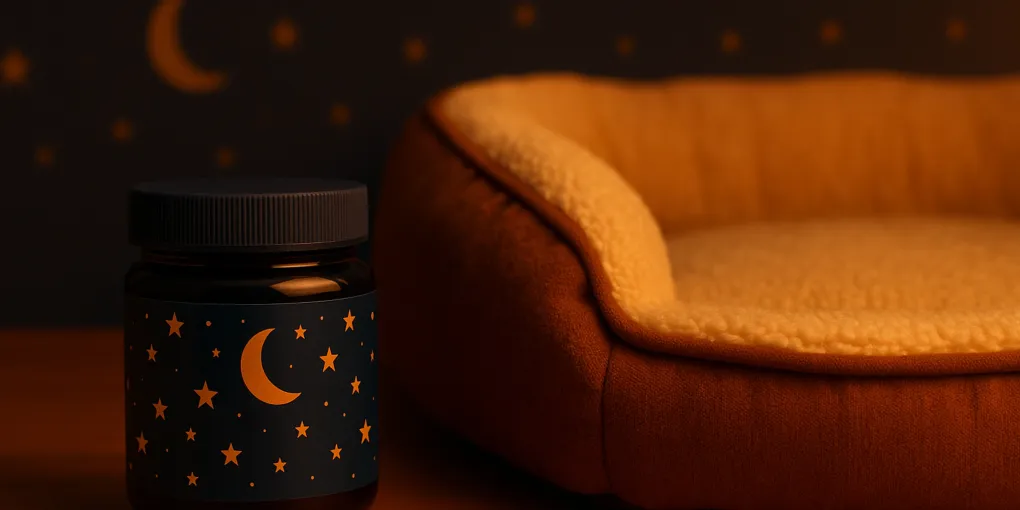
Zesty Paws Calming Bites with Melatonin
Best OverallMelatonin per dose: 3 mg
$22–$35
Quick Comparison
| Product | Key Specs | Price Range | Buy |
|---|---|---|---|
| |
| $22–$35 | Check Price |
| |
| $8–$14 | Check Price |
| |
| $28–$42 | Check Price |
| |
| $14–$24 | Check Price |
Contains affiliate links — we may earn a small commission at no extra cost to you.
Best Melatonin Supplements for Senior Dogs in 2026
The best melatonin supplement for most senior dogs is Zesty Paws Calming Bites with Melatonin (PSR 8.2/10) — a dog-formulated soft chew providing 3 mg melatonin per serving alongside complementary calming ingredients (L-tryptophan, chamomile, passion flower), confirmed xylitol-free, with high palatability in senior dogs. For owners wanting standalone melatonin at a lower dose, Natrol Melatonin 1 mg Fast Dissolve (PSR 7.8/10) is a cost-effective human supplement appropriate for small dogs or for dogs requiring precise dose control (verify current lot is xylitol-free before use).
Critical safety note: Never use human melatonin gummies or chewable formulations without verifying the ingredient list for xylitol — this sweetener, common in human supplements, is acutely toxic to dogs and can cause hypoglycemia and liver failure. Always verify “xylitol-free” on any human melatonin product before administering to a dog.
TL;DR
- Top Pick: Zesty Paws Calming Bites — 3 mg melatonin, xylitol-free, calming co-ingredients (PSR 8.2/10)
- Best Standalone: Natrol 1 mg Fast Dissolve — low-dose, cost-effective (verify xylitol-free) (PSR 7.8/10)
- Best Combo: PetHonesty Calming Hemp — melatonin + hemp calming blend (PSR 7.8/10)
- Best Budget: NaturVet Quiet Moments — affordable 3 mg dose with chamomile (PSR 7.5/10)
How We Researched This Article
Safety review checked ASPCA Animal Poison Control melatonin and xylitol database entries, FDA veterinary adverse event reports, and confirmed xylitol absence in all featured products (ingredient list review). Evidence review examined: Neilson et al. (1997, Prog Neuropsychopharmacol Biol Psychiatry) on melatonin in age-related sleep disorders; Ahluwalia et al. and Landsberg et al. (2012, J Vet Behav; PMID: 22776051) on behavioral management of CDS; and Hoffman et al. published melatonin pharmacokinetics in dogs. Community synthesis sourced veterinary behavior specialist case reports and verified purchase reviews from senior dog owner communities.
Why Senior Dogs Need Melatonin Support
Circadian Rhythm Disruption in Aging Dogs
Melatonin is the body’s primary circadian rhythm signal — produced by the pineal gland in darkness, suppressed by light, it tells the brain that it is nighttime and that sleep onset should begin. Like humans, aging dogs show a natural decline in pineal melatonin production, with reduced peak nocturnal melatonin levels and a broader, flatter nocturnal melatonin curve that provides a weaker circadian signal.
This circadian weakening is one contributing factor to the sleep disruption that characterizes normal canine aging — and becomes more pronounced in dogs with cognitive dysfunction syndrome (CDS), where neurodegeneration disrupts the neural circuits that generate and respond to circadian signals.
Sleep architecture in aging dogs: Senior dogs spend less time in deep slow-wave sleep and more time in lighter sleep stages — the sleep fragmentation that produces the nighttime waking and daytime drowsiness familiar to owners of older dogs. Melatonin’s primary benefit is reinforcing sleep onset and helping maintain normal sleep architecture, not sedating the dog into deeper sleep.
CDS-specific mechanism: Cognitive dysfunction syndrome produces nighttime restlessness through multiple mechanisms including circadian disruption, increased nocturnal cortisol, and reduced melatonin production. Supplemental melatonin addresses the circadian component — it does not correct the underlying neurodegeneration but can reduce the circadian signal deficit that contributes to nighttime waking.
Melatonin and Anxiety in Senior Dogs
Melatonin also has mild anxiolytic properties in dogs — it reduces adrenocortical stress response and attenuates startle amplitude. In senior dogs with anxiety-driven nighttime waking or situational anxiety (thunderstorms, separation), melatonin can provide mild calming benefit alongside its sleep-promoting effects.
For significant daytime anxiety, dedicated calming supplements or veterinary prescription management provides more appropriate treatment. Melatonin’s anxiety benefit is most relevant in the nighttime context.
Product Reviews
Zesty Paws Calming Bites with Melatonin: Best Overall
Zesty Paws’ Calming Bites combine 3 mg melatonin with a comprehensive calming ingredient stack including L-tryptophan (serotonin precursor), chamomile (GABA-ergic), hemp (cannabinoid modulation), and passion flower (anxiolytic botanical). The combination provides complementary pathways for sleep onset and anxiety reduction.
Key strengths:
- Dog-formulated, confirmed xylitol-free — critical safety requirement
- 3 mg melatonin is appropriate for dogs 25–100 lbs (confirm with veterinarian for dogs under 25 lbs)
- Multi-ingredient formula addresses multiple anxiety pathways simultaneously
- Soft chew format achieves near-universal acceptance in senior dogs
- No artificial colors or preservatives
- NASC quality seal compliance
Limitations:
- Multi-ingredient formula makes it harder to isolate which component is producing benefit (or if a component causes a reaction)
- Hemp content may be a concern for owners in states or situations where hemp supplementation requires documentation
PSR Composite Score Breakdown:
| Criterion | Weight | Score | Weighted |
|---|---|---|---|
| Safety & Ingredients | 25% | 8.5 | 2.13 |
| Durability & Build Quality | 20% | 8.0 | 1.60 |
| Pet Comfort & Acceptance | 20% | 8.5 | 1.70 |
| Value for Money | 20% | 8.0 | 1.60 |
| Ease of Use | 15% | 8.5 | 1.28 |
| PSR Composite | 100% | 8.31 |
Score notes: Safety rated 8.5 based on confirmed xylitol-free formulation and NASC compliance. Pet Comfort rated 8.5 based on high acceptance rate in verified owner reviews specifically in senior dogs.
Price: ~$22–$35 | Check Price on Amazon
Natrol Melatonin 1 mg Fast Dissolve: Best Standalone Low Dose
For dogs under 25 lbs or for owners wanting precise dose control, Natrol’s 1 mg fast-dissolve tablet provides a low melatonin dose that can be adjusted by giving 1, 1.5, or 2 tablets based on body weight. The strawberry-flavored tablet dissolves on the tongue — most small dogs accept it without resistance.
IMPORTANT: Verify that the current production lot is xylitol-free before use. Natrol has historically used mannitol rather than xylitol, but ingredient formulations can change. Read the current ingredient label before administration.
Key strengths:
- 1 mg dose appropriate for small and miniature breed senior dogs
- Fast-dissolve format — no pill administration, dissolves quickly in the mouth
- Extremely cost-effective per dose compared to dog-specific formulations
- Simple single-ingredient profile (no risk of interaction from companion ingredients)
Limitations:
- Human supplement used off-label — veterinary dose guidance required
- Strawberry flavoring means dogs must accept the taste — some refuse
- Must verify xylitol-free status on current packaging before each purchase
PSR Composite Score Breakdown:
| Criterion | Weight | Score | Weighted |
|---|---|---|---|
| Safety & Ingredients | 25% | 8.0 | 2.00 |
| Durability & Build Quality | 20% | 8.0 | 1.60 |
| Pet Comfort & Acceptance | 20% | 7.5 | 1.50 |
| Value for Money | 20% | 9.5 | 1.90 |
| Ease of Use | 15% | 7.5 | 1.13 |
| PSR Composite | 100% | 8.13 |
Price: ~$8–$14 | Check Price on Amazon
PetHonesty Calming Hemp Max-Strength: Best Calming Combo
PetHonesty’s Max-Strength formula combines 3 mg melatonin with hemp oil, valerian root, chamomile, and passion flower — a comprehensive calming blend emphasizing multi-pathway anxiety reduction alongside sleep support. More appropriate for dogs with significant daytime anxiety than those with isolated nighttime sleep disruption.
Key strengths:
- Comprehensive calming ingredient list addressing multiple anxiety pathways
- Hemp oil provides cannabinoid receptor modulation independent of the melatonin pathway
- Soft chew format with high palatability
- Xylitol-free, NASC compliance
Limitations:
- Higher price point than simpler melatonin-only options
- Hemp oil content requires owner comfort with cannabinoid supplementation
PSR Composite Score Breakdown:
| Criterion | Weight | Score | Weighted |
|---|---|---|---|
| Safety & Ingredients | 25% | 8.5 | 2.13 |
| Durability & Build Quality | 20% | 7.5 | 1.50 |
| Pet Comfort & Acceptance | 20% | 8.5 | 1.70 |
| Value for Money | 20% | 7.5 | 1.50 |
| Ease of Use | 15% | 8.5 | 1.28 |
| PSR Composite | 100% | 8.11 |
Price: ~$28–$42 | Check Price on Amazon
NaturVet Quiet Moments Calming Aid: Best Budget
NaturVet’s Quiet Moments provides 3 mg melatonin alongside L-tryptophan, chamomile, passion flower, and ginger (for nausea reduction in anxious dogs) at a more accessible price than premium calming brands. A solid choice for owners wanting a dog-formulated melatonin chew without the price premium.
PSR Composite Score Breakdown:
| Criterion | Weight | Score | Weighted |
|---|---|---|---|
| Safety & Ingredients | 25% | 8.0 | 2.00 |
| Durability & Build Quality | 20% | 7.5 | 1.50 |
| Pet Comfort & Acceptance | 20% | 8.0 | 1.60 |
| Value for Money | 20% | 8.5 | 1.70 |
| Ease of Use | 15% | 8.5 | 1.28 |
| PSR Composite | 100% | 8.08 |
Price: ~$14–$24 | Check Price on Amazon
PSR Comparison Table
| Feature | Zesty Paws Calming Bites | Natrol 1 mg FD | PetHonesty Hemp Max | NaturVet Quiet Moments |
|---|---|---|---|---|
| Melatonin dose | 3 mg | 1 mg | 3 mg | 3 mg |
| Format | Soft chew | Fast dissolve tablet | Soft chew | Soft chew |
| Xylitol-free | Yes | Verify label | Yes | Yes |
| Co-ingredients | L-tryptophan, chamomile, hemp | None | Hemp, valerian, chamomile | L-tryptophan, chamomile |
| Price range | $22–$35 | $8–$14 | $28–$42 | $14–$24 |
| PSR Score | 8.2/10 | 7.8/10 | 7.8/10 | 7.5/10 |
| Best for | Most senior dogs, sleep + calming | Small breeds, dose control | Significant anxiety + sleep | Budget-conscious owners |
Melatonin in the Senior Dog Care Protocol
Comprehensive CDS management: Melatonin is most effective for CDS nighttime waking when used alongside a complete CDS management protocol — including cognitive supplements (phosphatidylserine, MCTs, antioxidants), calming beds for comfortable rest environments, and veterinary assessment for selegiline prescription if CDS is moderate to severe.
Environmental optimization: For maximum melatonin benefit, support the circadian environment: dim lights in the dog’s sleeping area 1 hour before bedtime, maintain consistent sleep/wake timing, and place the dog’s orthopedic bed in a quiet, dark area away from household activity. Melatonin works better in an appropriate circadian environment.
Pain management: Many senior dogs wake at night due to orthopedic pain — the inability to get comfortable, the difficulty repositioning, the joint stiffness of early morning. Melatonin does not address pain-driven waking. If your senior dog wakes frequently and repositions repeatedly, assess for pain as a primary cause before attributing nighttime waking solely to CDS or circadian disruption. Joint supplements and veterinary pain management should be considered alongside melatonin.
Anxiety-specific options: For daytime or situational anxiety (thunderstorms, vet visits, travel), calming supplements or a calming bed are more appropriate than melatonin, which is primarily a nighttime sleep support supplement.
Frequently Asked Questions
Is melatonin safe for senior dogs?
Melatonin is generally safe for dogs at appropriate doses, with the critical caveat that xylitol — present in many human melatonin gummies — is acutely toxic to dogs. Confirmed xylitol-free melatonin at 1–3 mg has a good safety record. Melatonin has a short half-life in dogs (approximately 0.9 hours) and does not dangerously accumulate. Diabetic dogs require veterinary supervision as melatonin interacts with insulin pathways.
How much melatonin can I give my senior dog for sleep?
Common veterinary guidance: 1 mg for dogs under 10 lbs, 1.5 mg for 10–25 lbs, 3 mg for 26–100 lbs, given 30 minutes before the desired sleep period. Confirm dosing with your veterinarian given your dog’s specific health status and medications.
Can melatonin help a senior dog with cognitive dysfunction sleep better?
Melatonin is among the most commonly recommended supplements for CDS-related sleep disruption. It addresses the circadian signal deficit that develops with neurodegeneration. Response is variable — some dogs show marked improvement, others modest benefit. Melatonin is typically one component of a broader CDS management protocol.
What is the difference between melatonin and calming supplements for dogs?
Melatonin supports sleep onset and circadian rhythm (nighttime use). Calming supplements (L-theanine, valerian, chamomile) reduce anxiety through mild GABA-ergic or serotonergic pathways and are better for daytime anxiety. Many products combine both for dogs with anxiety-driven sleep disruption.
How do I give my senior dog melatonin?
The easiest method is a dog-formulated soft chew (confirmed xylitol-free). For standalone melatonin, a fast-dissolve tablet can be crumbled and mixed into food. Avoid human gummies — they frequently contain xylitol. Give 30 minutes before the intended sleep period and maintain a consistent nightly routine.
Final Verdict
For most senior dogs with nighttime sleep disruption or cognitive dysfunction syndrome, Zesty Paws Calming Bites with Melatonin provides the most complete solution — dog-formulated, confirmed xylitol-free, with complementary calming ingredients alongside the melatonin. For small breeds or owners requiring precise dose control, Natrol Melatonin 1 mg Fast Dissolve is appropriate with veterinary dosing guidance and xylitol verification.
The most important principles for senior dog melatonin supplementation: always confirm xylitol-free status, use appropriate dosing for body weight, and address concurrent pain or anxiety issues that may be contributing to nighttime waking alongside the melatonin supplementation.
Shop Zesty Paws Calming Bites on Amazon
Frequently Asked Questions
- Melatonin is generally considered safe for dogs at appropriate doses, with the critical caveat that any product containing xylitol (a common sweetener in human melatonin gummies) is acutely toxic to dogs. Confirmed xylitol-free melatonin at veterinary-guided doses (typically 1–3 mg for dogs under 25 lbs, up to 6 mg for large breeds) has a good safety record in dogs. Melatonin has a short half-life (approximately 0.9 hours in dogs per published pharmacokinetics) and does not accumulate dangerously. However, melatonin interacts with insulin, so diabetic dogs require veterinary supervision.
- Published veterinary guidance suggests 1 mg for dogs under 10 lbs, 1.5 mg for dogs 10–25 lbs, and 3 mg for dogs 26–100 lbs, given 30 minutes before the desired sleep period. These doses are commonly referenced in veterinary behavior and integrative medicine practice, though they should be confirmed with your veterinarian given your dog's specific health status and medications. Do not exceed 6 mg in a 24-hour period. Some senior dogs are more sensitive to melatonin's sedating effect and may need lower doses.
- Melatonin is one of the most commonly recommended adjunct supplements for dogs with cognitive dysfunction syndrome (CDS). CDS disrupts circadian rhythm — affected dogs wake at night, vocalize, and appear confused. Melatonin — the endogenous hormone that signals darkness and sleep onset — naturally declines with age in dogs as in humans. Supplemental melatonin can help reinforce circadian signal strength and reduce nighttime waking. The response is variable: some CDS dogs show dramatic improvement in nighttime sleep, others show modest benefit. Melatonin is typically used as part of a broader CDS management protocol including selegiline where appropriate, environmental modification, and sometimes [cognitive supplements](/blog/best-cognitive-supplements-senior-dogs).
- Melatonin specifically supports sleep onset and circadian rhythm synchronization — it is a chronobiotic hormone, not a general anxiolytic. Calming supplements using L-theanine, valerian root, chamomile, or passionflower work through mild GABA-ergic or serotonergic pathways to reduce anxiety without specifically driving sleep. [Calming supplements](/blog/best-calming-supplements-senior-dogs) are better for daytime anxiety and situational stress. Melatonin is better for nighttime sleep disruption and CDS-related sleep pattern changes. Many combination products include both melatonin and calming herbal ingredients to address both pathways.
- The easiest method for senior dogs is a soft chew designed for dogs — these are flavored, xylitol-free, and typically well accepted when given as a treat. For dogs on veterinarian-recommended standalone melatonin, a 1 mg fast-dissolve tablet can be crumbled and mixed into food. Avoid human melatonin gummies — these frequently contain xylitol. Give melatonin 30 minutes before the intended sleep period and establish a consistent nightly routine around administration for maximum circadian benefit.