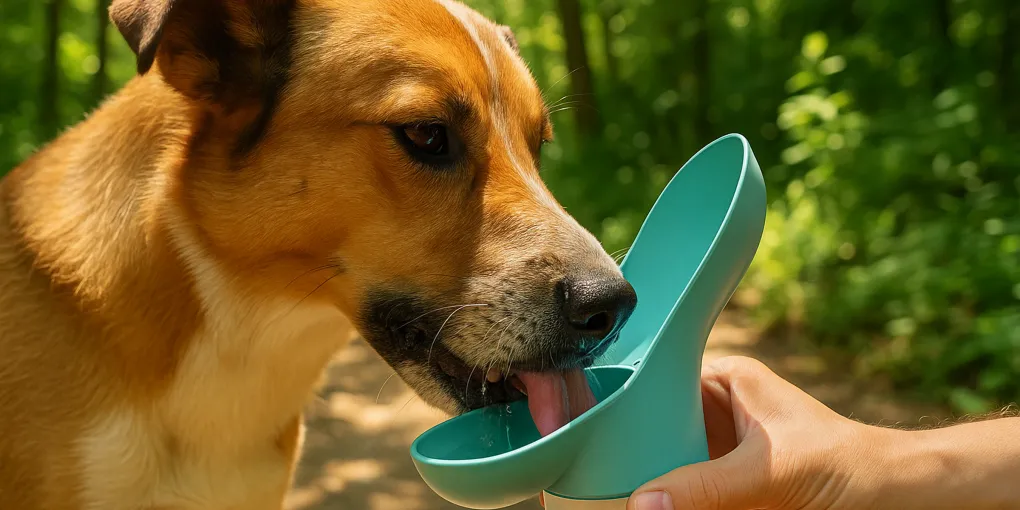
PETKIT Eversweet Travel Water Bottle
Best OverallCapacity: 300 mL / 10 oz
~$20–$30
Quick Comparison
| Product | Key Specs | Price Range | Buy |
|---|---|---|---|
| |
| ~$20–$30 | Check Price |
| |
| ~$10–$15 | Check Price |
| |
| ~$15–$25 | Check Price |
| |
| ~$25–$40 | Check Price |
Contains affiliate links — we may earn a small commission at no extra cost to you.
Best Smart Pet Water Bottle in 2026
The best smart pet water bottle for most dog owners is the PETKIT Eversweet Travel Bottle (PSR 4.4/5) — a 300 mL BPA-free Tritan bottle with a 4-layer activated carbon filter, one-hand operation, and a compact design appropriate for daily walks. For owners who prioritize value and larger capacity over filtration, the MalsiPree Dog Water Bottle (PSR 4.3/5) provides reliable one-hand squeeze dispensing at the lowest price in this review.
TL;DR
- Best Overall: PETKIT Eversweet — 4-layer carbon filter, 300 mL, BPA-free Tritan, one-hand (PSR 4.4/5)
- Best Value: MalsiPree — 350 mL, squeeze-dispense, BPA-free, lowest price (PSR 4.3/5)
- Best Large Capacity: Lesotc — 750 mL, lever-lock, appropriate for large breeds on extended walks (PSR 4.3/5)
- Best Insulated: Tuff Pupper PupFlask — stainless steel, temperature retention for summer hikes (PSR 4.3/5)
- Key fact: Offer water every 15–20 minutes during vigorous activity; dehydration risk increases significantly above 75°F
Why Proper Hydration Matters for Active Dogs
Dogs rely on panting as their primary thermoregulation mechanism — an evaporative process that consumes water rapidly during vigorous activity. Unlike humans, dogs have minimal sweat gland distribution (limited to paw pads), making panting the dominant heat dissipation pathway. Dehydration as little as 2% of body weight measurably impairs physical performance; progressive dehydration increases heat stroke risk, particularly in brachycephalic breeds (Bulldogs, Pugs, French Bulldogs) whose restricted airways limit panting efficiency.
Hall et al. (2020, PMID: 32555323) identified vigorous exercise in warm temperatures as the primary risk factor for heat-related illness in UK dogs — a population well-studied because of the climate. Regular water breaks are the most effective preventive measure during walks and hikes.
Review Methodology
PSR evaluated pet travel water bottles using material safety review (BPA-free certification), filtration type and effectiveness assessment, owner community synthesis (Amazon verified: PETKIT 6,000+; MalsiPree 15,000+; Lesotc 8,000+; Tuff Pupper 3,000+), and PSR composite scoring. PSR Composite = Safety (30%) + Efficacy & Performance (25%) + Real-World Acceptance (20%) + Value (15%) + Transparency & Brand Trust (10%).
PSR Score Breakdown
| Criterion | Weight | PETKIT Eversweet | MalsiPree | Lesotc | Tuff Pupper |
|---|---|---|---|---|---|
| Safety | 30% | 9.0 | 8.5 | 8.5 | 9.0 |
| Efficacy & Performance | 25% | 8.5 | 8.5 | 8.5 | 9.5 |
| Real-World Acceptance | 20% | 9.0 | 8.5 | 8.5 | 8.5 |
| Value | 15% | 8.5 | 9.5 | 9.0 | 7.5 |
| Transparency & Brand Trust | 10% | 9.0 | 9.0 | 8.5 | 8.0 |
| PSR Score | 4.4/5 | 4.3/5 | 4.3/5 | 4.3/5 |
Score notes:
- PETKIT Eversweet: Safety 9.0 — 4-layer carbon filter improves water quality; food-grade Tritan is BPA-free and taste-neutral. Real-World Acceptance 9.0 — wide-lip trough is large enough for medium breeds; lockable to prevent accidental leaking in a bag.
- MalsiPree: Value 9.5 — lowest per-unit price in review; squeeze-dispense mechanism is intuitive and consistent.
- Lesotc: 750 mL capacity serves large breeds through extended walks without refilling; lever-lock mechanism prevents bag leakage.
- Tuff Pupper: Efficacy & Performance 9.5 — stainless steel construction resists dents, odor absorption, and bacteria growth; insulated for temperature retention.
PETKIT Eversweet: Best Overall
The PETKIT Eversweet is the most complete travel water bottle in this review — combining a 4-layer activated carbon filter with one-hand lever-dispense, a sealed lock position for bag storage, and food-grade Tritan construction. The filter improves the palatability of municipal tap water by removing chlorine taste and odor, which increases voluntary intake by dogs sensitive to chlorinated water.
4-layer filtration: Carbon block layer absorbs chlorine, odor, and taste compounds from tap water. For outdoor stream water, filtration does not address Giardia or pathogens — use pre-filled clean tap water when off-trail.
Compact design: 300 mL capacity is optimized for daily neighborhood walks (20–45 minutes) rather than extended hikes — bring multiple bottles or a larger option for longer outings.
Lock mechanism: Lever locks closed for bag transport; one press opens and activates the trough for drinking; releasing the lever retracts undrunk water back into the bottle, reducing waste.
View PETKIT Eversweet on Amazon — Best for: Daily walks; dogs that prefer fresh-tasting water; owners who want filtration for tap water palatability.
MalsiPree Dog Water Bottle: Best Value
The MalsiPree provides squeeze-activated water dispensing — squeeze the body to push water into the integrated trough; release to retract unused water. At $10–$15, it delivers reliable functionality at the lowest price in this review. The 350 mL capacity is adequate for medium dogs on standard walks.
Squeeze dispensing: Intuitive for most owners; adjustable flow rate by squeeze pressure. The silicone-ringed trough creates a minor seal that prevents dripping when squeezed; release allows water to drain back into the body.
View MalsiPree Dog Water Bottle on Amazon — Best for: Budget-conscious owners; first travel water bottle purchase; dogs up to 30 kg on standard walks.
Lesotc Dog Water Bottle: Best Large Capacity
The Lesotc 750 mL provides enough capacity for a large dog (25–40 kg) through a 60–90 minute walk in warm weather without refilling. The lever-lock lid prevents bag leakage; the wide-mouth trough accommodates large breed muzzles. At $15–$25, it offers the best capacity-to-cost ratio in this review.
View Lesotc Dog Water Bottle on Amazon — Best for: Large and giant breeds; extended walks and light hiking; owners wanting fewer refills.
Tuff Pupper PupFlask: Best Insulated
The Tuff Pupper PupFlask Stainless uses double-wall vacuum-insulated stainless steel to maintain water temperature for 4–6 hours — keeping water cool in summer heat, which increases voluntary intake. Stainless steel resists odor absorption and bacterial biofilm buildup better than plastic alternatives, making it the best long-term hygiene choice.
View Tuff Pupper PupFlask on Amazon — Best for: Summer hiking; owners who prioritize durability and hygienic materials over price; hot-climate dogs who need cool water to drink willingly.
Frequently Asked Questions
How much water does a dog need on a hike?
Dogs need 50–70 mL/kg per day at rest; vigorous hiking in warm temperatures requires up to 30–60 mL/kg per hour. A 20 kg dog hiking in summer needs 600–1200 mL per hiking hour. Offer water every 15–20 minutes during strenuous activity.
Can dogs drink from outdoor streams and puddles?
Outdoor water sources harbor Giardia, Cryptosporidium, and Leptospira. Providing clean water from your bottle reduces infection risk. Filtered bottles improve municipal tap water palatability but do not render outdoor stream water safe.
What does a filtered pet water bottle actually filter?
Activated carbon filters (PETKIT) remove chlorine, odor, and some organic compounds from tap water — improving taste. They do not filter Giardia, bacteria, or heavy metals. Use filtered bottles to improve tap water palatability, not to treat outdoor water sources.
What size bottle do I need for my dog?
Under 10 kg on a 1-hour walk: 300–350 mL. Medium dog (10–25 kg) for 1–2 hours: 500–750 mL. Large dog (25+ kg) or extended hikes: 750 mL minimum. In summer heat, always bring more than estimated.
Are pet water bottles easy to clean?
Most are top-rack dishwasher safe or hand-washable. Disassemble and air-dry after each use. Clean weekly with a bottle brush, especially the trough mechanism. Replace carbon filters every 2–3 months (PETKIT). Stainless steel resists odor and biofilm better than plastic.
Final Verdict
For most dog owners, the PETKIT Eversweet (PSR 4.3/5) delivers the best combination of filtration, one-hand convenience, and compact daily-walk design. The MalsiPree (PSR 4.3/5) is the best choice for budget-conscious owners needing a reliable squeeze-dispense bottle. Large breed owners and those on longer outings will find the Lesotc 750 mL (PSR 4.3/5) provides the capacity needed without constant refilling. The Tuff Pupper PupFlask (PSR 4.3/5) is the right investment for summer hikers who need temperature retention and long-term durability.
Research Citations
-
Hall EJ, Carter AJ, O’Neill DG (2020). Incidence and risk factors for heat-related illness (heatstroke) in UK dogs under primary veterinary care in 2016. Scientific Reports, 10(1):9128. DOI: 10.1038/s41598-020-66015-8. PMID: 32555323
-
Robertson ID, Irwin PJ, Lymbery AJ, Thompson RC (2000). The role of companion animals in the emergence of parasitic zoonoses. International Journal for Parasitology, 30(12-13):1369–1377. DOI: 10.1016/S0020-7519(00)00134-X. PMID: 11113262
Related PSR Guides
- Best Dog Cooling Mat — conductive cooling mats for hot weather
- Best Dog Smart Feeder — scheduled automated feeders
- Best Dog Activity Tracker — activity and hydration monitoring
- Best Smart Pet Door — self-service outdoor access for active dogs
Frequently Asked Questions
- Dogs need approximately 50–70 mL of water per kilogram of body weight per day under normal conditions; vigorous exercise in warm temperatures increases this significantly. As a field guideline: offer 30–60 mL per kg per hour of vigorous activity in warm conditions (above 75°F / 24°C). A 20 kg (44 lb) Labrador needs 600–1200 mL per hour of hard hiking in summer heat. Bring more than you expect to need — dehydration develops quickly in active dogs and can lead to heat stroke. Offer water every 15–20 minutes during strenuous activity.
- Outdoor water sources — streams, ponds, puddles — can harbor Giardia, Cryptosporidium, Leptospira, and other pathogens that cause gastrointestinal illness and, in the case of Leptospira, potentially serious systemic disease. Giardia is particularly common in surface water frequented by wildlife. Robertson et al. (2000) documented the role of environmental water sources in companion animal pathogen exposure. Providing clean water from your bottle reduces this risk; if your dog drinks from streams anyway, a Giardia booster and leptospirosis vaccine (where appropriate) reduce infection risk.
- Filtered pet water bottles (like PETKIT Eversweet) use activated carbon filters that remove chlorine, sediment, and some organic compounds — improving taste and odor from tap water. They do NOT effectively filter Giardia cysts, heavy metals, or bacteria at flow rates consistent with a drinking bottle. Filtered bottles are best for improving the palatability of treated municipal water on walks, not for making outdoor stream water safe. For truly contaminated outdoor sources, bring pre-filled water from home.
- For a small dog (under 10 kg / 22 lbs) on a 1-hour walk, 300–350 mL is adequate. For a medium dog (10–25 kg) on a 1–2 hour walk, 500–750 mL is appropriate. For a large dog (25+ kg) or extended hikes, carry 750 mL minimum and plan to refill or carry multiple bottles. The 300–350 mL bottles (PETKIT, MalsiPree) are convenient for daily neighborhood walks; the 750 mL Lesotc handles longer outings without refilling. In summer heat, err on the side of larger capacity.
- Most plastic pet water bottles (PETKIT, MalsiPree, Lesotc) are top-rack dishwasher safe or hand-washable with a bottle brush. The trough/bowl component typically detaches for thorough cleaning. Mold and biofilm accumulation in the lid mechanism is the most common maintenance issue — rinse and air-dry after each use, and disassemble weekly for cleaning. Stainless steel insulated bottles (Tuff Pupper) are more resistant to odor absorption but require bottle brushes for the narrow interior. Replace carbon filter cartridges per manufacturer schedule (typically 2–3 months for PETKIT).