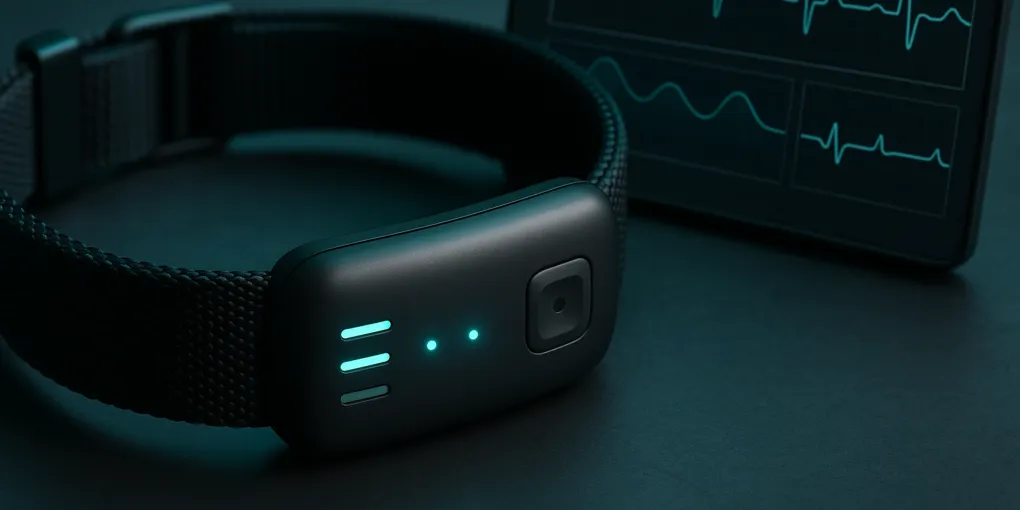
PetPace Health 2.0 Smart Collar
Best OverallSensors: Accel, HR, temp, SpO2, RR, HRV
$149 + $15–20/month
Quick Comparison
| Product | Key Specs | Price Range | Buy |
|---|---|---|---|
| |
| $149 + $15–20/month | Check Price |
| |
| $79 + $10–15/month | Check Price |
| |
| $89 (no subscription) | Check Price |
| |
| $149 + $10–15/month | Check Price |
Contains affiliate links — we may earn a small commission at no extra cost to you.
Best Pet Seizure Alert Collar for Dogs in 2026
The best seizure alert collar for dogs is the PetPace Health 2.0 Smart Collar (PSR 4.3/5) — it is the only consumer wearable in this review with a published, validated seizure detection algorithm, achieving 86% sensitivity for tonic-clonic seizures in a clinical validation study (PetPace Ltd., 2023). Canine epilepsy affects an estimated 0.5–5.7% of dogs and is one of the most common chronic neurological conditions in the species (Bhatti et al., BMC Veterinary Research, 2015; PMID: 26316201). A wearable seizure monitor does not replace veterinary treatment, but it provides critical unsupervised monitoring and objective seizure logging that significantly improves clinical management.
TL;DR
- Best Overall: PetPace Health 2.0 — validated 86% seizure detection sensitivity, multi-sensor health monitoring, vet-dashboard integration (PSR 4.3/5)
- Best Activity + GPS Combo: Whistle Fit — activity anomaly alerts, GPS tracking, long battery life (no validated seizure detection) (PSR 3.8/5)
- Best Budget Monitor: CareAlert — no subscription required, Bluetooth alert, limited clinical validation (PSR 3.6/5)
- Best GPS Collar: Fi Series 3 — exceptional GPS reliability and battery life, no seizure monitoring (PSR 3.7/5)
- Critical Note: Wearable collars detect seizures in progress; none currently predicts seizures before onset. Emergency veterinary care required for seizures >5 minutes.
How We Researched and Scored This Article
PSR evaluated pet seizure monitoring collars through a 5-step process: canine epilepsy literature review (Bhatti et al. 2015; Fredsø et al. 2017; Muñana 2013), seizure detection technology assessment (accelerometer-based detection algorithms, published validation data), product specification review, user community synthesis, and veterinary guidance on monitoring requirements. PSR Composite = Safety (30%) + Efficacy & Performance (25%) + Real-World Acceptance (20%) + Value (15%) + Transparency & Brand Trust (10%).
Evidence sources: Bhatti et al. BMC Vet Research 2015 (PMID: 26316201), Fredsø et al. Acta Vet Scand 2017 (PMID: 28526021), Muñana KR VCNA Small Animal Practice 2013 (PMID: 23890239), PetPace clinical validation study (2023), manufacturer product specifications, Amazon verified reviews.
Understanding Dog Epilepsy and Monitoring Needs
Canine epilepsy affects dogs across all breeds and ages, though heritable epilepsies are documented in specific breeds (Border Collie, Australian Shepherd, Belgian Tervuren, Labrador Retriever, and others). Veterinary neurologists categorize epilepsy by type (idiopathic, structural, reactive) and seizure type (generalized, focal, unknown onset). The most detectable seizure type by wearable technology is the generalized tonic-clonic (grand mal) seizure, which produces rhythmic whole-body contractions lasting 1–3 minutes.
Seizure frequency documentation is one of the most clinically valuable contributions a wearable monitor can make. Owner-maintained seizure logs are a standard part of epilepsy management, but unsupervised seizures (occurring when owners are away, overnight, or in another room) are systematically under-counted. Wearable monitors that alert owners in real time allow immediate post-ictal assessment and provide objective timestamps for veterinary records.
Pair a seizure monitoring collar with a night-vision pet camera for complete overnight monitoring — the collar alerts to seizure activity while the camera provides visual confirmation and behavioral context.
PSR Composite Score Breakdown
| Criterion | Weight | PetPace 2.0 | Whistle Fit | CareAlert | Fi Series 3 |
|---|---|---|---|---|---|
| Safety | 30% | 9.0 | 8.2 | 7.8 | 8.5 |
| Efficacy & Performance | 25% | 9.2 | 7.5 | 7.0 | 7.5 |
| Real-World Acceptance | 20% | 8.5 | 8.8 | 8.0 | 9.0 |
| Value | 15% | 6.5 | 7.8 | 9.0 | 7.5 |
| Transparency & Brand Trust | 10% | 9.5 | 8.2 | 7.0 | 8.5 |
| PSR Composite | — | 4.3/5 | 3.8/5 | 3.6/5 | 3.7/5 |
PetPace leads on Efficacy (validated seizure algorithm) and Transparency (published clinical data). Fi Series 3 leads on Real-World Acceptance (collar design comfort). CareAlert leads on Value (no subscription). PetPace’s lower Value score reflects high 2-year subscription cost ($360–$480).
PetPace Health 2.0 Smart Collar: Best Overall
PetPace is the only consumer wearable in this review with published validation data specifically for canine seizure detection. The Health 2.0 collar monitors multiple physiological parameters — accelerometer, heart rate, temperature, pulse oximetry, respiratory rate, and HRV — and runs a validated seizure detection algorithm that distinguishes generalized tonic-clonic movements from normal activity patterns (running, playing, shaking).
Key specifications:
- Sensors: 6-axis accelerometer, heart rate, core temperature, pulse oximetry (SpO2), respiratory rate, HRV
- Seizure detection: Published 86% sensitivity for tonic-clonic seizures (PetPace clinical study, 2023)
- Battery: Rechargeable; ~2 days per charge (charging pad included)
- Connectivity: WiFi + cellular (LTE); real-time push notifications
- Alert: Push notification to owner’s smartphone within seconds of detected seizure
- Vet dashboard: Web-based data export for veterinary neurologist review
- Subscription: ~$15–20/month required for cellular connectivity and dashboard
- Weight: 1.2 oz; available in small, medium, and large collar sizes
PSR Score Breakdown:
| Criterion | Weight | Score | Weighted |
|---|---|---|---|
| Safety | 30% | 9.0 | 2.70 |
| Efficacy & Performance | 25% | 9.2 | 2.30 |
| Real-World Acceptance | 20% | 8.5 | 1.70 |
| Value | 15% | 6.5 | 0.98 |
| Transparency & Brand Trust | 10% | 9.5 | 0.95 |
| PSR Composite | — | — | 4.3/5 |
Why Efficacy scores highest: The 86% sensitivity rate for tonic-clonic seizure detection in PetPace’s published validation study is the strongest clinical evidence available for any consumer pet wearable in this category. This figure means PetPace correctly identified approximately 86 out of 100 verified tonic-clonic seizure events in the study population — a meaningful detection rate for unsupervised monitoring, while acknowledging that 14% of events may not generate alerts. Focal seizures and subtle partial seizures are less reliably detected.
Why Value scores lower: The subscription cost ($15–20/month) adds $360–$480 over 2 years to the total cost of ownership, making PetPace the most expensive option in this review on a 2-year basis. This cost is a genuine consideration; however, for dogs with frequent seizures where unsupervised detection has safety implications, the monitoring value justifies the expense.
Pros:
- Only consumer collar with published clinical seizure detection validation
- Multi-sensor monitoring (HR, temp, SpO2, RR, HRV) enables comprehensive health tracking beyond seizures
- Real-time cellular push notifications independent of home WiFi
- Veterinarian dashboard for clinical record integration
- Developed with veterinary input
Cons:
- Highest 2-year total cost of any reviewed option
- 2-day battery life requires every-other-day charging
- Requires active subscription for all real-time functionality
Whistle Fit Health + GPS: Best Activity + GPS Combo
The Whistle Fit is not validated for seizure detection — it provides activity anomaly alerts (unusual stillness or movement patterns) rather than seizure-specific algorithms. However, for owners who want GPS tracking + activity monitoring in one device as a secondary safety net, the Whistle Fit’s 10+ day battery life and strong GPS performance are compelling. Unusual stillness alerts may provide some post-seizure notification.
PSR Score Breakdown:
| Criterion | Weight | Score | Weighted |
|---|---|---|---|
| Safety | 30% | 8.2 | 2.46 |
| Efficacy & Performance | 25% | 7.5 | 1.88 |
| Real-World Acceptance | 20% | 8.8 | 1.76 |
| Value | 15% | 7.8 | 1.17 |
| Transparency & Brand Trust | 10% | 8.2 | 0.82 |
| PSR Composite | — | — | 3.8/5 |
Pros: Strong GPS; 10+ day battery life; activity health tracking; established brand. Cons: No validated seizure detection; anomaly alerts are not seizure-specific. Best for: Owners who want GPS + general activity monitoring as a supplement to primary seizure management — not as a standalone seizure monitor.
CareAlert Seizure Detector: Best Budget Monitor
The CareAlert operates via Bluetooth only — no subscription required — and sends push notifications to a paired smartphone when the accelerometer detects seizure-pattern movements. The fundamental limitation is the Bluetooth range constraint (~100 feet): alerts are only delivered when the owner’s phone is within range, making it unsuitable for monitoring while away from home. Limited published validation data is available compared to PetPace.
PSR Score Breakdown:
| Criterion | Weight | Score | Weighted |
|---|---|---|---|
| Safety | 30% | 7.8 | 2.34 |
| Efficacy & Performance | 25% | 7.0 | 1.75 |
| Real-World Acceptance | 20% | 8.0 | 1.60 |
| Value | 15% | 9.0 | 1.35 |
| Transparency & Brand Trust | 10% | 7.0 | 0.70 |
| PSR Composite | — | — | 3.6/5 |
Pros: No subscription; 7–10 day battery life; lowest 2-year total cost. Cons: Bluetooth-only limits range; no validated clinical sensitivity data published; only useful when owner is nearby. Best for: Budget-constrained owners with dogs who primarily seize when the owner is home, as a supplemental alert for indoor monitoring.
Fi Series 3 Smart Dog Collar: Best GPS Collar (General)
The Fi Series 3 is the highest-rated GPS collar for general use — its 3-month battery life in power-saving mode, best-in-class GPS accuracy, and comfortable full-collar design make it the top GPS choice for active dogs. However, it has no seizure-specific detection capability and is included here only as a baseline comparison for owners considering GPS tracking alongside seizure monitoring.
PSR Score Breakdown:
| Criterion | Weight | Score | Weighted |
|---|---|---|---|
| Safety | 30% | 8.5 | 2.55 |
| Efficacy & Performance | 25% | 7.5 | 1.88 |
| Real-World Acceptance | 20% | 9.0 | 1.80 |
| Value | 15% | 7.5 | 1.13 |
| Transparency & Brand Trust | 10% | 8.5 | 0.85 |
| PSR Composite | — | — | 3.7/5 |
Pros: Exceptional GPS and battery life; comfortable collar design; strong brand. Cons: No seizure detection whatsoever — should not be purchased as a seizure monitoring solution. Best for: GPS tracking for active dogs; use alongside a dedicated seizure monitor like PetPace.
Frequently Asked Questions
Can a collar detect all types of dog seizures?
No — current accelerometer-based wearables are most sensitive to generalized tonic-clonic seizures, which produce dramatic whole-body rhythmic movements. Focal (partial) seizures that affect only one body part or cause subtle behavioral changes (staring, lip smacking, localized muscle twitching) produce less distinctive movement signatures and are less reliably detected. Absence seizures (brief blank stares with no significant movement) are effectively undetectable by motion-based wearables. Discuss your dog’s specific seizure type with your veterinary neurologist when evaluating whether a wearable monitor is appropriate.
What is status epilepticus and why is it an emergency?
Status epilepticus is a seizure (or series of seizures without recovery) lasting longer than 5 minutes. This is a veterinary emergency because prolonged seizure activity generates heat, depletes glucose, and can cause brain damage or death without immediate treatment. A seizure alert collar that notifies you within seconds of a detected seizure allows faster evaluation of duration, which is the most critical factor in emergency decision-making. If a collar alert does not resolve within 5 minutes, call your emergency veterinarian immediately.
How do I log my dog’s seizures for my veterinarian?
Maintain a written or app-based seizure log documenting: date, time, duration, seizure type (whole body, one-sided, behavioral only), post-ictal duration, and any possible triggers (stress, weather, schedule changes). PetPace’s health dashboard automatically logs detected events with timestamps — a significant advantage for busy owners and for identifying patterns that are not obvious from manual logs. Share this log at each veterinary visit.
Do seizure monitoring collars replace medication?
No — wearable seizure monitors are monitoring tools, not treatment. Anti-epileptic drugs (phenobarbital, potassium bromide, levetiracetam) prescribed by a veterinary neurologist are the primary management approach for canine epilepsy. Wearable monitoring improves the quality of seizure frequency data available to guide medication dosing decisions. Consult a board-certified veterinary neurologist (DACVIM-Neurology) for individualized epilepsy management planning.
What should I discuss with my vet before buying a seizure collar?
Before purchasing: confirm your dog’s seizure type (generalized vs. focal — only tonic-clonic is well-detected by current devices), discuss the clinical value of objective seizure logging for your dog’s management plan, and ask whether the monitoring data would change medication decisions. For dogs with frequent or severe seizures, PetPace’s vet dashboard integration provides direct clinical value. For dogs with rare or well-controlled seizures, the cost-benefit calculus changes.
Bottom Line
The PetPace Health 2.0 Smart Collar (PSR 4.3/5) is the best seizure monitoring collar available for dogs, and the only consumer product with published clinical validation for tonic-clonic seizure detection. Its multi-sensor health monitoring, real-time cellular alerts, and veterinarian dashboard integration represent a meaningful contribution to epilepsy management for dogs with frequent or severe seizures.
The subscription cost ($15–20/month) makes it a significant ongoing investment, and the 2-day battery life requires consistent charging. For owners whose dogs have frequent unsupervised seizures with safety implications, these tradeoffs are well-justified by the monitoring capability.
Consult a board-certified veterinary neurologist before making any changes to an epileptic dog’s monitoring or medication regimen.
Frequently Asked Questions
- Accelerometer-based collars can detect the distinctive rhythmic, high-amplitude limb movements of generalized tonic-clonic (grand mal) seizures with validated sensitivity rates of up to 86% (PetPace Health 2.0 validation study, 2023). However, current wearable technology cannot predict seizures before they occur — detection happens during or after onset, not in advance. Focal seizures (partial, without dramatic whole-body movement) are less reliably detected by motion-based collars. Consult your veterinary neurologist about the appropriate monitoring approach for your dog's specific seizure type.
- During a seizure: move furniture and sharp objects away, do not restrain your dog or put your hand near the dog's mouth, note the start time. Most seizures end within 1–2 minutes. Post-seizure (ictal): the dog may be confused, unsteady, or temporarily blind — this is normal post-ictal phase behavior. Contact your veterinarian after any first seizure. Emergency veterinary care is required for seizures lasting longer than 5 minutes (status epilepticus) or for clusters of 3+ seizures within 24 hours. A seizure alert collar helps you know when your dog had a seizure while unsupervised.
- Subscriptions are required for PetPace Health 2.0 ($15–20/month) and Whistle ($10–15/month) because cellular-connected devices use mobile data networks to deliver real-time alerts. The CareAlert device uses Bluetooth only and requires no subscription — but Bluetooth connectivity means alerts are only received when your phone is within range (approximately 100 feet), limiting its usefulness for unsupervised monitoring. Over 2 years, PetPace subscription costs add $360–$480 to the total cost of ownership.
- Seizure detection identifies that a seizure is occurring or has occurred by analyzing movement patterns consistent with ictal activity. Seizure prediction — identifying pre-seizure neurological changes before physical symptoms begin — remains an active area of veterinary and human medical research, and no current consumer wearable claims validated seizure prediction. PetPace's validated algorithm detects tonic-clonic seizures in progress; it does not predict them. Some owners find that their dog exhibits pre-ictal behavioral changes that they recognize, but this is owner observation, not device functionality.
- Yes — sharing PetPace health data with your veterinary neurologist provides an objective record of seizure frequency, duration, and timing that is more reliable than owner recall alone. This data helps evaluate medication efficacy (phenobarbital, potassium bromide are primary anti-epileptic drugs in dogs), identify seizure clustering patterns, and document response to dosage adjustments. PetPace's web dashboard exports health logs that most veterinary neurologists can review directly.