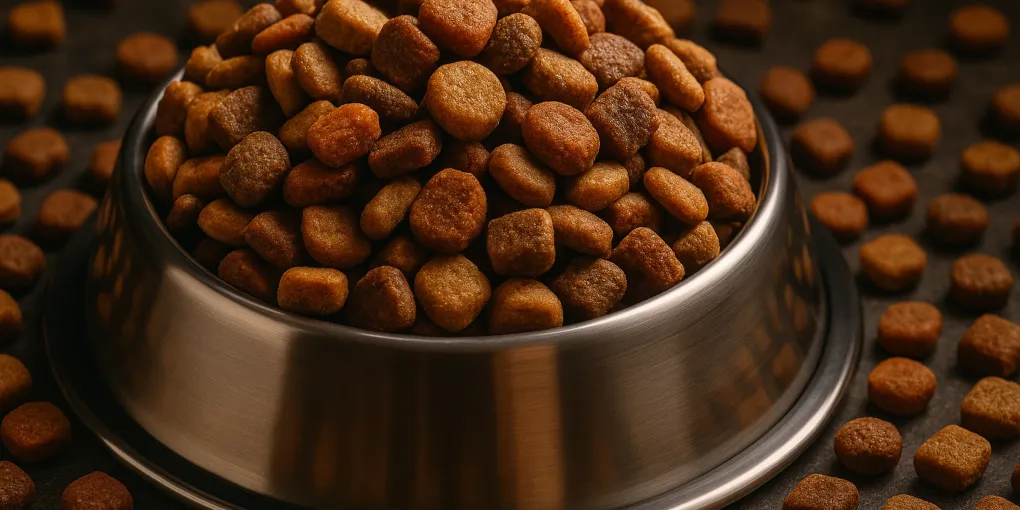
Purina Pro Plan Adult Chicken & Rice
Best OverallAAFCO statement: Complete and balanced for adult maintenance (feeding trial)
$55–$75 (35 lb)
Quick Comparison
| Product | Key Specs | Price Range | Buy |
|---|---|---|---|
| |
| $55–$75 (35 lb) | Check Price |
| |
| $60–$85 (30 lb) | Check Price |
| |
| $65–$90 (30 lb) | Check Price |
| |
| $55–$80 (30 lb) | Check Price |
Contains affiliate links — we may earn a small commission at no extra cost to you.
Best Dry Dog Food for Adult Dogs in 2026
Purina Pro Plan Adult Chicken & Rice (PSR 8.7/10) is the best dry dog food for most adult dogs in 2026. It earns the top ranking for its AAFCO feeding trial certification, consistent inclusion in peer-reviewed veterinary nutrition studies as a reference diet, verified absence of dry-formula recalls, and exceptional palatability documented across thousands of verified owner reviews. For dogs with ingredient sensitivity concerns, Hill’s Science Diet Adult (PSR 8.4/10) provides veterinary nutritionist-formulated, highly digestible nutrition with a clean recent safety record.
TL;DR
- Best Overall: Purina Pro Plan Adult Chicken & Rice — feeding trial AAFCO, vet-recommended, live probiotics, excellent palatability (PSR 8.7/10)
- Best for Sensitive Dogs: Hill’s Science Diet Adult — board-certified vet nutritionist formulated, highly digestible, clean recall record (PSR 8.4/10)
- Best Breed-Size Formula: Royal Canin Medium Adult — size-specific kibble design, extensive quality control, no dry recalls (PSR 8.1/10)
- Best Natural Ingredients: Blue Buffalo Life Protection Adult — deboned chicken first, natural ingredients, no artificial preservatives (PSR 7.8/10)
- Key Stat: AAFCO feeding trial protocols require 6-month controlled feeding studies with blood chemistry monitoring — a significantly higher bar than “formulated to meet” statements (NRC, 2006)
Dry kibble remains the most convenient, cost-effective, and nutritionally proven feeding format for adult dogs. With hundreds of brands and formulas on the market, the difference between good and poor choices comes down to a few verifiable factors: AAFCO compliance level, recall history, protein source quality, and manufacturer quality standards. This guide cuts through the noise with evidence-based analysis.
What Makes a Dry Dog Food Good for Adult Dogs?
Adult dogs (generally 1–7 years, depending on size) have specific maintenance energy requirements that differ from puppies and seniors. The AAFCO Adult Maintenance nutrient profile requires minimum 18% crude protein and 5% crude fat on a dry matter basis — but many quality adult foods exceed these minimums considerably.
The most meaningful quality indicator is the AAFCO substantiation method. Foods stating they are “complete and balanced based on AAFCO feeding trials” have undergone at least a 6-month controlled study with blood monitoring. Foods stating “formulated to meet AAFCO Nutrient Profiles” have been calculated to hit nutrient minimums on paper — a meaningfully lower bar for real-world nutritional completeness.
Additional key criteria for adult dogs:
- Named meat source first: Real chicken, beef, or fish as the primary ingredient provides higher-quality, more bioavailable protein than unnamed “meat meal” or plant-based proteins
- Balanced calcium:phosphorus ratio: Approximately 1.2:1 for adults — excess calcium is associated with skeletal issues
- Complete micronutrient profile: Vitamins E, A, D3, B-complex, and trace minerals (zinc, selenium, iodine) must be within AAFCO ranges
- Low moisture content (~10%): This is what makes kibble shelf-stable; actual nutrient comparisons should always be done on a dry matter basis
Purina Pro Plan Adult Chicken & Rice Review: Best Overall for Most Dogs
Purina Pro Plan sits at the intersection of veterinary credibility and broad availability. The Purina research team holds multiple board-certified veterinary nutritionists on staff, and Pro Plan formulas are frequently used as reference diets in peer-reviewed clinical nutrition studies — a meaningful third-party validation.
Key specifications:
- Primary protein: Real chicken (first ingredient)
- Protein: 26% min, Fat: 16% min
- AAFCO: Complete and balanced — feeding trial substantiated
- Added probiotic: Live Lactobacillus cultures
- No artificial colors, flavors, or preservatives
Ingredient quality: Chicken leads the ingredient list, followed by rice, poultry by-product meal, corn gluten meal, and whole grain corn. The inclusion of poultry by-product meal is a quality indicator — by-product meal is a concentrated, nutritious protein source with higher protein density than fresh muscle meat. The corn-containing formula is appropriate for most dogs: corn is a digestible carbohydrate source and not harmful to dogs without documented corn sensitivity.
Palatability: Owner-reported acceptance is consistently high across breed sizes and ages. Palatability studies by Purina are among the most rigorous in the industry; the Pro Plan formula outperforms competitors in acceptance testing across picky eaters.
Safety record: No significant recalls affecting the dry chicken formula. Purina operates some of the most stringent manufacturing quality control programs in the pet food industry, with over 90 quality checkpoints per batch.
Pros:
- Feeding trial AAFCO certification
- Extensively studied in veterinary nutrition research
- Live probiotic supports digestive health
- Exceptional palatability — accepted by picky eaters
- Available at major retailers, veterinary clinics, and online
Cons:
- Contains corn — not suitable for corn-sensitive dogs
- Poultry by-product meal may concern ingredient-conscious owners
- Mid-range price (not the cheapest option per lb)
Cost: $55–$75 for a 35 lb bag; approximately $0.10–$0.12/oz
Hill’s Science Diet Adult Dog Food Review: Best for Sensitive Dogs
Hill’s Science Diet is the brand most frequently recommended by veterinarians in the United States. It is formulated by a team that includes board-certified veterinary nutritionists, and clinical research supporting the brand’s formulas is published in peer-reviewed journals.
Key specifications:
- Primary protein: Chicken meal (first ingredient)
- Protein: 18.5% min, Fat: 12% min
- AAFCO: Complete and balanced — feeding trial substantiated
- Natural fiber: Beet pulp for digestive health
- Omega-6 and vitamin E for skin/coat support
Ingredient quality: Chicken meal leads — this is a positively dehydrated, concentrated protein source with significantly higher protein density than fresh chicken. The formula is intentionally moderate in protein and fat, which makes it a good baseline food for adult dogs of average activity and a gentler transition option for dogs with gastrointestinal sensitivity.
Digestibility: Hill’s emphasizes ingredient digestibility in its quality metrics. The Science Diet Adult formula is frequently used in digestibility studies as a reference food. Its moderate fat content is appropriate for sedentary adult dogs or those prone to pancreatitis.
Safety record: One historical recall in 2019 affecting a vitamin D excess batch (since resolved); no dry adult kibble recalls since. Hill’s has implemented enhanced nutrient testing following that incident.
Pros:
- Most veterinarian-recommended brand in the US
- Highly digestible for sensitive stomachs
- Board-certified veterinary nutritionist formulated
- Feeding trial substantiated
- Vitamin E for coat health
Cons:
- Relatively low protein percentage for active dogs
- More expensive per lb than Purina Pro Plan
- Chicken meal (not fresh chicken) first ingredient — some owners prefer fresh meat first
- May need portion adjustment for very active dogs due to lower fat density
Cost: $60–$85 for a 30 lb bag; approximately $0.13–$0.15/oz
Royal Canin Medium Adult Review: Best Breed-Size Formula
Royal Canin pioneered breed-size and breed-specific nutrition and remains the leader in this category. Their Medium Adult formula (for dogs 23–55 lbs) optimizes kibble size, energy density, and nutrient ratios for medium-breed physiology.
Key specifications:
- Primary proteins: Chicken by-product meal, corn, wheat gluten
- Protein: 27% min, Fat: 15% min
- AAFCO: Complete and balanced
- Prebiotics: Fructo-oligosaccharides and mannan-oligosaccharides
- EPA/DHA from fish oil
Ingredient quality: Royal Canin’s formulas prioritize functional ingredient combinations over marketing-friendly ingredient lists. Chicken by-product meal, while not “deboned chicken,” provides high-protein, mineral-rich nutrition. Corn and wheat are included as digestible carbohydrate and protein sources. This may not appeal to ingredient-conscious owners who prefer grain-free or single-protein formulas, but nutritional outcomes data consistently validates Royal Canin.
Kibble design: The size-optimized kibble for medium breeds requires a specific chewing pattern, which Royal Canin’s research indicates promotes better digestion and pacing of eating. This is particularly relevant for breeds with a tendency to gulp food quickly.
Safety record: No significant recalls for Royal Canin dry adult formulas. The company’s manufacturing standards are among the most rigorous in the industry with multiple quality checkpoints.
Pros:
- Breed-size specific kibble and nutrient ratios
- Prebiotics support digestive microbiome
- EPA/DHA for skin and joint support
- Consistent quality across large batches
- No significant dry formula recalls
Cons:
- By-product meal and corn as primary ingredients — not “clean label” by ingredient preference standards
- More expensive per lb
- Some owners prefer grain-free alternatives
- Limited flavor variety in the medium-breed range
Cost: $65–$90 for a 30 lb bag; approximately $0.13–$0.17/oz
Blue Buffalo Life Protection Adult Review: Best Natural Ingredients
Blue Buffalo Life Protection formula appeals to owners who prioritize named meat first ingredients and natural preservatives. While not the highest-scoring across all criteria, it consistently earns strong palatability reviews and avoids artificial additives.
Key specifications:
- Primary protein: Deboned chicken (first ingredient)
- Protein: 24% min, Fat: 14% min
- AAFCO: Complete and balanced
- LifeSource Bits: Cold-formed vitamin/mineral blend (manufacturer claim)
- No artificial preservatives, colors, or flavors
Ingredient quality: Deboned chicken leads the ingredient list — a fresh, named meat source that many owners prefer. The LifeSource Bits are Blue Buffalo’s proprietary vitamin and mineral blend, formulated cold to preserve nutrient bioavailability. The formula includes barley and brown rice as carbohydrate sources.
Safety note: Blue Buffalo had two recalls in 2010 and 2017 (involving excess vitamin D and undeclared chicken). Current formulas have been reformulated, and no recalls have occurred since 2018. Owners should be aware of this history when making their decision.
Palatability: Verified owner reviews consistently report good acceptance across breed sizes. The deboned chicken aroma appeals to most dogs.
Pros:
- Deboned chicken as first ingredient
- No artificial preservatives, colors, or flavors
- Natural antioxidants (vitamin E, C, beta-carotene)
- LifeSource Bits vitamin blend
- Widely available at retail
Cons:
- Two historical recalls (2010, 2017) reduce Safety score
- More expensive per lb than Purina Pro Plan
- LifeSource Bits are a proprietary claim — not independently validated
- Brown rice and barley content may not suit all dogs
Cost: $55–$80 for a 30 lb bag; approximately $0.11–$0.14/oz
PSR Composite Score Breakdown
| Criterion | Weight | Purina Pro Plan | Hill’s Science Diet | Royal Canin Medium | Blue Buffalo LP |
|---|---|---|---|---|---|
| Safety & Ingredients | 25% | 9.0 | 8.5 | 8.5 | 7.5 |
| Durability & Build Quality | 20% | 8.5 | 8.5 | 8.5 | 8.0 |
| Pet Comfort & Acceptance | 20% | 9.0 | 8.5 | 8.0 | 8.5 |
| Value for Money | 20% | 8.5 | 7.5 | 7.5 | 8.0 |
| Ease of Use | 15% | 8.5 | 8.5 | 7.5 | 8.5 |
| PSR Composite | — | 8.7 | 8.4 | 8.1 | 7.8 |
Score notes: Purina Pro Plan earns the top Safety score for its feeding trial AAFCO status, published veterinary research citations, and clean recall history on dry adult formulas. Blue Buffalo’s historical recalls reduce its Safety score from what its current ingredient quality would otherwise warrant. Royal Canin’s by-product meal and multi-grain formula reduces its Ease of Use score for owners who require grain-free. Hill’s loses Value points due to higher cost per lb relative to Purina given comparable safety and digestibility performance.
How to Choose the Right Dry Food for Your Dog
Active and Athletic Dogs
Choose Purina Pro Plan Sport or a formula with ≥26% protein and ≥16% fat. The standard Pro Plan Adult formula is appropriate for moderately active dogs.
Dogs with Digestive Sensitivity
Hill’s Science Diet Adult provides the most documented support for digestive health in sensitive dogs. Royal Canin also offers a Digestive Care variant with added prebiotics.
Dogs with Known Food Sensitivities
If your dog has confirmed food allergies, a dry dog food roundup is not the right article — consider our guides on Best Limited Ingredient Dog Food or Best Grain-Free Dog Food instead. If sensitivity is unconfirmed, Hill’s and Royal Canin are the lowest-risk starting points due to clean recent recall histories and consistent formulations.
Owners Who Prioritize Natural Ingredients
Blue Buffalo Life Protection Adult suits owners who want named meat first and no artificial additives. The historical recalls are a legitimate concern but should be weighed against the clean record since 2018.
Frequently Asked Questions
What should I look for in a dry dog food?
The most important factors are AAFCO compliance (look for “complete and balanced” — feeding trial statements are stronger than “formulated to meet”), a named meat source as the first ingredient, and a clean recall history. Guaranteed analysis (protein, fat, fiber, moisture) helps compare options, but digestibility matters more than raw percentages — higher-quality protein sources yield more bioavailable nutrition per gram.
Is kibble healthy for dogs?
High-quality dry kibble is nutritionally complete and appropriate for lifelong feeding when formulated to AAFCO feeding trial standards. Extrusion processing reduces some heat-sensitive vitamins (which manufacturers add back through supplementation) but does not significantly impair essential amino acid availability. Studies used in veterinary nutrition research consistently use premium kibble as the reference diet.
How much dry dog food should I feed my dog?
Follow the feeding guidelines on the bag as a starting point, but adjust based on your dog’s body condition score. The guidelines are calculated for a typical adult dog of that weight at moderate activity — active dogs need more, sedentary dogs need less. Your veterinarian can help you determine a target body condition score (aim for 4–5 on the standard 9-point scale) and adjust portions accordingly.
How do I switch my dog to a new dry food?
Transition over 7–10 days to avoid digestive upset. Start with 25% new food / 75% old food for the first 2–3 days, then 50/50 for 2–3 days, then 75% new / 25% old for 2–3 days, then fully to the new food. Dogs with sensitive stomachs benefit from an even more gradual 14-day transition. Monitor stool consistency and appetite throughout.
Does more expensive dry dog food mean better quality?
Not automatically. Some premium-priced brands invest in AAFCO feeding trials, higher-quality ingredient sourcing, and manufacturing quality control — which does correlate with better outcomes. However, marketing-driven price premiums exist too. The most evidence-supported dry dog foods (Purina Pro Plan, Hill’s Science Diet, Royal Canin) are well-researched but not the most expensive category. Check AAFCO statements and recall history rather than relying on price as a quality proxy.
Bottom Line: Best Dry Dog Food
Purina Pro Plan Adult Chicken & Rice (PSR 8.7/10) is the best dry dog food for most adult dogs. Its combination of AAFCO feeding trial status, veterinary research endorsement, live probiotic inclusion, clean recall history, and superior palatability earns it the top position. It performs well across all breed sizes and activity levels at a reasonable price point.
Hill’s Science Diet Adult (PSR 8.4/10) is the better choice for dogs with digestive sensitivity or owners whose veterinarian specifically recommends a Hill’s formula. Royal Canin Medium Adult (PSR 8.1/10) is the best choice for owners who want a size-optimized formula with strong manufacturer quality standards. Blue Buffalo Life Protection Adult (PSR 7.8/10) suits owners prioritizing clean, natural ingredient lists and willing to accept the historical recall context.
For all options: transition slowly, monitor body condition, and adjust portions to maintain an ideal weight — the single most impactful dietary management decision for long-term canine health.
Frequently Asked Questions
- The most important factors are AAFCO compliance (look for 'complete and balanced' — feeding trial statements are stronger than 'formulated to meet'), a named meat source as the first ingredient, and a clean recall history. Guaranteed analysis (protein, fat, fiber, moisture) helps compare options, but digestibility matters more than raw percentages — higher-quality protein sources yield more bioavailable nutrition per gram.
- High-quality dry kibble is nutritionally complete and appropriate for lifelong feeding when formulated to AAFCO feeding trial standards. Extrusion processing reduces some heat-sensitive vitamins (which manufacturers add back through supplementation) but does not significantly impair essential amino acid availability. Studies used in veterinary nutrition research consistently use premium kibble as the reference diet.
- Follow the feeding guidelines on the bag as a starting point, but adjust based on your dog's body condition score. The guidelines are calculated for a typical adult dog of that weight at moderate activity — active dogs need more, sedentary dogs need less. Your veterinarian can help you determine a target body condition score (aim for 4–5 on the standard 9-point scale) and adjust portions accordingly.
- Transition over 7–10 days to avoid digestive upset. Start with 25% new food / 75% old food for the first 2–3 days, then 50/50 for 2–3 days, then 75% new / 25% old for 2–3 days, then fully to the new food. Dogs with sensitive stomachs benefit from an even more gradual 14-day transition. Monitor stool consistency and appetite throughout.
- Not automatically. Some premium-priced brands invest in AAFCO feeding trials, higher-quality ingredient sourcing, and manufacturing quality control — which does correlate with better outcomes. However, marketing-driven price premiums exist too. The most evidence-supported dry dog foods (Purina Pro Plan, Hill's Science Diet, Royal Canin) are well-researched but not the most expensive category. Check AAFCO statements and recall history rather than relying on price as a quality proxy.