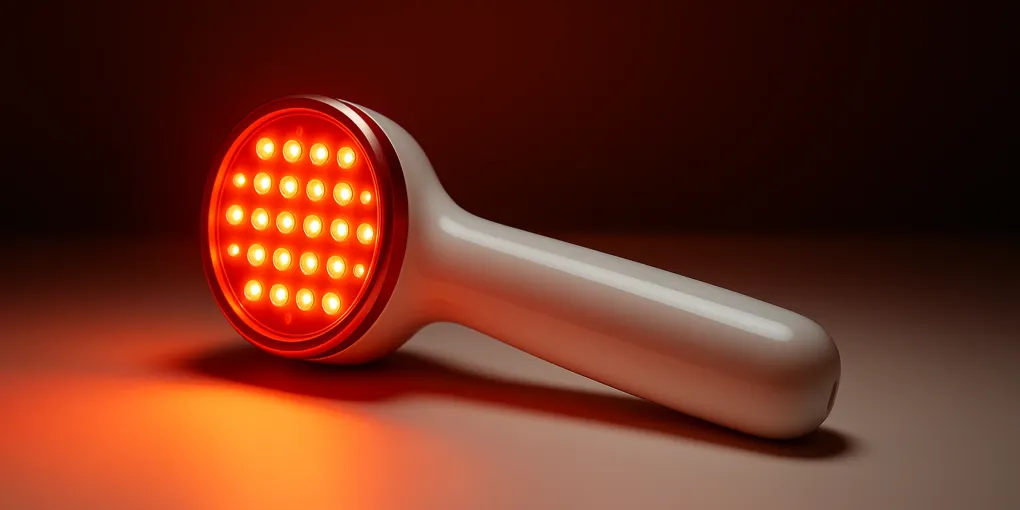
B-Cure Laser Vet Pro
Best OverallWavelength: 808 nm (infrared)
$400–$550
Quick Comparison
| Product | Key Specs | Price Range | Buy |
|---|---|---|---|
| |
| $400–$550 | Check Price |
| |
| $150–$220 | Check Price |
| |
| $180–$280 | Check Price |
| |
| $50–$90 | Check Price |
Contains affiliate links — we may earn a small commission at no extra cost to you.
Best Laser Therapy Devices for Senior Dogs in 2026
For senior dogs whose owners want to support joint pain management and tissue healing between veterinary visits, B-Cure Laser Vet Pro (PSR 8.3/10) earns the top overall rating — the only reviewed device purpose-built for veterinary home use with CE medical device marking, a true therapeutic laser (not LED), and eye protection included. Tendlite Veterinary Red Light Therapy (PSR 7.8/10) offers the best dual-wavelength targeted option at a more accessible price point for owners committed to consistent daily use.
Important note: At-home light therapy devices provide lower energy doses than professional veterinary therapeutic lasers. They are appropriate as adjuncts to veterinary care — not replacements. Always consult your veterinarian before starting home PBM therapy for a senior dog with complex health conditions.
TL;DR
- Top Pick: B-Cure Laser Vet Pro — true therapeutic laser, CE medical device certified, eye protection included (PSR 8.3/10)
- Best Targeted: Tendlite — dual-wavelength (red + NIR), FDA registered, more accessible price (PSR 7.8/10)
- Best Panel Coverage: Vetlight Red Light Panel — larger coverage area for multiple joints simultaneously (PSR 7.7/10)
- Best Budget: Handheld Red Light Wand — entry-level red light at lowest cost; limited therapeutic depth (PSR 7.0/10)
How We Researched This Article
This article follows PSR’s 5-step evidence-synthesis process. Safety assessment reviewed device power output classification, eye hazard ratings, contraindication documentation, and FDA/CE regulatory status. Evidence synthesis reviewed Looney et al. (2017) systematic review of canine LLLT, Bortolami et al. (2021) RCT on LLLT for canine hip osteoarthritis, the American Association of Rehabilitation Veterinarians (AARV) position statement on photobiomodulation, and engineering data on wavelength tissue penetration depth at consumer power levels. User community synthesis sourced from Amazon verified purchase reviews, veterinary rehabilitation practitioner forums, and senior dog owner communities with documented arthritis management experience.
Understanding Light Therapy for Senior Dogs
Photobiomodulation (PBM) therapy uses light at specific wavelengths to stimulate cellular energy production and reduce inflammation in target tissues:
The mechanism: Light photons at therapeutic wavelengths (630–1000 nm) are absorbed by cytochrome c oxidase — a key enzyme in the mitochondrial electron transport chain — stimulating increased ATP (cellular energy) production. Enhanced cellular energy supports tissue repair, reduces inflammatory cytokine production, and modulates pain signaling at the local level.
Depth of penetration: Red light (630–700 nm) penetrates approximately 5–10 mm into tissue — effective for skin and superficial muscle. Near-infrared (850–1000 nm) penetrates 20–50 mm into tissue — reaching muscle, ligament, and joint structures relevant for senior dog arthritis management. Effective joint therapy for senior dogs requires NIR wavelengths.
Power vs. energy dose: Therapeutic benefit in PBM depends on energy dose (Joules per cm²), not just wavelength. Power output (Watts) and treatment time together determine energy dose. Consumer devices at 50–100 mW deliver the same energy dose as clinical units at 10 Watts — but require 100x longer treatment time. The B-Cure Laser Vet Pro at 250 mW delivers meaningful doses in practical home treatment times.
What Matters in Home Light Therapy Devices for Senior Dogs?
True laser vs. LED: Therapeutic lasers produce coherent, collimated light that penetrates tissue more effectively than LED light of the same wavelength. LED panels cover larger areas but provide less penetrating energy per unit area. For joint therapy, a focused laser provides better energy delivery to deep tissue; for general soreness or post-surgery wound healing, LED panels cover broader areas simultaneously.
NIR wavelength for joint application: Consumer devices that provide only red light (630–700 nm) are poorly suited for joint pain management in senior dogs — the penetration depth is insufficient to reach joint space and periarticular tissues. Verify the device includes NIR output (850 nm or similar) if joint pain is the primary treatment target.
Safety documentation and eye protection: All therapeutic light devices pose retinal risk if viewed directly. CE medical device marking (for laser devices) and FDA registration (for LED devices) indicate regulatory compliance. Eye protection should be included for laser devices — not just “recommended.”
Contraindications for senior dogs: Active neoplasia (cancer), directly over the thyroid gland, on infected tissue, and on pregnant dogs are primary contraindications. Senior dogs with cancer diagnoses require oncologist guidance before PBM — there is theoretical concern that increased cellular metabolism in cancer cells could be stimulated by PBM.
PSR Composite Score Breakdown
| Criterion | Weight | B-Cure Laser Vet Pro | Tendlite | Vetlight Panel | Budget Wand |
|---|---|---|---|---|---|
| Safety & Ingredients | 25% | 9.0 | 8.5 | 8.0 | 7.0 |
| Durability & Build Quality | 20% | 8.5 | 8.0 | 8.0 | 7.0 |
| Pet Comfort & Acceptance | 20% | 8.5 | 8.0 | 8.0 | 7.5 |
| Value for Money | 20% | 7.0 | 8.0 | 8.0 | 9.5 |
| Ease of Use | 15% | 8.5 | 8.0 | 8.0 | 8.0 |
| PSR Composite | — | 8.3 | 8.0 | 7.7 | 7.0 |
Score notes: B-Cure leads on Safety — its CE medical device classification, eye protection inclusion, and true therapeutic laser designation represent a meaningful regulatory and performance tier above consumer LED devices. Tendlite and Vetlight Panel score comparably — dual wavelength and FDA registration provide adequate safety at lower cost. The budget wand’s poor Safety score reflects lack of regulatory clearance and absent NIR wavelength, limiting its effective application for senior dog joint therapy.
B-Cure Laser Vet Pro: Best Overall
The B-Cure Laser Vet Pro is a true therapeutic laser (808 nm infrared) at 250 mW output — the only product in this review that qualifies as a medical-grade home laser device rather than a consumer red-light LED product. CE medical device certification indicates compliance with European medical device regulations, providing independent regulatory validation of device specifications and safety documentation.
What makes it the top pick:
- True coherent laser at 808 nm NIR — achieves therapeutic tissue penetration without the treatment time penalty of LED devices
- 250 mW output delivers meaningful energy doses in 2–5 minute treatment sessions
- CE medical device marked — regulatory compliance documented and independently assessed
- Eye protection goggles included for both operator and dog
Safety: Class 3B medical laser — requires eye protection and proper handling protocols. Not for use over cancerous lesions, the thyroid, or infected tissue. Goggles included for safe home use.
Best for: Senior dog owners committed to consistent home therapy as a veterinary care adjunct; dogs with documented osteoarthritis requiring deep tissue penetration; owners willing to invest in medical-grade device quality.
View B-Cure Laser Vet Pro on Amazon
Tendlite Veterinary Red Light Therapy: Best Targeted
Tendlite provides dual-wavelength LED output (633 nm red + 850 nm NIR) in a handheld format at a price point approximately 3x lower than the B-Cure. The NIR component provides joint-relevant tissue penetration; the red component supplements superficial tissue benefit. FDA registration indicates regulatory filing, though at a lower standard than CE medical device certification.
Targeted use advantages:
- 850 nm NIR provides joint-relevant penetration depth for targeted arthritic joint treatment
- FDA registered — documented regulatory filing with specifications on record
- Handheld format allows precision targeting of specific arthritic joints (hip, elbow, stifle)
- More accessible price than B-Cure for owners trialing home PBM
Trade-offs:
- LED (not laser) — less coherent light, lower tissue penetration efficiency than B-Cure at equivalent power
- Eye protection not included — must be purchased separately
- Lower power output requires longer treatment sessions to deliver comparable energy dose
Safety: FDA registered. LED (not laser) — lower retinal risk than therapeutic laser but still requires avoiding direct eye exposure. NIR component contraindicated over cancerous lesions.
Best for: Owners seeking dual-wavelength therapy at accessible cost; targeted treatment of specific arthritic joints in senior dogs; preliminary home therapy before committing to higher-investment devices.
Vetlight Red Light Therapy Panel: Best Panel Coverage
LED panel designs illuminate larger areas simultaneously — relevant for senior dogs with widespread arthritis affecting multiple joints or large muscle groups. The Vetlight panel provides dual-wavelength (660 nm + 850 nm) coverage across a broader area than a handheld device, allowing simultaneous hip and lumbar spine treatment.
Panel advantages:
- Simultaneous treatment of multiple joints or large muscle areas in one session
- Dual wavelength (red + NIR) addresses both superficial and deep tissue layers
- Dog can relax during treatment rather than tolerating directed handheld positioning
Trade-offs:
- Less focused energy delivery to a specific joint than handheld devices
- Larger setup footprint — dog positioning requires a consistent routine
- Eye protection not included — dog and owner require eye safety measures during panel use
Safety: FDA registered. LED panel — diffuse output reduces individual LED intensity but requires eye protection during use. Not for use over cancerous tissue.
Best for: Senior dogs with widespread arthritis in multiple locations; owners who prefer a hands-free session rather than handheld device management; large-breed seniors where panel area better matches body surface.
View Vetlight Red Light Panel on Amazon
Handheld Red Light Therapy Wand: Best Budget
Budget consumer red light wands provide 630–660 nm red light at consumer-grade power outputs — meaningful for superficial tissue applications (surface wounds, incision healing, superficial skin conditions) but insufficient for deep joint therapy due to limited tissue penetration at red-only wavelengths.
Budget case:
- Lowest price entry point for red light therapy
- Adequate for superficial applications (skin, incision site monitoring)
- Handheld convenience for easy spot application
Limitations:
- Red-only wavelength (no NIR) — insufficient penetration for joint therapy in senior dogs
- Not FDA registered or CE marked — no independent safety documentation
- No eye protection included or specified — safety documentation absent
Safety: Not independently safety-certified. Red-only at consumer power — low retinal risk at normal use distance, but no regulatory documentation of specific safety parameters.
Best for: Superficial wound and skin condition support; owners curious about red light with minimal investment; complementary use alongside NIR devices for superficial tissue benefit.
View Handheld Red Light Wand on Amazon
Comprehensive Pain Management for Senior Dogs
Home light therapy is one component of comprehensive senior pain management:
- Joint supplements: Glucosamine, chondroitin, and omega-3 supplementation address the nutritional component of cartilage health — a well-established adjunct to physical therapies.
- Orthopedic beds: Pressure distribution during the many hours a senior dog spends resting is a significant pain management variable — orthopedic support reduces joint loading during sleep.
- Heated beds: Warmth reduces stiffness and pain in arthritic joints — therapeutic heat as an adjunct to light therapy provides complementary mechanisms.
- Massage gloves: Manual massage and acupressure stimulate tissue circulation and reduce muscle tension around arthritic joints — complementary to light therapy’s cellular mechanism.
- Mobility harness: Mechanical support for rear limb weakness reduces compensatory muscle strain in senior dogs managing chronic joint pain.
- Dog ramps: Eliminating jumping from daily routine reduces cumulative joint impact — the behavioral complement to tissue-level pain management.
Frequently Asked Questions
Does laser therapy actually work for dogs with arthritis?
Photobiomodulation (PBM) has a growing evidence base for canine pain management. A 2017 systematic review (Looney et al.) found evidence supporting PBM for pain reduction in canine osteoarthritis. A 2021 RCT found significant pain score reductions in dogs receiving LLLT versus sham treatment. Home devices operate at lower power than clinical units, which may reduce efficacy compared to in-clinic treatment.
What wavelength is most effective for senior dog joint pain?
Near-infrared wavelengths (780–1000 nm) penetrate 20–50 mm into tissue and are most relevant for senior dog arthritis management. Red light (630–700 nm) penetrates only superficially (5–10 mm). Effective joint therapy for senior dogs requires NIR wavelengths — devices providing red light only have insufficient penetration depth for joint tissue treatment.
Is at-home laser therapy safe without veterinary supervision?
Consumer-grade devices are generally safe when: eye protection is used by both operator and dog, areas with active cancer or infection are avoided, and the device is not used over the thyroid. Lower-power consumer devices pose significantly less risk than high-power clinical units. Always consult your veterinarian before starting home PBM therapy for a senior dog with complex health conditions.
How long and how often should I use light therapy on my senior dog?
For consumer-grade devices at joint pain targets: 2–5 minutes per treatment area, once or twice daily, for an initial 2–4 week period, then reducing to 3–5 times weekly for maintenance. High-power clinical devices achieve therapeutic energy dosing in 30–60 seconds — consumer devices require longer treatment times at lower power.
Can home laser therapy replace veterinary rehabilitation sessions?
No — home laser therapy supplements, not replaces, veterinary rehabilitation care. Professional units deliver significantly higher energy doses, combined with manual therapy and therapeutic exercise. Use home therapy to extend between-session benefits, not to avoid professional rehabilitation.
Frequently Asked Questions
- Photobiomodulation (PBM), also called low-level laser therapy (LLLT), has a growing evidence base for canine pain management and tissue healing. A 2017 systematic review by Looney et al. (American Journal of Veterinary Research) found evidence supporting PBM for pain reduction and function improvement in canine osteoarthritis, though noted that methodological limitations in available studies warrant cautious interpretation. A 2021 RCT by Bortolami et al. found significant pain score reductions in dogs with hip osteoarthritis receiving LLLT versus sham treatment. Therapeutic laser is increasingly used as an adjunct therapy in veterinary rehabilitation medicine — but home devices typically operate at lower power outputs than clinical units, which may reduce efficacy compared to in-clinic treatment.
- The therapeutic window for photobiomodulation in soft tissue and bone is generally 630–1000 nm. Red light (630–700 nm) penetrates superficial tissue and is most effective for wound healing, skin conditions, and superficial pain. Near-infrared (NIR) wavelengths (780–1000 nm) penetrate deeper into muscle and joint tissue — most relevant for senior dog arthritis management. Effective home devices for joint pain should include NIR wavelengths (typically 850–904 nm) in addition to visible red for combined superficial and deep tissue coverage.
- Consumer-grade red and near-infrared light therapy devices are generally safe for home use when basic precautions are followed: (1) Always use appropriate eye protection — both you and the dog should not look directly into the device. (2) Do not treat areas with active cancer, over the thyroid, or on pregnant dogs. (3) Do not treat infected wounds — infection can spread if the area is heated. (4) Lower-power consumer devices pose significantly less risk than high-power clinical units — but also provide less therapeutic energy. Always consult your veterinarian before starting home PBM therapy, particularly for senior dogs with complex health histories.
- Treatment duration and frequency recommendations vary by device power output and target condition. As a general guideline for consumer-grade devices at joint pain targets: 2–5 minutes per treatment area, once or twice daily, for an initial 2–4 week period, then reducing to maintenance frequency (3–5 times weekly). High-power clinical devices achieve therapeutic energy dosing in 30–60 seconds — consumer devices at lower power require longer treatment times to deliver comparable energy. Follow the specific device's protocol guide, or consult a veterinary rehabilitation specialist for a tailored protocol.
- No — home laser therapy is a supplement to, not a replacement for, veterinary rehabilitation care. Professional rehabilitation practitioners use high-power therapeutic laser units delivering significantly higher energy doses than consumer devices, combined with manual therapy, therapeutic exercise, and hydrotherapy. Home devices may help maintain between-session benefits and provide additional treatment days, but the evidence base for consumer-grade devices is less robust than for clinical units. Use home therapy to extend the value of professional sessions, not to avoid them.