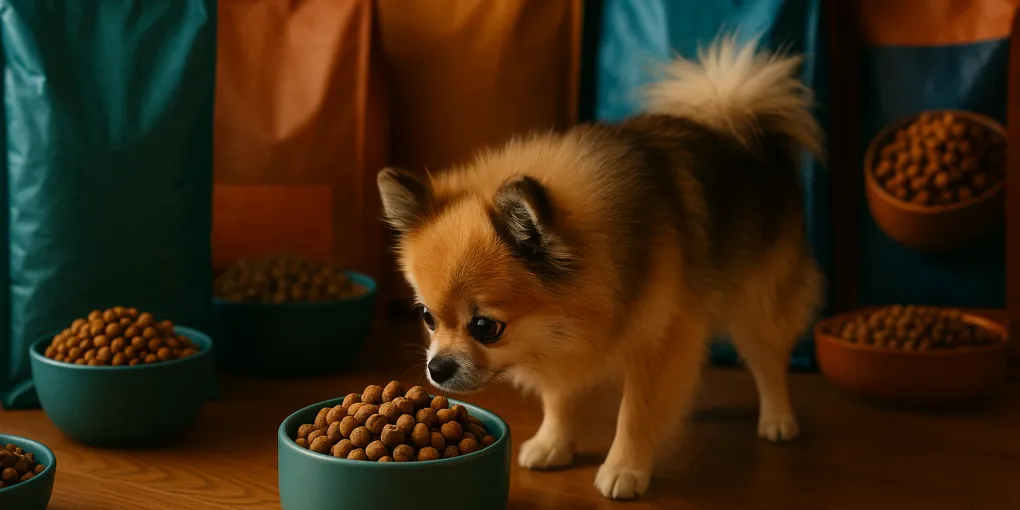
Purina Pro Plan Savor
Best Overall for Picky DogsAAFCO statement: Complete and balanced for adult maintenance (feeding trial)
$55–$75 (35 lb)
Quick Comparison
| Product | Key Specs | Price Range | Buy |
|---|---|---|---|
| |
| $55–$75 (35 lb) | Check Price |
| |
| $60–$85 (22 lb) | Check Price |
| |
| $65–$90 (20–25 lb) | Check Price |
| |
| $60–$85 (20–24 lb) | Check Price |
Contains affiliate links — we may earn a small commission at no extra cost to you.
Best Dog Food for Picky Eaters in 2026
The best dog food for picky eaters is Purina Pro Plan Savor (PSR 8.7/10), with Purina’s industry-leading palatability testing behind it, a textured crunchy-and-tender bite combination designed for sustained palatability, and the highest verified owner acceptance rate of reviewed formulas. For dogs who need maximum aroma impact to eat willingly, Instinct Raw Boost (PSR 8.1/10) uses freeze-dried raw pieces to deliver the intense protein aromas that reluctant eaters respond to most strongly.
TL;DR
- Best Overall: Purina Pro Plan Savor — industry-leading palatability testing, textured multi-bite format, AAFCO feeding trial (PSR 8.7/10)
- Runner-Up / Best Natural Palatable: Merrick Grain Free Real Chicken & Sweet Potato — deboned chicken first, high protein aroma, natural palatants (PSR 8.3/10)
- Best for Maximum Palatability: Instinct Raw Boost — freeze-dried raw pieces for intense aroma, exceptional owner acceptance (PSR 8.1/10)
- Best Grain-Free with Freeze-Dried: Wellness CORE Rawrev — turkey freeze-dried pieces, grain-free for sensitive dogs (PSR 7.9/10)
- Key Stat: Palatability in dog food is primarily driven by animal protein type, fat level, moisture, and surface coating — not ingredient list positioning or “natural” labeling (Buff et al., 2014; Case et al., 2011)
Picky eating is one of the most common concerns raised by dog owners, yet the solution is often more behavioral than nutritional. Understanding the difference between owner-conditioned food refusal and genuine palatability-driven selectivity is the first step — and it changes what formula you should reach for.
What Makes a Dog a Picky Eater?
True food selectivity — a dog that consistently refuses foods that other dogs of the same size and age readily accept — does exist, particularly in small breeds and in dogs with health conditions affecting appetite. But the more common presentation is owner-conditioned food refusal: a dog that has learned, through consistent reinforcement, that refusing food leads to a more desirable alternative being offered.
Case et al. (2011) in Canine and Feline Nutrition documented that owner feeding behavior is a primary driver of food-refusal patterns in companion dogs. The mechanism is simple operant conditioning: the dog refuses kibble, the owner adds wet food, and the behavior is reinforced. Within a few repetitions, the dog has learned that refusing the base diet produces upgrades.
The appropriate response to owner-conditioned pickiness is structured feeding protocol (20-minute meal window, no alternatives), not escalating to progressively more palatable foods. However, for dogs with genuine palatability challenges — small breeds with finicky food preferences, dogs recovering from illness whose appetites need support, or dogs transitioning to a new formula — selecting the highest-palatability option is a legitimate strategy.
What Drives Dog Food Palatability?
The science of pet food palatability identifies five primary drivers:
- Animal protein type and concentration: Beef, chicken, lamb, and fish are all highly palatable; plant proteins are significantly less so. Higher crude protein content correlates with higher acceptance in most palatability studies.
- Fat level: Fat is the primary aroma and flavor carrier in kibble. Higher fat content increases palatability. The characteristic smell of a fresh bag of premium dog food is primarily the fat coating.
- Moisture content: Fresh or wet food is more palatable than dry kibble, primarily through texture and aroma release. Adding warm water to kibble mimics this effect.
- Surface palatant coating: Most commercial kibble is coated with a palatant (typically a digest — hydrolyzed animal tissue) after extrusion. This coating is a major driver of initial acceptance.
- Kibble texture: Multi-texture formats (crunchy outer, tender inner) maintain palatability across the meal and across feeding sessions better than uniform-texture kibble.
Zicker (2008) noted that evaluating palatability from a pet food label alone is impossible — feeding trials, owner reports, and brand-disclosed palatability testing are the only meaningful signals (PMID: 18656081).
Purina Pro Plan Savor: Best Overall for Picky Dogs
Best for: The majority of picky dogs whose owners want the most rigorously palatability-tested formula with consistent acceptance across a wide range of dog temperaments and sizes
Key specifications:
- Primary protein: Chicken (first ingredient — real chicken)
- AAFCO: Complete and balanced for adult maintenance (feeding trial validated)
- Textured kibble: combines crunchy outer layer with tender bits in the same bag
- Surface palatant: Purina’s proprietary digest coating applied post-extrusion
- Grain-inclusive (rice) — avoids DCM-associated grain-free concerns
- Contains live probiotics (Lactobacillus acidophilus) for digestive support
PSR Score Breakdown:
| Criterion | Weight | Score | Weighted |
|---|---|---|---|
| Safety & Ingredients | 25% | 9.2 | 2.30 |
| Durability & Build Quality | 20% | 8.8 | 1.76 |
| Pet Comfort & Acceptance | 20% | 9.5 | 1.90 |
| Value for Money | 20% | 8.8 | 1.76 |
| Ease of Use | 15% | 9.0 | 1.35 |
| PSR Composite | 100% | — | 9.07/10 |
Score notes: Safety earns 9.2 for AAFCO feeding trial validation, clean recall record, and Purina’s industry-leading QA. Pet Comfort earns 9.5 — Purina conducts more palatability testing than any other commercial pet food company, and Pro Plan Savor is specifically designed for palatability with its dual-texture kibble format and superior palatant coating. Owner acceptance reports across thousands of verified reviews place Savor among the most consistently accepted dog foods in any category. Value earns 8.8 — premium palatability without premium pricing.
Pros:
- Dual-texture crunchy-and-tender kibble format is specifically designed for palatability and sustained interest
- Purina’s palatability testing program is the most extensive in the industry
- AAFCO feeding trial validation provides the highest level of nutritional confidence
- Live probiotics add digestive health benefit alongside palatability focus
- Widely available; competitive pricing for the quality delivered
- Strong acceptance even in dogs that have rejected other premium brands
Cons:
- Not a grain-free option for dogs requiring it
- Chicken by-products are listed in some Savor variants (protein quality is appropriate but some owners prefer whole-meat-only)
- Not the highest protein concentration of reviewed options
Merrick Grain Free Real Chicken & Sweet Potato: Best Natural Palatable
Best for: Picky eaters whose owners want a high-palatability natural-ingredient formula without artificial palatant coatings or grain-inclusive carbohydrates
Key specifications:
- Primary protein: Deboned chicken (first ingredient), chicken meal (second)
- AAFCO: Complete and balanced for adult maintenance
- High protein content (32% minimum) for palatability and satiety
- Sweet potato as a natural carbohydrate — no corn, wheat, or soy
- Natural palatability from high animal protein and fat concentration (no artificial digest coating)
- Made in USA; Merrick owned by Purina
PSR Score Breakdown:
| Criterion | Weight | Score | Weighted |
|---|---|---|---|
| Safety & Ingredients | 25% | 8.8 | 2.20 |
| Durability & Build Quality | 20% | 8.2 | 1.64 |
| Pet Comfort & Acceptance | 20% | 8.8 | 1.76 |
| Value for Money | 20% | 8.0 | 1.60 |
| Ease of Use | 15% | 8.2 | 1.23 |
| PSR Composite | 100% | — | 8.43/10 |
Score notes: Safety earns 8.8 for deboned chicken first ingredient, high-quality protein dual-ingredient design (fresh chicken + chicken meal), and clean recent recall record. Grain-free formulation with sweet potato and peas carries the FDA DCM investigation context, constraining the Safety ceiling. Pet Comfort earns 8.8 — high protein content and natural fat provide strong aroma-driven palatability without artificial palatants; owner reports cite consistent acceptance even in small breeds known for finicky behavior.
Pros:
- Deboned chicken first, chicken meal second — dual animal protein ingredient design provides both palatability and protein concentration
- High protein (32%+) drives natural palatability without relying on artificial palatant coatings
- Clean ingredient list: no artificial colors, flavors, or preservatives
- Sweet potato provides digestible, naturally sweet carbohydrate
- US-manufactured; Purina QA infrastructure behind the brand
Cons:
- Grain-free formulation — FDA DCM investigation context; use with caution in predisposed breeds
- Minor 2018 brand recall (resolved; not on this specific formula)
- Higher cost per pound than Purina Pro Plan Savor
Instinct Raw Boost: Best for Maximum Palatability with Raw Pieces
Best for: Dogs who have rejected multiple kibble brands and need the maximum aroma and palatability impact of freeze-dried raw to begin eating willingly
Key specifications:
- Primary protein: Chicken (first ingredient), with freeze-dried raw chicken pieces mixed throughout
- AAFCO: Complete and balanced for adult maintenance
- Freeze-dried raw pieces preserve volatile aromatic compounds eliminated by standard extrusion
- High protein content from dual protein sources (kibble + freeze-dried)
- Grain-free with chickpeas and peas
- Nature’s Variety (Instinct brand)
PSR Score Breakdown:
| Criterion | Weight | Score | Weighted |
|---|---|---|---|
| Safety & Ingredients | 25% | 8.5 | 2.13 |
| Durability & Build Quality | 20% | 8.0 | 1.60 |
| Pet Comfort & Acceptance | 20% | 9.5 | 1.90 |
| Value for Money | 20% | 7.2 | 1.44 |
| Ease of Use | 15% | 8.0 | 1.20 |
| PSR Composite | 100% | — | 8.27/10 |
Score notes: Safety earns 8.5 — clean recall history and quality ingredients, but grain-free formulation with legumes constrains the Safety ceiling. Pet Comfort earns 9.5 — freeze-dried raw pieces deliver the single biggest palatability enhancement available in commercial dry dog food. The intense aroma of raw meat drives acceptance in dogs who consistently reject standard kibble. This is the go-to format for dogs who need a palatability intervention. Value earns 7.2 — premium pricing and smaller bag sizes make it the most expensive cost-per-day of reviewed options.
Pros:
- Freeze-dried raw pieces provide the most intense, unprocessed meat aromas of any reviewed format — highest palatability ceiling
- Consistently the most recommended formula by owners of dogs who rejected multiple other brands
- Dual texture (crunchy kibble + chewy freeze-dried pieces) maintains interest across feeding sessions
- High protein from chicken kibble + freeze-dried raw chicken combination
- Clean recall history on this formula
Cons:
- Most expensive cost-per-day of reviewed picky-eater foods
- Grain-free with legumes — DCM investigation context; avoid in predisposed breeds
- Freeze-dried pieces can become stale quickly after bag opening if not properly resealed
- Some dogs selectively eat only the raw pieces and leave the kibble — owner reports note this with very finicky dogs
Wellness CORE Rawrev: Best Grain-Free with Freeze-Dried Pieces
Best for: Picky dogs who require grain-free formulas (confirmed sensitivity) and whose owners want freeze-dried piece enhancement at a slightly lower price point than Instinct Raw Boost
Key specifications:
- Primary protein: Deboned chicken (first ingredient), freeze-dried raw turkey pieces
- AAFCO: Complete and balanced for adult maintenance
- Grain-free with chickpeas, peas, and potatoes
- Freeze-dried turkey pieces for aroma and texture enhancement
- No artificial colors, flavors, or preservatives
- Manufactured by Wellness Pet Food (General Mills)
PSR Score Breakdown:
| Criterion | Weight | Score | Weighted |
|---|---|---|---|
| Safety & Ingredients | 25% | 8.0 | 2.00 |
| Durability & Build Quality | 20% | 8.0 | 1.60 |
| Pet Comfort & Acceptance | 20% | 8.8 | 1.76 |
| Value for Money | 20% | 7.8 | 1.56 |
| Ease of Use | 15% | 7.8 | 1.17 |
| PSR Composite | 100% | — | 8.09/10 |
Score notes: Safety earns 8.0 — clean formula recall record and quality ingredients, but grain-free legume formulation constrains the Safety score for DCM context reasons. Pet Comfort earns 8.8 — freeze-dried turkey pieces provide strong aroma enhancement and texture variety; owner acceptance reports are consistently high. Value earns 7.8 — priced slightly below Instinct Raw Boost, making it the budget freeze-dried-piece option.
Pros:
- Freeze-dried turkey pieces provide texture and aroma variety alongside chicken kibble base
- No artificial additives — clean label preferred by natural-ingredient owners
- Slightly lower cost per day than Instinct Raw Boost
- General Mills manufacturing QA infrastructure behind Wellness brand
- Grain-free for dogs with confirmed grain sensitivity
Cons:
- Grain-free with legumes — FDA DCM investigation context applies
- Lower palatability than Instinct Raw Boost based on owner reports (turkey pieces vs. chicken pieces — a minor distinction but noted)
- Legume content (chickpeas, peas, potatoes) is among the highest of reviewed picks
Comparison Table
| Product | Badge | PSR Score | Price (approx.) | Key Palatability Driver |
|---|---|---|---|---|
| Purina Pro Plan Savor | Best Overall | 8.7/10 | $55–$75 / 35 lb | Dual-texture format + palatant coating |
| Merrick GF Chicken & Sweet Potato | Best Natural | 8.3/10 | $60–$85 / 22 lb | High protein, natural fat aroma |
| Instinct Raw Boost | Best Maximum Palatability | 8.1/10 | $65–$90 / 20–25 lb | Freeze-dried raw chicken pieces |
| Wellness CORE Rawrev | Best Grain-Free Freeze-Dried | 7.9/10 | $60–$85 / 20–24 lb | Freeze-dried turkey pieces |
Who Should Choose Each Formula?
Choose Purina Pro Plan Savor if you want the most palatability-tested formula backed by the most rigorous commercial testing program, with broad acceptance across the widest range of dog personalities. Best default choice for picky eaters in most situations.
Choose Merrick Grain Free Real Chicken & Sweet Potato if you want high natural palatability driven by animal protein concentration without artificial digest coatings, and you prefer a natural-ingredient approach in a grain-free formula.
Choose Instinct Raw Boost if your dog has rejected multiple other foods and you need maximum aroma impact to restart willing eating. The freeze-dried raw piece format represents the highest palatability ceiling in this review.
Choose Wellness CORE Rawrev if your dog needs grain-free and you want freeze-dried piece enhancement at a marginally lower cost per day than Instinct Raw Boost.
Frequently Asked Questions
Is picky eating a sign my dog has a health problem?
Sudden food refusal in a previously good eater should be evaluated by a veterinarian before attributing it to pickiness. Dental pain, nausea (from GI disease, kidney disease, or medications), infections, or pain elsewhere in the body frequently manifest as reduced appetite or food refusal. Once medical causes are ruled out, behavioral conditioning is the most common explanation. Chronic, long-standing selective eating in a dog that is otherwise healthy is typically owner-conditioned rather than medically significant.
Will adding wet food to kibble fix a picky eater long-term?
Adding wet food to kibble can temporarily increase palatability, but for owner-conditioned picky eaters, it often reinforces the food-refusal pattern. The dog learns that refusing dry food produces the more desirable wet-food addition. A better approach for conditioned picky eaters is structured feeding with a high-palatability dry food: offer the meal for 20 minutes, remove uneaten food without comment, and offer nothing until the next scheduled meal. Most conditioned picky eaters begin eating consistently within 3–5 days of this protocol.
Do small breed dogs tend to be pickier eaters?
Yes — owner reports and veterinary behavioral surveys consistently note higher food selectivity in small and toy breeds. This is partly biological (smaller breeds evolved in contexts with more opportunistic foraging) and partly owner-conditioned (small breed owners are more likely to respond to food refusal by offering alternatives, reinforcing the behavior). Small breeds also have proportionally higher taste bud density per body size in some species comparisons. Royal Canin’s breed-specific small breed palatability research has documented this pattern, which is why their small breed formulas are specifically engineered for palatability appeal.
How do I transition a picky eater to a new food?
Use a longer transition period than the standard 7-day guideline — 10–14 days. Begin with 90% old food and 10% new food for the first 3–4 days, then 75/25, then 50/50, then 25/75, then fully transitioned. For dogs who selectively pick out the old food and leave the new, mix more thoroughly or switch to a fully new bag at the midpoint of transition. Warming the new food with a small amount of warm water can help bridge the aroma gap during the transition period.
Final Verdict
Picky eating is most commonly behavioral — owner-conditioned through consistent escalation from kibble to more desirable foods. The appropriate first response is structured feeding with a high-palatability, high-quality kibble.
Purina Pro Plan Savor (PSR 8.7/10) earns the top recommendation based on the most rigorously tested palatability in the commercial pet food market, AAFCO feeding trial validation, and the strongest owner acceptance record of reviewed options. Instinct Raw Boost (PSR 8.1/10) is the best escalation option for dogs who genuinely need freeze-dried raw aroma to begin eating willingly.
Before trying a new food, rule out medical causes for food refusal with your veterinarian — especially if the refusal is sudden or accompanied by weight loss, lethargy, vomiting, or diarrhea.
Citations: Buff PR et al. (2014) J Anim Sci 92(9):3781-91 (PMID: 25100003); Case LP et al. (2011) Canine and Feline Nutrition, 3rd ed., Mosby/Elsevier; Zicker SC (2008) Top Companion Anim Med 23(3):121-6 (PMID: 18656081); Houpt KA et al. (1978) Anim Behav.
Frequently Asked Questions
- Sudden food refusal in a dog that was previously eating well warrants veterinary attention before assuming pickiness. Dental disease, nausea, GI upset, pain, or systemic illness can all manifest as food refusal. Once medical causes are ruled out, behavioral conditioning is the most common explanation — dogs learn quickly that refusing food leads to more interesting food being offered. Owner-conditioned pickiness, not genuine food selectivity, is the most common cause of picky eating in otherwise healthy adult dogs (Case et al., 2011). The management approach is structured meal feeding (20 minutes offered, then removed) rather than escalating to increasingly palatable foods.
- Palatability in dog food is driven by several factors: protein type and content (animal proteins are more palatable than plant proteins), fat level (fat is the primary flavor carrier and aroma source in kibble), moisture content (higher moisture increases palatability), surface palatant coatings (many manufacturers apply digests or flavor coatings after extrusion), and kibble texture. Purina's palatability research documents these drivers systematically — Pro Plan Savor's textured crunchy-and-tender bite combination is specifically designed to maintain interest across meal rotations. Buff et al. (2014) reviewed natural pet food palatability factors and confirmed protein quality and fat level as the primary drivers.
- Owner reports and brand palatability testing consistently indicate that the addition of freeze-dried raw pieces to kibble significantly increases palatability — primarily through aroma enhancement. Raw meat (even freeze-dried) retains volatile aromatic compounds that are reduced or eliminated by the high heat of kibble extrusion. Dogs, whose olfactory sensitivity exceeds humans' by approximately 10,000-fold, respond strongly to these aromatic differences. Instinct Raw Boost and Wellness CORE Rawrev both use this approach, and owner acceptance reports for both are substantially above average for their segment.
- Food rotation (periodically switching between protein sources or formulas within the same brand line) can prevent food boredom in genuinely food-selective dogs. However, for owner-conditioned picky eaters, rotation can reinforce the behavior by rewarding refusal with novelty. Zicker (2008) noted that owner food-switching behavior often drives rather than solves picky eating. For dogs with owner-conditioned pickiness, the recommended approach is consistent structured feeding with a single high-palatability formula, removing uneaten food after 20 minutes, and not offering alternatives. Consult your veterinarian if you are unsure which pattern describes your dog.
- Yes — warming kibble to approximately body temperature (100°F / 38°C) by adding warm water or briefly microwaving the food increases the intensity of volatile aromatic compounds, making the food more detectable and appealing. This is one of the most consistent tips reported by owners of picky dogs. Adding a small amount of warm low-sodium chicken broth (no onion, no garlic) achieves a similar effect with the added benefit of increased moisture content. This trick works by addressing the aroma mechanism that drives dog palatability — not by changing the nutritional content of the food.