Taste of the Wild Ancient Prairie Bison
Best OverallAAFCO statement: Complete and balanced for all life stages including large breed puppies
$55–$70 (28 lb)
Quick Comparison
| Product | Key Specs | Price Range | Buy |
|---|---|---|---|
| |
| $55–$70 (28 lb) | Check Price |
| |
| $65–$85 (27 lb) | Check Price |
| |
| $70–$90 (22 lb) | Check Price |
| |
| $60–$80 (26 lb) | Check Price |
Contains affiliate links — we may earn a small commission at no extra cost to you.
Best Chicken-Free Dog Food in 2026
The best chicken-free dog food for most dogs is Taste of the Wild Ancient Prairie Bison (PSR 8.5/10), which provides bison and venison as novel proteins with no chicken or poultry ingredients, an AAFCO all-life-stages certification, and strong palatability at a competitive price. For dogs requiring strict single-protein allergen management, Zignature Salmon Formula (PSR 8.3/10) provides the most rigorously controlled novel-protein option.
TL;DR
- Best Overall: Taste of the Wild Ancient Prairie — bison + venison, no chicken/poultry, all-life-stages AAFCO (PSR 8.5/10)
- Best for Strict Allergy Management: Zignature Salmon — single protein, no chicken/beef/corn/wheat/soy (PSR 8.3/10)
- Best Veterinary LID: Natural Balance L.I.D. Lamb & Brown Rice — decades of vet allergy history, single protein (PSR 8.2/10)
- Best High-Protein Chicken-Free: Merrick Grain-Free Real Bison — deboned bison first, 32% protein (PSR 8.0/10)
- Key Stat: Chicken is the third most common food allergen trigger in dogs at ~15% of adverse food reactions (Mueller et al., 2016, BMC Veterinary Research)
Chicken is the most widely used protein in commercial dog food — and the third most common food allergen trigger in dogs, behind only beef and dairy. Owners managing confirmed or suspected chicken allergy need formulas that are genuinely free of chicken at every level: no chicken meal, no chicken fat, no chicken broth, and no undeclared poultry by-products.
Understanding Chicken Allergy in Dogs
Chicken allergy develops through repeated exposure to chicken proteins — the same mechanism as all food hypersensitivities. Because chicken is present in an enormous proportion of commercial dog foods from puppyhood through adulthood, many US dogs have been extensively exposed to chicken proteins throughout their lives.
Mueller et al. (2016, BMC Veterinary Research, DOI: 10.1186/s12917-016-0633-8) meta-analyzed published food adverse reaction reports: beef (34%), dairy (17%), and chicken (15%) were the most prevalent triggers. Wheat, soy, and lamb followed at lower rates. Chicken’s high prevalence is directly related to its ubiquity in commercial formulas — not any inherent property of chicken protein.
The novel protein principle: An elimination diet trial works by removing all proteins the dog has previously been exposed to and replacing them with a protein source the dog’s immune system has not learned to react against. For the elimination trial to be diagnostic, the novel protein must be truly novel — a protein the dog has never consumed before. For dogs raised primarily on chicken-based formulas, bison, venison, lamb, and salmon are appropriate novel candidates.
Cross-reactivity warning: Some dogs sensitized to chicken may show cross-reactive responses to other poultry proteins (turkey, duck, geese). Verlinden et al. (2006, Critical Reviews in Food Science and Nutrition, DOI: 10.1080/10408690590957943) documented cross-reactivity patterns in food-allergic companion animals. When poultry cross-reactivity is suspected, use a mammalian novel protein (bison, lamb, venison) rather than any bird-based protein.
Taste of the Wild Ancient Prairie Bison Review: Best Overall
Taste of the Wild Ancient Prairie provides bison and roasted venison as the primary proteins, with zero chicken or poultry ingredients. The all-life-stages AAFCO certification and competitive pricing make it the best choice for households transitioning a chicken-sensitive dog.
Key specifications:
- Primary proteins: Bison (first ingredient), roasted venison
- No chicken, turkey, duck, or any poultry
- AAFCO: All life stages including large breed puppies — feeding trial substantiated
- Grain-free with sweet potato, peas, and lentils
- Probiotics and antioxidants from tomatoes, blueberries, raspberries
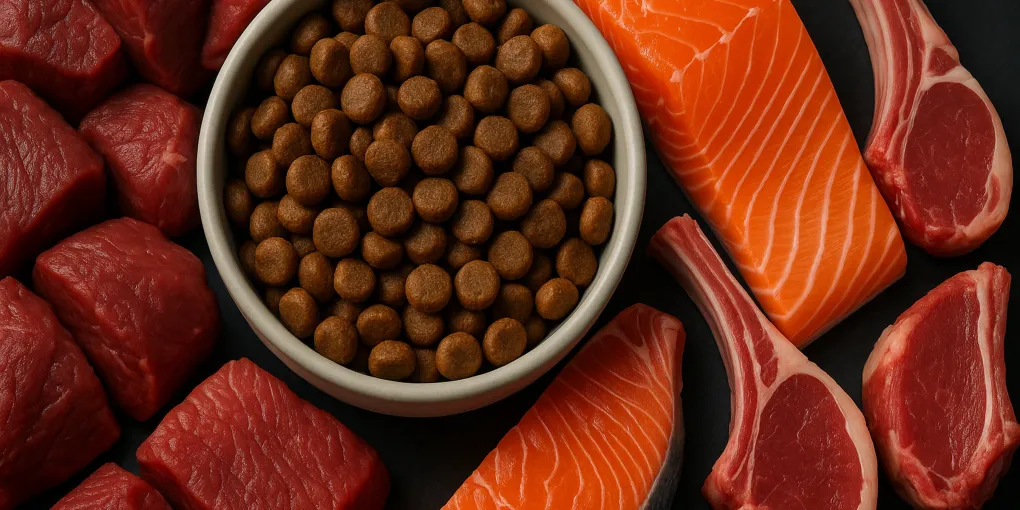
Novel protein profile: Bison is a genuinely low-exposure protein for most US dogs. Venison provides additional novel protein alongside unique amino acid content. Neither bison nor venison is among the documented top-10 food allergens in dogs.
AAFCO all-life-stages: The all-life-stages certification makes this suitable for puppies, adults, and seniors — useful for households with dogs of different life stages who all need chicken-free options.
Safety context: Taste of the Wild was subject to a 2018 heavy metals lawsuit that was resolved — independent testing found levels within FDA safety guidelines. No formula recalls affecting Ancient Prairie.
Pros:
- Bison and venison — genuine novel proteins for most chicken-allergy dogs
- No chicken, poultry, or poultry by-products
- AAFCO all-life-stages feeding trial
- Competitive pricing
- Antioxidant fruits and vegetables
Cons:
- High legume content (peas, lentils) — FDA DCM investigation context
- 2018 heavy metals lawsuit (resolved)
- Not a strict single-protein LID (multiple proteins)
- Grain-free — not appropriate for dogs who do best with grains
Cost: $55–$70 for a 28 lb bag; approximately $0.12–$0.14/oz
Zignature Salmon Formula Review: Best for Strict Allergy Management
Zignature Salmon is the strictest single-protein chicken-free option in this review. With no chicken, no beef, no corn, no wheat, no soy, and no secondary animal proteins, it provides the cleanest novel-protein profile for dogs undergoing formal food allergy elimination trials.
Key specifications:
- Sole animal protein: Salmon (no poultry of any kind)
- No chicken, beef, corn, wheat, soy, eggs, dairy
- Carbohydrates: Chickpeas, peas, lentils
- AAFCO: Complete and balanced for adult maintenance and growth
- No artificial preservatives or colors
Allergy trial positioning: Zignature Salmon is designed for formal dietary elimination trials. The absence of all commonly cross-reactive proteins — not just chicken — makes it appropriate even for dogs with complex multi-protein sensitivity patterns. Veterinary dermatologists sometimes recommend Zignature as an over-the-counter elimination trial option.
Safety record: No significant recalls on record.
Pros:
- Strictest allergen control — no chicken, beef, corn, wheat, soy
- Single animal protein for clean elimination trial
- AAFCO-compliant for adult and growth
- Clean recall history
- Veterinary dermatology-appropriate formulation
Cons:
- Premium price per lb
- High legume content (chickpeas, peas, lentils) — FDA DCM context
- Adult and growth only — not senior-specific
- Limited flavor variety
- Not ideal for dogs without food sensitivity (no added value without allergy concern)
Cost: $65–$85 for a 27 lb bag; approximately $0.15–$0.17/oz
Natural Balance L.I.D. Lamb & Brown Rice Review: Best Veterinary LID
Natural Balance L.I.D. Lamb & Brown Rice has the longest clinical veterinary history of any limited ingredient diet. Its single-protein, single-carbohydrate design makes it the most frequently veterinarian-recommended over-the-counter LID for food allergy elimination.
Key specifications:
- Sole animal protein: Lamb (no chicken, poultry, beef)
- Sole grain: Brown rice
- No chicken, turkey, beef, corn, wheat, soy, artificial preservatives
- AAFCO: Complete and balanced for adult maintenance
- Short, verifiable ingredient list
Veterinary history: Lamb and rice diets have been used in veterinary allergy protocols since the 1980s. Natural Balance L.I.D. popularized this approach in commercial form and remains the most recognized LID option by name in veterinary practices. Its long history of use provides more real-world validation data than newer options.
Grain-inclusive advantage: Brown rice as the sole carbohydrate is appropriate for the majority of food-allergic dogs and avoids the FDA DCM concern associated with legume-heavy grain-free formulas.
Safety record: One 2019 recall for a different Natural Balance variety (vitamin A excess) — lamb formula not involved.
Pros:
- Decades of veterinary allergy management use
- Single protein (lamb), single grain (brown rice)
- No chicken, poultry, beef, corn, wheat, soy
- Grain-inclusive — avoids legume-heavy grain-free concern
- Clean lamb-formula recall history
Cons:
- Lower protein (20%) for active dogs
- Adult maintenance only — not suitable for puppies
- Brown rice — not grain-free for dogs requiring grain elimination
- More expensive per lb than standard multi-protein formulas
Cost: $60–$80 for a 26 lb bag; approximately $0.13–$0.17/oz
Merrick Grain-Free Real Bison Review: Best High-Protein Chicken-Free
Merrick uses deboned bison as the first ingredient, providing a high-protein (32%) chicken-free formula for active adults. The sweet potato carbohydrate base is digestible and familiar.
Key specifications:
- Primary protein: Deboned bison (first ingredient)
- No chicken or poultry in any form
- Protein: 32% min, Fat: 17% min
- AAFCO: All life stages
- Sweet potato as primary carbohydrate
- Made in the USA
High-protein active positioning: The 32% protein, 17% fat profile is suitable for active adult dogs who need chicken-free nutrition without sacrificing caloric density. Bison as the first ingredient provides a novel, palatable protein at high concentration.
Safety record: One minor 2018 recall for an isolated batch — resolved; no recalls since.
Pros:
- Deboned bison as first ingredient
- No chicken or poultry
- High protein (32%) for active dogs
- All-life-stages AAFCO
- Made in USA
Cons:
- 2018 recall (resolved)
- High fat (17%) — not for overweight or pancreatitis-prone dogs
- Grain-free with legumes — FDA DCM context
- Premium pricing
Cost: $70–$90 for a 22 lb bag; approximately $0.17–$0.22/oz
PSR Composite Score Breakdown
| Criterion | Weight | Taste of Wild Ancient Prairie | Zignature Salmon | Natural Balance L.I.D. | Merrick Real Bison |
|---|---|---|---|---|---|
| Safety & Ingredients | 25% | 8.5 | 9.0 | 8.5 | 8.0 |
| Durability & Build Quality | 20% | 8.5 | 8.0 | 8.0 | 8.0 |
| Pet Comfort & Acceptance | 20% | 9.0 | 8.0 | 8.5 | 8.5 |
| Value for Money | 20% | 9.0 | 7.5 | 8.0 | 7.0 |
| Ease of Use | 15% | 8.5 | 8.0 | 8.5 | 8.5 |
| PSR Composite | — | 8.5 | 8.3 | 8.2 | 8.0 |
Score notes: Zignature earns the highest Safety score for its strictest allergen control — no chicken, beef, corn, wheat, or soy. Taste of the Wild earns the best composite for its AAFCO all-life-stages certification, strong palatability, and best value per lb of reviewed options. Natural Balance L.I.D. earns high marks for its grain-inclusive LID approach and veterinary history. Merrick loses Value points for premium pricing at a higher fat density.
Frequently Asked Questions
What are the signs of chicken allergy in dogs?
Common signs of food allergy in dogs include chronic or recurrent ear infections, itchy skin (especially paws, groin, and face), loose stools or vomiting, and perianal itching. These symptoms are non-specific — they can also be caused by environmental allergies or other conditions. Mueller et al. (2016, BMC Veterinary Research) documented chicken as the third most common food allergen trigger in dogs (15% of food-allergic cases). The only way to confirm a food allergy is through an 8–12 week strict dietary elimination trial with a novel protein, followed by challenge feeding.
Does chicken-free mean poultry-free?
Not necessarily. “Chicken-free” means the formula contains no chicken meat, by-products, or fat. However, some chicken-free formulas still contain turkey, duck, or other poultry proteins, which can trigger reactions in dogs sensitized to poultry proteins generally rather than chicken specifically. Dogs with known cross-reactive poultry sensitivity should use a mammalian novel protein (bison, lamb, venison) rather than any poultry-based formula.
How long does a chicken elimination trial take?
A diagnostic dietary elimination trial requires 8–12 weeks of strict feeding with the novel protein formula — avoiding all other food sources, including flavored treats, flavored toothpaste, chewable medications, and table scraps. Rosser (1993, JAVMA) established this protocol as the gold standard for food allergy diagnosis. If clinical signs improve during the trial, a chicken challenge (reintroducing chicken) that causes symptom recurrence confirms the diagnosis.
What protein sources are best for dogs with chicken allergies?
The best novel protein alternatives for chicken-allergic dogs are proteins with the lowest historical exposure rates in the dog’s diet: bison, venison, salmon, lamb, and duck (if no pan-poultry sensitivity). Mueller et al. (2016) confirmed that fish and venison are among the lowest-allergenicity proteins in dogs. For the most complete avoidance, choose a formula with a single named novel protein and no secondary animal proteins (no “poultry fat,” “meat meal,” or “broth”).
Can I just buy regular dog food and remove the chicken pieces?
No — food allergies in dogs are triggered by protein fragments (specific amino acid sequences), not whole pieces of meat. If a food contains chicken meal, chicken fat, chicken broth, or chicken flavor, the allergenic proteins are distributed throughout the food and cannot be removed. The only effective management is feeding a formula that contains no chicken-derived ingredients at any level.
Bottom Line: Best Chicken-Free Dog Food
Taste of the Wild Ancient Prairie Bison (PSR 8.5/10) is the best chicken-free dog food for most dogs — bison and venison provide genuine novel proteins at a competitive price with all-life-stages AAFCO certification. Zignature Salmon Formula (PSR 8.3/10) is the right choice when a strict, veterinary-grade single-protein elimination trial is needed. Natural Balance L.I.D. Lamb & Brown Rice (PSR 8.2/10) remains the gold standard for veterinary-endorsed chicken-free allergy management in a grain-inclusive formula.
For any food allergy management: commit to 8–12 weeks of strict single-formula feeding, eliminate all alternative food sources, and consult a veterinarian if symptoms do not resolve within that window — environmental allergies are more common than food allergies and require different management.
Frequently Asked Questions
- Common signs of food allergy in dogs include chronic or recurrent ear infections, itchy skin (especially paws, groin, and face), loose stools or vomiting, and perianal itching. These symptoms are non-specific — they can also be caused by environmental allergies or other conditions. Mueller et al. (2016, BMC Veterinary Research) documented chicken as the third most common food allergen trigger in dogs (15% of food-allergic cases). The only way to confirm a food allergy is through an 8–12 week strict dietary elimination trial with a novel protein, followed by challenge feeding.
- Not necessarily. 'Chicken-free' means the formula contains no chicken meat, by-products, or fat. However, some chicken-free formulas still contain turkey, duck, or other poultry proteins, which can trigger reactions in dogs sensitized to poultry proteins generally rather than chicken specifically. Dogs with known cross-reactive poultry sensitivity should use a mammalian novel protein (bison, lamb, venison) rather than any poultry-based formula.
- A diagnostic dietary elimination trial requires 8–12 weeks of strict feeding with the novel protein formula — avoiding all other food sources, including flavored treats, flavored toothpaste, chewable medications, and table scraps. Rosser (1993, JAVMA) established this protocol as the gold standard for food allergy diagnosis. If clinical signs improve during the trial, a chicken challenge (reintroducing chicken) that causes symptom recurrence confirms the diagnosis.
- The best novel protein alternatives for chicken-allergic dogs are proteins with the lowest historical exposure rates in the dog's diet: bison, venison, salmon, lamb, and duck (if no pan-poultry sensitivity). Mueller et al. (2016) confirmed that fish and venison are among the lowest-allergenicity proteins in dogs. For the most complete avoidance, choose a formula with a single named novel protein and no secondary animal proteins (no 'poultry fat,' 'meat meal,' or 'broth').
- No — food allergies in dogs are triggered by protein fragments (specific amino acid sequences), not whole pieces of meat. If a food contains chicken meal, chicken fat, chicken broth, or chicken flavor, the allergenic proteins are distributed throughout the food and cannot be removed. The only effective management is feeding a formula that contains no chicken-derived ingredients at any level.